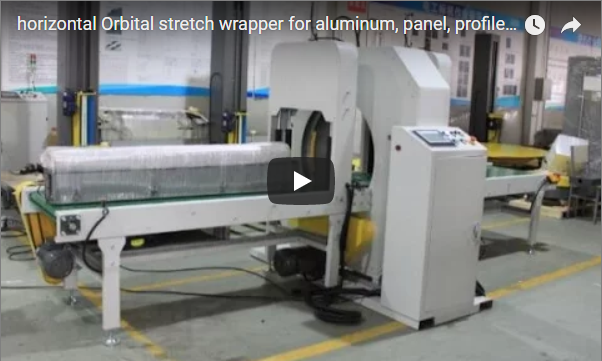
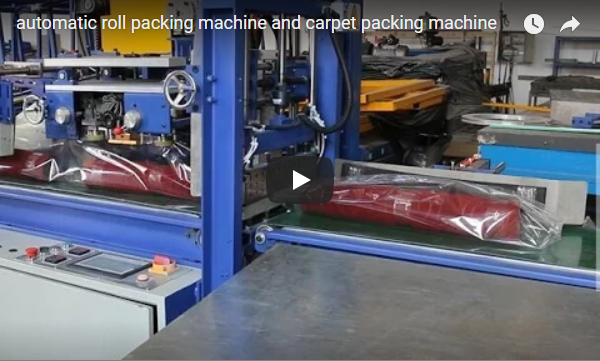
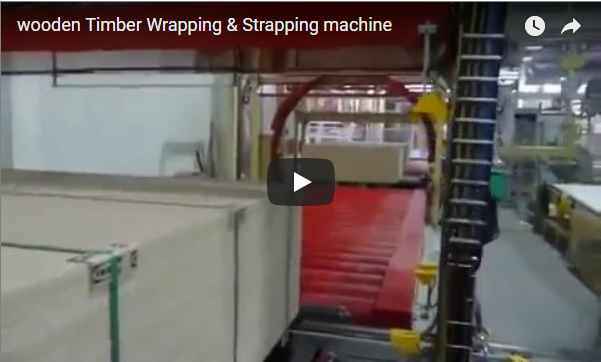
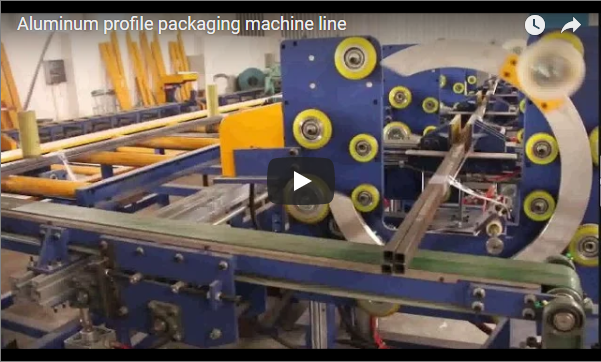
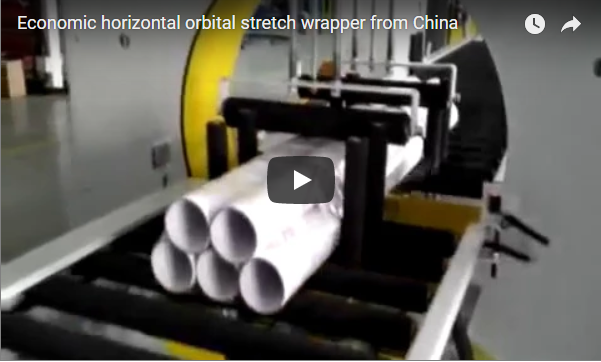
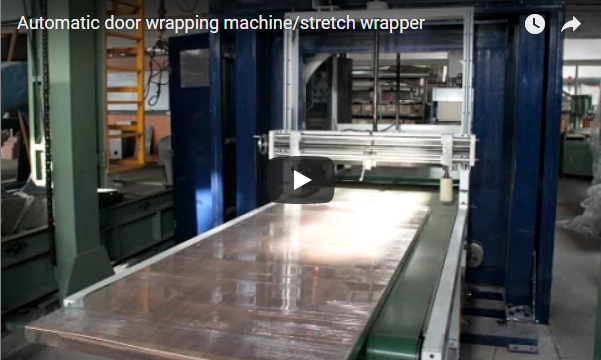
Executive summary This video shows a horizontal stretch wrapping machine from FHOPE wrapping long, flat rectangular products — first a wooden crate, then light-colored panel-style workpieces — on a conveyor. A bubble film dispenser feeds protective film over the load, a wrapping/pressing mechanism secures it, and the wrapped product exits on the conveyor. Yellow safety guarding surrounds the moving parts. For exact speeds, film specs, and load size limits, check with the manufacturer.
Why this machine matters
Long, flat products such as panels, profiles, crates, and insulation boards are awkward to protect by hand. Wrapping them manually with bubble film is slow, inconsistent, and hard on workers’ backs and shoulders. A horizontal stretch wrapping machine solves this by passing the product through a fixed wrapping station on a conveyor, so film is applied evenly while the product simply moves forward.
This video demonstrates exactly that concept, with an added feature: a bubble film dispenser. Bubble film adds cushioning and surface protection on top of what plain stretch film offers, which matters for fragile or scratch-sensitive products.
If you are evaluating a machine like this, the video answers three practical questions:
- What does a complete wrapping cycle look like, start to finish?
- How does bubble film integrate into a horizontal wrapper?
- What does the machine look like in a real factory layout, including guarding and controls?
What the video shows: the machine in action
The footage shows the full sequence on the factory floor. Here is the cycle as it appears on screen:
- Loading (0–4 seconds). A rectangular workpiece is placed on the conveyor — in one segment, a wooden crate; in another, a light gray or white panel-like product. In one shot an operator’s hand is visible placing the product at the infeed. The conveyor starts moving and carries it into the wrapping zone.
- Film application (4–12 seconds). Bubble film is drawn from an overhead roll and laid over the top of the product. The machine’s upper mechanism — visible inside a yellow frame — presses down, stretching the film and beginning the wrap around the load.
- Wrapping and securing. The wrapping arm and film guide rotate and travel around the product, pulling the film taut so it conforms to the top and sides. In the crate-wrapping segment, the rotation path of the wrapping mechanism is clearly visible while the crate itself stays stationary.
- Output (12 seconds onward). The wrapped product continues down the conveyor with film fitted closely to its surface — smooth on top, with only slight creasing at the edges in some shots. It exits toward the next handling step.
Across the footage, a green indicator light on the control panel stays lit during operation, and in later frames the panel is shown with a display screen and multiple buttons, some with green or red indicator lights.
Machine structure at a glance
Based on what is visible in the video, the machine consists of these main parts:
| Component | Observed position | Observed role |
|---|---|---|
| Conveyor | Bottom / left side | Feeds the product into and through the wrapping zone, left to right |
| Bubble film roll and dispenser | Upper section on a support | Releases bubble film over the moving product |
| Wrapping arm / film guide | Middle of the machine | Rotates and travels around the product to apply and tension the film |
| Upper pressing mechanism | Yellow frame, center | Presses down to stretch film and secure the initial wrap |
| Control panel | Right side, white enclosure | Display screen, buttons, and indicator lights; green light on during running |
| Safety guarding | Yellow metal mesh around the packaging zone | Keeps personnel away from moving parts |
The overall layout is horizontal and compact: product in one end, wrapped product out the other, controls within standing reach on the right. The frame is white painted metal with yellow-painted structural elements and yellow guarding.
Direct observation notes
The following points are kept close to the frame-by-frame analysis of the video, with only light grammar editing:
- The video shows a horizontal stretch wrapping machine wrapping a wooden crate placed on a conveyor. White bubble film is pulled from an overhead roll, laid over the crate, and a wrapping arm rotates around it to secure the film.
- In later segments, the machine wraps long, flat, light-colored rectangular workpieces — possibly foam boards or similar industrial products — that travel along a green or silver conveyor.
- A large transparent film roll (white material on a spool) sits on the left side of the machine. The wrapping and film transport mechanism with rollers and guides is in the middle.
- A white control box on the right carries a green indicator light; in closer frames it shows a display screen and several round buttons, some with green or red lights.
- Yellow metal mesh safety guarding covers the packaging area. In one segment the guard is closed during operation, and the green indicator light is on, suggesting the machine runs only with guarding in place.
- The wrapped product moves out on the conveyor with film fitted tightly; minor creasing appears at the edges in some shots.
- No readable text, nameplates, or watermarks appear anywhere in the footage.
What the video does not show
The footage is a visual demonstration only, with background music and no narration or on-screen text. The following are not observable and must be verified with the manufacturer before purchase:
- Machine model, rated capacity, and throughput
- Cycle time and wrapping speed
- Maximum and minimum product dimensions and weight
- Bubble film and stretch film specifications (width, thickness, core size)
- Power requirements and voltage
- Control system type (PLC brand, touchscreen model)
- Safety certifications (CE, ISO, etc.)
- Machine weight, footprint, and installation requirements
- Price, warranty, and after-sales support terms
Treat the video as evidence of how the machine works, not as a specification sheet.
Where a machine like this fits
Derived from the product types shown, this style of horizontal wrapper with bubble film dispensing suits:
- Building materials — insulation boards, panels, profiles that need surface and edge protection
- Furniture and joinery — flat-pack components, doors, tabletops
- Crated goods — wooden crates and boxes needing cushioning before shipping
- Logistics and warehousing — protecting long goods in transit
The constraint visible in the footage is product shape: the machine handles regular rectangular loads well. Irregular or highly deformable products are a poor fit — confirm suitability with the manufacturer for anything outside the shapes shown.
Fit criteria before you buy
Use this checklist when comparing machines of this type:
- Your product’s longest and largest dimensions fit within the machine’s ring or arm opening — verify dimensions with the manufacturer
- Bubble film and stretch film can both be used, or can be swapped per product line
- Film specification (width, thickness) is available from your local film supplier
- Guarding, emergency stop, and interlock configuration meets your site’s safety requirements
- Changeover between product sizes is fast enough for your production mix
- Control panel allows wrapping parameters (turns, tension, conveyor speed) to be adjusted
- Operator training and documentation are included
Buyer questions to ask the manufacturer
- What is the confirmed range of product lengths, widths, and heights this model accepts?
- What is the typical cycle time for a load like the one shown in the video?
- Can the machine run both bubble film and plain stretch film, and how is the film changed?
- Does the machine include an emergency stop, and how does the safety guarding interlock work?
- What film roll sizes does the dispenser accept, and how often does it need reloading at typical output?
- What installation, commissioning, and training support is provided?
Frequently asked questions
Does the machine wrap the product, or does the product rotate? As shown in the video, the product stays on the conveyor and moves horizontally; the wrapping mechanism moves around it. This suits heavy or unstable loads that should not be spun.
Is it wrapping with stretch film or bubble film? The video shows a bubble film dispenser in use — white bubble film is drawn over the load. Other segments show transparent film application. Confirm with the manufacturer which film types and widths the machine supports.
Can one operator run it? The footage shows minimal manual intervention: loading at the infeed, then automatic wrapping and discharge. A single operator appears sufficient for feeding, but staffing needs depend on your upstream and downstream handling — check with the manufacturer.
What safety features are visible? Yellow mesh guarding around the packaging zone and a control panel with indicator lights. No emergency stop button, light curtain, or warning labels are clearly observable in the footage, so verify the full safety package with the manufacturer.
What sizes of product can it handle? Not shown in the video. Load dimension limits must be confirmed with the manufacturer before ordering.
Maintenance and operating notes
Derived from the visible machine layout, routine care for this class of equipment typically includes:
- Checking film rollers and guides for dust and film residue, since bubble film generates debris when cut
- Inspecting the conveyor belt surface for wear and tracking
- Verifying the guarding stays closed and interlocks function before each shift
- Keeping the control panel clean and confirming indicator lights behave normally at startup
- Monitoring film tension output for consistency — visible looseness or heavy creasing on wrapped products is an early sign of adjustment needs
Specific maintenance intervals and procedures should come from the manufacturer’s manual — request it as part of your purchase evaluation.
Source and method
This article is based on the FHOPE demonstration video embedded above. The footage was analyzed frame-by-frame using a local vision model on sampled frames; the video contains background music only, with no narration or speech, so all factual observations come from what is visible on screen. Claims not visible in the video are marked as needing manufacturer confirmation.
Related reading
- Orbital stretch wrapper
- Horizontal wrapping machine
- Stretch wrapping machine
- Rotary ring stretch wrapping machine
- Automatic horizontal stretch wrapper
Next step
If your products look like the loads in this video — long, flat, and needing bubble film protection — send us your product dimensions and photos. Our engineers will confirm machine fit, film options, and a layout proposal. Visit the contact page to request a quotation or arrange a demonstration.