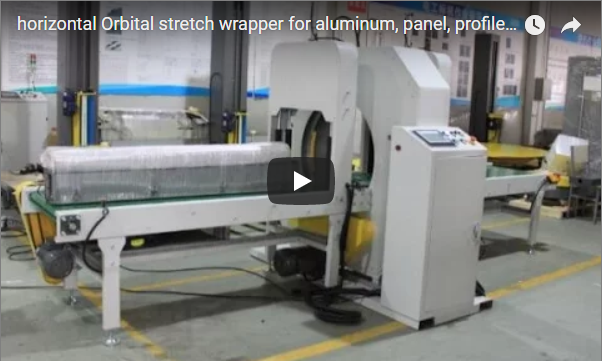
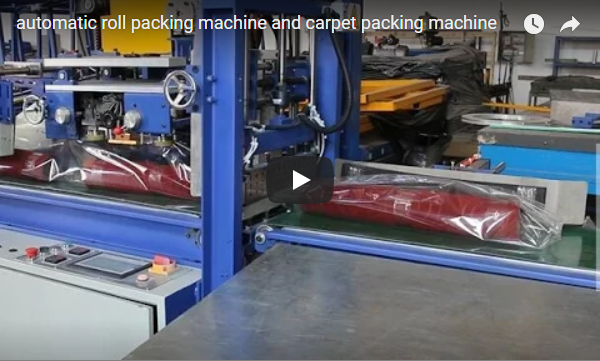
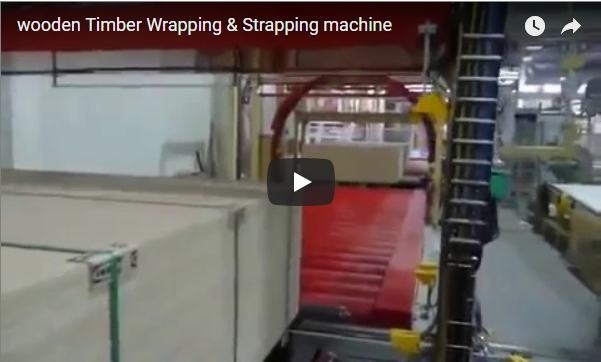
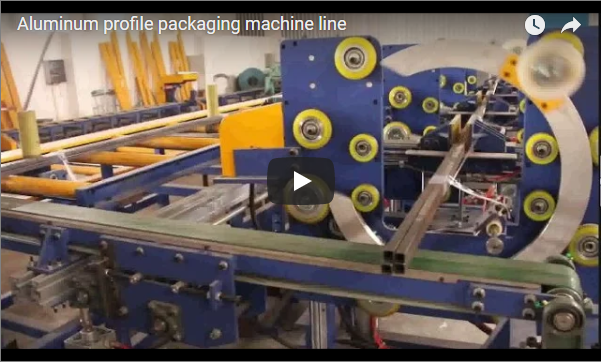
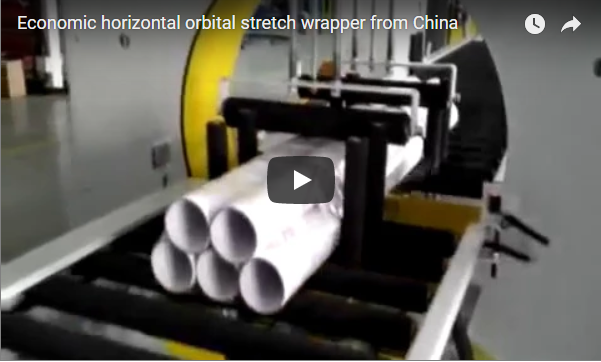
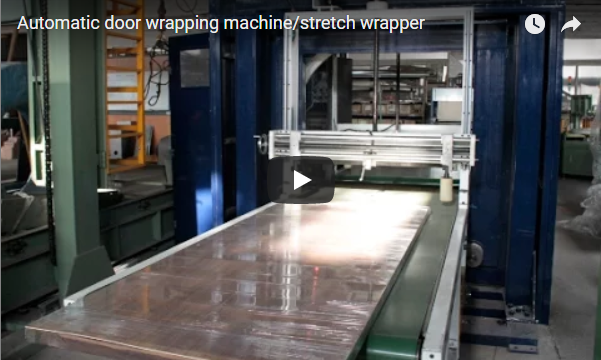
Executive Summary Horizontal bubble film orbital wrappers secure powder-coated radiator tubes, structural heating panels, and steel convectors by spiraling high-cushion bubble wrap directly around the moving workpiece. By replacing labor-intensive manual packing with a continuous rotating ring, the system eliminates surface abrasion, edge denting, and bubble bursting. The FHOPE E500 handles workpieces exceeding 1,500 mm in length, cross-sections from 200 mm to 500 mm, and payloads from 50 kg to 500 kg. Operating at variable ring speeds of 10–60 rpm synchronized with 3–12 m/min in-feed conveyors, the equipment achieves precise 30%–70% overlap control.
Table of Contents
- Why Heaters Require Synchronized Bubble Wrapping
- Mechanical Architecture: Orbital Ring with Pneumatic Top Hold-Down
- Six-Stage Automated Wrapping Sequence
- E500 Technical Specifications
- Kinematic Calculation: Conveyor and Ring Speed for 50% Overlap
- Machine Calibration to Protect Powder-Coated Finishes
- Engineering Selection and Sizing Checklist
- Functional Safety Standards: EN 415-10 and ISO 12100 Compliance
- Engineering FAQ
- Project Sizing & Inquiry Protocols
- Related Packaging Solutions
- Technical References
Why Heaters Require Synchronized Bubble Wrapping
Industrial panel radiators, designer convector bodies, and tubular heat exchangers exit powder-coating and curing ovens with high-gloss or textured architectural finishes. These surfaces must arrive at the installation site free from micro-scratches, edge chips, or transport chafing.
When long heaters are handled manually:
- Hand-wrapping a 2-meter convector requires two operators, consumes excessive tape, and produces inconsistent tension that leaves protruding edges exposed.
- In stacked shipping configurations, localized contact points experience abrasive friction, often grinding painted surfaces down to bare metal.
Horizontal orbital wrapping applies bubble cushioning or pre-stretched poly films in a continuous high-tension helix. The film encloses the cross-section completely, securing fragile brackets and corner headers without pressure-sensitive adhesive tapes touching the paintwork.
Mechanical Architecture: Orbital Ring with Pneumatic Top Hold-Down
The orbital wrapper utilizes a structural horizontal chassis with the product conveyed directly through the center of a machined rotating ring:
- Conveyor Foundation: In-feed and out-feed beds use non-marking polyurethane (PU, Shore 65A) rollers. These prevent metal-to-metal contact and damp out vibrations as the heater advances.
- Pneumatic Press-Down Assembly: A vertical overhead clamp mounted on linear guide posts travels down onto the leading edge. Regulated via pneumatic valves (0.15–0.40 MPa), it applies uniform clamping force to suppress lateral product wandering while preventing mechanical rupture of the bubble film cells.
- Dual-Media Wrapping Options: The main ring houses a high-capacity orbital roll carrier fitted with an adjustable friction mechanical brake. For multi-layer transit protection, a front-end bubble sheet covering station lays flat, heavy-gauge bubble film along the top and bottom faces before the ring locks the package in an outer spiral of stretch film.
Six-Stage Automated Wrapping Sequence
- In-Feed Induction: The operator places the radiator on the powered PU conveyor; an optical retro-reflective photocell registers the leading edge.
- Top Stabilization: The pneumatic soft-touch hold-down lowers to clamp the workpiece securely without bruising the bubble substrate.
- Head Reinforcement (Tag Turns): The orbital ring accelerates smoothly via variable-frequency drive (VFD), applying 2 to 4 preset zero-pitch reinforcement wraps at the vulnerable leading end.
- Helical Continuous Pass: The conveyor advances the panel through the rotating ring at a strictly synchronized speed-to-rotation ratio to maintain uniform film pitch.
- Tail Reinforcement & Cut: At the trailing edge, the conveyor pauses or decelerates for trailing reinforcement wraps. A pneumatic arm grips, severs, and presses the film tail flush against the product.
- Out-Feed Discharge: The overhead clamp raises clear, and the driven exit conveyor transfers the wrapped heater to the staging line.
E500 Technical Specifications
The operational parameters below define the standard E500 horizontal orbital stretch wrapper platform:
| Parameter | Specification (FHOPE E500) | Engineering Notes |
|---|---|---|
| Product Length Range | 1,500 mm to 6,000 mm | Extended modular conveyor beds available |
| Product Cross-Section | 200 mm to 500 mm (Diagonal ≤ 520 mm) | Must clear rotating film carriage envelope |
| Product Payload Capacity | 50 kg to 500 kg | Supported on heavy-duty structural rollers |
| In-Feed / Out-Feed Tables | 2,000 mm (L) × 700 mm (W) standard | Powered PU-coated rollers, VFD controlled |
| Wrapping Materials | LLDPE Stretch Film / Bubble / Woven | Film width: 150–300 mm; Roll OD: 100–250 mm; Core: 50 / 76 mm |
| Bubble Film Delivery | Direct ring-mounted reel or upstream sheet applicator | High-density PE air cushion film |
| Conveyor Line Speed | 3.0 to 12.0 m/min | Synchronized closed-loop via PLC |
| Orbital Ring Velocity | 10 to 60 rpm | Controlled by industrial VFD with dynamic braking |
| Pneumatic Operating Pressure | 0.5 to 0.8 MPa (5–8 kgf/cm²) | Clean, dry industrial plant air supply |
| Electrical Rating | 4.5 kW, AC 380 V, 50 Hz, 3-Phase | 24 V DC safety control circuits |
| Machine Dimensions | Approx. 5,200 mm (L) × 1,600 mm (W) × 1,800 mm (H) | Floor layout confirmed on approval drawings |
Kinematic Calculation: Conveyor and Ring Speed for 50% Overlap
Operational Example
- Radiator Dimensions: Length = 2,000 mm; Width (W) = 400 mm; Height (H) = 100 mm; Weight = 50 kg.
- Consumable Data: Film roll width (W_f) = 250 mm; Effective width accounting for edge neck-in (W_eff) ≈ 230 mm; Required overlap ratio = 50%.
Sizing and Motion Formulations
-
Cross-Sectional Envelope Calculation:
- Formula: Product Diagonal D(diag) = √(W)² + H² = √(400)² + 100² ≈ 412.3 mm Evaluation: The 412.3 mm diagonal falls safely inside the E500 envelope capacity (D_diag ≤ 500 mm), ensuring over 40 mm radial dynamic clearance to the film tension carriage.
-
Linear Spiral Pitch (p): To secure 50% overlap of effective width:
- Formula: p = W(eff) × (1 – 0.50) = 230 mm × 0.50 = 115 mm/rev = 0.115 m/turn
-
Conveyor Velocity Matching: Given a selected ring speed n = 40 rpm:
- Formula: v = n × p = 40 rpm × 0.115 m/turn = 4.60 m/min
-
Net Spiral Wrap Duration:
- Formula: t(spiral) = (L/v) × 60 = (2.0 m / 4.60 m/min) × 60 ≈ 26.1 s Adding 3 head wraps (4.5 s) and 3 tail wraps (4.5 s), the total operational cycle is approximately 35.1 seconds.
-
Film Consumption per Unit:
- Formula: Spiral Turns = L/p = 2,000 mm / 115 mm ≈ 17.4 turns
- Formula: Total Revolutions (with 6 reinforcement turns) = 23.4 turns
- Formula: Product Perimeter P = 2 × (W + H) = 2 × (0.4 + 0.1) = 1.0 m
- Formula: Consumable Consumption ≈ 23.4 × 1.0 m = 23.4 linear meters per heater
Kinematic Relationship:
Conveyor Speed v (m/min) = Ring Speed n (rpm) × Pitch p (m)
Target Overlap % = [1 - (p / W_eff)] × 100%
Adjusting ring velocity to 60 rpm allows the conveyor to ramp up to 6.9 m/min without altering wrap density, cutting cycle time to under 25 seconds per panel.
Machine Calibration to Protect Powder-Coated Finishes
- Proportional Clamping Force: Standard pneumatic cylinders can crush bubble air packets. The E500 features a precision pressure regulator enabling low-pressure clamping (0.15–0.30 MPa) that grips the load securely without bursting cushion chambers.
- Lateral Centering Rollers: Manually adjustable side guide arms fitted with vulcanized rubber sleeves prevent long, narrow radiators from crabbing or vibrating inside the ring center during high-speed rotation.
- Controlled Web Tension: Bubble packaging material cannot withstand standard stretch-film prestretch tension. The orbital dispenser utilizes a low-inertia mechanical friction core brake, preventing film necking and ensuring bubbles lie flat against sharp sheet-metal edges.
- Reinforced Edge Overlap: Programmable logic controls (PLC) permit independent setup for leading and trailing edge wrapping passes, adding extra cushioning layers where distribution impacts commonly occur.
Engineering Selection and Sizing Checklist
Before issuing a packaging cell proposal, plant engineers should confirm:
- Dimensional Extremes: Minimum and maximum panel lengths, widths, heights, and structural cross-sections (including mounting lugs).
- Surface Sensitivity: Standard industrial gloss, textured powder coat, or wet lacquer (determines PU roller hardness and film layer count).
- Packaging Configuration: Single-layer spiral bubble wrap only, or dual-layer (inner protective bubble sheet + outer weather-tight stretch wrap).
- Target Throughput: Cycle rates defined as parts per hour (pph) to configure conveyor VFD acceleration rates.
- Conveyor Integration: Standalone off-line loading via crane/forklift or fully integrated upstream paint line integration.
- Utility Baseline: Supply voltage (e.g., 380V/480V, 3-Phase, 50/60 Hz) and compressed air flow capacity.
Functional Safety Standards: EN 415-10 and ISO 12100 Compliance
The FHOPE E500 horizontal orbital wrapper conforms to European machinery safety mandates:
- EN 415-10 Safety Specifics: Regulates horizontal wrapping machines, mandating perimeter interlocks, fixed physical shielding enclosing the rotating ring mechanism, and light-curtain safeguarding across the in-feed and out-feed danger zones.
- ISO 12100 Risk Assessment: Integrated dual-channel safety relays (PL d / Category 3) govern the emergency stop circuits. Detection of physical intrusion, drive-belt slip, or pneumatic drop triggers controlled Category 0 dynamic braking stops.
- Operator Safety Ergonomics: Film roll replacement is carried out strictly when the orbital ring is held in a mechanically locked home position, with ring jog controls accessible on the main HMI.
Engineering FAQ
Q: How is wrap overlap maintained when conveyor speeds vary? A: The system links the conveyor frequency drive and the orbital ring drive via the central PLC. The linear pitch p = v / n remains constant; altering the production rate automatically recalibrates ring rotation to preserve the specified overlap.
Q: Can the hold-down rollers cause denting on thin-gauge convector shells? A: No. Clamping rollers are constructed with Shore 65A soft polyurethane jackets and utilize adjustable counter-balanced pneumatic downforce, dampening contact forces to well below the elastic deformation limit of thin-sheet radiator casings.
Q: What is the mechanical difference between ring-mounted bubble wrap and an upstream sheet dispenser? A: Ring-mounted reels apply narrow bubble strips (150–250 mm) in an external spiral wrap. An upstream sheet covering station feeds wide bubble sheet rolls (up to 1,000 mm) axially over the top and bottom of the heater, after which the ring applies stretch film to bundle the enclosure tightly.
Q: Does the system accommodate structural mounting brackets welded to the heaters? A: Yes. As long as the combined diagonal (including projecting bracket profiles) stays within the ring internal clearance (D_diag ≤ 500 mm), the soft roll carriage clears the envelope safely.
Project Sizing & Inquiry Protocols
To confirm sizing parameters for your radiator or structural panel line:
- Submit Product Profiles: Send maximum/minimum part dimensions, weights, and hourly output requirements to info@fhopepack.com.
- Engineering Review: Our mechanical engineering team verifies ring cross-section clearance, conveyor speed ranges, and dynamic clamping requirements.
- Turnaround: Receive a detailed 2D/3D plant footprint layout, mechanical specification sheet, and formal quotation within 24–48 hours.
Related Packaging Solutions
- E500 Horizontal Stretch Wrapper with Bubble Film (Product Detail)
- Cabinet Bubble Film Packing Machine Case Video
- Horizontal Ring Orbital Stretch Wrapping Equipment Overview
- FHOPE Heavy-Duty Door and Panel Packaging Solutions
Technical References
- FHOPE E500 Horizontal Orbital Wrapper Series Technical Documentation (2026 Edition)
- Packaging Machine Safety Specification: EN 415-10 (Safety of Packaging Machines – Part 10: General Requirements)
- Machinery Safety Risk Assessment: ISO 12100:2010 (Basic concepts, general principles for design)
- ASTM D3951 Standard Practice for Commercial Packaging
Last reviewed by Technical Operations: 2026-10-18