Executive summary
A metal coil that arrives with an uneven wrap fails in transit, and a coil that arrives without its mark causes returns at the door. A coil wrapper with logo tapping applies consistent film around spools, wire rods and reels, then marks the package with the brand or product marking as part of the same cycle. We build marked coil wrappers for metal distributors and producers. Coil range and film plan are confirmed per project.
Table of Contents
- Why coils need a marked, consistent wrap
- How the wrapper covers the coil
- Orbital shuttling through the coil
- Logo tapping and marking
- Film cut and hold
- Recipes and changeover
- Typical configuration
- What the video shows
- Selection checklist
- Operation and safety
- Engineering FAQ
- Next step
- Related reading
- Sources and standards
Why coils need a marked, consistent wrap
Coils of wire rod, cable and metal spools travel through multiple modes of transport, and the film is what carries them. Uneven tension creates weak points that fail under vibration, while a loose wrap lets moisture reach the metal.
The package also has to identify itself: the customer wants the brand and the product marking visible when the coil arrives. A wrapper that wraps and marks in one cycle protects the coil and identifies it in the same step, so nothing is done to the package by hand after it leaves the machine.
How the wrapper covers the coil
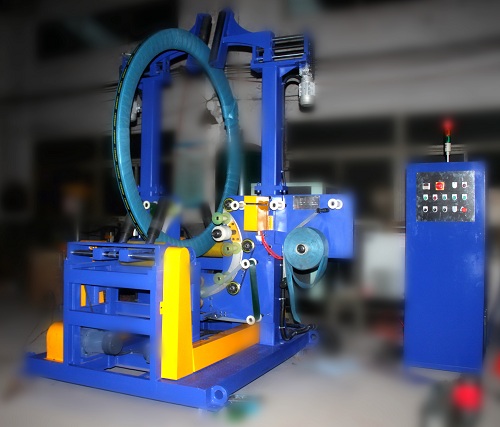
The wrapper applies film automatically around the coil with controlled tension and overlap, working around the outer circumference and through the central eye. Automatic cut and hold mechanisms secure the film tail after each cycle, so the wrap cannot unspool during handling. Film overlap and pre-stretch are set per coil specification rather than by operator feel, which is what gives repeatable containment on every coil in a shift.
Orbital shuttling through the coil
The film path runs through the coil eye so the wrap covers the full coil evenly without stressing the inner wraps. An orbital shuttle rotates around the outer diameter while the film passes through the center, distributing film uniformly and preventing the buckling that stresses cores. Vibration-free operation during the cycle keeps film from buckling and the core from deforming, which matters for both heavy wire rods and precise cable reels.
Logo tapping and marking
The distinctive step is the marking, the “logo tapping” of the machine name. As part of the cycle, the machine applies the brand or product marking onto the wrapped coil, fixing the identification into the wrap so the coil arrives marked at the receiver. Marking runs automatically with the wrap, removing a manual labeling step that is usually forgotten or misapplied on a busy line. The marking design and position follow the customer’s brand and the coil, confirmed per project.
Film cut and hold
Every cycle ends with the film being cut and the tail held down, so the coil leaves with a finished wrap rather than a loose end. The cut and hold step is automatic and consistent, and it is what keeps the film from unspooling between the wrapper and the warehouse. Combined with controlled tension, the finished wrap is the protection the coil carries through transit, with no operator finishing required.
Recipes and changeover
Facilities running mixed product lines need fast switching between coil types. Recipes stored in the control store film overlap, pre-stretch, wrap count and marking settings for each coil specification, so a change of coil is a recipe call rather than a re-teach. Parameter switching keeps a line that runs heavy rods and light reels productive without an evening of re-setting between batches.
Typical configuration
Figures below list functional design boundaries rather than numeric values, and are confirmed per project.
| Parameter | Typical range, confirmed per project |
|---|---|
| Coil | OD, inner eye, width, weight |
| Wrap | overlap, pre-stretch, pattern |
| Marking | logo or product marking |
| Cut and hold | automatic film tail |
| Changeover | recipe-based |
| Electrical supply | 380 V three phase 50 Hz, or 220 V single phase for light machines, selected per project |
What the video shows
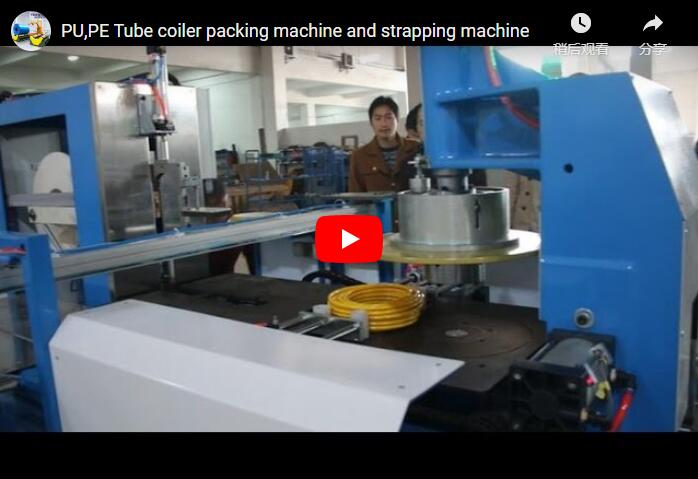
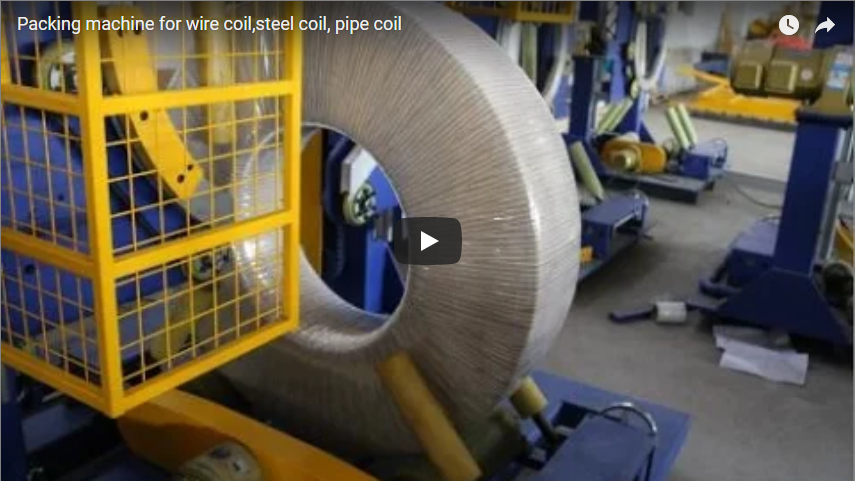
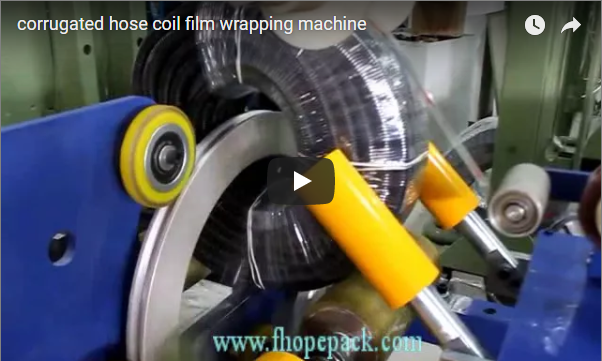
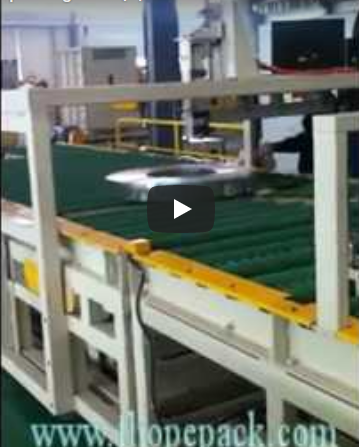
Our footage shows a coil wrapper wrapping a metal coil and applying the marking in the same cycle. It is a general demonstration, so your coil range and marking are confirmed with us per project.
Selection checklist
| Question | Confirm per project |
|---|---|
| Coil range | OD, eye, width, weight |
| Film plan | overlap and pre-stretch |
| Marking | logo position and form |
| Cut and hold | tail finishing |
| Changeover | recipe set |
| Electrical supply | voltage, phase and frequency on site |
Operation and safety
Run the recipe from the panel and the wrapper applies film, applies the marking and finishes the tail automatically. Keep clear of the shuttle and film zone while it runs, with guarding and emergency stops at the operator position. Routine checks cover the film path, shuttle, cut and hold devices, marking unit and sensors, per the machine manual. Check the film and marking supplies before each shift so cycles never stop mid-run.
Engineering FAQ
Q: What does a coil wrapper with logo tapping do? A: It applies a consistent film wrap around the coil and marks the package with the brand or product marking in the same cycle.
Q: Which coils does it handle? A: Wire rod, cable reels and metal spools, on coil OD, eye, width and weight confirmed per project.
Q: How does film pass through the eye? A: The orbital shuttle routes the film through the central eye, covering the coil without stressing the inner wraps.
Q: How is the logo applied? A: The marking unit applies the brand or product marking automatically as part of the wrap cycle.
Q: How are different coils changed over? A: Recipes store wrap and marking settings per coil, recalled from the panel for fast switching.
Next step
- Email us at info@fhopepack.com with your coil sizes, film and marking needs.
- We send a coil wrapper proposal and a layout drawing within 48 hours.
- We arrange a site survey to confirm coil range and film plan.
Related reading
- Steel coil wrapping and packing
- Automatic coil packing machine theory
- Coil wrapper with film cutter
- FHOPE packing machinery product lines
Sources and standards
- ISO 12100:2010 Safety of machinery, general principles for design and risk assessment
- EN 415-10:2014 Safety of packaging machines, general requirements
- EN ISO 13849-1:2023 Safety of machinery, safety-related parts of control systems
FHOPE coil wrapper with logo tapping demonstration video. Reviewed as a general demonstration; coil range confirmed per project.
Last reviewed: 2026-10-10