Executive summary
A large flexible hose that arrives hanging in a ring needs to be coiled into a tight, compact disc before wrapping and packing. This machine takes a big circular hose, feeds it into a central winding unit, and turns it into a dense spiral stack ready for a packing machine. The demonstration runs without an operator stepping in, so the coiling step is powered and repeatable. Coil size, hose diameter and packing layout are confirmed per project.
Table of Contents
- Why hoses need mechanical coiling
- What the machine does
- From hanging ring to tight disc
- Ready for the packing machine
- What the footage shows
- Typical configuration
- Selection checklist
- Operation and safety
- Engineering FAQ
- Next step
- Related reading
- Sources and standards
Why hoses need mechanical coiling
A big flexible hose is awkward to pack while it hangs in a loose ring. It takes up too much space, it swings, and a loose coil is hard to strap or wrap evenly. Coiling it into a tight disc first makes the product compact and stable.
Hand coiling a large-diameter hose is tiring and uneven. A machine that winds it into a dense spiral gives the same compact result every time. Coil size and hose handling are confirmed per project.
What the machine does
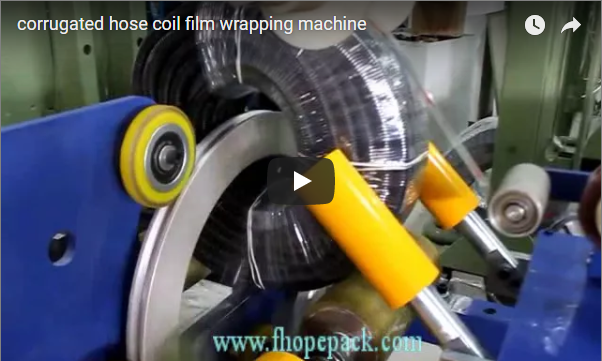
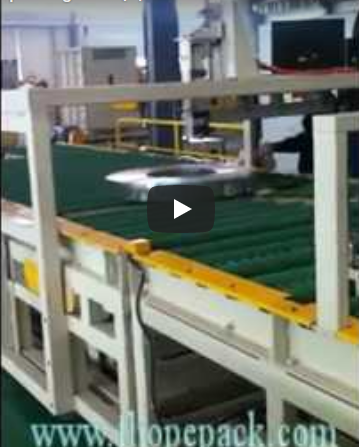
The machine is a coiling and packing unit for large flexible hose. A big circular hose hangs between two upright supports at the start. The hose is then fed into a central rotating mechanism, where guide rollers and tension wheels steer it, and it winds around the centre into a tight, multi-layer spiral.
The machine keeps running through the whole coiling pass without an operator stepping in. The packed disc that comes out is then small enough to be handled by a packing machine. The hose size and final disc are confirmed per project.
From hanging ring to tight disc
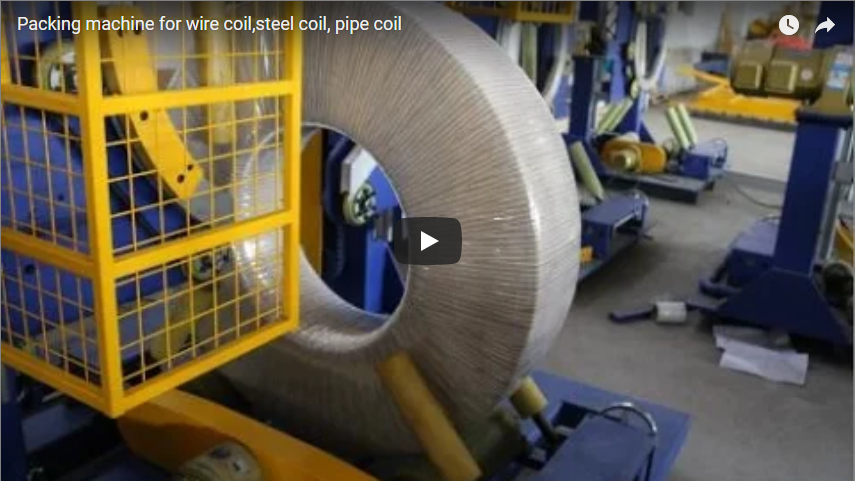
The footage shows the hose starting as a large hanging ring and ending as a compact spiral stack. The hose is pulled into the centre mechanism, guided by rollers, and laid down layer after layer until the ring is drawn into a dense circle. The wrap direction is consistent through the pass.
Because guide rollers and a tension wheel steer the hose, each loop is laid next to the previous one rather than crossing over. The number of layers and finished diameter are confirmed per project.
Ready for the packing machine
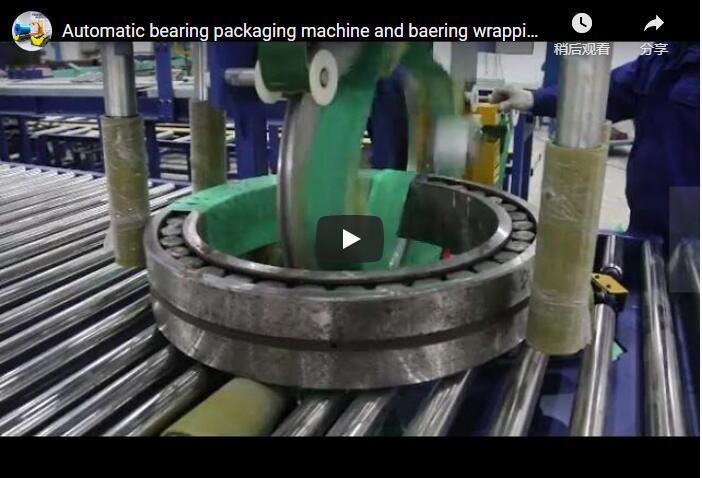
A tightly coiled disc is what a bearing wrapping machine and packing machine are designed to accept: it has a stable shape, a clean outer edge, and no loose tail swinging as it moves. The coiling step in front of the wrapper is what makes the rest of the packing line practical. The disc size handled by the packer is confirmed per project.
What the footage shows
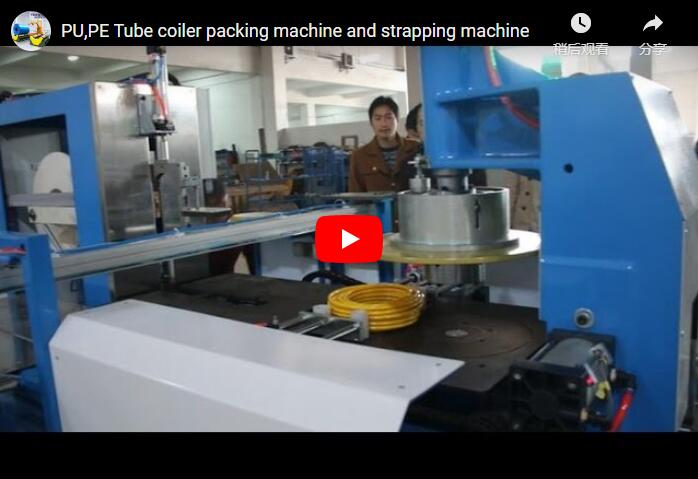
Our footage shows a coiling and packing machine drawing a large flexible hose into a compact multi-layer disc without operator intervention. It is a general demonstration, so your hose diameter, coil size and packing layout are confirmed with us per project.
Typical configuration
Figures below list functional design boundaries rather than numeric values, and are confirmed per project.
| Parameter | Typical range, confirmed per project |
|---|---|
| Load | large flexible hose ring |
| Feed | hanging between upright supports |
| Winding | central rotating mechanism |
| Guidance | rollers and tension wheel |
| Output | compact spiral disc |
| Electrical supply | 380 V three phase 50 Hz, or 220 V single phase for light machines, selected per project |
Selection checklist
| Question | Confirm per project |
|---|---|
| Load range | hose diameter, wall, stiffness |
| Feed | ring support and infeed |
| Disc | finished OD, height |
| Winding | speed, tension control |
| Packer | wrapper compatibility |
| Electrical supply | voltage, phase and frequency on site |
Operation and safety
Position the hose ring on the supports, start the cycle, and the mechanism draws the hose into a spiral under power. Keep clear of the winding area, the guide rollers and the moving hose while the machine runs, with guarding around the moving parts.
Routine checks cover the winding drive, the guide rollers and the tension wheel, per the machine manual. Confirm the setup against the hose before each run.
Engineering FAQ
Q: What does this machine do? A: It coils a large flexible hose into a compact multi-layer disc for packing.
Q: Why coil before wrapping? A: A tight disc is stable and compact, so it wraps evenly and ships well.
Q: Is the coiling automated? A: The footage shows the pass running without an operator stepping in.
Q: What does it suit? A: Large-diameter flexible hose and similar circular products.
Q: What does the footage prove? A: A hose drawn from a hanging ring into a tight disc in one continuous demonstration.
Next step
- Email us at info@fhopepack.com with your hose diameter and coil size.
- We send a coiling and packing proposal and a layout drawing within 48 hours.
- We arrange a site survey to confirm hose handling and packing requirements.
Related reading
- Big bearing wrapping machine
- Coil wrapping machines
- Coil packing line
- FHOPE packing machinery product lines
Sources and standards
- ISO 12100:2010 Safety of machinery, general principles for design and risk assessment
- EN 415-10:2014 Safety of packaging machines, general requirements
- EN ISO 13849-1:2023 Safety of machinery, safety-related parts of control systems
FHOPE big bearing wrapping machine and packing machine demonstration video. Reviewed as a general demonstration; hose diameter, coil size and packing layout confirmed per project.
Last reviewed: 2026-10-11