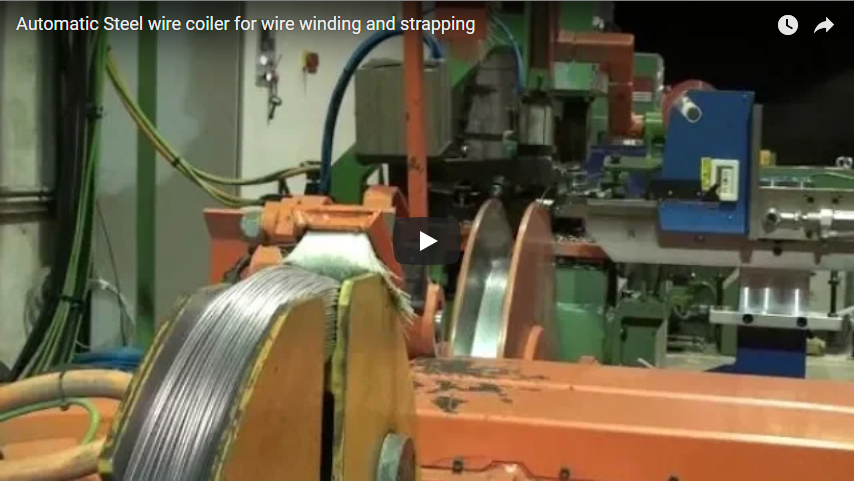
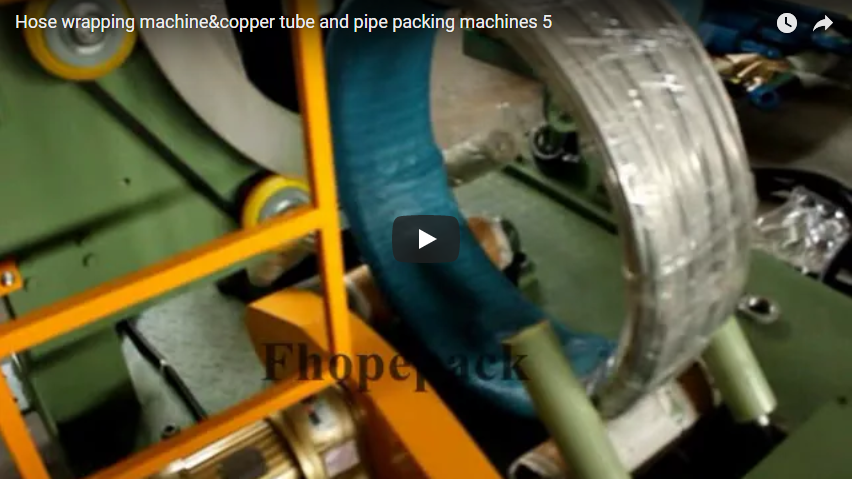
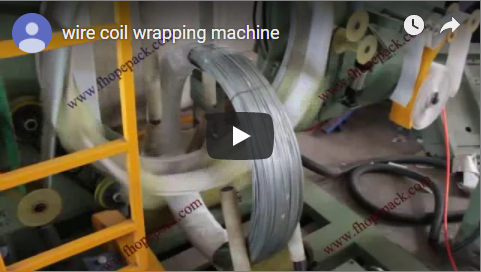
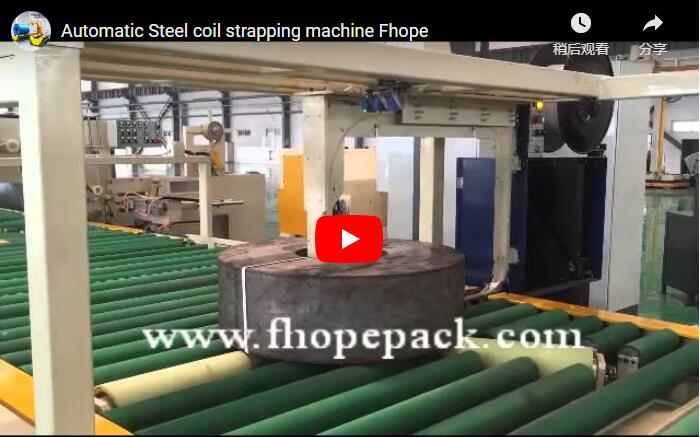
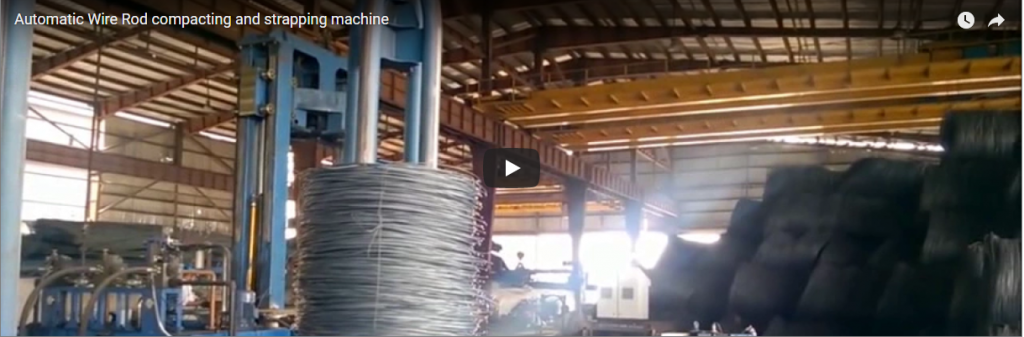
Executive summary This video shows an automated line that draws wire, winds it into coils, wraps each coil in plastic film, adds a protective sleeve, and stages it on a rack — end to end. You will see the full process sequence, the machine layout, and the control and safety features visible on camera. Capacity figures, model numbers, and power requirements are not shown, so confirm those directly with the manufacturer.
Why this line matters
If you buy wire coils in quantity — or produce them — the last steps before shipping often decide whether your product arrives clean, tangled, or corroded. Hand-wrapping coils is slow, inconsistent, and labor-heavy. The line in this video addresses exactly that gap: it connects wire drawing, coiling, and packaging into one continuous flow, so a coil never sits half-finished between stations waiting for an operator.
This page is written for plant managers and procurement teams evaluating whether a line like this fits their operation. Everything described below comes from the footage itself; anything the footage cannot confirm is flagged for you to check with the manufacturer.
What the video shows
The footage runs about 38 seconds and follows the product through the whole line:
| Time | Stage | What happens |
|---|---|---|
| 0s – 4s | Factory overview | Wide, low-angle shot of the factory floor: an overhead gantry crane with yellow beams, metal piping, cabling, and large grey wire coils staged on the floor |
| 4s – 12s | Drawing | Close-up of the wire drawing machine pulling thin silver wire from a large spool through rollers and guides; a worker in a yellow hard hat is visible nearby |
| 12s – 20s | Coiling | The coiling machine’s winding head winds the drawn wire into a tight circular coil on a rotating platform |
| 20s – 30s | Wrapping | The coil travels on a conveyor while the machine wraps it in clear plastic film |
| 30s – 38s | Sleeve and exit | A yellow protective sleeve is applied; the finished coil is lifted and placed onto a blue storage rack |
The video closes on a shot of finished, packaged coils stacked on the rack — the end state of every coil that passes through the line.
Process overview: four stations, one flow
1. Draw. The wire is drawn from a large spool through a series of rollers and guides, forming it into a curved shape as it feeds downstream. A red feeding wheel is shown in close-up as part of this mechanism.
2. Coil. The drawn wire enters the coiling machine, where a winding head builds a tight, circular coil — roughly one meter in diameter — on a rotating platform. The coiling machine is painted blue and white, with its control panel mounted on the side of the cabinet.
3. Pack. The completed coil transfers onto a conveyor and passes through the packaging machine, which wraps it in clear plastic film. The packaging area sits in a smaller, more enclosed room than the drawing and coiling stations.
4. Exit. After wrapping, a yellow protective sleeve is fitted over the coil. A lift-and-place transfer moves the packaged coil onto a blue rack for storage or dispatch.
The layout is linear, which matters for planning: drawing and coiling occupy the open factory floor, packaging is enclosed, and the conveyor connects everything with a red-framed roller system.
Machine structure at a glance
| Component | Observed details |
|---|---|
| Wire drawing machine | Rollers and guides; red feeding wheel; draws silver wire from a large spool |
| Coiling machine | Blue and white cabinet; rotating platform; winding head; side-mounted control panel |
| Packaging machine | Film dispenser; yellow sleeve applicator; located in an enclosed area |
| Conveyor | Metallic silver rollers in a red frame; transfers coils between and out of stations |
| Overhead crane | Yellow and grey gantry system above the factory floor |
Machines are metal construction with painted surfaces in blue, white, and red.
Controls and safety features
Several safety elements are visible and worth noting for your EHS review:
- Control panel on the coiling machine with a digital display, start/stop/settings buttons, and red and green indicator lights
- Red emergency stop button on the control panel
- Protective guards around moving parts such as the rollers and the winding head
- Warning label — a yellow label with a black triangle and exclamation mark — on the side of the coiling machine
The emergency stop functions as the line’s visible stop-in-place control. The exact interlock architecture, safety rating, and compliance certifications are not shown, so verify those with the manufacturer before purchase.
Direct observation notes
The following block keeps the observed facts in plain form, close to the footage:
- The video opens with a wide, low-angle view of a large factory floor, showing a yellow overhead gantry crane, metal pipes and cables, and large grey coils of wire on the floor.
- A worker wearing a yellow hard hat appears in the background near the wire drawing machine.
- The drawing machine pulls thin silver wire from a large spool through rollers and guides, forming a large curved, fan-like shape; a red wheel is part of the feeding mechanism.
- The coiling machine’s winding head winds the wire into a tight circular coil on a rotating platform; the machine is blue and white with a control panel on the side.
- The coiled wire travels on a conveyor and is wrapped in clear plastic film by the packaging machine.
- A yellow protective sleeve is placed over the wrapped coil; the coil is then lifted and placed onto a blue rack, and the video ends with finished packaged coils on the rack.
- The control panel has a digital display, buttons, red and green indicator lights, and a red emergency stop button.
- Machines have protective guards around rollers and the winding head; a yellow warning label with a black triangle and exclamation mark is on the coiling machine.
- A watermark reading “FHOPE GROUP” with the tagline “PACKING SOLUTION FOR YOU” appears in the bottom right corner of most frames.
- The wire is silver with a smooth metallic surface; coils are large and circular, approximately 1 meter in diameter.
- The video contains background music only — no narration or voiceover.
What the video does not show
For a fair evaluation, be aware of these gaps in the footage:
- Rated capacity — coils per hour or per shift is not stated
- Cycle time for the draw–coil–pack sequence is not shown
- Wire range — the video shows one wire diameter and type; flexibility across sizes is not demonstrated
- Machine model numbers, exact dimensions, and power requirements are not visible
- Certifications (CE, ISO, or similar) are not shown
- Changeover and maintenance procedures are not demonstrated
- Operator workload — only one worker is briefly visible; staffing needs per shift are unclear
Fit criteria: is this line right for you?
| Your situation | Good fit if… | Check further if… |
|---|---|---|
| You ship coils to customers | You need consistent film + sleeve protection | Your customers require specific packaging materials — confirm options |
| You currently hand-wrap coils | You want to reduce repetitive manual labor | Your coils differ significantly in size from ~1 m diameter |
| You run mixed products | — | You need frequent changeovers between wire sizes or coil sizes |
| Space is tight | — | Confirm total line footprint; the footage shows a large open floor with a gantry crane |
What to verify with the manufacturer
Before committing to a purchase, put these on your RFQ list:
- Line capacity at your wire diameter and coil size
- Full range of wire types and diameters the line handles
- Total footprint and required crane/floor-loading conditions
- Packaging material options beyond film and yellow sleeve
- Power requirements and installation requirements
- After-sales support, spare parts availability, and lead time
FAQ
What does the line produce? It takes silver metallic wire, draws it, winds it into large circular coils (roughly 1 meter diameter in the footage), and packages each coil in clear film plus a yellow protective sleeve.
How automated is the process? The footage shows the coil moving from coiling through wrapping, sleeving, and rack placement without manual handling at those steps. One worker appears near the drawing station. Confirm the exact level of automation per station with the manufacturer.
What safety features are visible? An emergency stop button, indicator lights on the control panel, guards around moving parts, and a warning label on the coiling machine.
Does the line handle different wire sizes? The video shows only one wire type and size. Ask the manufacturer about the supported diameter range and changeover process.
What packaging does it apply? Clear plastic film, followed by a yellow protective sleeve. Alternative materials are not shown — check with the manufacturer.
Related reading
Explore other automated packing solutions on our site:
- Automatic packing line solutions
- Automatic coil packing line
- Wire packing line
- Automatic steel tube packing line
- Plastic pipe packing line
Next step
If this wire drawing and packing line matches your production needs, or you want capacity and layout data for your specific wire sizes, contact our team for a technical consultation and quotation.
Source and method
This article is based solely on the video above. Analysis was performed using a vision model on sampled frames of the footage; the video contains background music only, with no narration or speech to transcribe. All observations reflect what is visible on screen. Specifications not shown in the video are marked as items to verify with the manufacturer.
Published: 2026-09-03