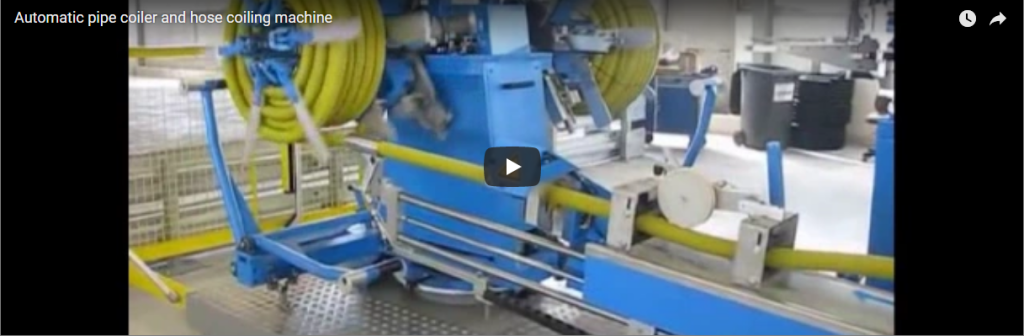
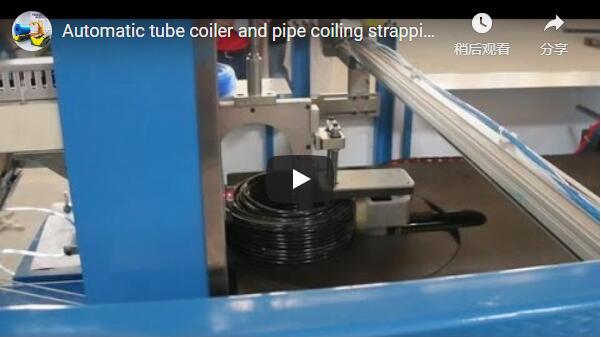
Automatic steel wire coil winding and strapping line showcase video

Executive summary This video shows an automated steel wire coil winding and strapping line completing a full production cycle: winding silver steel wire into a large, tightly wound coil, then applying a strap to secure it for transport. The footage runs about 32 seconds and covers winding, strapping, and exit stages, with a control panel, protective guards, and an emergency stop visible throughout.

If you are evaluating equipment for coil-forming or coil-securing operations, this showcase is a useful starting point. Below, we break down what the video actually shows, what it deliberately leaves out, and which questions you should raise before committing to a purchase.

What the video shows: the machine in action

The video follows a single production cycle from raw wire to a strapped, finished coil. Each stage is clearly visible on camera, which makes it easier to understand how the line is organized.

  • 0–4s: A wide shot of the factory floor shows a row of blue and white automated machines arranged in a line. Each machine is equipped with a large, circular winding mechanism. A worker in a yellow hard hat observes in the background while wire is fed into the winding stations.
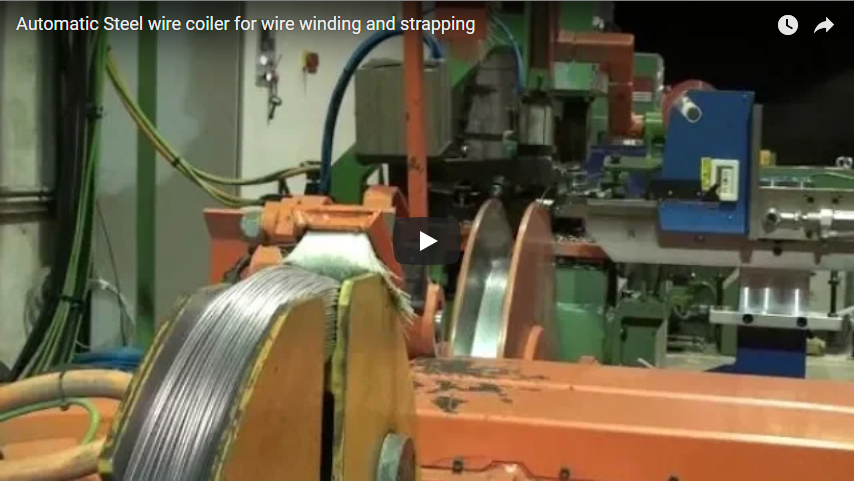
  • 4–8s: A close-up shows the winding process. A thin, silver-colored steel wire is wound precisely onto a rotating spool. A blue and orange rotating drum is visible through a protective guard. The wire is fed from a large coil located off-screen.
  • 8–12s: The camera shifts to a side view. The spool is now partially filled, and the machine’s wire-holding arm moves in a controlled manner to keep the winding even. The broader factory environment, with other machinery, is visible behind.
  • 12–16s: The focus moves to the control panel. The digital display reads 116.2, likely indicating the current weight or length of the coil. The panel carries several buttons and a red emergency stop button, and the spool continues to grow.
  • 16–20s: From another angle, the display now reads 0.0, indicating the winding process has completed or been reset. The finished coil rests on the spool.
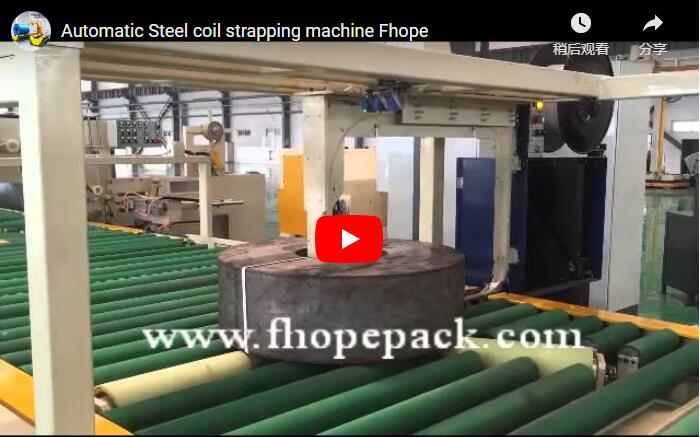
  • 20–24s: The strapping process begins. The machine’s arm now holds a strap instead of wire, and the strap is applied around the coil to secure it.
  • 24–28s: The strap is tightened around the coil. The arm again moves in a controlled motion so the strap sits evenly and securely.
  • 28–32s: Strapping completes. The arm retracts, and the finished, strapped coil is ready to move to the next stage of production.

Process overview

The full sequence breaks into three clear stages:

Stage Time in video What happens
Wind 0–12s Wire is fed from an off-screen supply coil and wound onto a rotating spool; the machine’s arm moves in a controlled pattern for even winding; the display tracks weight or length
Strap 12–24s Once winding completes, the arm applies a strap around the coil and tightens it evenly
Exit 24–32s Strapping finishes, the arm retracts, and the secured coil is ready for handling

This wind → strap → exit flow is the core value proposition of an integrated line: one machine handles coil forming and coil securing without the coil being manually transferred between stations. The controlled movement of the arm in both the winding and strapping stages is what produces the even, tightly wound coil visible in the footage.

Machine structure observed

The video offers several clear views of the machine’s construction:

  • Frame and body: Primarily metal construction in a blue, white, and grey color scheme. The main body is white; the winding mechanism and structural supports are blue.
  • Winding mechanism: Includes a rotating drum (blue and orange) and a wire feed system, with a large circular winding mechanism on each machine in the line.
  • Strapping mechanism: Includes a strap dispenser and a tensioning system, located at the rear of the machine.
  • Control panel: A light grey box mounted on the side of the machine, within easy reach of the operator, with a digital display, several buttons, and a red emergency stop button.
  • Layout: Machines are arranged in a line, each dedicated to winding and strapping a single coil. The winding station sits at the front; the strapping station at the back.

The display values visible in the footage — 116.2 during winding and 0.0 after completion — suggest the panel tracks the coil’s weight or length during the cycle. The exact unit and configuration should be confirmed with the manufacturer.

Product quality visible on screen

The finished product is a large, cylindrical coil of silver steel wire. The video shows:

  • A coil roughly 1 meter in diameter and about 0.5 meters high (approximate, from the footage).
  • Wire of medium thickness with a smooth, shiny surface, indicating quality steel.
  • Tight, evenly spaced winding with no visible defects or damage.

Even winding matters commercially. A poorly wound coil loosens during handling and transport, creating safety risks and rework. The controlled arm movement shown here is the mechanism that prevents that.

Direct observation notes

  • The video opens with a wide shot of a factory floor showing a row of blue and white automated machines, each with a large circular winding mechanism; a worker in a yellow hard hat is visible in the background.
  • From 4–8s, a close-up shows thin, silver-colored steel wire being precisely wound onto a rotating spool; a blue and orange rotating drum is visible through a protective guard; the wire is fed from a large coil located off-screen.
  • From 8–12s, a side view shows the partially filled spool and the machine’s arm moving in a controlled manner to ensure even winding.
  • At 12–16s, the control panel’s digital display reads “116.2”, likely indicating current weight or length of the coil; the panel has several buttons and a red emergency stop button.
  • From 16–20s, the display reads “0.0”, indicating the winding process has completed or been reset; the finished coil rests on the spool.
  • From 20–28s, the machine’s arm, which previously wound the wire, now holds a strap and applies it around the coil, tightening it evenly and securely.
  • From 28–32s, strapping completes; the arm retracts and the strapped coil is ready to be moved to the next stage of production.
  • A warning label reading “DANGER” with a lightning bolt symbol (indicating electric shock risk) is visible on the side of the machine at multiple points in the video.
  • The coil shown is approximately 1 meter in diameter and 0.5 meters high; the wire surface is smooth, shiny, and tightly wound with no visible defects.
  • A “HOPE GROUP” watermark appears in the bottom right corner of the video throughout.

What the video does not show

The footage is a showcase, not a technical briefing. Several facts a buyer needs are simply not observable:

  • Rated capacity — the maximum weight or length of wire the machine can wind and strap.
  • Machine dimensions — length, width, and height for layout planning.
  • Cycle time — how long one full winding and stracking cycle takes in production.
  • Model number and full technical specification sheet.
  • Power requirements — voltage and amperage.
  • Certifications — any safety or quality certifications held.
  • Maintenance procedures and spare parts availability.
  • Integration details — how the line connects to upstream wire drawing or downstream handling equipment.

None of these can be read from the video. Request them directly from the manufacturer before comparing options.

Safety features observed

Several safety elements are visible in the footage:

  • Protective guard around the winding mechanism, preventing contact with moving parts.
  • Interlocks on the guard, so the machine cannot operate when the guard is open.
  • Red emergency stop button on the control panel.
  • “DANGER” warning label with a lightning bolt symbol, indicating electric shock risk.

Guards and interlocks are baseline expectations for automated coil machinery, so their presence is reassuring but not differentiating. What matters more in practice is operator training: even a well-guarded line requires trained staff following documented procedures. Confirm the training and documentation package offered with the machine.

Who this line suits

Based on what the footage shows, this type of line fits operations that need large, tightly wound, securely strapped steel wire coils produced consistently:

  • Wire drawing and wire products plants moving from manual coiling and strapping to automated handling.
  • Construction material producers supplying wire coils that must survive transport and job-site handling.
  • Automotive and general manufacturing suppliers where coil consistency and presentation matter.

The machine shown is designed for a specific type of wire. If your product range includes other materials or wire types, or coil sizes outside the approximate dimensions seen here, verify compatibility with the manufacturer before assuming it fits.

What to verify with the manufacturer

Use this checklist when you contact a supplier about a line like this:

  1. Rated capacity (maximum coil weight and wire length per coil).
  2. Machine dimensions and required floor space.
  3. Cycle time per coil in real production conditions.
  4. Model number and full specification sheet.
  5. Power requirements (voltage, amperage).
  6. Safety and quality certifications, plus the operator training package.

FAQ

Does one machine do both winding and strapping? Yes. In the video, the same machine winds the wire onto a spool, then applies and tightens a strap around the finished coil, before the coil exits ready for transport.

Can the operator see how much wire has been wound? The control panel’s digital display shows a value (116.2 during winding) that likely indicates the current weight or length of the coil. Confirm the exact units and monitoring options with the manufacturer.

What happens if something goes wrong mid-cycle? The panel includes a red emergency stop button for immediate stopping. The winding mechanism is also enclosed by a protective guard with interlocks, so the machine cannot run with the guard open.

Is the line suitable for my wire type and coil size? The video shows silver steel wire of medium thickness wound into a coil of roughly 1 meter diameter and 0.5 meter height. The machine is designed for a specific wire type and coil size range — check with the manufacturer for your specifications.

What is the cycle time? The video does not state a cycle time, and the footage is edited, so it cannot be measured from screen. Verify with the manufacturer.

Related reading

Next step

If this winding and strapping line looks relevant to your operation, the fastest way to move forward is to send us your wire type, coil dimensions, and target output. Visit our contact page to request a quotation or arrange a discussion about a line configured for your plant.

Source and method

This article is based on the embedded showcase video, which contains background music only — no narration or voiceover. The analysis was performed by a vision model on frames sampled from the video. All factual statements above come from what is visible on screen; anything not observable is either omitted or explicitly marked as requiring confirmation with the manufacturer.

Published: 2026-09-03