Executive summary
PVC, PPR, HDPE and metal conduit pipe leaves production in bundles, and packing each bundle into a woven bag by hand is slow and inconsistent. This machine packs pipe bundles into woven bags automatically: the bundle is formed, loaded into the bag and closed, giving a protective unit at the end of the line. We build bundle woven bag packing machines for pipe producers. Pipe range and bundle plan are confirmed per project.
Table of Contents
- Why bundles go into woven bags
- What the machine does
- Forming the bundle
- Woven bag handling
- Loading and closing
- Construction to utilities use
- Typical configuration
- What the video shows
- Selection checklist
- Operation and safety
- Engineering FAQ
- Next step
- Related reading
- Sources and standards
Why bundles go into woven bags
Pipe bundles leaving production need a cover that holds in storage and travels well, and woven bags give pipe bundles a tough, breathable cover that manual packing applies unevenly. Manual or semi-automated packing struggles with consistency, speed and labor cost, and the bundle to bag hand pass is a common bottleneck. Packing bundles into woven bags by machine removes the hand work and the inconsistency together. The bundle and bag plan are confirmed per project.
What the machine does
The machine packs pipe bundles into woven bags automatically, taking the bundle, covering it with the bag and closing it as a unit. Pipes are formed into a bundle, the woven bag is brought around it and the bundle moves out bagged. Because the machine handles both the bundle and the bag, the packing is even and repeatable run after run. The covered steps are confirmed per project on the actual pipe.
Forming the bundle
The machine forms the pipe bundle to its set grouping, gathering the pipes that will share one bag. Consistent grouping is what gives every bag the same content and the pallet the same units. The bundle count and layout follow the pipe and the bag, confirmed per project. A bundle that is formed even is one that bags even.
Woven bag handling
The woven bag is opened and positioned by the machine, ready to take the bundle without an operator holding it wide. Bag handling by machine removes the awkward hand stage of threading pipes into a sagging bag. The machine holds the bag open to the bundle’s size, so loading is straight rather than forced. Bag opening and positioning follow the bag sizes used, confirmed per project.
Loading and closing
The formed bundle is loaded into the opened bag and the bag is closed, completing the packed unit. Loading straight into the held-open bag avoids the snagging and tearing that hand loading brings, and the close keeps the bundle inside. A closed woven-bag unit is the shippable package, consistent with the ones beside it. Loading and closing settings follow the bundle and bag, confirmed per project.
Construction to utilities use
Construction, agriculture and utilities move pipe in bundles for sites and stock, where a clean covered bundle can be delivered, stacked and counted as one. Woven bags suit these sectors because they protect the pipe and keep the bundle identifiable. The machine’s range is confirmed per project against the pipes and bundles these markets run.
Typical configuration
Figures below list functional design boundaries rather than numeric values, and are confirmed per project.
| Parameter | Typical range, confirmed per project |
|---|---|
| Pipe | PVC, PPR, HDPE, conduit |
| Bundle | grouping plan |
| Bag | woven, sized |
| Close | closure setting |
| Output | pallet fit |
| Electrical supply | 380 V three phase 50 Hz, or 220 V single phase for light machines, selected per project |
What the video shows
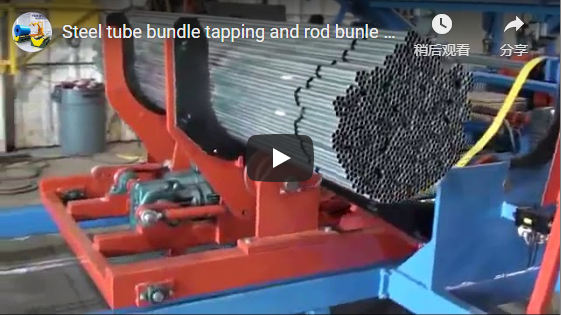
Our footage shows an automatic pipe bundle woven bag packing machine. It is a general demonstration, so your pipe range and bundle plan are confirmed with us per project.
Selection checklist
| Question | Confirm per project |
|---|---|
| Pipe range | PVC, PPR, HDPE, conduit |
| Bundle | sizes, counts |
| Bag | woven sizes |
| Close | closure |
| Output | pallet fit |
| Electrical supply | voltage, phase and frequency on site |
Operation and safety
Run the machine from the panel and it forms, bags and closes each pipe bundle automatically. Keep clear of the bundle former, bag station and outfeed while the machine runs, with guarding and emergency stops at the operator position. Routine checks cover the bundler, bag handling, close unit, sensors and control, per the machine manual. Confirm the bundle and bag settings against the pipe before each run so bags come out consistent.
Engineering FAQ
Q: What does this machine pack? A: Pipe bundles of PVC, PPR, HDPE or conduit into woven bags.
Q: Why woven bags? A: They give bundles a tough, breathable cover that travels and stores well.
Q: How is the bundle formed? A: The machine gathers the pipes to a set grouping before the bag is loaded.
Q: How is the bag handled? A: The machine opens and holds the bag, so loading is straight instead of forced.
Q: What comes out? A: A closed woven-bag unit, consistent and ready for the pallet or site.
Next step
- Email us at info@fhopepack.com with your pipe range, bundles and volumes.
- We send a bundle bagging proposal and a layout drawing within 48 hours.
- We arrange a site survey to confirm pipe range and end-of-line layout.
Related reading
- Online PVC pipe strapping and bagging line
- High speed steel tube single bagging line
- Automatic pipe bundle woven bag packing machine
- FHOPE packing machinery product lines
Sources and standards
- ISO 12100:2010 Safety of machinery, general principles for design and risk assessment
- EN 415-10:2014 Safety of packaging machines, general requirements
- EN ISO 13849-1:2023 Safety of machinery, safety-related parts of control systems
FHOPE automatic pipe bundle woven bag packing machine demonstration video. Reviewed as a general demonstration; pipe range confirmed per project.
Last reviewed: 2026-10-10