Executive summary
A long bale or bundle is hard to wrap by hand because its length exceeds the reach of a single wrap station. This horizontal orbital wrapping machine runs a ring around the load while a conveyor feeds it through, so stretch film is applied in a spiral along the whole length. The ring carries the film carriage, and the turntable and conveyor keep the load moving through the cycle. Bale size, film choice and feed speed are confirmed per project.
Table of Contents
- Why an orbital ring for bales
- What the machine does
- Orbital ring and film carriage
- Conveyor feed and turntable
- What the footage shows
- Typical configuration
- Selection checklist
- Operation and safety
- Engineering FAQ
- Next step
- Related reading
- Sources and standards
Why an orbital ring for bales
A long bale or rectangular bundle is awkward to wrap because the wrap has to travel the full length, not just around the end. Wrapping by hand along a long load is slow and uneven.
An orbital ring wraps the load from one side around the other as it passes through, covering the length automatically. Bale size and film choice are confirmed per project.
What the machine does
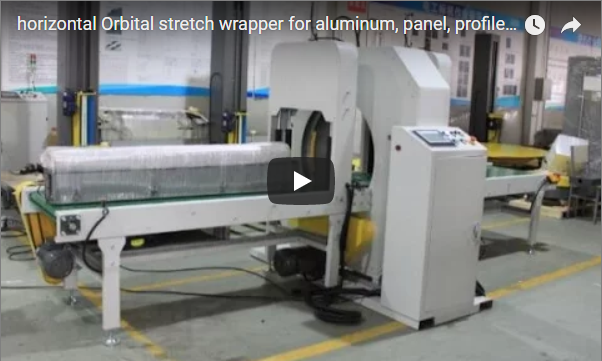
The machine is a horizontal orbital wrapping machine. A large circular ring rotates around the load while a conveyor carries the load through the ring, so stretch film is applied in a spiral along the length.
The film rides on a carriage at the top of the ring, and the load stays on the conveyor through the wrap. Bale size and feed speed are confirmed per project.
Orbital ring and film carriage
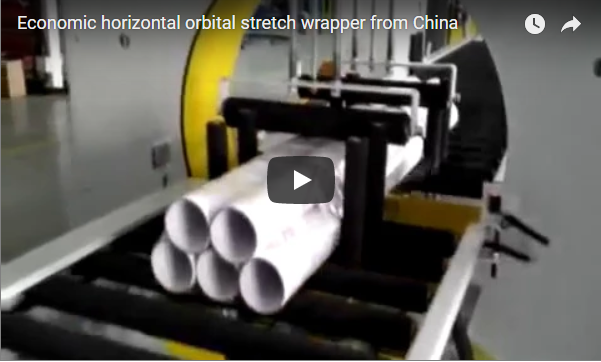
The large yellow ring surrounds the conveyor, and a film carriage at the top of the ring carries the film roll. As the ring turns, the film unwinds around the load while the carriage follows the ring.
The spiral build covers the load evenly from one end to the other. Ring size and film type are confirmed per project.
Conveyor feed and turntable
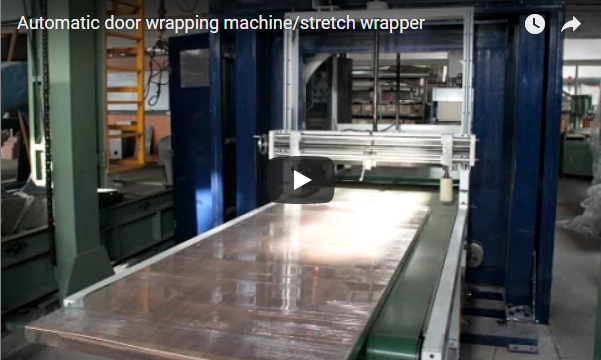
The load travels on a green conveyor with a rotating turntable base, which moves the bale through the ring while the ring applies the film. The turntable keeps the load turning so the wrap stays even as the bale advances.
A yellow guard surrounds the ring area. Feed speed and turntable rotation are confirmed per project.
What the footage shows
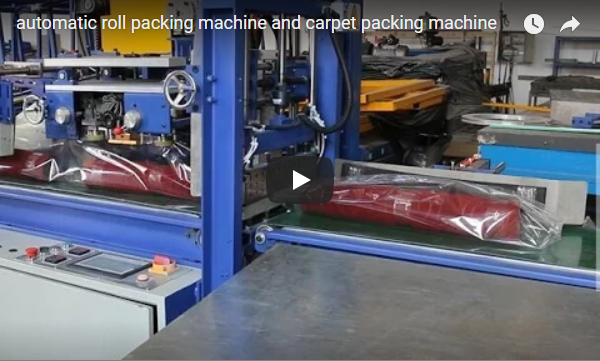
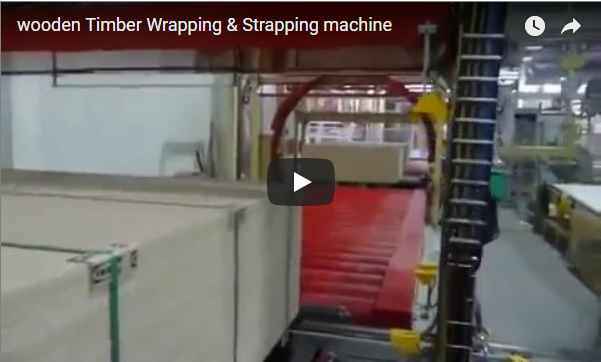
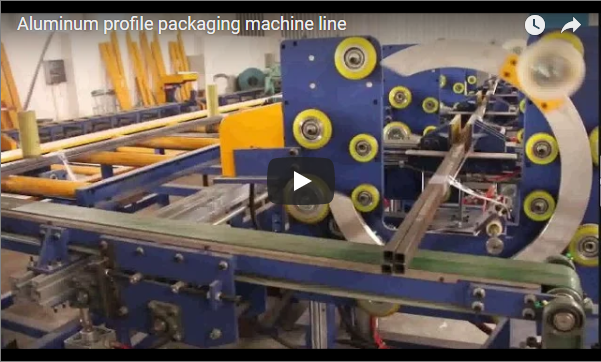
Our footage shows a rectangular bundle moving through the ring, the orbital ring wrapping it with clear film, and a second piece wrapped with a different coloured film. It is a general demonstration, so your bale size, film choice and feed speed are confirmed with us per project.
Typical configuration
Figures below list functional design boundaries rather than numeric values, and are confirmed per project.
| Parameter | Typical range, confirmed per project |
|---|---|
| Load | long bales, rectangular bundles |
| Wrapping | horizontal orbital ring with film carriage |
| Feed | conveyor with rotatable turntable |
| Film | clear or coloured, per project |
| Control | panel with display and buttons |
| Electrical supply | 380 V three phase 50 Hz, or 220 V single phase for light machines, selected per project |
Selection checklist
| Question | Confirm per project |
|---|---|
| Bale range | length, width, height, weight |
| Ring | diameter, wrap width |
| Film | width, type, stretch |
| Feed | conveyor speed, turntable rotation |
| Site | floor space, load entry and exit |
| Electrical supply | voltage, phase and frequency on site |
Operation and safety
Load the bale on the conveyor, start the cycle from the control panel, and watch the ring wrapping the load as it feeds through. Keep clear of the rotating ring and the moving bale while the machine runs.
Routine checks cover the ring, the film carriage and the yellow guard, per the machine manual. Confirm the bale is seated before each cycle.
Engineering FAQ
Q: What does this machine do? A: It wraps a long bale in stretch film with a rotating horizontal orbital ring.
Q: How does the film go around? A: The ring turns around the load and the film carriage on top feeds the film.
Q: How does the bale move through? A: A conveyor with a turntable carries the load through the ring as it wraps.
Q: Can the film type be changed? A: Yes, the demonstration shows different films including a coloured one; the type and width are confirmed per project for your bale.
Q: What does it suit? A: Long bales and rectangular bundles that need a full-length protective wrap before storage or transport.
Next step
- Email us at info@fhopepack.com with your bale length, width and weight.
- We send a horizontal orbital wrapper proposal within 48 hours.
- We confirm the ring size and feed layout for your line.
Related reading
- Horizontal Orbital Baler Wrapping Machine
- Partial film wrapping and packing by orbital wrapper
- Automatic plastic pipe bundling, strapping and bagging machine
- FHOPE packing machinery product lines
Sources and standards
- ISO 12100:2010 Safety of machinery, general principles for design and risk assessment
- EN 415-10:2014 Safety of packaging machines, general requirements
- EN ISO 13849-1:2023 Safety of machinery, safety-related parts of control systems
FHOPE horizontal orbital wrapping machine demonstration video. Reviewed as a general demonstration; bale size, film choice and feed speed confirmed per project.
Last reviewed: 2026-10-11