Executive summary Our aluminum profile paper packing line covers each profile or bundle in paper, tapes it, and moves it on to stacking. Sheet covering folds a cut paper sheet around the bundle and tapes it at 3–4 positions. We plan the line from your profile sections, bundle sizes and how the packed profiles leave the line.
Table of Contents
- Two ways to paper-pack profiles
- How sheet covering works
- Paper width and length
- Taping points
- Stacking after packing
- Utilities and safety
- Selection checklist
- Engineering FAQ
- Next step
- Related reading
- Sources
Two ways to paper-pack profiles
| Method | How it works | Typical use |
|---|---|---|
| Sheet covering | a cut sheet is folded around the bundle, then taped | single profiles or bundles, paper, PE sheet or board |
| Spiral covering | paper or plastic is wrapped in a spiral along the profile | high-speed covering of profile surfaces |
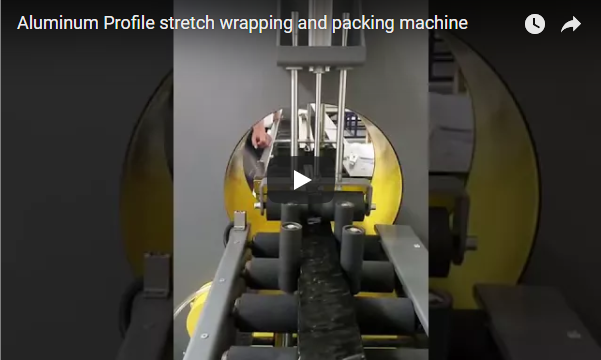
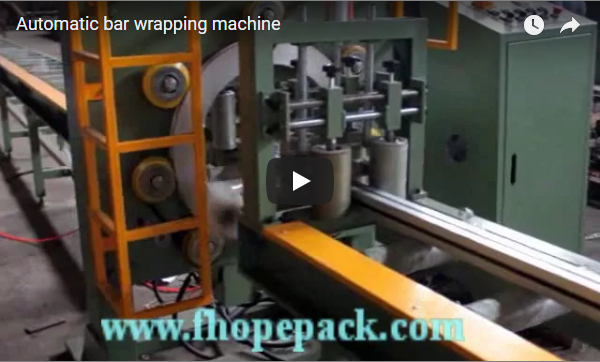
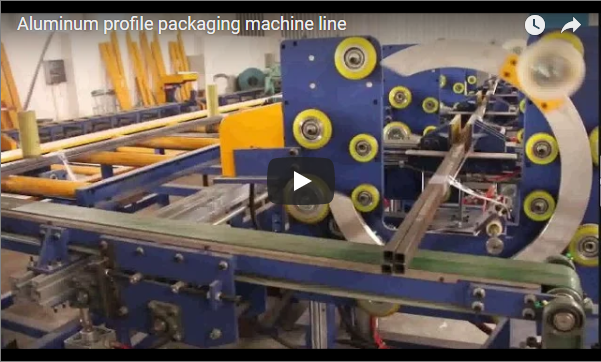
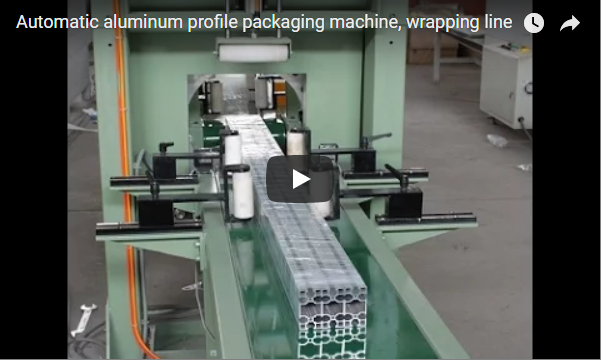
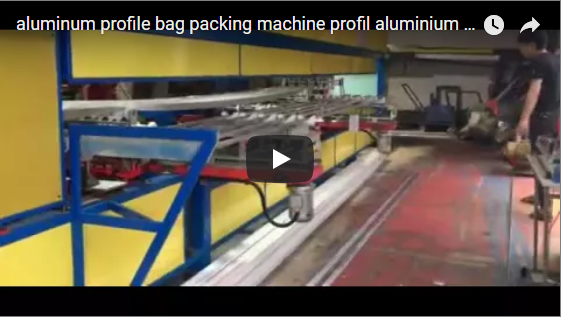
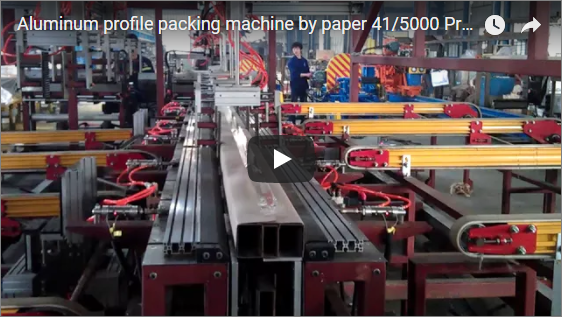
Both protect profile surfaces from scratches in handling. On our spiral paper covering machine, section feeding, covering, taping and outfeed need one operator only. Our video shows both machines in one line: a spiral wrapper on single profiles and a wide paper sheet covering station.
How sheet covering works
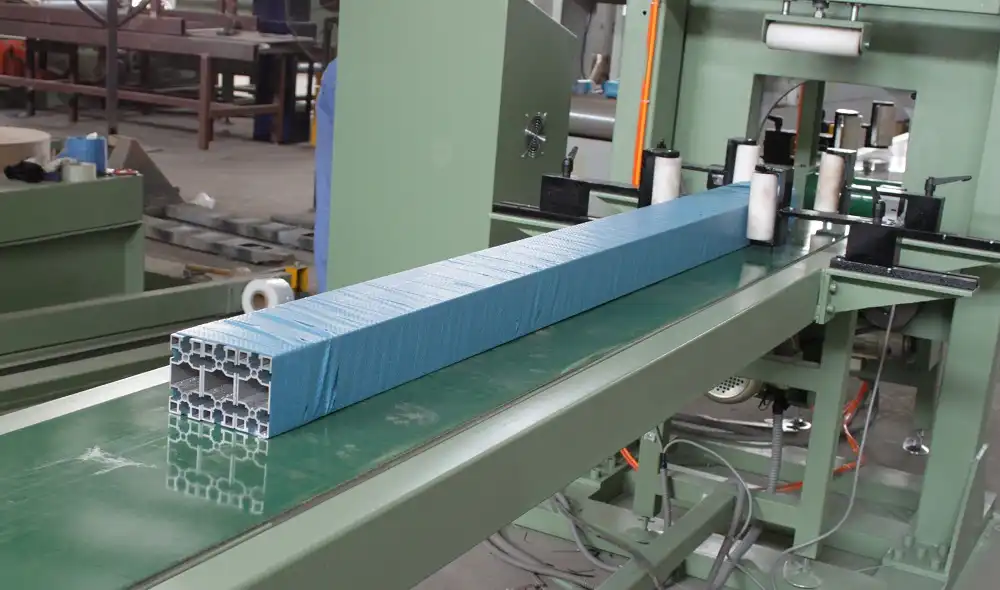
The sheet covering machine runs six steps:
| Step | Action |
|---|---|
| A | The feeding table gathers the profile bundle and feeds it to the covering station |
| B | The paper feeder clamps the paper head, draws it to the other side of the station and cuts it to the set length |
| C | The bundle is fed on top of the paper sheet |
| D | Belt holders rise and turn, folding the paper around the bundle |
| E | The package is taped at 3–4 positions to fix the paper |
| F | The unloading device picks up the packed profile and shifts it to the conveyor |
Paper width and length
The paper sheet must wrap the full perimeter of the bundle with some overlap. Illustrative example for a 200 × 100 mm bundle:
| Item | Value |
|---|---|
| Bundle perimeter | 2 × (200 + 100) = 600 mm |
| Overlap at the seam (illustrative) | 50 mm |
| Paper width across the bundle | 650 mm |
| Paper length | set to the bundle length |
The feeder cuts each sheet to the length you set, so one paper roll width can serve a range of bundle lengths.
Taping points
The package is taped at 3 or 4 positions. Illustrative example for a 6 m bundle:
| Taping positions | Spacing |
|---|---|
| 3 | near each end and in the middle, just under 3 m apart |
| 4 | near each end and at two inner points, just under 2 m apart |
End tapes sit a short distance in from the cut ends. Longer bundles or heavier paper usually need the fourth tape, and we set the positions on your bundle drawing.
Stacking after packing
Our aluminum profile stacking machine connects to the outfeed conveyor through a transfer belt conveyor and gathers profiles online. It then counts them and makes layers to the set quantity.
| Feature | Detail |
|---|---|
| Counting and layer making | per quantity setting |
| Section shapes | identified automatically, no adjustment for different shapes |
| Timber feeding | automatic |
| Empty basket loading | automatic |
| Handling | soft contact to reduce scratches between profiles |
| Modes | manual or automatic |
Utilities and safety
We design each line to the plant’s real situation, so power and air are listed in the proposal. The standards that apply depend on the destination market. For CE markets, ISO 12100 sets the risk-assessment method and EN 415-10 sets general requirements for packaging machines.
Selection checklist for a paper packing line
- Profile sections and bundle sizes.
- Sheet covering, spiral covering, or both.
- Paper, PE sheet or board.
- Taping positions per bundle.
- Surface finish, such as anodised or powder-coated.
- Stacking into baskets, with timber or without.
- Layout drawing of the outfeed area.
Engineering FAQ
Q: Can the line pack single profiles as well as bundles? A: Yes. The sheet covering machine works for single profiles or profile bundles.
Q: What materials can it use besides paper? A: PE sheet or board on the sheet covering machine, and plastic on the spiral covering machine.
Q: How many tapes hold the paper? A: 3–4 tapes along the package.
Q: How many operators does spiral paper covering need? A: One operator for section feeding, covering, taping and outfeed.
Q: Do we need to adjust the stacker for each profile shape? A: No. The stacker identifies the section shape automatically.
Next step
We plan your paper packing and stacking line in three steps:
- Submit your layout drawing with profile sections and bundle sizes to info@fhopepack.com.
- Receive a proposal within 48 hours, with the covering method, stacking and layout.
- Book a site survey to fit the line to your plant.
Related reading
- Automatic aluminum profile paper packing machine
- Aluminum profile paper covering machine
- Aluminum profile stacking machine
- Video: aluminum profile packing machine and wrapping line
- Video: aluminum profile stretch wrapping machine
Sources
- Sheet covering steps: automatic aluminum profile paper packing machine page
- Spiral covering: aluminum profile paper covering machine page
- Stacking features: aluminum profile stacking machine page
- Machine in action: our aluminum paper packing and stacking video on YouTube
- Standards scope: ISO 12100:2010, EN 415-10:2014
Last reviewed: 2026-10-04