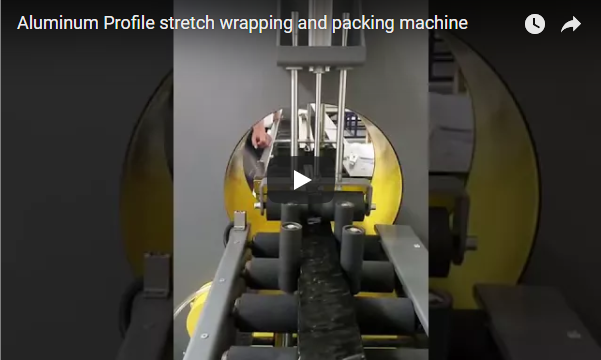
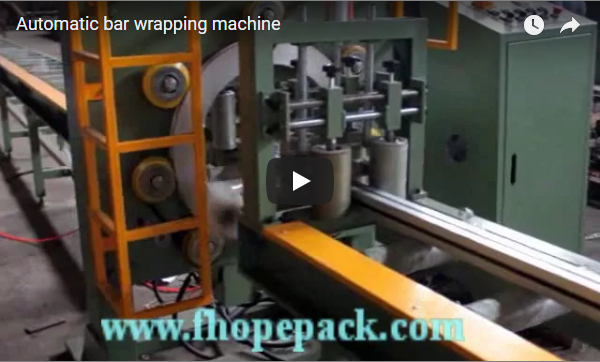
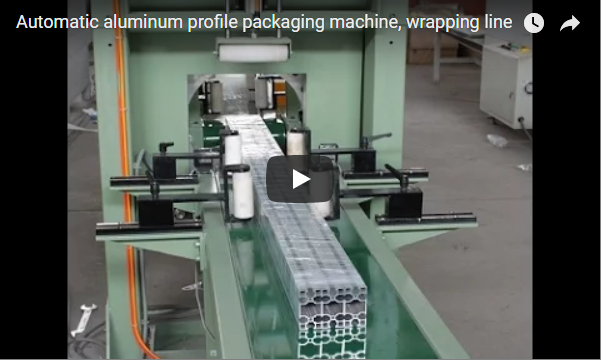
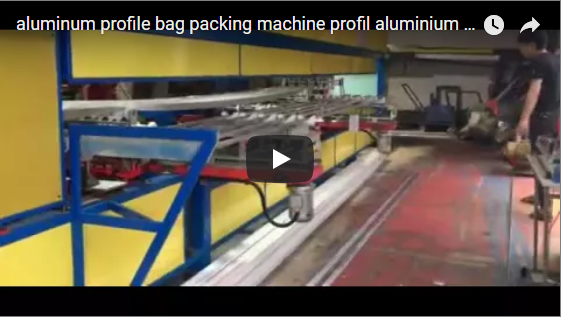
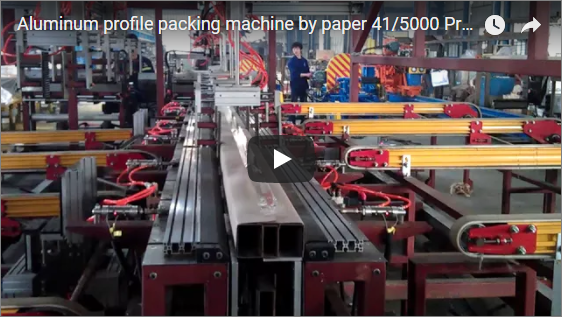
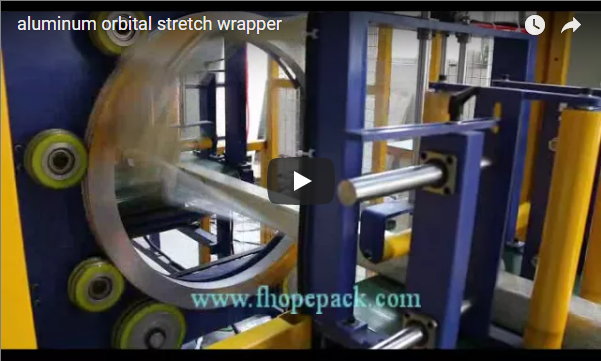
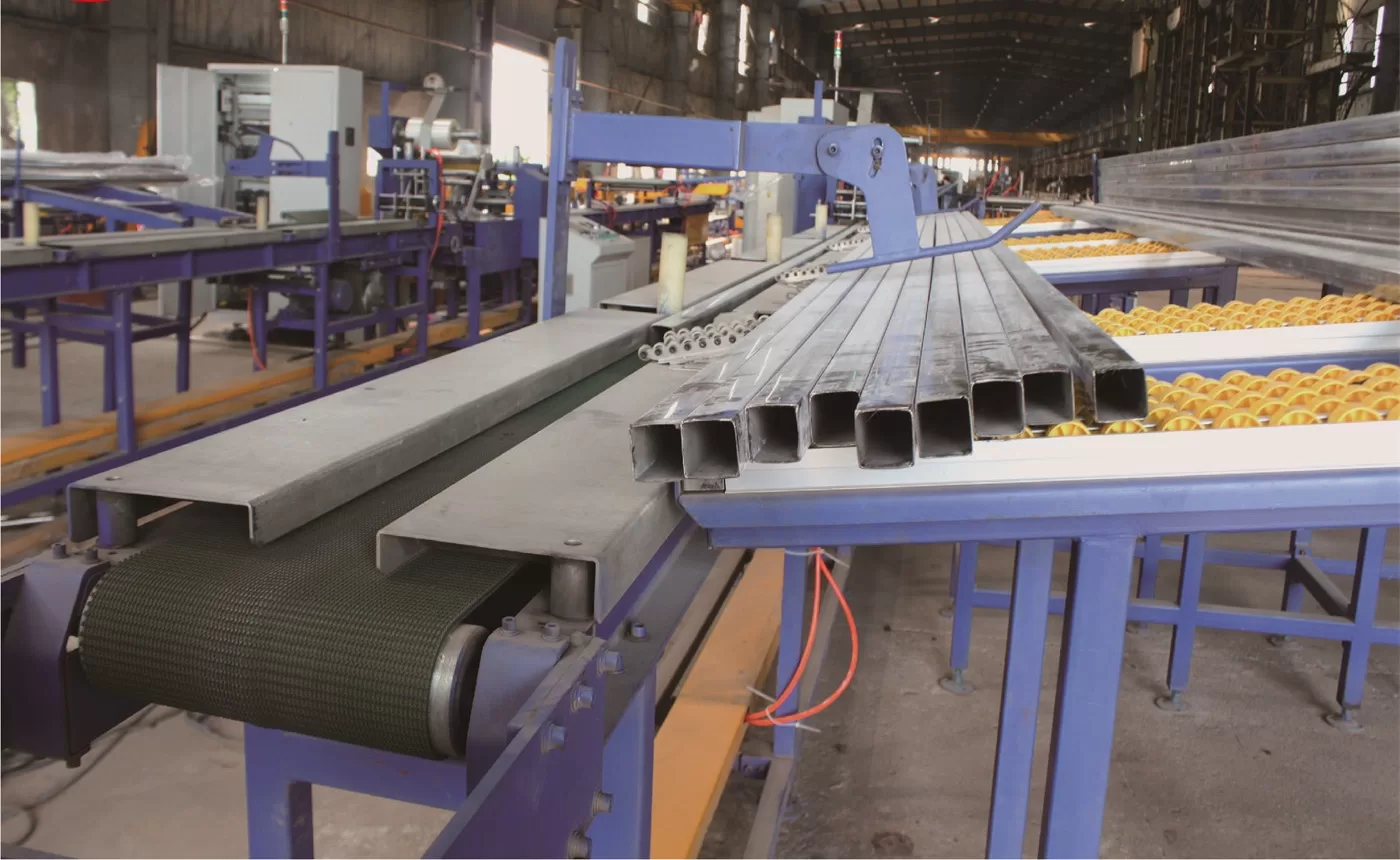
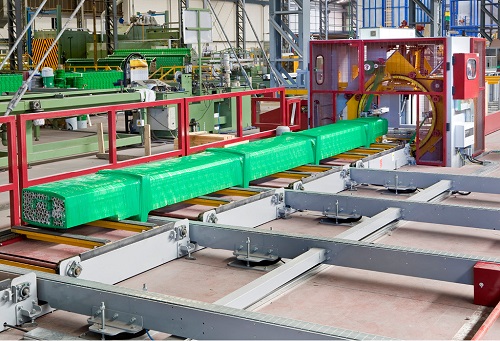
Executive summary: This page is for anyone wrapping long aluminum profiles at the end of an extrusion or finishing line. It explains what an aluminum profile packaging line does, why the film ring orbits the bar instead of spinning it, and what to verify with a supplier before you commit. The video below shows a wrapping stage for long aluminum profiles, and the photos on this page are product-library reference images, not stills from the clip.
Table of Contents
- What this page helps you decide
- What an aluminum profile packaging line does
- How the wrapping geometry works
- What to verify before you buy
- What the video shows
- Buyer’s verification checklist
- FAQ
- Related reading
- Next step
What this page helps you decide
Long aluminum profiles are scratch-sensitive and difficult to wrap by hand along their whole length. An aluminum profile packaging line moves the profiles through a wrapping stage on a roller conveyor, where a film ring secures each bar. The video below shows that wrapping stage running on a real line.
This page turns that machine into questions you can ask a supplier: what profile lengths it handles, how fast it runs, and what the title’s “technology and best practices” actually depend on. The checklist at the bottom gives you a single request you can send as it stands.
What an aluminum profile packaging line does
An aluminum profile packaging line moves long silver-grey aluminum profiles through a wrapping stage on a roller conveyor. The profiles travel left to right and enter a device with rotating rollers. A large circular ring runs around each profile while drawing transparent film from a big blue film roll, wrapping the profile along its length. The wrapped profile then continues to the outfeed.
The line in the video is longer than just that stage. The footage shows profiles being fed in, wrapped, and carried out, with adjacent bundling or stacking stations on site. Because the profile stays straight while the ring moves around it, the bar is not twisted during wrapping.
How the wrapping geometry works
Profile and long-length wrapping machines come in two common geometries, and the difference matters for long, thin aluminum profiles.
- Ring / orbital style (seen here): the profile stays straight on the conveyor while the film ring runs around it. Comparing frames confirms the bar’s cross-section keeps the same orientation while the film device moves around it.
- Spinning-profile style: the bar itself rotates about its long axis while a film carriage applies film. Not shown in this clip.
The ring style protects scratch-sensitive profiles without twisting them, and it lets several long bars keep their orientation while being wrapped.
A note on the title: it promises “Technology and Best Practices”. What the video actually shows is the machine running — there is no narration and no on-screen text explaining technology or best practice. Those ideas have to come from the supplier’s data sheet and their engineers, not from this clip, and the checklist below turns them into concrete questions.
What to verify before you buy
The video shows the wrapping action, not the specification. Nothing on screen states profile length, wrapping speed, film data or throughput, so those figures come from the supplier in writing. Start with six facts:
- Profile envelope — maximum and minimum profile length, width and weight.
- Throughput — metres or profiles per hour at your profile size.
- Film setup — film type, width, number of layers and tension.
- Line integration — how the wrapping stage connects to infeed and outfeed stations.
- Geometry — ring-style wrapping, confirming the bar is not spun.
- Safety package — the yellow mesh fencing shown, plus emergency stops, guarding and certifications.
Each item changes the purchase decision. The checklist below restates them as a single request you can send as it stands.
What the video shows
What the video shows is the wrapping stage of an aluminum profile line. Long silver-grey aluminum profiles move left to right on a roller conveyor, and a worker operates a control panel with red and green buttons and no screen.
Each profile enters a device with rotating rollers. A large circular ring runs around it while drawing transparent film from a large blue film roll, wrapping the profile’s length. The wrapped profile continues along the conveyor, and more profiles are wrapped the same way.
What the video does not show is just as important. It does not show profile length, width or weight range, wrapping speed, metres or profiles per hour, film type, width or layer counts, model number, power or voltage.
It does not show an emergency stop button clearly, and it does not show light curtains or interlocks. A yellow mesh fence and a yellow triangle warning sign are visible, but any wording on the sign could not be read clearly and is not quoted.
Direct observation notes from the sampled frames follow one rule: only what is visible is stated, and nothing is guessed from audio, because the clip has background music and no narration.
The line has a blue painted metal frame with yellow support and conveyor parts, a long roller conveyor, and a large circular roller-based wrapping ring fed by a large blue film roll. The controls are a grey box at the left with red and green buttons and indicator lights.
The product is long, thin, silver-grey aluminum profiles, much longer than their width and height. The photographs on this page are product-library reference images from the manufacturer, not stills from the clip.
Buyer’s verification checklist
| Ask the supplier for | Why it decides the purchase |
|---|---|
| Min/max profile length, width, weight | Whether the line holds your bars |
| Metres or profiles per hour | Whether it keeps pace with your line |
| Film type, width, layers, tension | The film is what protects the profile |
| How wrapping connects to infeed/outfeed | Whether it fits your existing stations |
| Confirm ring geometry (bar not spun) | It protects scratch-sensitive profiles |
| Safety: fence, E-stop, guarding, certs | Only a mesh fence is clearly visible |
Send to the supplier: Please confirm for an aluminum profile packaging wrapping stage: (1) the minimum and maximum profile length, width and weight; (2) metres or profiles per hour at our profile size; (3) film type, width, number of layers and tension; (4) how the wrapping stage connects to our infeed and outfeed stations; (5) confirmation that wrapping is ring-style with the bar kept straight and not spun; (6) fitted safety devices including the mesh fencing, emergency stops, guarding and certifications.
FAQ
Does the wrapping stage spin the profile? No. The video shows ring-style wrapping: the profile stays straight on the conveyor while the film ring runs around it. The bar’s orientation does not change during wrapping.
What profile lengths and sizes does the line accept? The video does not show limits. Ask for the minimum and maximum profile length, width and weight, and compare them against your bars.
Is this a full packaging line or just wrapping? The video shows the wrapping step of a larger line, with adjacent stations on site. Ask how the wrapping stage is delivered and how it connects to your infeed and outfeed.
Related reading
- Aluminum Profile Packaging
- Automatic Packing Line
- Automatic Aluminum Profile Packaging Machine: Wrapping Line
- Horizontal Orbital Stretch Wrapper for Aluminum Profiles
- Full Automatic Orbital Bagging Machine for Aluminum Profile
- Aluminum Profile Packaging Line Video
Next step
Send the supplier your profile lengths, widths, weights and target wrapping speed, and ask for the six verification figures from the checklist above.
Then confirm the wrapping geometry, because the ring-style shown protects scratch-sensitive profiles but must be confirmed for yours.
Then ask how the stage connects to your existing infeed and outfeed, since the video shows one part of a larger line. Use the contact page to start that exchange.
Last reviewed: 2026-09-24
Published: 2026-09-24