Executive summary Heavy loads need a stable turntable and even film tension. This heavy-duty pallet wrapping machine uses a reinforced turntable with a heavy-duty slewing bearing to wrap oversized pallets in steel, construction materials, drums and large machinery. A PLC and touch screen control the cycle, and pre-stretch film options reduce film use per pallet. The machine is customized to your load, size and line per project.
Table of Contents
- What this heavy-duty pallet wrapping machine does
- Heavy-duty turntable and slewing bearing design
- Load capacity and size options
- How the wrapping cycle runs
- Film carriage and pre-stretch
- PLC controls and line integration
- Specification and selection checklist
- Applications for heavy and oversized loads
- Engineering FAQ
- Next step
- Related reading
- Sources and standards
What this heavy-duty pallet wrapping machine does
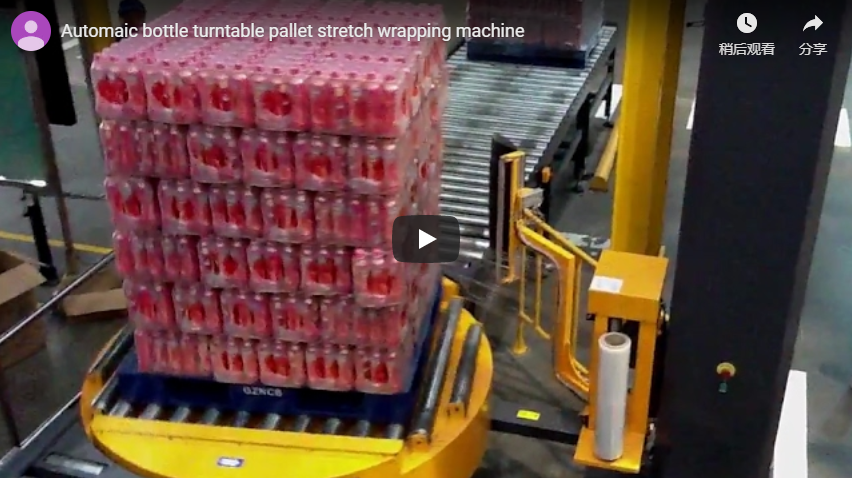
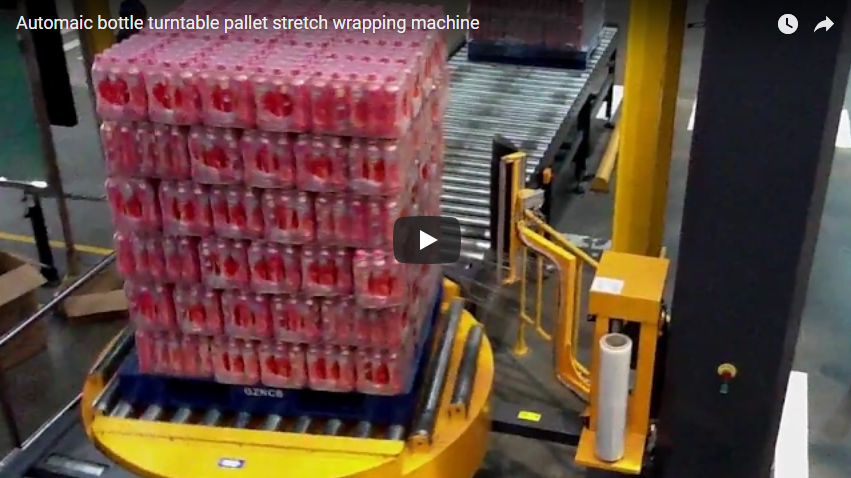
This is a pallet wrapping machine built for loads that a standard wrapper strains on. The load sits on a reinforced turntable. A film carriage on a vertical column climbs as the platform rotates, applying stretch film evenly from the base of the pallet to the top of the load. A PLC with a touch screen runs the cycle, so the wrapping height, rotation speed and film tension follow the settings for each pallet type.
The reinforced turntable and the heavy-duty slewing bearing under it carry the mass without wobbling, which matters when the pallet is two tonnes and the film arm is high up. The machine wraps oversized and ultra-heavy pallets that standard turntables are not rated for, and it does this in a warehouse or production line with a normal level floor.
Heavy-duty turntable and slewing bearing design
At the core of this machine is a reinforced turntable driven on a heavy-duty slewing bearing. Where a standard turntable uses a small center bearing and bolts that can flex under load, this structure spreads the weight over a large bearing race. The platform stays flat and stable while it rotates.
That design shows up in four practical advantages. Load distribution is even, so heavy pallets do not deform the machine or the load. Stability holds during high-load rotation, which prevents the load from wobbling or shifting film coverage. Service life is longer because the bearing race wears slowly under normal use. Maintenance stays low because the heavy-duty structure has fewer stressed parts to replace.
Load capacity and size options
The machine is rated and built around your heaviest pallet rather than an average one. The live specification covers the common range, and the structure is customized above it when your loads are heavier or wider.
| Parameter | Specification |
|---|---|
| Load capacity | 2000 kg+ (customizable) |
| Turntable diameter | 2000–3000 mm (custom design) |
| Wrapping height | Up to 3000 mm (extendable) |
| Turntable rotation speed | 0–12 rpm (variable) |
| Power supply | 220 V / 380 V, 50 Hz / 60 Hz |
| Film pre-stretch | 250% (optional upgrade) |
| Control system | PLC + touch screen |
| Standards and line interface | ISO 12100, EN 415-6, EN ISO 13849-1 |
For a pallet footprint wider than the standard range, the turntable diameter grows to match it. For a load that is taller than the standard mast, the wrapping height is extended. The rating itself can rise beyond the listed 2000 kg when the pallet demands it. Each of these options is confirmed against your actual pallet and payload before the machine is built.
How the wrapping cycle runs
The operator places the pallet on the turntable and calls the cycle from the control panel. The platform starts to rotate, the film carriage rises up the column, and the film unwinds around the pallet as it turns. When the carriage reaches the set height, it runs a few extra turns at the top to lock the film, then lowers back to its resting position and stands by for the next load.
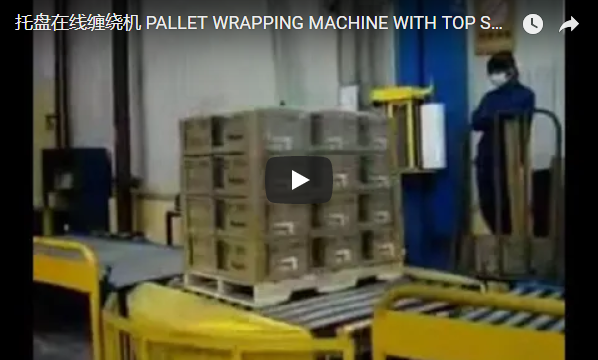
In a line layout, the conveyor brings the pallet onto the turntable and the machine takes its start signal from the line. The wrapping step then matches the pace of the cells around it, as with an inline pallet exchange on a roller conveyor line. The rotation speed and the wrap count adjust per pallet profile, stored as presets on the touch screen.
Film carriage and pre-stretch
The standard film carriage holds a roll of stretch film and unwinds it with controlled tension as the carriage climbs. The optional pre-stretch carriage stretches the film to 250% before it touches the load, so a longer length of film comes from the same roll and the wrap stays tight on the surface.
Pre-stretch is worth considering when your throughput is high or your film budget is under pressure. The same pallet uses less film per wrap, the load keeps a consistent tension, and the roll changes happen less often. The tension and stretch ratio follow the film grade you run, which is confirmed per project.
PLC controls and line integration
A PLC with a touch screen controls the machine. The operator enters the wrapping height, rotation speed and wrap count per pallet, and the presets recall them for repeat loads. The panel shows the cycle stage and alarms, so a stalled operation is visible at a glance.
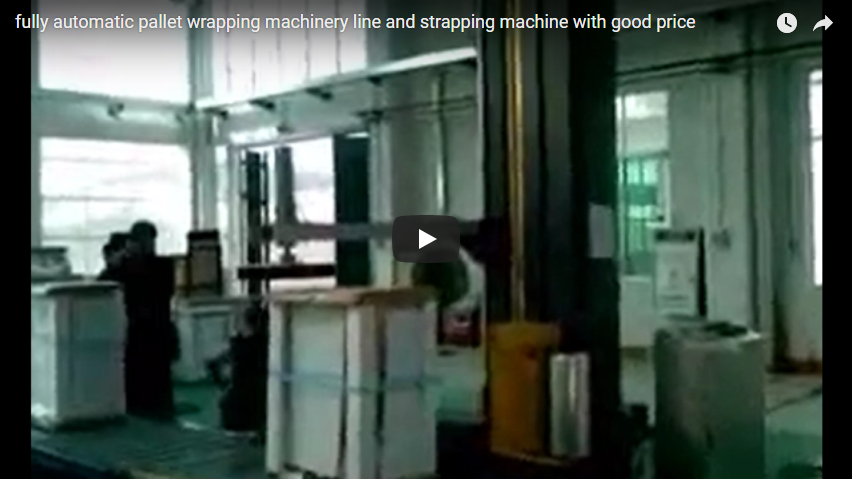
For automated packing lines, the PLC accepts a remote start signal from the upstream or downstream conveyor. The machine then wraps each pallet as it arrives and sends a cycle-complete signal back to the line, the same wiring style used on a fully automatic pallet wrapping machinery line. The conveyor position, entry timing and signal wiring are matched to your layout per project, and remote PLC control fits machines that already run on a line controller.
Specification and selection checklist
Send us these points when you ask for a quote, and we confirm the configuration per project.
| Item | What we confirm per project |
|---|---|
| Load capacity | kg, target the heaviest pallet in your operation |
| Turntable diameter | mm, match your widest pallet footprint |
| Wrapping height | mm, match your tallest load |
| Turntable rotation speed | rpm per project, balance cycle time and film stability |
| Power supply | V / Hz, match your site supply |
| Film pre-stretch | optional, decide by film budget and tension needs |
| Conveyor interface | PLC signal per project, timed to your line |
| Standards and line interface | ISO 12100, EN 415-6, EN ISO 13849-1, PLC remote start |
Applications for heavy and oversized loads
The machine is used where a pallet is too heavy or too big for a standard wrapper. Typical loads include steel and metal products, construction materials, chemical drums and bulk containers, large machinery components, and mixed items in logistics and warehousing centers.
In each of these, the operating pattern is the same: a heavy, valuable load has to move safely through storage and transport, and an even film layer holds the load together without crushing it. The reinforced turntable handles the mass, the carriage handles the film, and the PLC handles the repeatability that keeps high-value goods consistent from pallet to pallet.
Engineering FAQ
Q: What loads can this machine wrap? A: Heavy and oversized pallets in the 2000 kg class and above. The reinforced turntable and slewing bearing spread the mass evenly, and higher ratings are confirmed per project.
Q: How does a reinforced turntable differ from a standard turntable? A: It is driven on a heavy-duty slewing bearing under a larger-diameter platform, so rotation stays stable under load and shows less wobble and wear over time.
Q: Is the machine fixed at one size? A: No. Turntable diameter, wrapping height and load rating are customized per project, and conveyors can feed the machine in a line.
Q: What film options are available? A: A standard film carriage or an optional pre-stretch carriage. Pre-stretch to 250% uses less film per pallet while keeping tension.
Q: Does it integrate into an automated line? A: Yes. A PLC with a touch screen controls the cycle, and the machine accepts a start signal from upstream or downstream conveyors per project.
Q: What safety features are included? A: Guards, an emergency stop and stable rotation under heavy load. Risks are assessed to ISO 12100 and EN 415-6 during engineering.
Q: What utilities does it need? A: 220 V or 380 V, 50 Hz or 60 Hz power, plus a level floor. Conveyor and line interface options are confirmed per project.
Next step
The machine is built to the pallets you actually run, so the configuration starts with your loads rather than a brochure.
- Send your heaviest pallet size, weight and wrapping height to info@fhopepack.com.
- We confirm the load rating, turntable diameter and power supply for your site.
- We provide a layout drawing and a site survey within 48 hours.
- We quote the machine per project, including pre-stretch and conveyor integration.
Last reviewed: 2026-10-09
Related reading
- Automatic Pallet Wrapping Machine with Auto Film Cutting
- Pallet Wrapping Machine with Black Pallet Detection
- Pallet Turning Machine and Pallet Inverter
- Automatic Pallet Wrapping and Strapping System
- FHOPE main-site product range
Sources and standards
- ISO 12100:2010 — Safety of machinery: General principles for design
- EN ISO 13849-1:2023 — Safety-related parts of control systems: Functional safety
- EN 415-6:2013 — Safety of packaging machines: Pallet wrapping machines
- EN ISO 14120:2015 — Guards for machinery: General requirements