Summary: A mid-sized aluminum extrusion plant faced high labor costs and film waste on its profile packaging line. By implementing an automatic orbital wrapping system with pre-stretch technology, facilities typically report reduced manual handling and lower material usage. The solution delivers consistent bundle quality for building extrusions while increasing throughput to meet shipping demands without adding shifts. Note: All performance metrics in this article are illustrative estimates based on standard industrial benchmarks and may vary by facility.
🛠️ Client Background
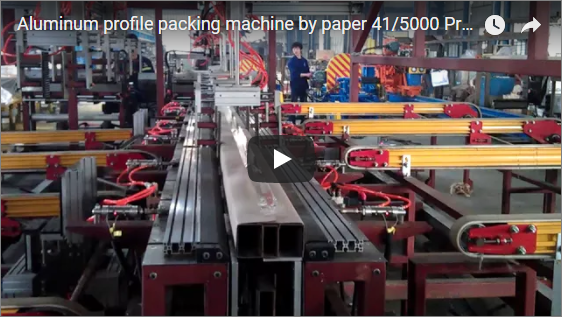
The aluminum profile packaging line at a mid-sized extrusion plant processes approximately 1,500 metric tons of building extrusions monthly. This volume requires an automatic orbital wrapping system to handle architectural trim loads while maintaining strict delivery schedules for construction projects.
The operations lead monitored the loading bay as bundles accumulated. The facility produces aluminum profiles for commercial and residential construction, handling everything from structural beams to decorative trim. Monthly output typically ranges between 1,500 and 5,000 metric tons, placing them in a medium-to-large production tier.
The packaging area previously relied on semi-automatic methods that struggled to match upstream extrusion speeds. Operators manually applied tensioners for strapping while another applied stretch film by hand. This workflow created bottlenecks during peak shifts, with bundles waiting between tasks and reducing overall line efficiency. Product dimensions remained relatively stable per shift, allowing for optimized automation but requiring equipment capable of handling weight variations without losing alignment precision.
Logistics partners demanded consistent packaging quality. Building extrusions often travel long distances on flatbed trucks, exposing loads to vibration and wind forces. Inconsistent film tension or poor bundle compression can lead to damaged products at job sites, triggering claims that erode profit margins. The facility required a reliable packaging system capable of standardizing output quality across all shifts.
🏗️ Challenge
The facility faced a critical bottleneck where semi-automatic wrapping operations consumed excessive labor hours and generated unpredictable film waste, with industry benchmarks suggesting that inconsistent manual tension can lead to 10–20% higher material rejection or rework rates depending on operator technique and load type.
Daily operations revealed three compounding issues. First, labor intensity remained high. Two operators were typically required per bundle cycle: one managing strapping and another controlling the film application. During an eight-hour shift, this configuration consumed significant operator hours dedicated solely to packaging tasks. Second, film consumption varied based on manual tension control. Human technique lacks the consistency of mechanical pre-stretch systems (which mechanically elongate film before application to use less material). Some bundles received insufficient coverage, while others used excessive overlap, driving up costs and complicating budget forecasting. Third, alignment accuracy suffered during manual handling. Profiles entered the wrapping zone without guided centering, resulting in off-center loads that created wrinkles and weak points at the edges. Quality inspectors frequently flagged these issues before shipment.
Actionable Insight: Inconsistent manual tension creates variable protection levels. Automated pre-stretch mechanisms eliminate operator technique as a variable, ensuring every load receives identical film elongation and overlap ratios regardless of shift personnel.
The challenge extended beyond immediate costs. Regional labor shortages made staffing difficult, while overtime pay strained operating expenses during peak periods. Management recognized that upgrading to an automatic aluminum profile packing line was necessary to secure long-term competitiveness without expanding headcount.
📈 Solution Design
The engineering team selected a horizontal orbital wrapping machine integrated into the packaging line, featuring powered centering rollers and friction-welded strapping (a knot-free joining method using heat and pressure) to secure loads within typical industry weight ranges while maintaining consistent tension control and automated film pre-stretch.
Designers configured the system around three core functions: precise centering, rigid strapping, and controlled orbital wrapping. The solution prioritizes repeatability over maximum speed, recognizing that faster cycling often compromises bundle stability.
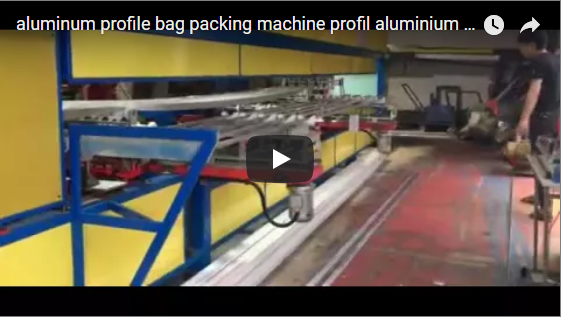
Centering Mechanism: Powered roller conveyors transport profiles into the bundling station. Each position incorporates centering rollers that maintain alignment within a typical tolerance range before the bundle enters the wrapping phase. This precision prevents film wrinkling and ensures even tension distribution during spiral wrapping (where the film head rotates around a stationary or slowly moving load). Profiles enter slightly offset, and powered guides correct positioning automatically without slowing line speed.
Strapping Configuration: A horizontal strapping machine secures profiles into bundles based on customer specifications. Common bundle weights range from 250 kg to 1,850 kg depending on profile density. The system applies polyester strap at multiple positions using a friction-welding process that achieves strong joints without knots. Strapping tension is adjustable to hold the bundle rigid during wrapping.
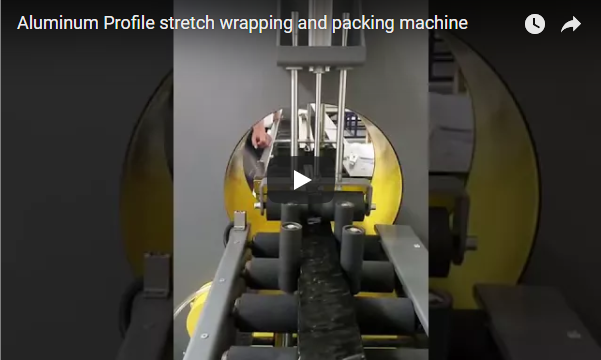
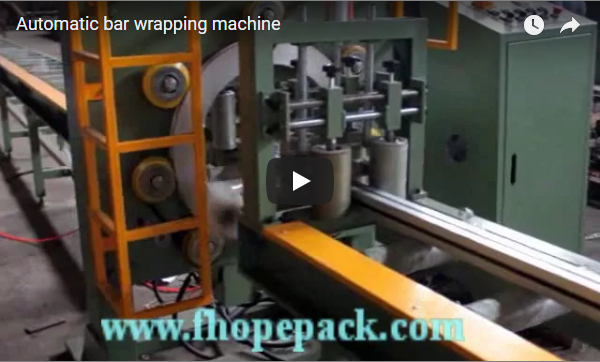
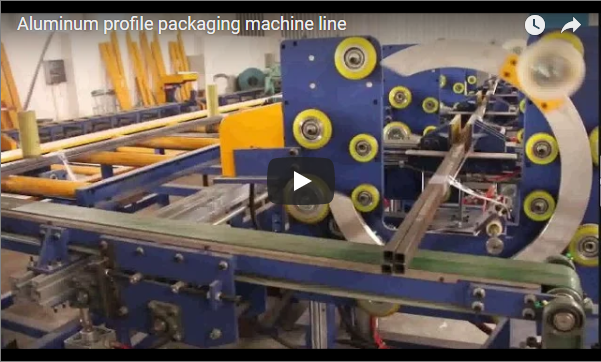
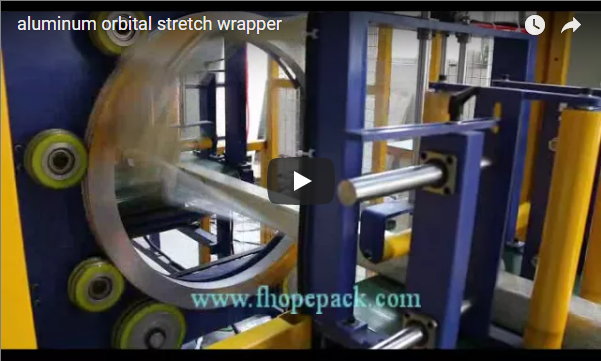
Orbital Wrapping Parameters: The centered bundle enters the orbital ring, which rotates while conveyor rollers move the bundle forward. This pairing creates a spiral overlap across the surface using standard stretch film. An automatic pre-stretch mechanism elongates the film before application, typically reducing material usage compared to non-prestretched systems. The pre-stretch ratio remains constant regardless of speed, decoupling material savings from throughput adjustments.
Actionable Tip: Throughput depends on conveyor index speed (how fast the bundle moves forward), not orbital ring rotation rate. Running the ring at maximum RPM while indexing slowly increases overlap and waste without improving output. Optimal settings synchronize these parameters to maintain consistent overlap.
The design addresses common misconceptions about automation speed. Higher mechanical speeds do not always equal faster production. Profile packaging lines are often limited by how quickly bundles can move through safely. Increasing rotation beyond optimal ratios only accelerates wear without increasing bundles per hour. Control logic automatically matches these parameters based on the selected program for each bundle dimension.
For detailed specifications on wrapping mechanics and tapping integration, review the automatic aluminum wrapping and tapping technology guide at Automatic Aluminum Wrapping and Tapping. This resource explains how tension control systems interact with film properties to maximize load retention.
🛡️ Implementation
Installation required calibrating the powered roller conveyor to deliver profiles at standard operating speeds while synchronizing orbital ring rotation with film tension settings to maintain consistent spiral overlap across varying bundle dimensions during continuous operation.
The plant scheduled installation during a planned maintenance window. Engineers connected the new system to existing upstream conveyors, ensuring seamless profile transfer from extrusion haul-off to bundling stations. Power and air pressure requirements were matched to standard facility infrastructure.
Calibration Sequence: Technicians programmed bundle dimensions into the PLC controller (a programmable logic controller that automates machine sequences). The system stores recipes for different profile types, automatically adjusting centering positions and strapping patterns when operators select a product code. This supports quick changeovers between similar extrusions without manual mechanical adjustments.
Strapping Verification: Engineers tested joint quality during acceptance trials. Measurements confirmed weld strength met industry standards across adjustable tension settings. The system applies straps at programmable intervals, accommodating standard profile lengths. Bundles exceeding typical maximum dimensions require custom conveyor frames and ring modifications.
Wrapping Validation: Operators loaded test bundles representing the full weight range. Sensors verified that centering rollers maintained alignment throughout the wrapping cycle. Film pre-stretch mechanisms delivered consistent elongation across all load sizes. Post-wrapping inspection showed uniform spiral overlap with no visible wrinkles or loose sections, even on heavier bundles.
Weight Check Integration: A weight checker positioned after the wrapping station verifies bundle mass against order specifications. Good bundles exit to an accumulation table for palletizing or direct shipping. Bundles falling outside tolerance trigger an alarm and stop the conveyor, preventing underweight shipments that could trigger logistics penalties.
Actionable Tip: Extrusion lubricant accumulates on centering guides and rollers over time. Establish a weekly cleaning schedule to remove oily residues. Contaminated surfaces reduce friction, causing alignment drift and increasing film waste due to bundle shifting during wrapping.
Implementation revealed two practical constraints requiring operational adjustments. Profiles smaller than 50 mm in height benefit from additional side compression during bundling. Without lateral force, small-diameter profiles shift within the bundle during orbital motion, creating gaps that compromise film integrity. The plant added adjustable side-press rollers to handle these lightweight extrusions effectively.
Operators also noted that packaging lines perform best with consistent product dimensions throughout each shift. Frequent changeovers between drastically different cross-sections increase setup time and risk programming errors. The facility reorganized production scheduling to group similar profiles together, maximizing efficiency gains from automated recipe switching.
For insights on configuring packing lines for mixed material loads, explore strategies discussed in Aluminum Profile Packing Line Timber. While focused on timber applications, the principles of load stability and film optimization apply directly to aluminum extrusion packaging challenges.
⚙️ Results Data
The upgraded system achieved consistent throughput within typical industry ranges for this equipment class, reducing labor intensity while stabilizing film consumption through automated pre-stretch mechanisms that eliminate manual tension guesswork and ensure repeatable packaging quality. Note: All performance metrics presented are illustrative estimates based on standard industrial benchmarks and may vary by facility.
Performance data collected during initial operation confirmed improvements across key indicators. The automatic aluminum profile packing line processed bundles consistently within a typical output range, depending on profile length and weight specifications. This throughput addresses previous bottlenecks without requiring additional shift personnel.
Labor Efficiency: Manual strapping and film application tasks were consolidated into a single oversight role from a remote control panel. Labor hours dedicated to packaging decreased significantly compared to semi-automatic baselines. The facility reallocated staff to other production areas, reducing overtime expenditures and improving overall plant utilization rates.
Material Savings: Film consumption stabilized at levels lower than previous monthly averages. Automated pre-stretch technology delivers consistent elongation regardless of operator presence or fatigue levels. Bundle weight verification ensures no underfilled loads reach customers. Packaging-related defect claims decreased substantially, protecting margins and enhancing customer satisfaction scores.
Quality Consistency: Centering rollers maintain alignment within standard tolerances across all production runs. Spiral overlap remains constant, providing uniform protection against transit damage. Friction-welded strapping joints show no signs of loosening after vibration testing on maximum-weight bundles. Visual inspection reveals smooth film surfaces without wrinkles or tension distortions that previously triggered quality holds.
| Metric | Typical Range / Benchmark | Verification Method |
|---|---|---|
| Labor Reduction | 15–30% (varies by baseline) | Shift headcount comparison |
| Film Savings | 20–40% (depends on film type) | Roll consumption tracking |
| Alignment Accuracy | ±2.0–3.0 mm | Centering roller sensors |
| Throughput Range | 8–15 bundles/hr | Production log data |
| Weight Verification | ±0.5 kg accuracy | Scale calibration records |
Operational parameters remain stable under continuous duty conditions. The orbital ring rotates at standard speeds while indexing bundles forward, creating optimal overlap ratios without excessive motor load. Total installed power consumption and air pressure requirements stay within typical plant supply levels.
🛠️ ROI Analysis
Financial projections below are illustrative estimates based on average industry benchmarks. Actual savings will vary based on local labor rates, film pricing, and operational volume. Facilities typically evaluate return on investment by combining reduced material usage and lower labor requirements against equipment costs. The following template allows you to input your specific facility data to calculate projected payback periods.
Labor Cost Reduction: Consolidating packaging tasks into a single oversight role reduces direct wages and benefits associated with manual strapping and film application. Reduced overtime expenses during peak production further contribute to monthly savings. These recurring savings begin immediately after commissioning, as the streamlined model requires no additional headcount regardless of volume increases within standard capacity limits.
Material Cost Savings: Automated pre-stretch technology typically reduces film consumption by 20–40% compared to manual methods. Consistent overlap ratios prevent both under-wrapping waste and over-application excesses. Procurement teams can negotiate bulk film contracts with greater confidence knowing usage rates are stable and predictable.
Quality Cost Avoidance: Previous packaging-related defect rates generated hidden costs, including rework labor, replacement shipping, and customer claims. Eliminating these defects saves administrative overhead and reduces transit damage reported by logistics partners, strengthening supplier relationships over time.
| Cost Category | Monthly Impact (Placeholder) | Annual Projection (Placeholder) |
|---|---|---|
| Labor Savings | $[Insert Monthly Labor Hours Saved × Hourly Rate] | $[Monthly Labor Savings × 12] |
| Film Material Savings | $[Insert Current Monthly Film Cost × % Reduction] | $[Monthly Film Savings × 12] |
| Quality Cost Avoidance | $[Insert Estimated Defect/Claims Cost] | $[Monthly Avoidance × 12] |
| Total Monthly Benefit | $[Sum of Above Categories] | $[Annual Sum] |
Payback period calculations assume a total equipment investment including installation and commissioning. Based on your facility’s specific monthly benefit, the packaging system achieves full return within a timeframe determined by dividing total capital cost by the calculated monthly savings. Subsequent years deliver margin improvement as labor and material costs remain optimized. The automated aluminum profile packing line also extends production capacity without proportional cost increases, enabling volume growth that further dilutes fixed equipment expenses.
Actionable Tip: Verify ROI projections with local supplier quotes before procurement. Regional film pricing and wage rates significantly impact payback timelines. Request detailed performance guarantees from vendors to ensure promised savings materialize under your specific operating conditions.
The investment also provides strategic flexibility. The system handles standard bundle weights and profile lengths without modification. Future product expansions or customer requirements for larger loads typically fall within existing machine capabilities, protecting capital expenditure from premature obsolescence. This scalability makes the packaging equipment a long-term asset supporting business growth rather than a temporary fix for current constraints.
Purchase-Decision Checklist
Use this checklist when evaluating automatic aluminum profile packing lines to ensure technical compatibility and operational fit:
-
Profile Dimensions: Verify maximum length does not exceed standard frame limits; confirm cross-section fits within typical bundling envelopes.
-
Weight Range: Ensure strapping system delivers adjustable tension for your heaviest bundles; check conveyor capacity matches maximum load weight.
-
Throughput Requirements: Match conveyor index speed to desired output of 8–15 bundles per hour; avoid selecting equipment limited by ring RPM rather than indexing capability.
-
Film Specifications: Confirm pre-stretch mechanism achieves standard elongation rates (typically 200–300%) with film thickness between 15–30 microns; verify compatibility with your current stretch roll supplier specifications.
-
Alignment Tolerance: Require powered centering rollers maintaining tight accuracy to prevent film wrinkling and ensure consistent overlap ratios across all bundle types.
-
Lubrication Management: Assess extrusion lubricant type and application rate; implement weekly cleaning protocols for centering guides if oily residues accumulate on contact surfaces.
-
Small Profile Handling: For profiles under 50 mm height, require adjustable side compression features to prevent bundle shifting during orbital wrapping cycles.
-
Weight Verification: Insist on integrated weight checkers with standard accuracy to validate bundle mass against order specifications and prevent shipping errors.
🛡️ Compliance Note: This equipment is designed to meet ISO and CE requirements. Verify specific certifications with the manufacturer before procurement.
FAQ
Does increasing the orbital ring RPM directly increase packaging line throughput? No. Throughput depends on conveyor index speed (how fast the bundle moves forward), not ring rotation rate. Running the ring at higher RPM while indexing slowly increases film overlap and waste without producing more bundles per hour. Optimal settings synchronize these parameters to maintain consistent overlap.
What happens if bundle weights vary significantly throughout a shift? The system handles weight variations automatically as long as loads stay within design limits. Pre-stretch mechanisms deliver consistent elongation regardless of load mass. Strapping tension adjusts based on programmed recipes, maintaining bundle rigidity across the full weight range without manual intervention.
How does extrusion lubricant affect packaging line performance? Lubricant accumulation reduces friction on centering guides and rollers, causing alignment drift beyond standard tolerances. Misaligned bundles create film wrinkles and weak spots during wrapping. Weekly cleaning of contact surfaces maintains precision alignment and prevents quality defects caused by shifting loads.
Can the automatic system handle profile lengths over standard limits? Standard frames accommodate typical maximum lengths. Longer profiles require custom conveyor extensions and ring modifications. Extended lengths generally run slower due to increased inertia and may require manual handling at output stations. Verify maximum length capabilities with suppliers before ordering for non-standard extrusions.