Executive summary Bare metal and plastic pipe need a sealed barrier against moisture, grit and abrasion while they wait outdoors and ride through transit. A tube bagging machine closes a protective polyethylene bag around a single pipe or a bundle, sealing the ends so the contents stay clean. PVC, steel, copper and aluminum pipes all run through the same machine, with sizes and sealing set per project.
Table of Contents
- What a tube bagging machine does
- The bagging process, step by step
- Bag forming, two ways
- Sealing options
- Pipes it covers
- Control and parameters
- Typical configuration
- What the video shows
- Selection checklist
- Controls and safety
- Engineering FAQ
- Next step
- Related reading
- Sources and standards
What a tube bagging machine does
A tube bagging machine is packaging equipment built for the pipe and tube industry. It encloses a pipe, or a pre-bundled group of pipes, in a polyethylene film bag and seals the ends, so the contents arrive clean and dry.
It suits manufacturers and distributors who ship lengths of PVC, steel, copper or aluminum pipe.
The bagging process, step by step
The cycle runs in sequence. The pipe or bundle is fed into the machine, often on a conveyor. The machine either forms a bag from a roll of film or draws a pre-made bag. The pipe is inserted into the open bag, the end or ends are sealed, the sealed bag is cut from the film, and the finished bundle is discharged ready for storage or shipment.
Bag forming, two ways
A machine can build its own bags from a continuous film roll, which sizes the bag to the pipe as it runs, or it can use pre-made bags. Forming on the machine suits a range of lengths on one line; pre-made bags suit a fixed product. Which approach runs depends on your product mix, per project.
Sealing options
Bag ends are closed with heat sealing or impulse sealing. A heat sealer holds the film at temperature for the closure; impulse sealing applies a timed pulse of current through the seal bar. Both close a clean end, and the choice follows the film grade and the bag width you run.
Pipes it covers
PVC, steel, copper and aluminum pipes all pass through the same sequence, because the machine handles the bundle envelope rather than the pipe material. The film and the seal settings are what change with the product, and these are confirmed per project.
Control and parameters
The machine runs from a PLC-based panel with a touchscreen, where bag length, seal time and feed speed are set for the product. Length-driven settings let the same line bag a short cut length one run and a full six-meter pipe the next without changing tooling.
Typical configuration
Figures below are common starting envelopes for this machine class and are confirmed per project.
| Parameter | Typical range, confirmed per project |
|---|---|
| Pipe range | short cut pieces up to 6 m standard lengths, with the bundle envelope confirmed per project |
| Bag forming | on-machine from roll, or pre-made |
| Sealing | heat or impulse, matched to film |
| Control | PLC with touchscreen and length settings |
| Feed | conveyor infeed to match your line |
| Electrical supply | 380 V three phase 50 Hz, or 220 V single phase for light stations, selected per project to the plant supply |
What the video shows
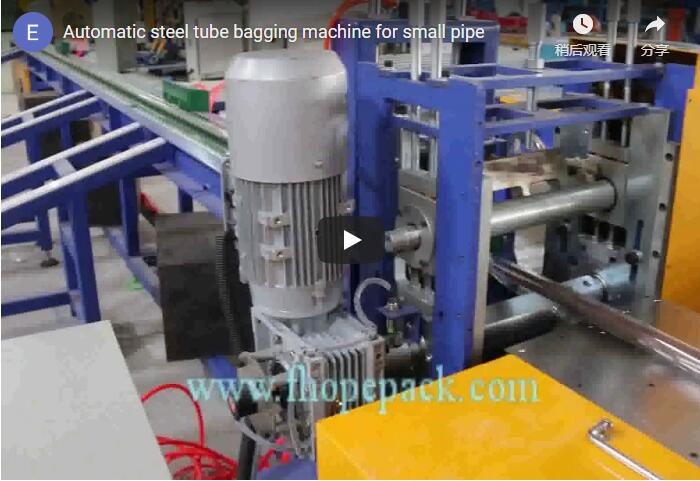
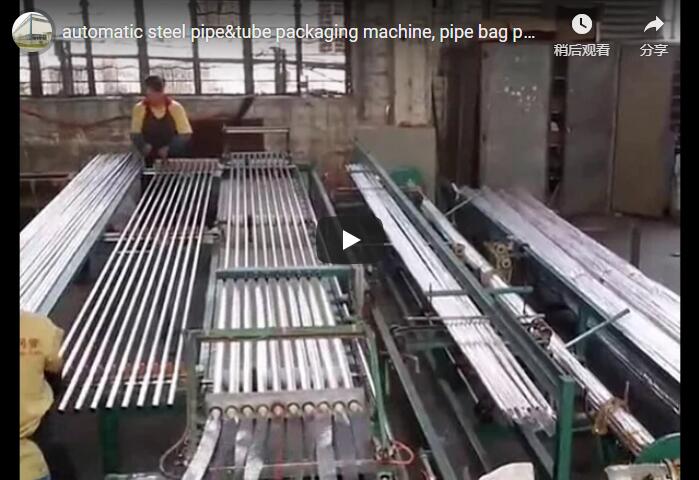
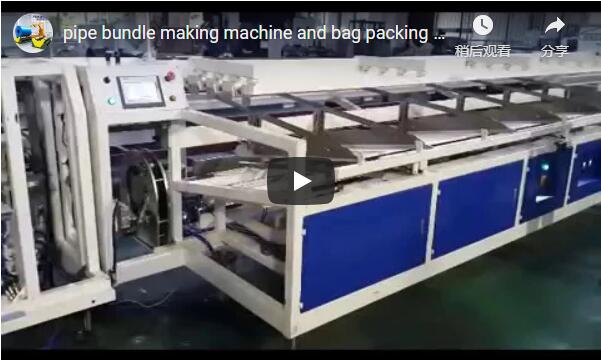
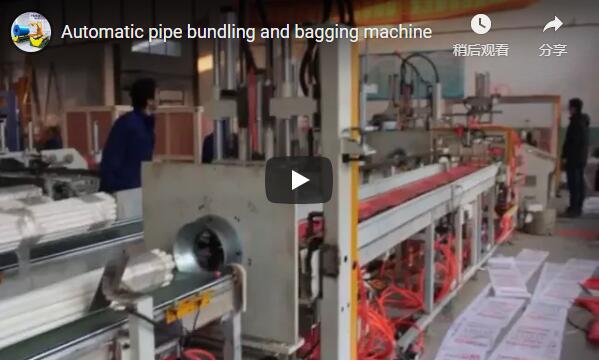
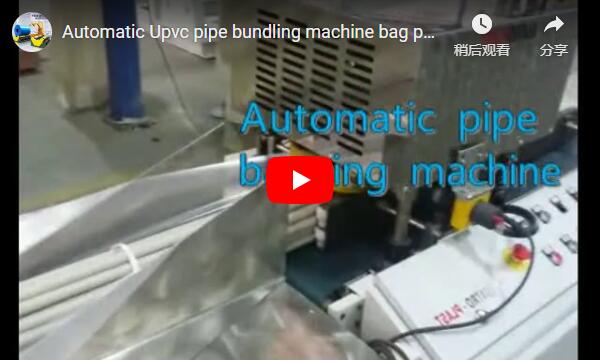
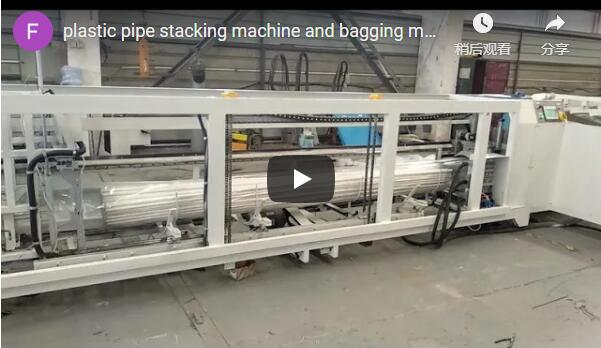
Our footage shows a tube bagging machine feeding a pipe, closing the bag and passing it out. It is a general demonstration, so pipe range, film and line layout for your plant are confirmed with us per project.
Selection checklist
| Question | Confirm per project |
|---|---|
| Pipe diameters and lengths | machine envelope |
| Single pipes or bundles | infeed design |
| Bag source | on-machine forming or pre-made |
| Film in use | gauge and seal compatibility |
| Output | bags per hour at your line pace |
| Electrical supply | voltage, phase and frequency on site |
Controls and safety
The machine runs from a control panel with an emergency stop at the operator position and guarding around the sealing area. Keep hands clear of the feed, the sealing jaws and the cut point while the machine runs. Routine checks cover the seal bars, film path and sensors, per the machine manual.
Engineering FAQ
Q: Single pipe or bundle? A: The same machine bags a single pipe or a pre-bundled group, with the infeed designed for your product per project.
Q: Heat or impulse sealing? A: Impulse sealing applies a timed current pulse that suits lighter film gauges, while constant heat sealing holds the jaw at temperature for heavy film grades. The choice follows your film specification per project.
Q: Does it need a different setting per pipe size? A: Length and seal settings are stored at the panel, so a size change is a selection rather than tooling.
Q: What materials can it bag? A: PVC, steel, copper and aluminum pipes all run through the machine; the film and settings follow the product.
Q: What lengths are covered? A: Short cut lengths up to full six-meter pipes are handled with the envelope confirmed per project.
Next step
- Email us at info@fhopepack.com with your pipe range, film and volumes.
- We send bagging options and a layout drawing within 48 hours.
- We arrange a site survey to confirm floor and services.
Related reading
- Plastic pipe and tube packing: technology and best practices
- Steel coil tilter with customized service
- Rod and tube automatic feeding and packing solution
- FHOPE packing machinery product lines
Sources and standards
- ISO 12100:2010 — Safety of machinery. General principles for design, risk assessment and risk reduction
- EN 415-10:2014 — Safety of packaging machines. General requirements
- EN ISO 13849-1:2023 — Safety of machinery. Safety-related parts of control systems
- FHOPE tube bagging machine demonstration video. Reviewed as a general demonstration; pipe range, film and layout confirmed per project.
Last reviewed: 2026-10-10