Executive summary A pipe line that runs everything at one speed runs nothing well. Tube and pipe packing is judged on five numbers a plant can actually compare: pieces out per hour, cost per piece, film used, seal quality and how fast the line changes size. We supply both manual bagging stations and automated lines, and the material you pack decides which one fits.
Table of Contents
- The five benchmarks
- Manual bagging stations
- Feeding by material and length
- Seal quality
- Changeover by recipe
- Bundling for transport
- Typical configuration
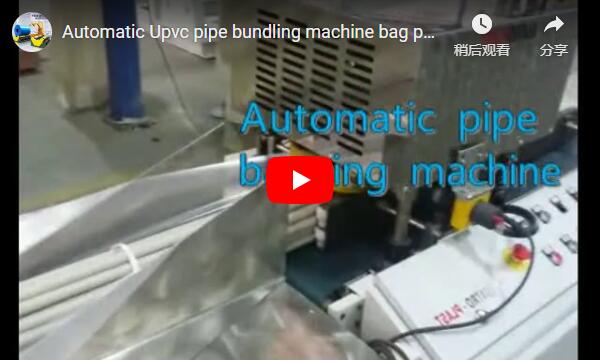
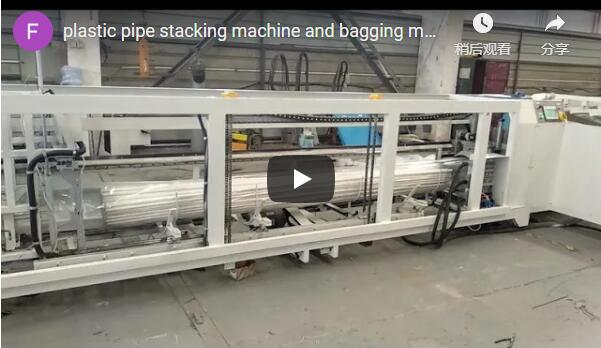
- What the video shows
- Selection checklist
- Controls and safety
- Engineering FAQ
- Next step
- Related reading
- Sources and standards
The five benchmarks
Any pipe packing station, manual or automated, is measured the same way. Throughput is pieces per shift. Unit cost is what one packed pipe really costs in labor and film. Film use is how much material one package consumes. Seal quality is how many bags hold on the way out. And changeover is how fast the line moves from one diameter to the next.
Comparing a station starts with these five, because a fast line with a slow changeover is not actually fast.
Manual bagging stations
A manual station is a film bench, a sealer and an operator. The operator cuts film to length, wraps and seals each pipe by hand. It works where volume is low or sizes change constantly.
The trade is consistency: hand tension varies with the shift and the operator, and a pipe line running full days gives a manual station more minutes than it has hands.
Feeding by material and length
The same bagger feeds a soft PE pipe differently from a rigid PVC one. A soft pipe indents under tension and needs a gentle feed and soft grip, while a rigid PVC pipe accepts a firm push. A line that tries to run every material at one setting drops to its weakest.
Pipes are fed into the bagger and measured along the way, so the bag ends where the pipe ends. One-meter short lengths and six-meter full-length pipes run through the same line with the length set at the control.
Sealing quality
The bag is closed at the cut end with a heat seal, and lines that run heavy duty use a double seal so the bag survives handling and the weight at the bundle end. Seals are checked on the line so a weak one is caught before the bundle leaves.
Changeover by recipe
Moving from one pipe diameter to the next is a recipe on the control when the guides are servo-driven: the guides set themselves to the new size and the sealer follows. Recipe storage turns a size change into a panel selection instead of a tooling change.
Bundling for transport
Distributors shipping pipe over long routes bundle the bagged lengths on wooden pallets. Where the route needs it, an optional downstream module adds a shrink-wrap cover over the bundle to hold dust and moisture off the whole pallet. The bundle is the load that travels, not the single pipe.
Typical configuration
Figures below are common starting envelopes for this machine class and are confirmed per project.
| Parameter | Typical range, confirmed per project |
|---|---|
| Pipe range | diameter and length of your products |
| Feed | servo-driven guides by pipe material |
| Sealing | double heat seal for heavy duty lines |
| Changeover | recipe storage for size changes |
| Output | set to the pipe mix of your line |
| Electrical supply | 380 V three phase 50 Hz, or 220 V single phase for light stations, selected per project to the plant supply |
What the video shows
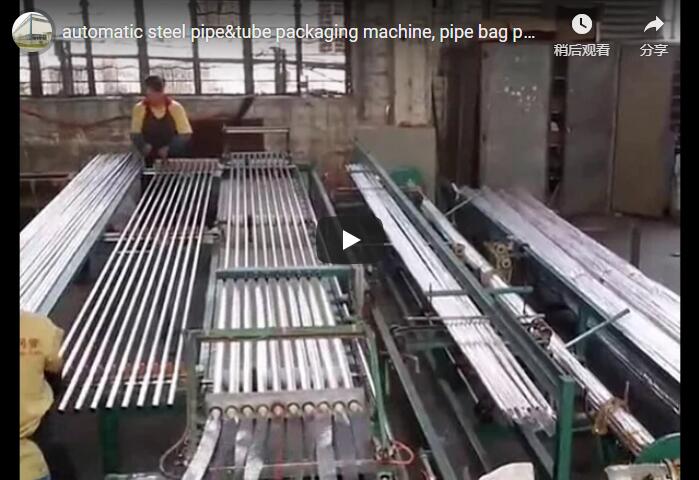
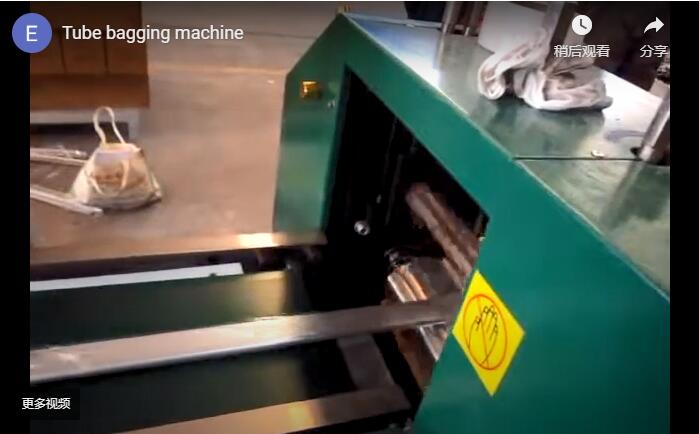
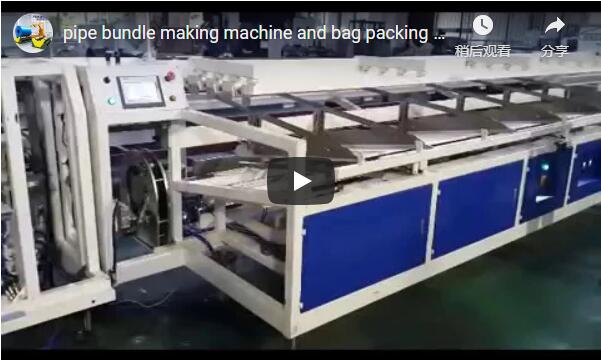
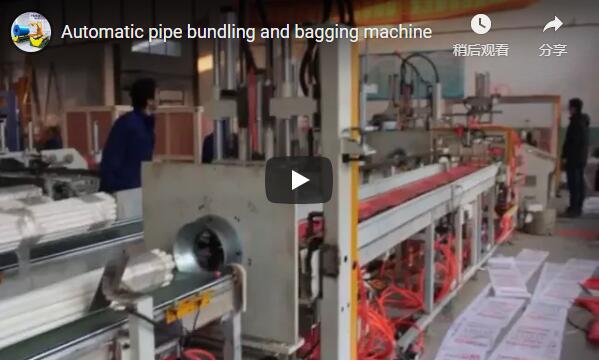
Our footage shows a bagging line feeding pipes, closing the bag and passing the bundle on. It is a general demonstration, so pipe range, film and layout for your plant are confirmed with us per project.
Selection checklist
| Question | Confirm per project |
|---|---|
| Diameter and length range | feed and sealer setup |
| Softest material in mix | feed strategy and grip |
| Film in use | gauge and bag length per pipe |
| Changeover demand | recipe storage scope |
| Output | pieces per shift needed |
| Electrical supply | voltage, phase and frequency on site |
Controls and safety
The line runs from a control panel with recipe selection and an emergency stop at the operator position. Keep hands clear of the feed, sealer and heated seal jaws while the line moves. Daily checks cover the seal blades, sensor lenses and lengths, per the machine manual.
Engineering FAQ
Q: Manual station or automated line? A: Low volume and constant size changes suit a manual or semi-automatic station; sustained volume with a stable size range pays back on an automated line. We size it from your mix per project.
Q: Why does material matter to the feed? A: Soft PE pipes need a gentle feed to avoid indentation, while rigid PVC accepts a firm push. The line runs each material at the setting it needs.
Q: How fast is a size change? A: With servo-driven guides and recipes, a diameter change is a panel selection measured in minutes instead of a tooling change. The exact figure is confirmed per project with your size range.
Q: How are bags sealed? A: With a heat seal at the cut end, and a double seal on heavy-duty lines so the bundle survives handling.
Q: What lengths are covered? A: Short cut lengths up to full six-meter pipes are set at the control per project.
Next step
- Email us at info@fhopepack.com with your pipe range, materials and volumes.
- We send a bagging station-versus-line comparison and a layout drawing within 48 hours.
- We arrange a site survey to confirm services and floor space.
Related reading
- PPR and PVC pipe bagging line
- Automatic steel pipe bundle packing line
- Steel coil tilter with customized service
- FHOPE packing machinery product lines
Sources and standards
- ISO 12100:2010 — Safety of machinery. General principles for design, risk assessment and risk reduction
- EN 415-10:2014 — Safety of packaging machines. General requirements
- EN ISO 13849-1:2023 — Safety of machinery. Safety-related parts of control systems
- FHOPE tube and pipe bagging line demonstration video. Reviewed as a general demonstration; pipe range, film and layout confirmed per project.
Last reviewed: 2026-10-10