Executive summary
PVC, PPR and HDPE pipe come off the extrusion line continuously, and the strapping and bagging after it decide whether bundles arrive intact. This online line integrates pipe strapping and bagging directly into production: bundles are formed, strapped and bagged in flow, without buffer zones between the steps. We build online PVC pipe strapping and bagging lines. Pipe range and bundle plan are confirmed per project.
Table of Contents
- Why pipe packaging moves online
- What the line does
- Strapping the bundle
- Bagging the bundle
- PVC PPR and HDPE range
- End-of-line integration
- Typical configuration
- What the video shows
- Selection checklist
- Operation and safety
- Engineering FAQ
- Next step
- Related reading
- Sources and standards
Why pipe packaging moves online
Handling PVC, PPR and HDPE pipes manually at the end of the line is no longer sustainable at high volume: it is labor-intensive, the tension varies bundle to bundle, and the handling loads the crew. Moving strapping and bagging online integrates the packaging steps directly into production flow, removing buffer zones and the work they store. An online line keeps every bundle consistent and meets transit needs without a hand pass. The pipe range and volumes are confirmed per project.
What the line does
The line integrates pipe strapping and bagging as one flow: bundles are formed from the pipe, strapped and bagged, and move out ready for storage or dispatch. Because the steps run together, the bundle is not re-handled between strapping and bagging, which is where manual lines lose consistency. Work-in-progress shrinks when packaging runs online, since there is nowhere for partial work to collect. The covered steps and their sequence are confirmed per project.
Strapping the bundle
The line straps each pipe bundle with controlled tension, holding the pipes together before the bag closes over them. Even tension is what keeps a bundle tight in storage and transit, and machine tensioning removes the variance of hand strapping. Strap positions and tension follow the pipe and the bundle, confirmed per project, so each bundle ships with the pattern that holds.
Bagging the bundle
After strapping, the line bags the bundle, covering the strapped pipes so they travel clean and protected. Bagging follows the strap in the same flow, so the bundle is covered where it was strapped rather than after a move. The bag is applied and closed by the machine, keeping every bundle at the same standard. The bag plan follows the bundle and the storage it will see, confirmed per project.
PVC PPR and HDPE range
The line is built around PVC, PPR and HDPE pipe, the plastic pipe range that moves in the highest volumes on extrusion sites. Plastic pipe bundles combine light weight with vulnerable surfaces, so the strapping and bagging have to hold without marking. The machine’s working range and bundle sizes are confirmed per project against the actual pipe mix.
End-of-line integration
The line sits at the end of production and accepts the pipe as it arrives, packaging it without a separate handling step. Integration is what removes the buffer zones and the work-in-progress they hold, keeping the end of the line clear. Because the line matches the production flow, pipe does not pile up waiting for a batch. The integration point and pace are confirmed per project on the actual line.
Typical configuration
Figures below list functional design boundaries rather than numeric values, and are confirmed per project.
| Parameter | Typical range, confirmed per project |
|---|---|
| Pipe | PVC, PPR, HDPE |
| Bundle | grouping plan |
| Straps | positions, tension |
| Bag | cover plan |
| Line | online interface |
| Electrical supply | 380 V three phase 50 Hz, or 220 V single phase for light machines, selected per project |
What the video shows
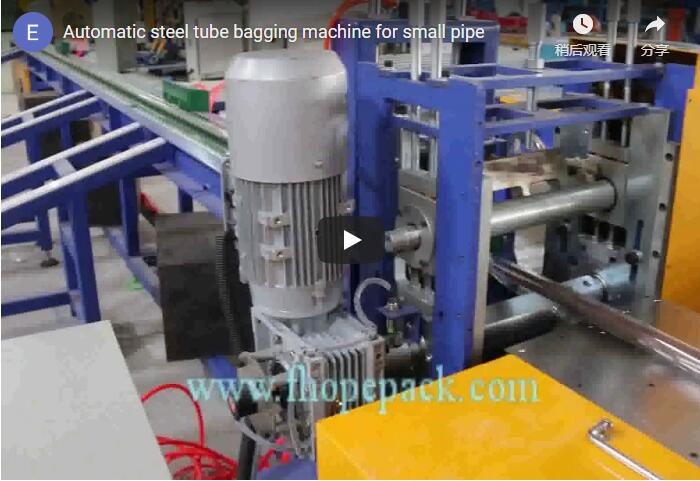
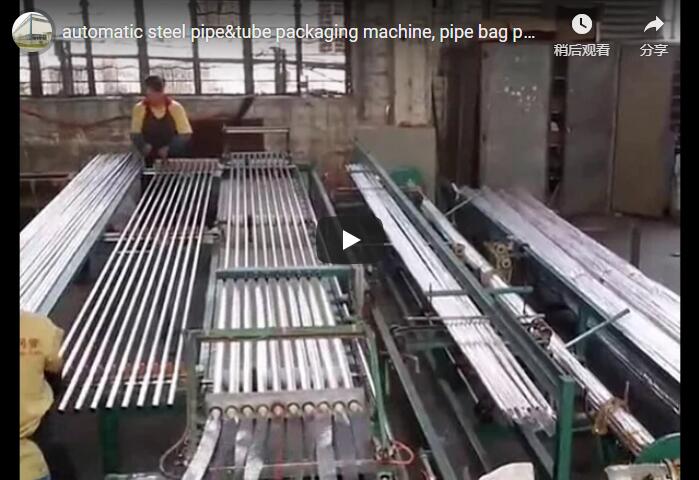
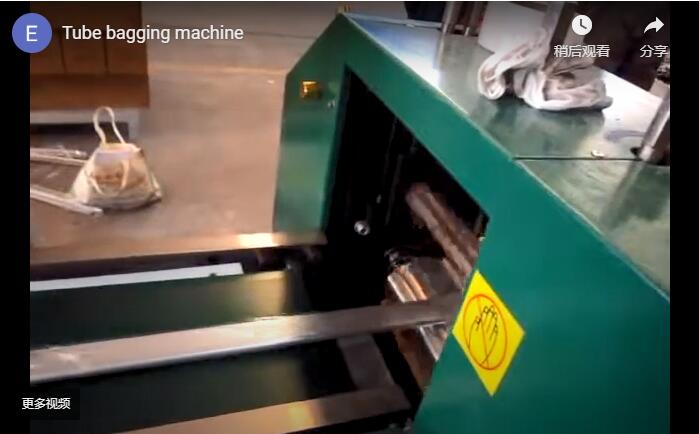
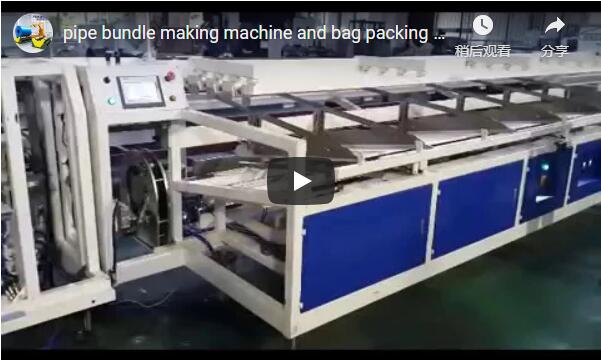
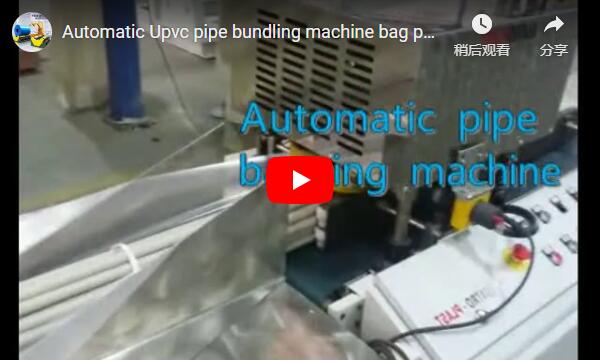
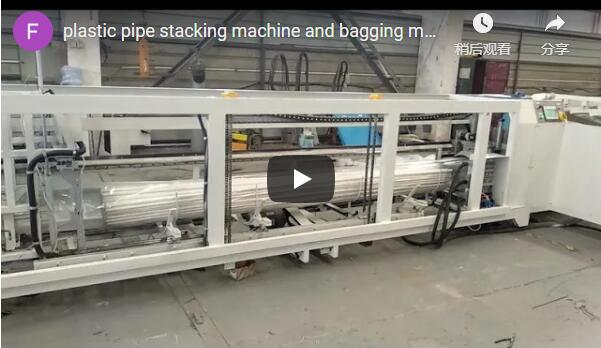
Our footage shows an online PVC pipe strapping and bagging line. It is a general demonstration, so your pipe range and bundle plan are confirmed with us per project.
Selection checklist
| Question | Confirm per project |
|---|---|
| Pipe range | PVC, PPR, HDPE |
| Bundle | sizes, counts |
| Straps | positions, tension |
| Bag | material plan |
| Line | integration point |
| Electrical supply | voltage, phase and frequency on site |
Operation and safety
Run the line from the panel and it forms, straps and bags each pipe bundle automatically in flow. Keep clear of the grouping section, strap heads, bag station and outfeed while the line runs, with guarding and emergency stops at the operator position. Routine checks cover the handler, strap heads, bag unit, sensors and control, per the machine manual. Confirm the strap and bag settings against the pipe before each run so bundles stay consistent.
Engineering FAQ
Q: What does this line do? A: It straps and bags PVC, PPR and HDPE pipe bundles online, in production flow.
Q: Why move packaging online? A: Online integration removes buffer zones and keeps the end of the line clear.
Q: How is the bundle strapped? A: Straps apply with controlled tension, even on every bundle.
Q: What does bagging add? A: It covers the strapped bundle so it travels clean and protected.
Q: How is tension kept even? A: The machine tensions every strap, removing the variance of hand work.
Next step
- Email us at info@fhopepack.com with your pipe range, bundles and volumes.
- We send a pipe packaging proposal and a layout drawing within 48 hours.
- We arrange a site survey to confirm pipe range and line integration.
Related reading
- Offline PVC pipe strapping and bagging line
- Automatic pipe bundle woven bag packing machine
- Automatic pipe coiler and strapping machine
- FHOPE packing machinery product lines
Sources and standards
- ISO 12100:2010 Safety of machinery, general principles for design and risk assessment
- EN 415-10:2014 Safety of packaging machines, general requirements
- EN ISO 13849-1:2023 Safety of machinery, safety-related parts of control systems
FHOPE online PVC pipe strapping and bagging line demonstration video. Reviewed as a general demonstration; pipe range confirmed per project.
Last reviewed: 2026-10-10