Executive summary
Loose pipes go in at one end and a weather-resistant bagged bundle comes out at the other. A PVC pipe strapping and bagging line counts the pipes, forms them into a stable stack, straps the bundle and slides it into a film bag that is sealed for dispatch. This guide covers the line sequence. Pipe sizes and bundle plan are confirmed per project.
Table of Contents
- What the line does
- Count and align
- Strap without crushing
- Transfer to the bag
- Bagging and heat sealing
- Discharge and handling
- Typical configuration
- What the video shows
- Selection checklist
- Controls and safety
- Engineering FAQ
- Next step
- Related reading
- Sources and standards
What the line does
Manual bundling and bagging of PVC pipe is labor-intensive, slow and uneven from batch to batch. An automatic line replaces that chain with a sequence of stations set for the product. Pipes feed in and accumulate, are counted and aligned, are grouped and strapped, and leave strapped and bagged, ready for handling. The cylindrical shape of PVC pipe is what the stations are built around, from the counting stage to the bag.
Count and align
The line counts pipes as they arrive and organizes them into a stack before strapping. Optical sensors or mechanical counters tally the required number per bundle, and alignment units set the pipes into a neat stack, typically hexagonal or square, which gives the bundle a stable cross-section. The count is done by the line, so a bundle that should hold a set number of pipes holds that number every time.
Strap without crushing
The grouped bundle is compressed and one or more strapping heads apply PET or PP strap, selected per project, at predetermined positions. Tension is controlled so the bundle stays tight without deforming the pipe walls, which is the balance that matters when strapping a cylindrical, hollow product. The strap positions are set per bundle plan, not by an operator measuring each time.
Transfer to the bag
After strapping, the bundle moves from the strapping station to the bagging station automatically. Lifting arms or pusher mechanisms, selected per project by bundle weight and line layout, carry the strapped bundle across, so the pipe bundle is not handled by hand between the two stations. The transfer keeps the bundle’s shape intact for the bag.
Bagging and heat sealing
A film bag is dispensed from a roll, opened by air jets or mechanical fingers per the film and bundle, and slid over the pipe bundle. The open end is then sealed with impulse heat bars, closing the bundle inside a weather-resistant, dust-tight package. The bag protects the pipe during storage and transport, and the seal keeps it closed through handling.
Discharge and handling
The finished, bagged bundle is discharged onto an outfeed conveyor or roller table, ready for forklift handling and shipment. Because the bundle is bagged, strapped and uniformly shaped, it stacks predictably in the yard and on the truck. Square or hexagonal per project, the line hands it over ready rather than requiring an extra wrapping or strapping stage.
Typical configuration
Figures below list functional design boundaries rather than numeric values, and are confirmed per project.
| Parameter | Typical range, confirmed per project |
|---|---|
| Pipe range | diameter and length envelope |
| Count | bundle count per plan |
| Strapping | PET or PP, positions |
| Bagging | film bag, open and seal |
| Transfer | lifting arms or pusher |
| Electrical supply | 380 V three phase 50 Hz, or 220 V single phase for light machines, selected per project |
What the video shows
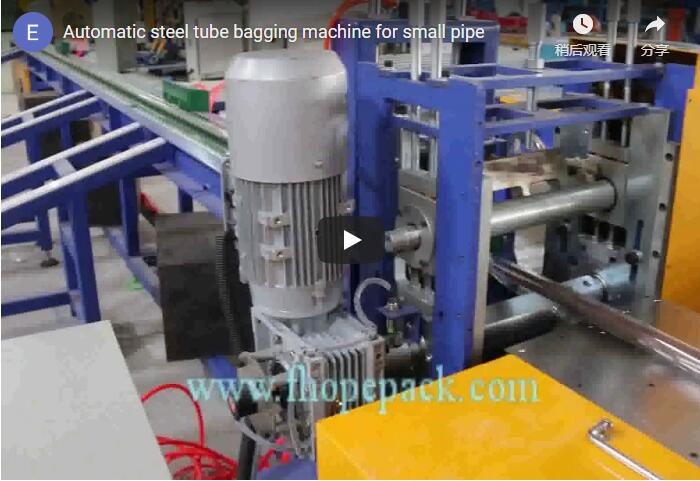
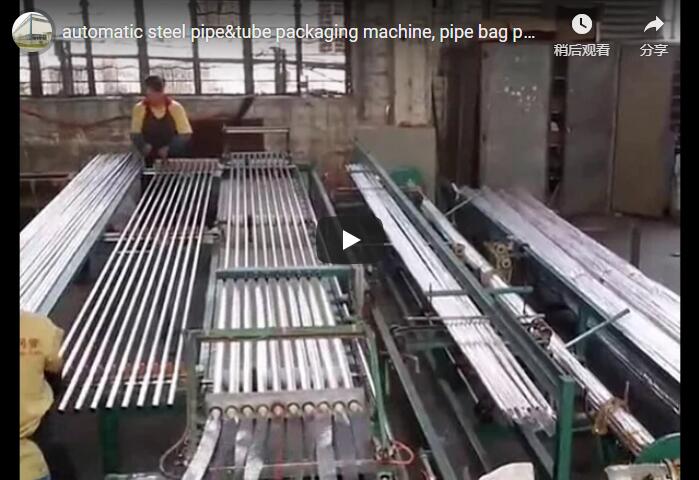
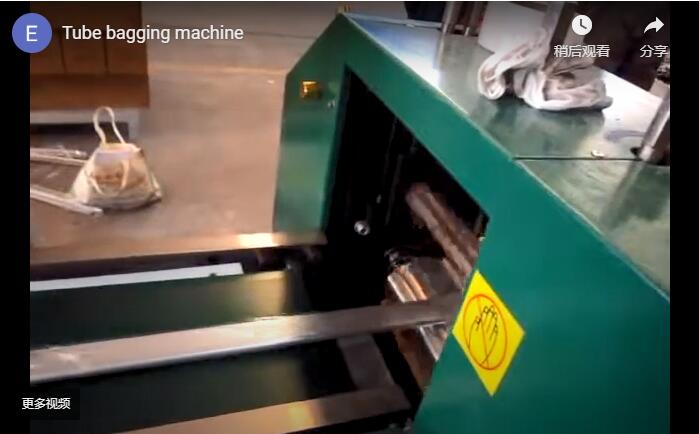
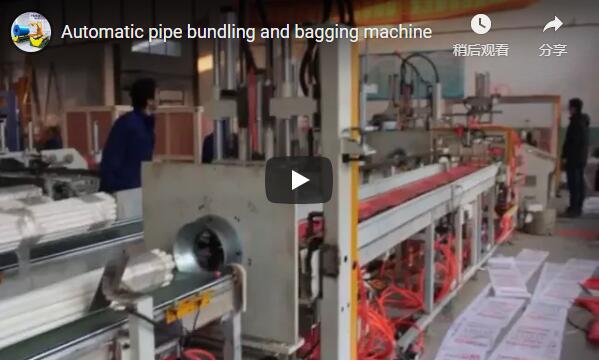
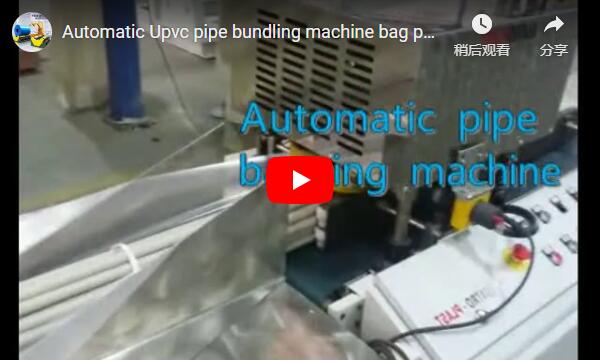
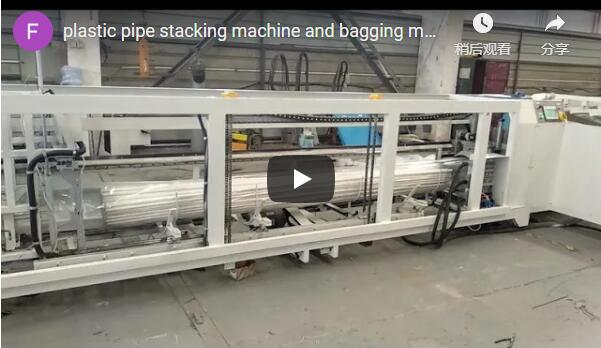
Our footage shows a PVC pipe bundling line counting, strapping and bagging bundles in sequence. It is a general demonstration, so pipe sizes, bundle plan and bag for your plant are confirmed with us per project.
Selection checklist
| Question | Confirm per project |
|---|---|
| Pipe sizes | diameter, length, weight |
| Bundle plan | count, stack shape, straps |
| Bag spec | film, length, seal type |
| Line pace | output vs upstream flow |
| Floor layout | station sequence and space |
| Electrical supply | voltage, phase and frequency on site |
Controls and safety
The line runs from control panels along the stations, with emergency stops at the operator positions and guarding around the strapping and sealing zones. Keep clear while sections cycle. Routine checks cover the counters, strapping heads, transfer, bag opener and seal bars, per the machine manual.
Engineering FAQ
Q: What enters the line? A: Extruded or socketed PVC pipes feed in and accumulate ahead of the counting station, sized per project.
Q: How is the bundle count kept accurate? A: Optical sensors or mechanical counters tally the pipes, and the bundle follows that count every cycle.
Q: Will strapping crush the pipe? A: Tension is controlled so the bundle stays tight without deforming the pipe walls.
Q: How does the bag go on? A: A film bag is opened by air jets or mechanical fingers and slid over the bundle, then sealed with heat bars.
Q: What leaves the line? A: A strapped, bagged and sealed bundle, square and ready for forklift handling and shipment.
Next step
- Email us at info@fhopepack.com with your pipe sizes, bundle plan and volumes.
- We send a bundling line proposal and a layout drawing within 48 hours.
- We arrange a site survey to confirm services and floor space.
Related reading
- PVC pipe bundling and bagging machine: technology and best practices
- Automatic pipe coiling strapping machine
- Automatic wire coiler and strapping machine
- FHOPE packing machinery product lines
Sources and standards
- ISO 12100:2010 Safety of machinery, general principles for design and risk assessment
- EN 415-10:2014 Safety of packaging machines, general requirements
- EN ISO 13849-1:2023 Safety of machinery, safety-related parts of control systems
FHOPE PVC pipe strapping and bagging line demonstration video. Reviewed as a general demonstration; pipe sizes, bundle plan and bag confirmed per project.
Last reviewed: 2026-10-10