Executive summary
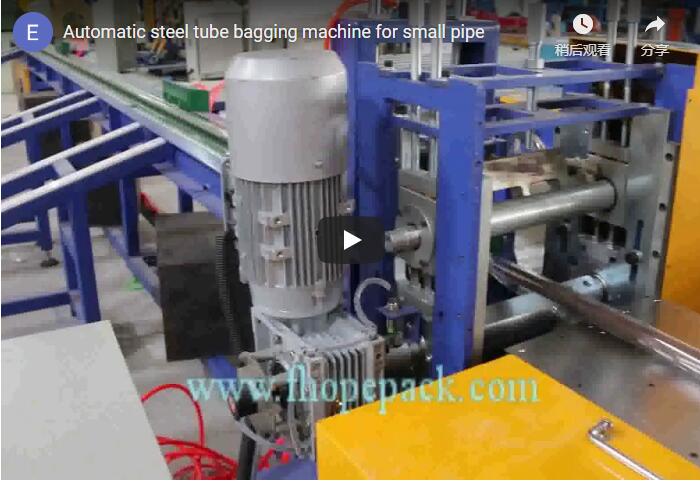
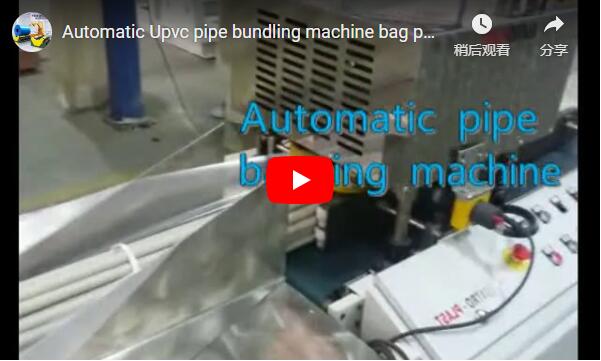
Bright and polished steel tube is sold on its surface finish. One scratch from tube rubbing on tube in a bundle can turn a good piece into a reject. Our single bagging line separates the tubes, sleeves each one in its own film bag and seals the ends, so every tube leaves the line protected before it is bundled.
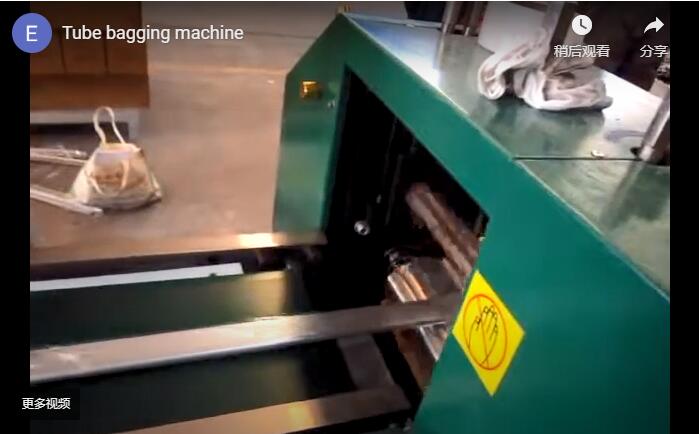
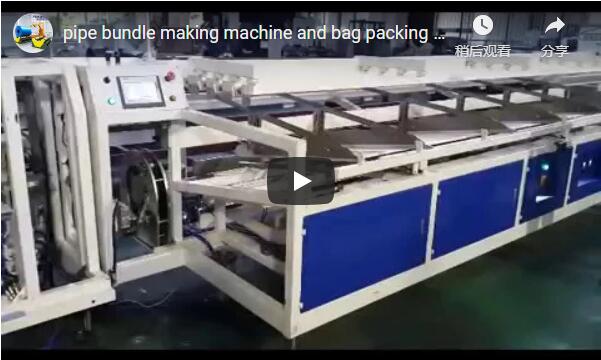
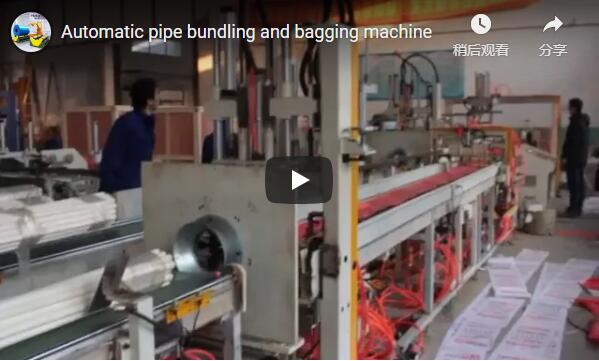
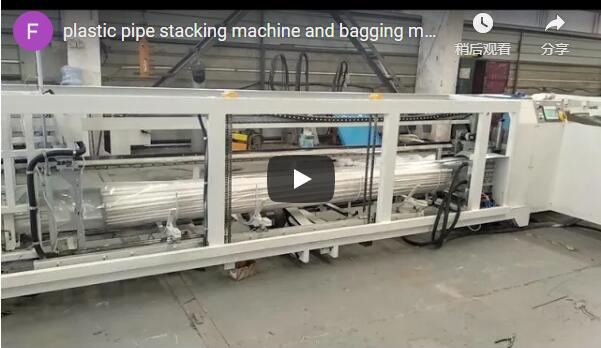
Bright tubes lie side by side on a long in-feed table. Rows of white V-groove blocks keep them apart, and pneumatic stops release them one at a time into the bagging line. Each tube then runs lengthwise into the film and comes out bagged at the far end, where the operators collect it.
Table of Contents
- Why bag each tube
- Line sequence
- Machine data
- Bag size
- Output formula
- Selection checklist
- Safety
- Engineering FAQ
- Next step
- Related reading
- Sources
Why bag each tube
In a bundle, tubes move against each other every time the bundle is lifted or the truck brakes. On bright, polished or coated tube that movement leaves marks. A film bag on each tube puts a layer between every contact point, keeps oil and dust off the surface and lets the customer open one tube at a time without exposing the rest.
Line sequence
- Tubes are laid on the in-feed table and held apart by the V-groove blocks.
- Pneumatic stops release one tube at a time onto the bagging conveyor.
- The film is formed into a tube around the steel tube as it runs through.
- The film edge is sealed along the length.
- The ends are sealed and cut between tubes.
- Bagged tubes run out to a collecting table or a bundling station.
Machine data
| Item | Value |
|---|---|
| Tube OD | 9.5–50 mm |
| Tube length | up to 6,000 mm |
| Bagging speed | about 10–50 m/min |
| Film | BOPP or PE |
| Film thickness | 30–60 micron |
| Film roll | OD 100–200 mm, ID 75 mm |
| Air supply | 5–7 bar |
| Control | PLC with inverters and sealing temperature control |
Tubes outside this range are confirmed at quote.
Bag size
The flat width of the bag must be at least half the tube circumference: lay-flat width ≥ π × OD ÷ 2, plus a sealing allowance. Example only: a 30 mm tube has a circumference of about 94 mm, so the lay-flat width must be over 47 mm before the seal is added.
The flat film web fed into the former is wider again: web width ≈ π × OD + seam allowance, so the same 30 mm tube needs about 94 mm of web plus the seam, which is set at quote. The bag size is set per tube size in the program.
Output formula
Tubes per minute ≈ bagging speed (m/min) ÷ tube length (m)
Example only: at 30 m/min with 6 m tubes, 30 ÷ 6 = 5 tubes per minute, or 300 per hour. Gaps between tubes and the in-feed release time lower this figure; the real rate is confirmed at quote.
Selection checklist
- Tube OD range and wall finish.
- Tube length range.
- Tubes per hour.
- Film type: BOPP or PE.
- Manual or automatic in-feed from the mill.
- Bundling or stacking after bagging.
Safety
We design to EN ISO 12100:2010 for risk assessment, EN 415-10 for packaging machine safety and EN 60204-1 for the electrical equipment. The sealing area is guarded, sensor and mechanical stops control each tube, and the motors have over-current protection.
Engineering FAQ
Q: Why use V-groove blocks on the in-feed? A: They keep the tubes apart so the surfaces do not rub before bagging.
Q: What film is used? A: BOPP or PE, 30–60 micron.
Q: How fast does it run? A: About 10–50 m/min, depending on tube size.
Q: Can it feed a bundling machine? A: Yes. The out-feed can hand the bagged tubes to a stacking or strapping station, confirmed at quote.
Next step
- Send your tube OD, length, finish and output to info@fhopepack.com.
- We set the film, bag size and in-feed layout.
- We reply within 24 hours with a proposal and quotation.
Related reading
- Pipe bagging machine (product)
- Automatic aluminum tube bagging and stacking line
- Aluminum profile bundle bag packing machine
- Offline PVC pipe strapping and bagging line
Sources
- FHOPE product page: pipe bagging machine
- EN ISO 12100:2010; EN 415-10; EN 60204-1
Last reviewed: 2026-10-20