Executive summary
Buying a PVC pipe bundling and bagging line fails three common ways: staffing it like a manual line, choosing the wrong transit protection, and misapplying small-diameter handling. This guide covers why automated counting and fault recovery, film versus strapping, and the small-diameter bundle plan matter. The line spec, film and bundle are confirmed per project.
Table of Contents
- What this guide covers
- Staffing an automated line
- Counting and fault recovery
- Stretch film versus PP strapping
- The small-diameter handling question
- Setting the line specification
- Typical configuration
- What the video shows
- Selection checklist
- Controls and safety
- Engineering FAQ
- Next step
- Related reading
- Sources and standards
What this guide covers
This guide is for engineering and operations people specifying a bundling and bagging line for PVC pipe. It frames the specification as three decisions: how the line is staffed, how the bundle is protected in transit, and how small-diameter pipe is handled. Getting these three right is what separates a line that runs from one that runs only with an expert in the room.
Staffing an automated line
A common mistake is staffing an automated line the way a manual one was run, one person per station. Automated counting, tension control and fault recovery replace the manual steps of counting pipes, collating the bundle, strapping or wrapping it, and sleeving it into a bag. The staffing plan should follow the machine, not the old station layout.
A centralized control interface, typically an HMI, lets one operator supervise several stations and intervene when a fault flag appears, instead of standing at one station all day.
Counting and fault recovery
Counting accuracy is what the downstream bundle count depends on. The line counts pipes autonomously and recovers from a fault on its own, flagging rather than silently passing a bad bundle. That is why a single supervisor can watch the line between checks: the system holds the count and reports exceptions, and the operator works to the machine’s schedule rather than the bundle’s.
Stretch film versus PP strapping
The two protection methods are not interchangeable when the bundle travels. Stretch film applies pressure evenly around the whole bundle and damps vibration, which suits long transit, where rigid PVC is vulnerable to point-load stress. PP strapping concentrates force at discrete contact points, which suits short-distance indoor handling but can stress the pipe at those points over a long truck ride and under moisture. Film or strap and the distance they protect are part of the line decision, per project.
The small-diameter handling question
Small-diameter conduit raises a different set of choices than large pipe, because the bundle holds more pipes and each pipe is more fragile. Counting, film behavior and the stack plan all change with the smaller envelope. The right plan is not a scaled-down large-pipe plan; it is a plan set for the conduit sizes on your line, confirmed per project.
Setting the line specification
A line specification should state what the machine must hold and what it must not. The pipe range, the bundle count and shape, the strapping or film plan, and the bag are the contract between the plant and the machine builder. Quantified targets, such as bundles per hour and counting error allowance, are better set from your real mix and volumes than copied from a brochure. We confirm the line specification from that mix, per project.
Typical configuration
Figures below list functional design boundaries rather than numeric values, and are confirmed per project.
| Parameter | Typical range, confirmed per project |
|---|---|
| Pipe range | diameter, length, weight |
| Bundle | count, stack geometry, crush limit |
| Protection | film or PP, transit distance |
| Small pipe | conduit plan set per line |
| Control | centralized HMI |
| Electrical supply | 380 V three phase 50 Hz, or 220 V single phase for light machines, selected per project |
What the video shows
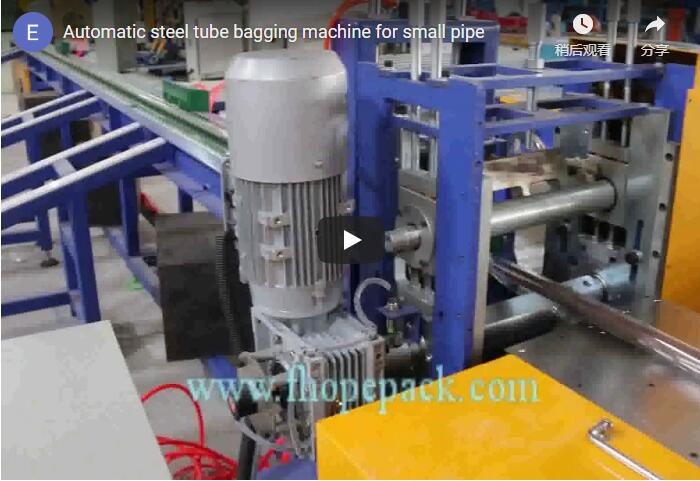
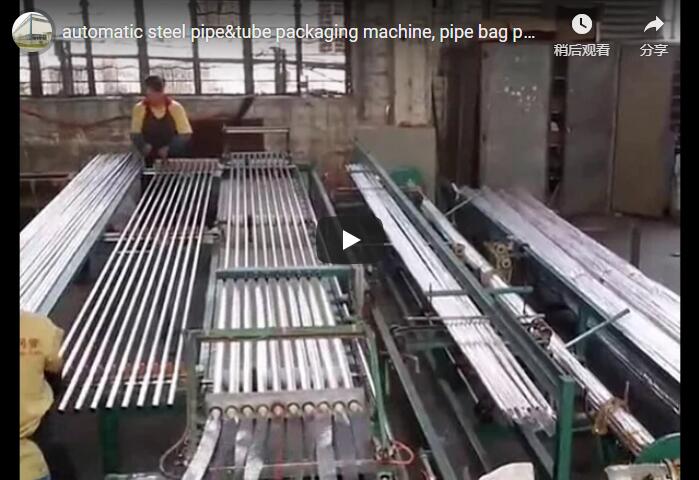
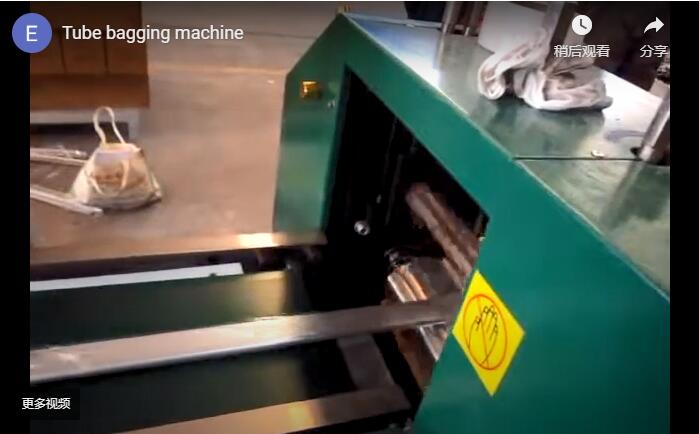
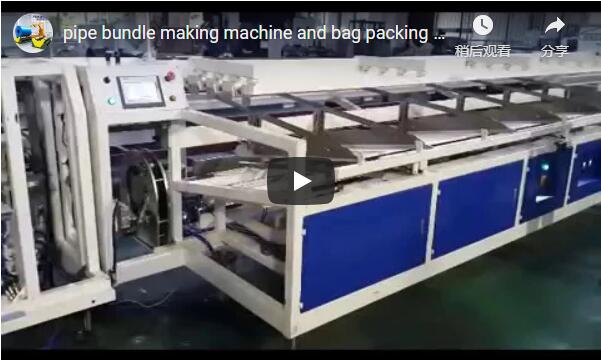
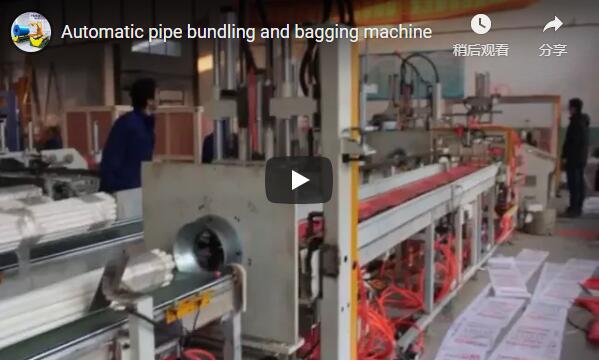
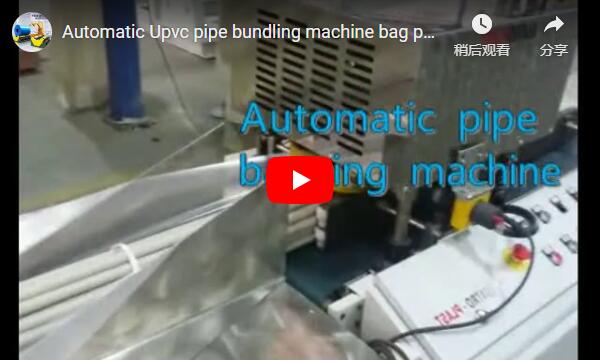
Our footage shows a PVC pipe bundling and bagging line running with automated counting and a single control interface. It is a general demonstration, so pipe range, bundle and protection for your plant are confirmed with us per project.
Selection checklist
| Question | Confirm per project |
|---|---|
| Staffing model | how many stations per operator |
| Pipe range | diameter, length, weight |
| Transit duty | distance and climate |
| Protection | film versus strapping |
| Small pipe | conduit sizes and stack |
| Electrical supply | voltage, phase and frequency on site |
Controls and safety
The line runs from its control panel, with emergency stops at the operator positions and guarding around the strapping, film and sealing stations. Keep clear while sections cycle. Routine checks cover the counting sensors, tension units, film or strap path and seal bars, per the machine manual.
Engineering FAQ
Q: How many operators does a modern line need? A: The staffing plan follows the machine: automated counting and fault recovery let one supervisor watch several stations from an HMI.
Q: Why film over PP straps for transit? A: Film applies even pressure and damps vibration for long transit, while PP point-loads the pipe, which suits short indoor moves.
Q: Is small-diameter conduit just a scaled-down plan? A: No. Conduit bundles hold more fragile pipes, so counting, film and stack plan are set for the conduit sizes on your line.
Q: How should we set output targets? A: From your real pipe mix and volumes with us, not from brochure numbers, and confirmed per project.
Q: What does the line hand over? A: A counted, bundled and bagged pipe package that matches the bundle plan you specified.
Next step
- Email us at info@fhopepack.com with your pipe range, bundle plan and volumes.
- We send a bundling line proposal and a layout drawing within 48 hours.
- We arrange a site survey, and we confirm output targets from your mix.
Related reading
- PVC pipe strapping and bagging line
- Automatic pipe coiling strapping machine
- Automatic hose coil making machine: technology and best practices
- FHOPE packing machinery product lines
Sources and standards
- ISO 12100:2010 Safety of machinery, general principles for design and risk assessment
- EN 415-10:2014 Safety of packaging machines, general requirements
- EN ISO 13849-1:2023 Safety of machinery, safety-related parts of control systems
FHOPE PVC pipe bundling and bagging machine demonstration video. Reviewed as a general demonstration; pipe range, bundle and protection confirmed per project.
Last reviewed: 2026-10-10