Executive summary
A wire winding machine earns its place when it is configured around the client’s production line, not around a catalog. This steel wire winding machine is set up for a client’s line: a curved arm lays the wire onto a rotating spool, and the setup is guided into a longer line of winders. We build steel wire winding machines to client needs. Line layout and wire plan are confirmed per project.
Table of Contents
- Why the client defines the machine
- What the machine does
- The curved arm lay
- A unit in the line
- Guiding the setup
- Around the client’s production line
- Typical configuration
- What the video shows
- Selection checklist
- Operation and safety
- Engineering FAQ
- Next step
- Related reading
- Sources and standards
Why the client defines the machine
A winding machine that fits the client’s production line does its job, and one that does not fit it becomes a bottleneck in it. The machine in the footage is built as one unit in a longer wire line, matching the client’s layout rather than standing alone. Configuration starts from the line the wire already flows through. The line layout and wire plan are confirmed per project.
What the machine does
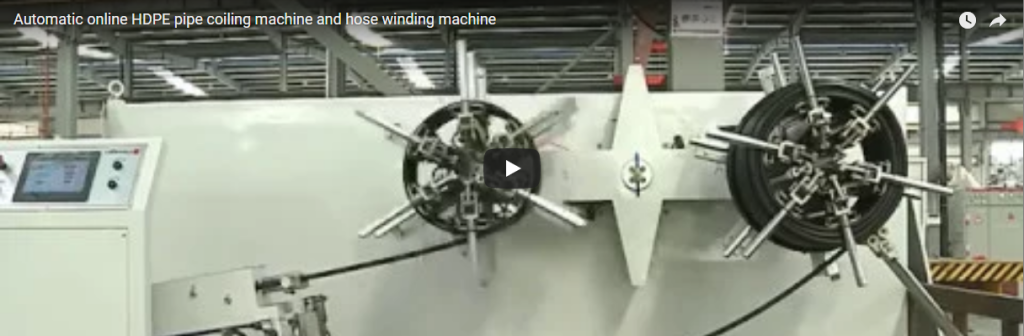
The machine winds steel wire, laying wire onto a rotating spool to build a coil in line with the client’s production. The machine runs as a unit within the line, taking the wire as it comes and winding it to the coil the client needs. Because the machine is configured around the line, its place in the flow is set. The covered steps and winding plan are confirmed per project.
The curved arm lay
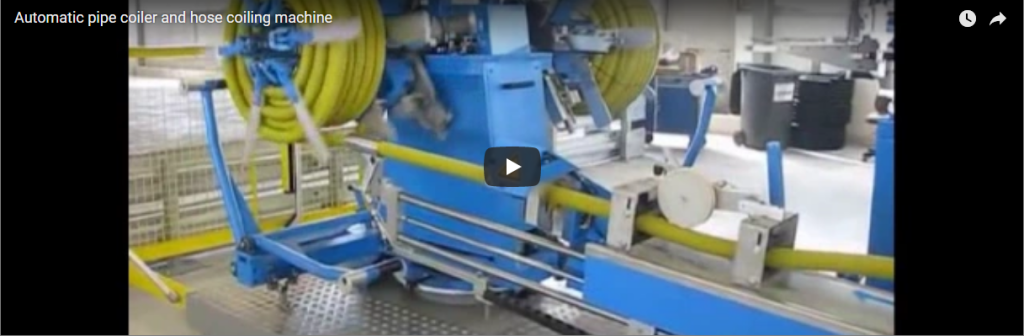
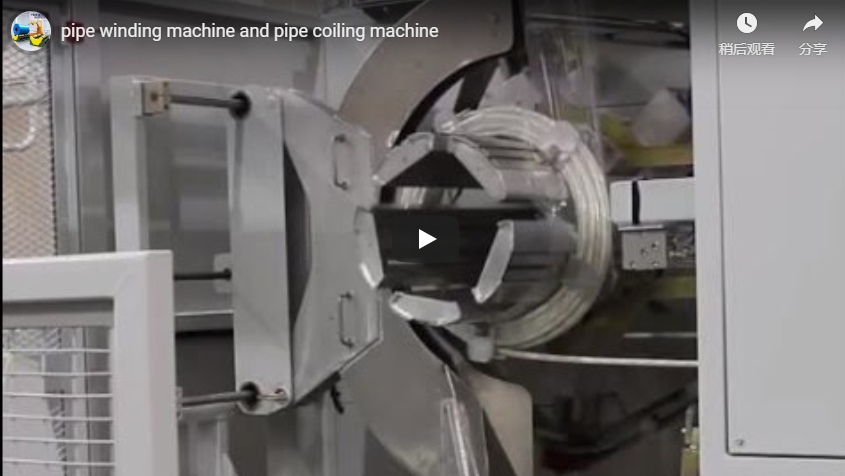
A curved arm carries the wire and lays it across the rotating spool, guiding each pass onto the coil. The curved arm gives the lay geometry, so the wire lands where the spool builds evenly. With the arm doing the guiding, the coil forms without the operator steering the wire. The arm travel and spool rotation follow the wire, confirmed per project.
A unit in the line
The machine is one unit in a longer line of identical winders, wrapping wire in a continuous arrangement. Being a unit in the line means the machine matches its neighbors, keeping the wire flow even across the bank. Line placement is what makes several winders behave as one flow. The line arrangement is confirmed per project.
Guiding the setup
The setup is guided on site as the machine runs, with the operator overseeing the start and the wire’s path. Guiding the setup is about a smooth commissioning, where the machine is adjusted to the client’s wire and line. The operator supervises rather than winds by hand. The setup and commissioning steps are confirmed per project.
Around the client’s production line
The machine is built around the client’s production line, which is what makes it useful rather than ornamental. A machine configured to the line takes the wire the way the line gives it and returns a coil the next step expects. Configuration around the client is the whole point. The client’s line and its interfaces are confirmed per project.
Typical configuration
Figures below list functional design boundaries rather than numeric values, and are confirmed per project.
| Parameter | Typical range, confirmed per project |
|---|---|
| Wire | client range |
| Spool | rotating |
| Lay | curved arm |
| Line | unit position |
| Setup | guided |
| Electrical supply | 380 V three phase 50 Hz, or 220 V single phase for light machines, selected per project |
What the video shows
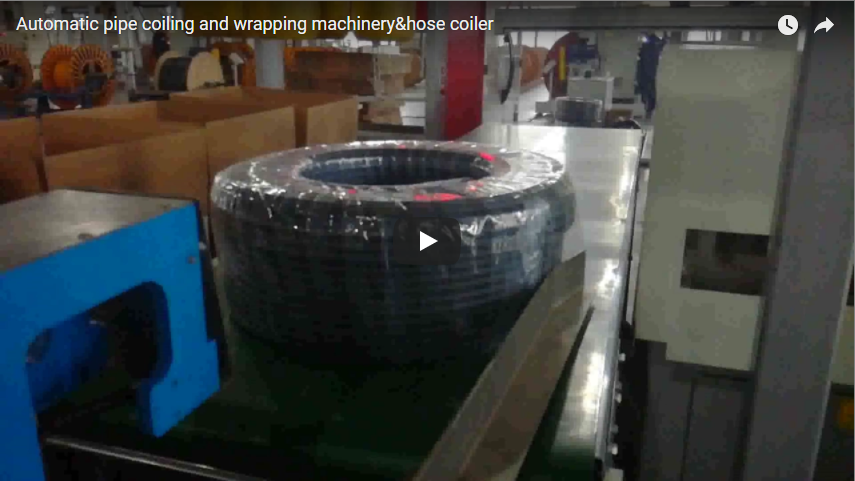
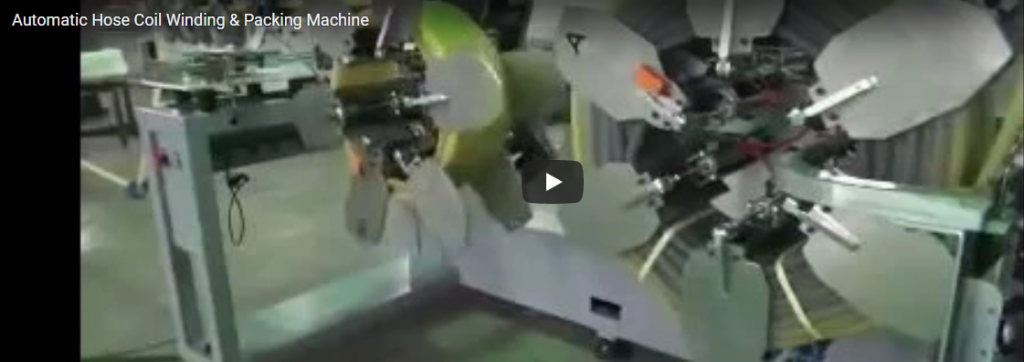
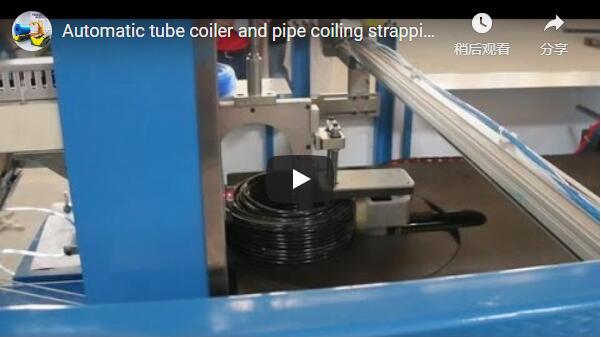
Our footage shows a steel wire winding machine configured for a client’s production line, running with a spool and guided setup. It is a general demonstration, so your line layout and wire plan are confirmed with us per project.
Selection checklist
| Question | Confirm per project |
|---|---|
| Wire range | client grades |
| Spool | sizes |
| Lay | arm plan |
| Line | unit fit |
| Setup | guidance needs |
| Electrical supply | voltage, phase and frequency on site |
Operation and safety
Run the recipe from the panel and the machine winds each spool automatically as part of the line. Keep clear of the wire path, rotating spool and curved arm while the machine runs, with guarding and emergency stops at the operator position. Routine checks cover the arm, spool drive, tension, sensors and control, per the machine manual. Confirm the winding settings against the wire before each run so coils stay consistent with the line.
Engineering FAQ
Q: What makes this winding machine different? A: It is configured around the client’s production line, not a catalog size.
Q: How does the wire get onto the spool? A: A curved arm lays the wire across the rotating spool in even passes.
Q: Where does the machine sit? A: As one unit in a longer line of identical winders.
Q: How is the setup handled? A: Guided on site, with the operator overseeing the wire path as it runs.
Q: Who is it built for? A: Clients with a defined wire line, confirmed per project.
Next step
- Email us at info@fhopepack.com with your wire line and coil needs.
- We send a winding proposal and a layout drawing within 48 hours.
- We arrange a site survey to confirm line layout and wire plan.
Related reading
- Automatic steel wire winding machine
- High speed online automatic wire winding machine
- Steel Wire Wrap and Packaging Machine
- FHOPE packing machinery product lines
Sources and standards
- ISO 12100:2010 Safety of machinery, general principles for design and risk assessment
- EN 415-10:2014 Safety of packaging machines, general requirements
- EN ISO 13849-1:2023 Safety of machinery, safety-related parts of control systems
FHOPE steel wire winding machine demonstration video. Reviewed as a general demonstration based on the footage; line layout confirmed per project.
Last reviewed: 2026-10-10