Executive summary
Steel wire processing depends on winding that keeps up with production and keeps quality consistent, and hand winding cannot deliver either. This automatic steel wire winding machine winds wire automatically, addressing the dual demands of increased productivity and enhanced quality control. We build automatic steel wire winding machines. Wire range and coil plan are confirmed per project.
Table of Contents
- Why winding is a process step
- What the machine does
- Automatic winding sequence
- Quality at speed
- Production efficiency
- The wire range
- Typical configuration
- What the video shows
- Selection checklist
- Operation and safety
- Engineering FAQ
- Next step
- Related reading
- Sources and standards
Why winding is a process step
Winding turns drawn wire into the coil the next process or the customer uses, so it sits at the center of steel wire operations. A winding step that falls behind holds the whole line, and one that winds unevenly sends the problem downstream. Automated winding addresses both demands of productivity and quality together. The wire range and coil plan are confirmed per project.
What the machine does
The machine winds steel wire automatically, taking the wire and laying it onto the spool in a controlled pattern to form a coil. The winding runs by the machine, so the coil’s form does not depend on the operator. Because the pattern is machine set, every coil is wound to the same standard. The covered steps and winding plan are confirmed per project.
Automatic winding sequence
The wire is fed, traversed across the drum and wound, with the machine running the sequence continuously. The automatic sequence is what lets the machine wind without the operator in the wire path. Traverse and tension are controlled at the machine, so the coil builds evenly. The sequence and its settings follow the wire, confirmed per project.
Quality at speed
Quality control in winding means the coil is even, tight and free of tangles even as production runs fast. The machine holds the tension and lay as the speed rises, keeping quality from sliding with throughput. An even coil is a coil that pays off downstream. The quality standard is confirmed per project against the wire grades.
Production efficiency
Winding automatically removes the winding operator from the bottleneck, freeing the crew and keeping wire flowing at line speed. Efficiency is the machine running continuously, coil after coil, without the variance or fatigue of hand winding. The process runs steadier shift after shift. The efficiency gain is confirmed per project against the line’s demand.
The wire range
The machine winds a range of steel wire diameters and grades, the common production wires of drawing and processing shops. The wire range sets the machine’s capacity and its traverse plan, confirmed per project against the wires actually run. One machine covers the wire mix a shop produces.
Typical configuration
Figures below list functional design boundaries rather than numeric values, and are confirmed per project.
| Parameter | Typical range, confirmed per project |
|---|---|
| Wire | steel range |
| Coil | winding plan |
| Drive | automatic |
| Tension | control |
| Output | coil form |
| Electrical supply | 380 V three phase 50 Hz, or 220 V single phase for light machines, selected per project |
What the video shows
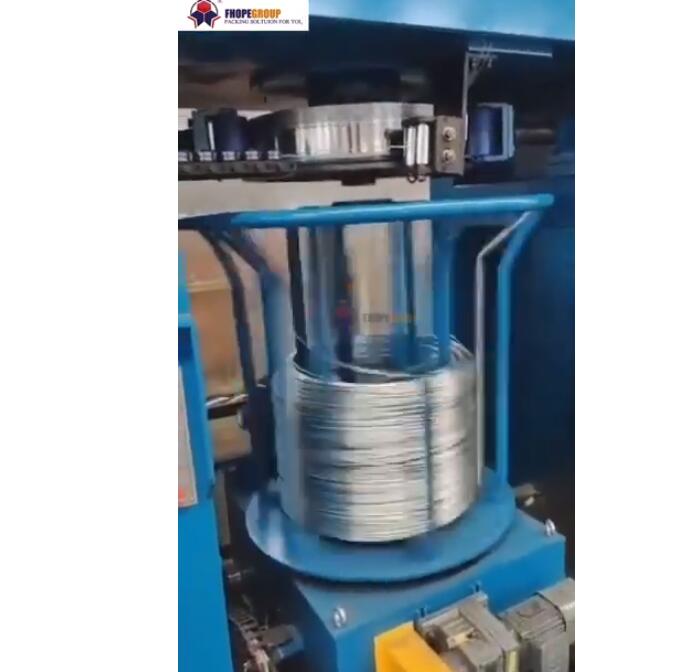
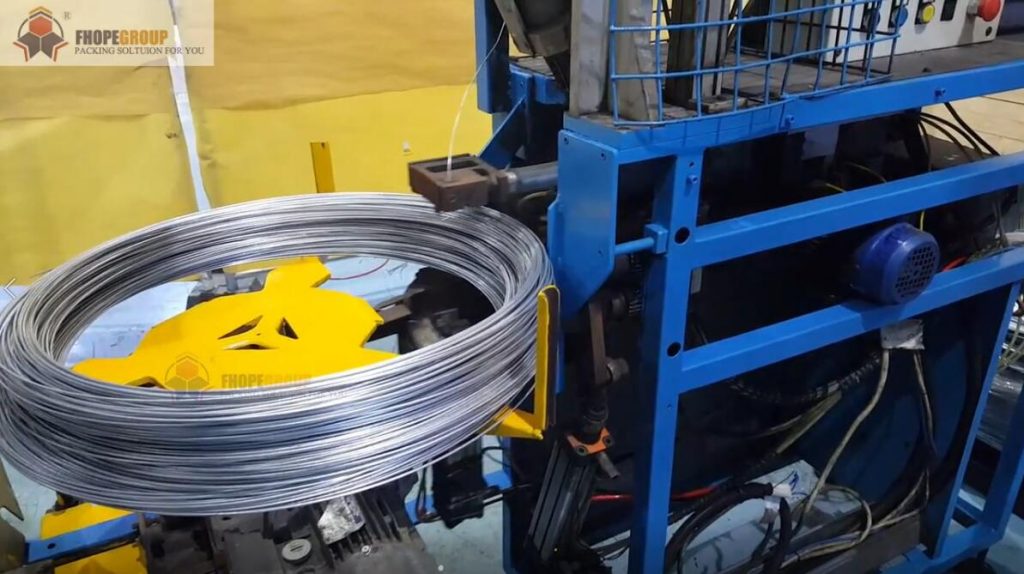
Our footage shows an automatic steel wire winding machine winding wire. It is a general demonstration, so your wire range and coil plan are confirmed with us per project.
Selection checklist
| Question | Confirm per project |
|---|---|
| Wire range | diameters, grades |
| Coil | winding plan |
| Drive | automatic |
| Tension | control needs |
| Output | coil form |
| Electrical supply | voltage, phase and frequency on site |
Operation and safety
Run the recipe from the panel and the machine winds each spool automatically. Keep clear of the wire path, traverse, drum and outfeed while the machine runs, with guarding and emergency stops at the operator position. Routine checks cover the traverse, tension, drum drive, sensors and control, per the machine manual. Confirm the winding settings against the wire before each run so coils come out even.
Engineering FAQ
Q: What does this machine do? A: It winds steel wire automatically onto a spool in a controlled pattern.
Q: Why automate winding? A: Manual winding cannot hold both productivity and quality as the line runs.
Q: How is the coil formed? A: Wire is fed, traversed and wound under machine-controlled tension and lay.
Q: What wires does it wind? A: A range of steel wire diameters and grades, confirmed per project.
Q: What makes quality a result? A: Machine-held tension and lay keep the coil even as speed rises.
Next step
- Email us at info@fhopepack.com with your wire range and volumes.
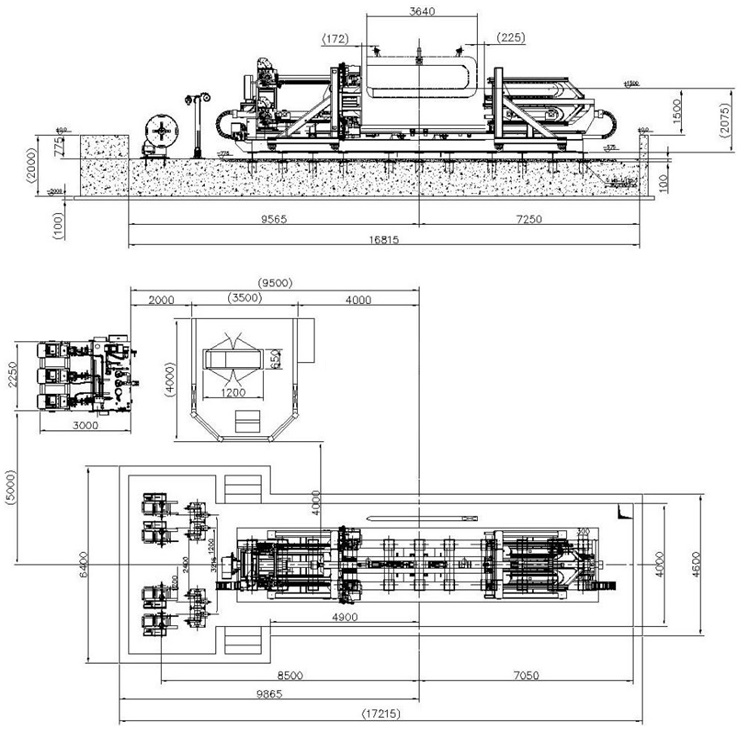
- We send a winding proposal and a layout drawing within 48 hours.
- We arrange a site survey to confirm wire range and line position.
Related reading
- Steel wire winding machine for client needs
- High speed online automatic wire winding machine
- Steel Wire Coil Winding and Strapping System
- FHOPE packing machinery product lines
Sources and standards
- ISO 12100:2010 Safety of machinery, general principles for design and risk assessment
- EN 415-10:2014 Safety of packaging machines, general requirements
- EN ISO 13849-1:2023 Safety of machinery, safety-related parts of control systems
FHOPE automatic steel wire winding machine demonstration video. Reviewed as a general demonstration; wire range confirmed per project.
Last reviewed: 2026-10-10