🛠️ Evaluation Criteria
| Selecting the optimal plate rotation system requires rigorous benchmarking of load capacity, dimensional tolerance, hydraulic pressure thresholds, certified safety interlocks, and verified uptime metrics. These parameters dictate seamless line integration, operator safety compliance, and long-term capital depreciation. Evaluating industrial flipping equipment demands a systematic breakdown of mechanical and hydraulic specifications rather than relying on generalized marketing claims. The maximum flipping load must exceed the heaviest workpiece weight by a minimum 10% safety margin to account for dynamic inertial forces during acceleration and deceleration phases. Workpiece dimensional compatibility requires precise verification of platform length, width, and thickness range to prevent structural overhang or torsional stress on the turning mechanism. Hydraulic pressure ratings must distinguish between continuous operating pressure and transient peak allowance, ensuring the cylinder seals and pump assemblies withstand momentary load spikes without catastrophic failure. Safety and compliance verification mandates the presence of mechanical and electric stop blocks, emergency interlocks, and recognized certifications such as CE marking and ISO 9001 quality management. Operational efficiency rate should be calculated as the ratio of successful production cycles to scheduled machine availability, excluding planned maintenance windows. | Evaluation Parameter | Technical Requirement | Procurement Verification Step |
|---|---|---|---|
| Maximum Flipping Load | ≥10% safety margin above heaviest workpiece | Cross-reference supplier load charts with actual plate density | |
| Workpiece Dimensions | Platform L×W must exceed plate footprint by 150 mm clearance | Validate against CAD drawings of primary workpieces | |
| Hydraulic Pressure | 15 MPa operating / 20 MPa peak allowance | Request pump curve and cylinder seal material specifications | |
| Safety/Compliance | Mechanical/electric stops, CE/ISO 9001 certification | Audit third-party test reports and emergency stop circuit schematics | |
| Efficiency Rate | ≥98% calculated as uptime ÷ scheduled production hours | Request maintenance logs and mean time between failures (MTBF) data | |
| Floor Bearing Capacity | Minimum 5-ton/m² static load rating | Confirm concrete slab thickness and anchor bolt specifications |
🏗️ Option A: Steel Sheet Flipper (FPFT‑12)
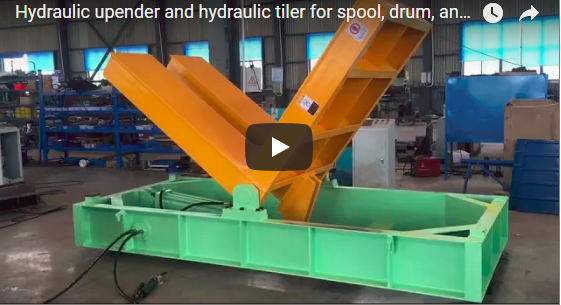
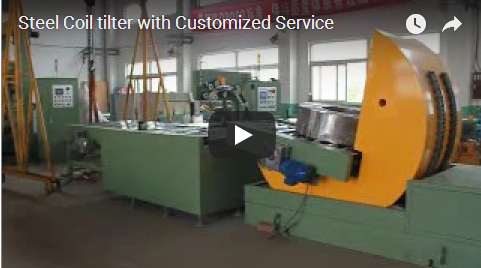
The FPFT‑12 hydraulic steel sheet flipper delivers precision 90-degree rotation for plates ranging from 50 to 300 mm thick, handling maximum loads of 12 tons with synchronized dual-cylinder actuation and a 15 MPa operating pressure rating. This machine is engineered specifically for high-volume flat steel processing environments where dimensional accuracy and operator safety are non-negotiable. The dual-cylinder synchronization device ensures both lifting arms move in exact unison, eliminating torsional stress and edge deformation that commonly occur when flipping thick, rigid steel plates. This mechanical harmony is critical for downstream CNC plasma cutting or automated palletizing systems that require perfectly flat workpiece geometry. The adjustable turning speed allows operators to match rotational velocity to plate mass, reducing hydraulic shock and extending component lifespan. Automatic angle-holding pressure utilizes a hydraulic lock mechanism that maintains positional stability at any intermediate rotation angle, preventing plate sag or unintended drift during setup adjustments. The FPFT‑12 operates on a standard 380V 3-phase 50Hz power supply and draws 8.0 kW of motor output to drive the hydraulic pump assembly. The integrated 60-liter oil reservoir provides sufficient thermal mass to dissipate heat during continuous operation, while the heavy-duty welded steel frame ensures long-term structural rigidity. Mechanical and electric stop blocks create redundant safety layers, automatically halting rotation if an obstruction is detected or if the operator triggers the emergency cutoff. The machine carries CE certification and ISO 9001 quality management accreditation, with a comprehensive 2-year warranty covering both parts and labor. The stated 98% efficiency rate is derived from manufacturer testing, calculated as total successful flipping cycles divided by scheduled operational hours, excluding planned filter changes and seal inspections.
🔗 Related: Explore more solutions
📈 Option B: Die Flipper (Mold/Die Upender)
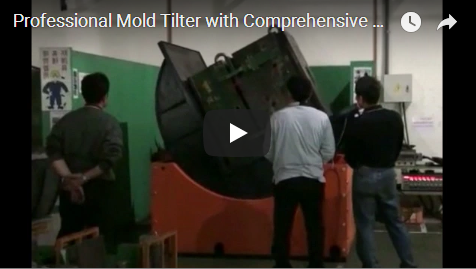
Die flippers are engineered for concentrated load distribution across irregular tooling geometries, typically supporting 8 to 15 tons with narrower platform footprints and optional mechanical clamping systems to secure non-flat workpieces during rotation. Unlike sheet flippers that prioritize wide, distributed support, die upenders are designed to handle the uneven weight distribution and vertical height characteristics of injection molds, stamping dies, and heavy tooling blocks. Industry averages indicate that most die flippers operate within a 12 to 16 MPa hydraulic pressure range, though exact specifications vary significantly by manufacturer and duty cycle classification. The platform dimensions typically range from 1200 mm × 1200 mm to 2000 mm × 1500 mm, accommodating standard mold bases without requiring excessive floor space. Many models incorporate adjustable mechanical clamps or vacuum pads to prevent slippage when rotating tall or asymmetrical tooling that lacks a flat base. Safety protocols for die flippers emphasize emergency stop circuits, mechanical limit switches, and optional pressure-holding valves that lock the cylinder at a predetermined angle. Operational efficiency for these units generally falls between 96% and 98%, depending on the frequency of clamping adjustments and the complexity of the tooling being rotated. Cycle times and maintenance intervals are highly variable and should never be standardized without consulting the specific supplier’s technical manual. Hydraulic seal compatibility must be verified against the manufacturer’s recommended ISO VG 46 or VG 68 oil grades to prevent premature degradation. Operators should confirm that the control interface, whether pendant-mounted or wireless remote, meets local plant safety regulations for two-hand operation or light curtain integration.
🛡️ Comparison Table
| A direct technical comparison between the FPFT‑12 steel sheet flipper and industry-standard die flippers highlights critical differences in platform geometry, load distribution, hydraulic thresholds, and certification requirements that dictate optimal workflow integration. The FPFT‑12 excels in wide-format plate handling with synchronized dual-cylinder turning and a 15 MPa operating pressure, while die flippers prioritize concentrated load support and mechanical clamping for irregular tooling. Both systems require 380V 3-phase power and CE/ISO compliance, but their dimensional footprints and safety interlock configurations differ substantially. Procurement decisions must align machine specifications with actual workpiece density, platform clearance requirements, and shop-floor load-bearing capacity. | Specification | Steel Sheet Flipper (FPFT‑12) | Die Flipper (Industry Average) |
|---|---|---|---|
| Max Flipping Load | 12 tons (verified) | 8–15 tons (supplier-dependent) | |
| Platform Dimensions | 1800 mm × 2500–2800 mm | 1200 mm × 1200 mm to 2000 mm × 1500 mm | |
| Thickness Range | 50–300 mm | 100–500 mm (typical) | |
| Hydraulic Pressure | 15 MPa operating / 20 MPa peak | 12–16 MPa (varies by model) | |
| Safety Interlocks | Mechanical/electric stops, auto-angle lock, pressure-keep | Mechanical stops, e-stop, optional pressure-hold | |
| Efficiency Rate | 98% (uptime ÷ scheduled hours) | 96–98% (duty-cycle dependent) | |
| Certifications | CE, ISO 9001 | CE/ISO (verify per manufacturer) | |
| Warranty | 2 years (parts & labor) | 1–2 years (supplier standard) | |
| Floor Bearing Requirement | ≥5 tons/m² static capacity | ≥4 tons/m² static capacity | |
| Power Supply | 380V 3P 50Hz | 380V 3P 50Hz (or 400V/60Hz regional) |
🔗 See Also: Related equipment
⚙️ Selection Advice
Match the FPFT‑12 to high-volume flat plate workflows requiring wide platform support and vibration-free turning, while reserving die flippers for concentrated-load tooling rotation where mechanical clamping and compact footprints prevent structural overhang. The FPFT‑12’s 4600 mm × 2500 mm × 1400 mm footprint and 4.5-ton machine weight demand a reinforced concrete floor with a minimum 5-ton/m² bearing capacity and properly anchored M24 base bolts. Its synchronized hydraulic system and 15 MPa pressure rating make it ideal for steel processing lines, cutting tables, and automated material handling systems where plate flatness directly impacts downstream machining tolerances. The 60-liter oil reservoir and 8.0 kW motor provide sufficient thermal and hydraulic capacity for continuous shift operations without overheating or pressure drop. Conversely, die flippers are better suited for mold shops, foundries, and toolroom environments where workpieces are tall, irregular, or require secure clamping during rotation. The narrower platform and adjustable clamping mechanisms prevent slippage on non-flat surfaces, though they sacrifice the wide-span support needed for large steel sheets. For facilities managing mixed workloads, some manufacturers offer modular platforms that accept interchangeable clamping attachments, though this increases initial capital expenditure and requires additional calibration. Always verify that the selected machine’s control interface matches your plant’s safety protocols, and confirm that the hydraulic oil temperature range aligns with your facility’s ambient conditions.
🛠️ Purchase‑Decision Checklist
| Final procurement validation requires cross-referencing machine specifications against actual workpiece parameters, verifying floor load capacity, confirming power compatibility, and auditing safety interlock schematics before committing to capital expenditure. The FPFT‑12’s technical documentation must explicitly state the 12-ton load limit, 15 MPa operating pressure, and 20 MPa peak allowance, with third-party certification copies for CE and ISO 9001 compliance. Operators should request a live demonstration video showing a full-load 90-degree turn to verify vibration-free motion and accurate angle positioning. The 2-year warranty must clearly define coverage for hydraulic cylinders, pump assemblies, and control panel components, excluding normal wear items like seals and filters. Floor anchoring specifications must be reviewed by a structural engineer to ensure the 4.5-ton machine weight and dynamic flipping forces do not exceed the slab’s load-bearing threshold. | Procurement Verification Step | Technical Requirement | Documentation Required |
|---|---|---|---|
| Load & Dimension Validation | 10% safety margin above max workpiece | Supplier load chart & CAD footprint | |
| Floor Bearing Confirmation | ≥5 tons/m² static capacity | Structural engineer sign-off | |
| Power Supply Compatibility | 380V 3P 50Hz (or regional equivalent) | Electrical single-line diagram | |
| Hydraulic Pressure Audit | 15 MPa operating / 20 MPa peak | Pump curve & seal material spec | |
| Safety Interlock Verification | Mechanical/electric stops, e-stop circuit | CE test report & wiring schematic | |
| Efficiency Rate Validation | 98% calculated as uptime ÷ scheduled hours | MTBF data & maintenance log template | |
| Warranty & Support Terms | 2 years parts & labor | Warranty certificate & service SLA | |
| Operational Demonstration | Full-load 90° turn, vibration-free motion | Video proof or site visit report |
🏗️ FAQ
Addressing critical operational queries regarding cross-application compatibility, hydraulic maintenance protocols, control interface configurations, and rotational velocity parameters ensures accurate machine specification and minimizes unplanned downtime during initial commissioning. Technical clarification prevents misapplication of equipment and guarantees that hydraulic systems operate within manufacturer-specified pressure and temperature limits. Operators must understand how synchronization devices prevent plate deformation and how pressure-keeping valves maintain positional stability during setup adjustments. Maintenance intervals and cycle times should never be standardized without consulting the supplier’s technical manual, as they vary based on duty cycle, oil viscosity, and ambient temperature.
Q: Can I use a steel sheet flipper to rotate dies? A: Only if the die fits within the 1800 mm × 2500 mm platform dimensions and remains under the 12-ton load limit. The FPFT‑12 lacks mechanical clamping, so irregular or tall dies may shift during rotation due to uneven weight distribution. For tooling with vertical centers of gravity, a die flipper with adjustable clamps is structurally safer.
Q: What maintenance does the hydraulic system require? A: Hydraulic maintenance follows manufacturer-specified intervals rather than fixed quarterly schedules. Operators should monitor oil level in the 60-liter reservoir weekly, inspect cylinder seals annually for leakage, and replace hydraulic filters based on differential pressure indicators. The synchronization device requires periodic calibration to maintain dual-cylinder alignment, ensuring consistent 98% operational efficiency.
Q: Is remote control standard? A: The FPFT‑12 supports both fixed control panel and wireless remote operation. Remote control improves operator safety by allowing the technician to stand outside the flipping radius during rotation. Verify with your supplier which interface is included in the base package and whether additional safety light curtains are required for your facility.
Q: How long does a typical 90-degree turn take? A: Rotational velocity is fully adjustable and depends on plate mass, hydraulic flow rate, and desired smoothness. Faster speeds reduce cycle time but may increase hydraulic shock and vibration at maximum load. Operators should calibrate turning speed to match the workpiece density, prioritizing controlled acceleration and deceleration over raw speed to preserve cylinder seals and plate flatness.