Executive summary A sofa packing stream line moves finished sofas through checking, wrapping and cartoning on conveyors, so nobody carries them between stations. In this line the sofas ride a metal slat conveyor, pass a turntable where tags are removed, and climb an incline to the cartoning stations. Output follows from the sofa pitch on the conveyor and the slowest station. Both are set per project to your sofas.
Table of Contents
- What the video shows
- Stations along the line
- Planning pitch and output
- Balancing the stations
- Controls and safety
- Selection checklist for a sofa packing line
- Engineering FAQ
- Next step
- Related reading
- Sources
What the video shows
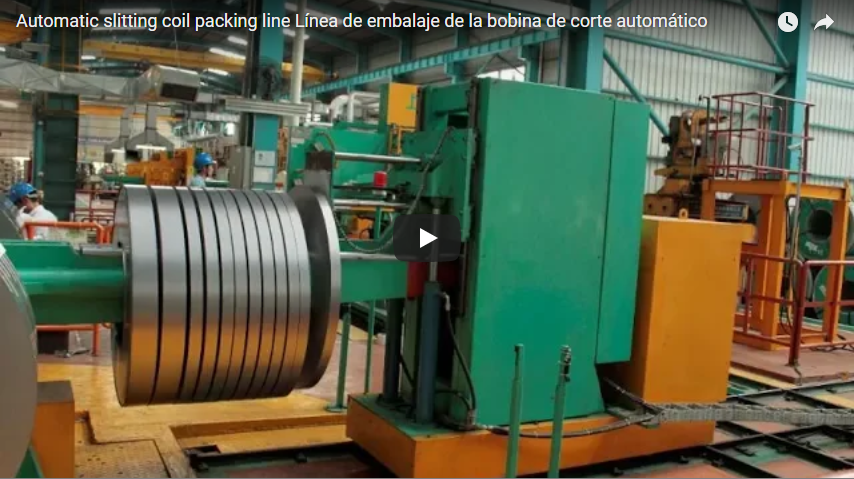
Workers in green push black leather armchairs one by one onto a long metal slat conveyor. The chairs travel in single file at a steady spacing past the work stations.
Further on, several chairs sit on a round turntable while a worker cuts the red tags from their backs. Chairs covered in bubble film are then pushed onto an inclined conveyor and carried up. Long cartons travel along the line, workers fit the packed parts, and at the end a tilting lift table raises each pack for the next step.
Stations along the line
| Station | What happens |
|---|---|
| Loading | Sofas are pushed onto the slat conveyor |
| Transfer | The conveyor carries them in single file at even spacing |
| Turntable | Final checks and tag removal, with each sofa turned to the worker |
| Wrapping | Sofas are covered in bubble film |
| Incline | An inclined conveyor lifts them to the cartoning level |
| Cartoning | Sofas and parts are packed in cartons |
| Lift-off | A tilting lift table raises each pack for removal |
The turntable lets one worker reach every side of a sofa without walking round it.
Planning pitch and output
Illustrative example with sofas 0.9 m deep spaced 1.8 m apart on a 3 m/min conveyor:
| Item | Value |
|---|---|
| Sofa depth along the line | 0.9 m |
| Pitch, sofa plus gap (illustrative) | 1.8 m |
| Conveyor speed (illustrative) | 3 m/min |
| Sofas per minute, 3 ÷ 1.8 | about 1.7 |
| Time each station has per sofa, 60 ÷ 1.7 | about 35 s |
| Sofas per hour, 1.7 × 60 | about 100 |
If a station needs longer than that, slow the line, or put two workers on that station so each handles every second sofa.
Balancing the stations
| Station | What sets its time |
|---|---|
| Tag removal and checks | Number of tags and checks per sofa |
| Bubble wrapping | Sofa size and wrap layers |
| Cartoning | Carton type and number of parts |
| Lift-off | How the pack is taken away |
Time each station with your own sofas. The slowest one sets the output for the whole line.
Controls and safety
Green guard rails run along parts of the conveyor, and yellow and black lines mark the floor at the lift table. Keep hands clear of the slat conveyor edges, the turntable and the lift table while they move.
The standards that apply depend on the destination market. For CE markets, ISO 12100 sets the risk-assessment method and EN 415-10 sets general requirements for packaging machines.
Selection checklist for a sofa packing line
- Sofa models, sizes and weights.
- Sofas per shift.
- Stations you need: checks, wrapping, cartoning.
- Single seats, sets or flat-packed parts.
- Floor length and height for an incline.
- How packs leave the line.
Engineering FAQ
Q: Why a turntable in the line? A: It turns each sofa to the worker, so tags and checks can be done on every side without walking round.
Q: Why an inclined conveyor? A: It lifts sofas to the cartoning level without anyone carrying them.
Q: How many sofas per hour? A: Conveyor speed divided by pitch, times 60. Our 3 m/min example with 1.8 m pitch moves about 100 an hour.
Q: What sets the line speed? A: The slowest station. Time each one with your own sofas.
Q: Can it pack sofa sets? A: Yes. Sets and loose parts travel on the same conveyor and are cartoned together.
Next step
We plan your sofa packing line in three steps:
- Submit your layout drawing with sofa models and output to info@fhopepack.com.
- Receive a proposal within 48 hours, with the station plan and line speed.
- Book a site survey to check the floor length and height.
Related reading
- Video: sofa packing machine and furniture packaging line
- Automatic strapping machines
- Semi-automatic pallet wrapping machines
Sources
- Machine content: FHOPE engineering team, 2026-10-04
- Pitch and output example: our worked example, illustrative values
- Machine in action: our video on YouTube
- Standards scope: ISO 12100:2010, EN 415-10:2014
Last reviewed: 2026-10-04