Executive summary
A steel coil needs a clean, dry cover that holds the outer layer, and the cover material can be paper, film or both. This steel coil paper and film wrapping machine holds the coil on a rotating base with support rollers, and an overhead arm lays the wrap around the coil surface as it turns. Both wrap materials feed from the head, so the cover is chosen for the coil. Coil size, cover material and cycle settings are confirmed per project.
Table of Contents
- Why paper or film on a coil
- What the machine does
- Rotating base and overhead arm
- Paper, film or both
- What the footage shows
- Typical configuration
- Selection checklist
- Operation and safety
- Engineering FAQ
- Next step
- Related reading
- Sources and standards
Why paper or film on a coil
A steel coil has a surface that can mark and must stay dry. A paper cover cushions the surface, while a film cover seals out moisture; the right choice depends on the coil and how it travels.
Wrapping the coil with the machine gives a full cover that hand wrapping cannot match. Cover choice and coil range are confirmed per project.
What the machine does
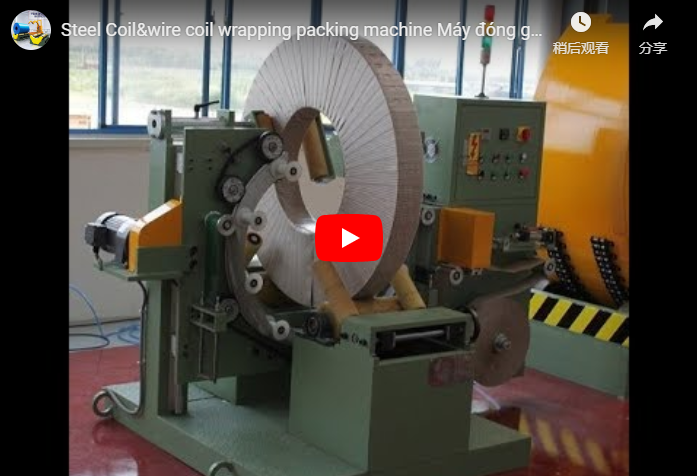
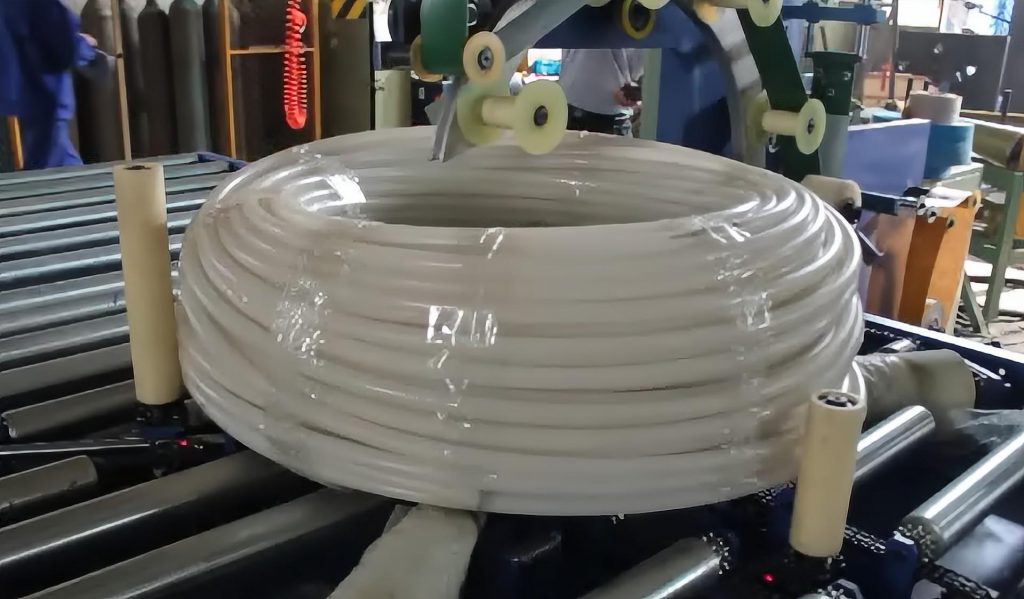
The machine is a steel coil paper and film wrapping machine. A coil is placed on the rotating base, which turns the coil while an overhead arm holds the wrap head. The head feeds the cover material around the outside of the coil in layers until the cover is set.
The operator places the coil and starts the cycle; the machine wraps and finishes. Coil diameter and wrap width are confirmed per project.
Rotating base and overhead arm
Support rollers on the rotating base hold the coil as it turns, and the overhead arm carries the wrap head above the coil. As the base rotates, the head lays the material across the coil surface.
Turning the coil instead of the head lets a simple head cover the full outer layer. Base speed and arm position are confirmed per project.
Paper, film or both
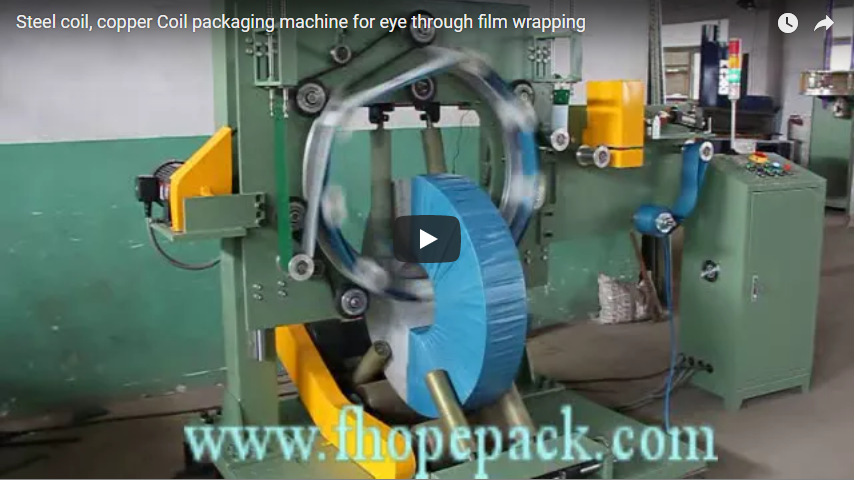
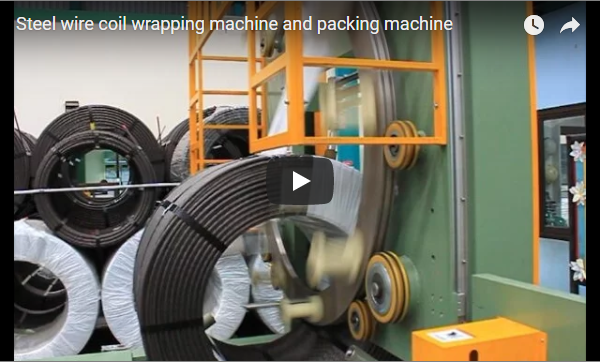
The wrap head holds both paper and film rolls, so the cover can be paper only, film only, or a combination. The footage shows the film covering the coil from the top as the coil turns.
Choosing the material in the cycle lets one machine cover different coils. Material setup is confirmed per project.
What the footage shows
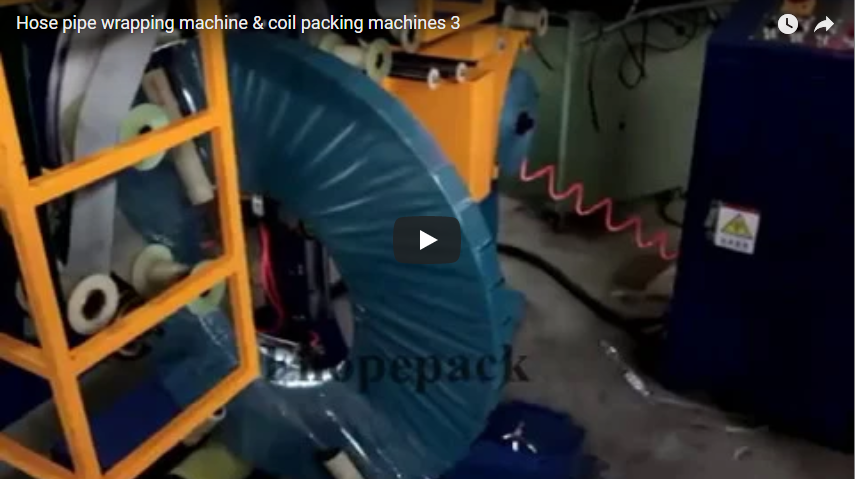
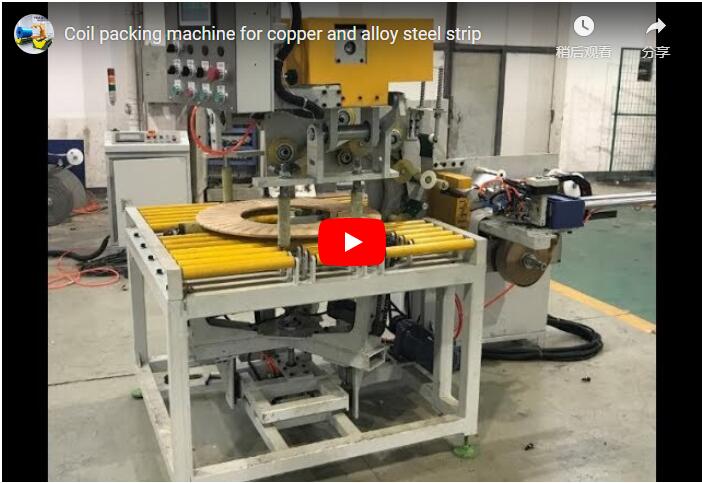
Our footage shows a coil placed on the rotating base, the overhead head applying cover while the coil turns, and the wrap finishing with the head lifting. It is a general demonstration, so your coil size, cover and cycle settings are confirmed with us per project.
Typical configuration
Figures below list functional design boundaries rather than numeric values, and are confirmed per project.
| Parameter | Typical range, confirmed per project |
|---|---|
| Load | steel coil on base |
| Turning | rotating base, support rollers |
| Wrap | overhead head |
| Material | paper or film |
| Finish | head lift, end held |
| Electrical supply | 380 V three phase 50 Hz, or 220 V single phase for light machines, selected per project |
Selection checklist
| Question | Confirm per project |
|---|---|
| Load range | coil diameter, width, weight |
| Cover | paper, film or both |
| Cycle | layers, band spacing |
| Finish | end handling |
| Site | clearance for base and head |
| Electrical supply | voltage, phase and frequency on site |
Operation and safety
Place the coil on the base and start the cycle from the control; the coil turns and the head wraps under power, then the wrap finishes and resets. Keep clear of the base and the head while the machine runs, with guarding around the working area.
Routine checks cover the base drive, the support rollers, the wrap head and the material feed, per the machine manual. Confirm the cover setup before each run.
Engineering FAQ
Q: What does this machine do? A: It wraps a steel coil with paper or film on a rotating base.
Q: Why rotate the coil? A: Turning the coil lets one head cover the full outer layer.
Q: Can it use both materials? A: Yes. Paper suits scuff protection where the coil surface must not mark, film suits moisture and dust sealing, and a paper inner cover with an outer film is the common export transit pack.
Q: How does the wrap finish? A: The head lifts and the end is held at the end of the cycle.
Q: What does it suit? A: Steel coils and similar cylindrical loads needing a clean, dry, scuff-protected cover.
Next step
- Email us at info@fhopepack.com with your coil size and cover choice.
- We send a paper and film wrapping proposal and a layout drawing within 48 hours.
- We arrange a site survey to confirm material and cycle settings.
Related reading
- Steel coil paper and film wrapping machine
- Automatic coil wrapping machine
- Steel coil packing machine
- FHOPE packing machinery product lines
Sources and standards
- ISO 12100:2010 Safety of machinery, general principles for design and risk assessment
- EN 415-10:2014 Safety of packaging machines, general requirements
- EN ISO 13849-1:2023 Safety of machinery, safety-related parts of control systems
FHOPE steel coil paper and film wrapping machine demonstration video. Reviewed as a general demonstration; coil size, cover and cycle settings confirmed per project.
Last reviewed: 2026-10-11