Executive summary
A sofa is large and soft, so it needs a protective cover that does not dent or shift before delivery, and wrapping it by hand pulls crew time. This packing machine lays a full film cover over the sofa from an overhead film carriage, so the piece is enclosed in a single outer skin. Operators then fold in the loose film ends and seal them to finish the package. The operator runs the film feed from the panel; sofa size and film type are confirmed per project.
Table of Contents
- Why pack a sofa
- What the machine does
- Film carriage and cover
- Fold and seal
- What the footage shows
- Typical configuration
- Selection checklist
- Operation and safety
- Engineering FAQ
- Next step
- Related reading
- Sources and standards
Why pack a sofa
A sofa collects dust and can mark or tear in transit, and its soft shape makes a rigid box difficult to fit. A full film cover keeps the outer surface clean and stable.
Covering the whole piece in one film skin is faster than hand wrapping and gives a uniform finish. Sofa range is confirmed per project.
What the machine does
The machine is a furniture packing line for sofas. A film carriage overhead feeds a wide transparent film that drops over the sofa as it moves down the line, enclosing the piece in a full cover. Operators then fold the loose film ends inward and seal them to complete the package.
The line runs from the infeed through covering to the outfeed. Film width and cover height are confirmed per project.
Film carriage and cover
A gantry over the line carries two wide film rolls. As the sofa moves forward, the film unrolls and drops over the top, draping down over the sides so the whole piece is enclosed.
Several film rolls run in sequence so a long sofa is covered without gaps. Film width and roll loading are confirmed per project.
Fold and seal
Once the film has covered the sofa, an operator folds the loose ends at the front and back inward and tapes them flat, tightening the cover around the piece. The covered sofa then moves to the outfeed.
The fold-and-seal step turns the open cape into a closed package. End fold method is confirmed per project.
What the footage shows
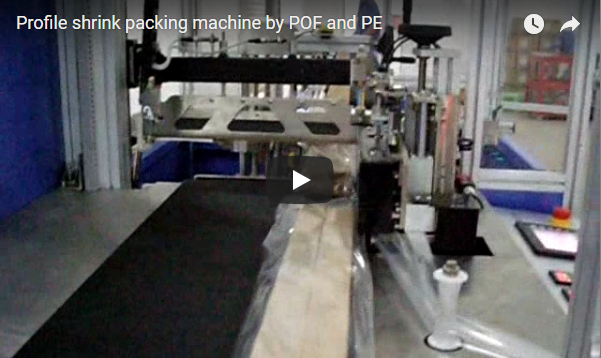
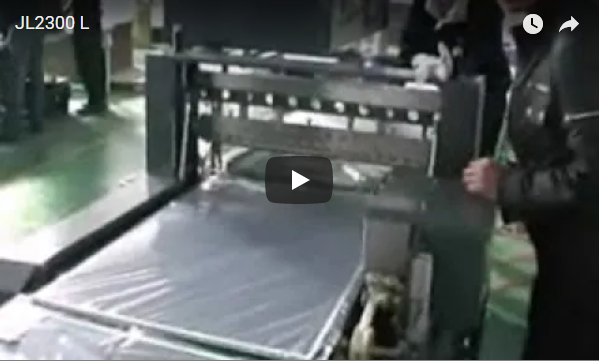
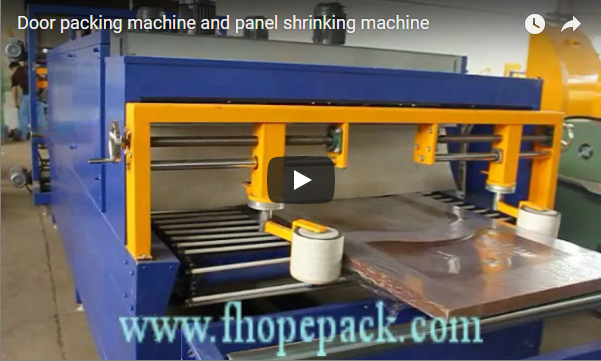
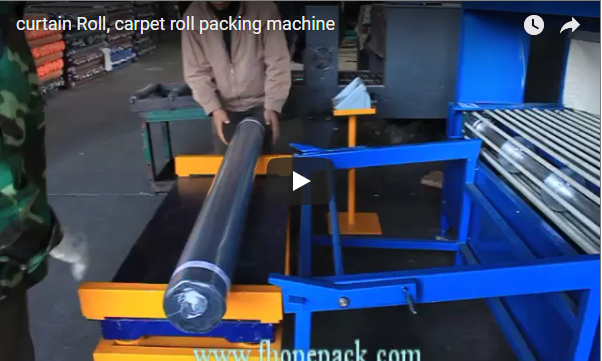
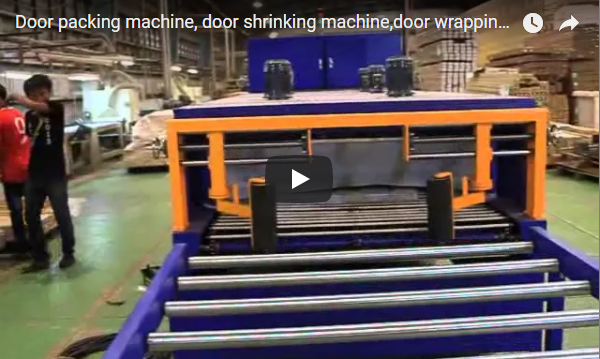
Our footage shows the film dropping over a sofa on the line, the cover being pulled around the piece, and operators folding and sealing the ends. It is a general demonstration, so your sofa size, film type and line height are confirmed with us per project.
Typical configuration
Figures below list functional design boundaries rather than numeric values, and are confirmed per project.
| Parameter | Typical range, confirmed per project |
|---|---|
| Load | sofa on line |
| Cover | overhead film carriage |
| Material | transparent film |
| Finish | manual fold and seal |
| Layout | infeed, covering, outfeed |
| Electrical supply | 380 V three phase 50 Hz, or 220 V single phase for light machines, selected per project |
Selection checklist
| Question | Confirm per project |
|---|---|
| Sofa range | length, width, height, weight |
| Film | width, thickness, type |
| Line | conveyor height, speed |
| Finish | automatic or manual seal |
| Layout | infeed and outfeed space |
| Electrical supply | voltage, phase and frequency on site |
Operation and safety
Place the sofa on the line and start the film feed; the overhead carriage unrolls the film over the piece as it moves, and operators fold and seal the ends at the finishing station. Keep clear of the gantry and the film travel while the line runs.
Routine checks cover the film rolls, the gantry and the conveyor, per the machine manual. Confirm the film is threaded before each run.
Engineering FAQ
Q: What does this machine do? A: It lays a full film cover over a sofa as it moves down the line.
Q: Why cover a sofa in film? A: A full film skin keeps the outer surface clean and stable in transit.
Q: How is the film applied? A: An overhead carriage drops wide film over the sofa as it moves forward.
Q: How is the cover finished? A: Operators fold the loose ends inward and seal them flat.
Q: What does it suit? A: Sofas and similar soft, bulky furniture pieces.
Next step
- Email us at info@fhopepack.com with your sofa size and output.
- We send a packing line proposal and a layout drawing within 48 hours.
- We confirm the film type and line height against your furniture range.
Related reading
- Sofa packing machine & furniture packaging line
- Automatic board packing line
- Cabinet bubble film packing machine
- FHOPE packing machinery product lines
Sources and standards
- ISO 12100:2010 Safety of machinery, general principles for design and risk assessment
- EN 415-10:2014 Safety of packaging machines, general requirements
- EN ISO 13849-1:2023 Safety of machinery, safety-related parts of control systems
FHOPE sofa packing machine and furniture packaging line demonstration video. Reviewed as a general demonstration; sofa range, film type and line height confirmed per project.
Last reviewed: 2026-10-11