Executive summary Weighing and wrapping at one station saves a forklift move and a second floor position. Our turntable pallet wrapper in this video spirals clear film round a load while a digital weighing display on the column shows the reading. Net weight follows from the gross reading, minus the pallet and film weight. We set the scale to your loads.
Table of Contents
- What the video shows
- How weighing and wrapping work together
- Net weight from the gross reading
- Stretch film laid per load
- Controls and safety
- Selection checklist for a pallet wrapper with scale
- Engineering FAQ
- Next step
- Related reading
- Sources
What the video shows
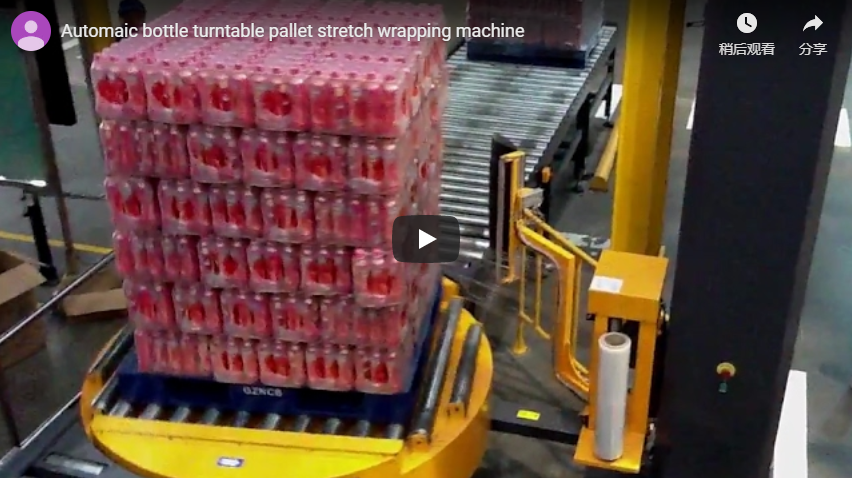
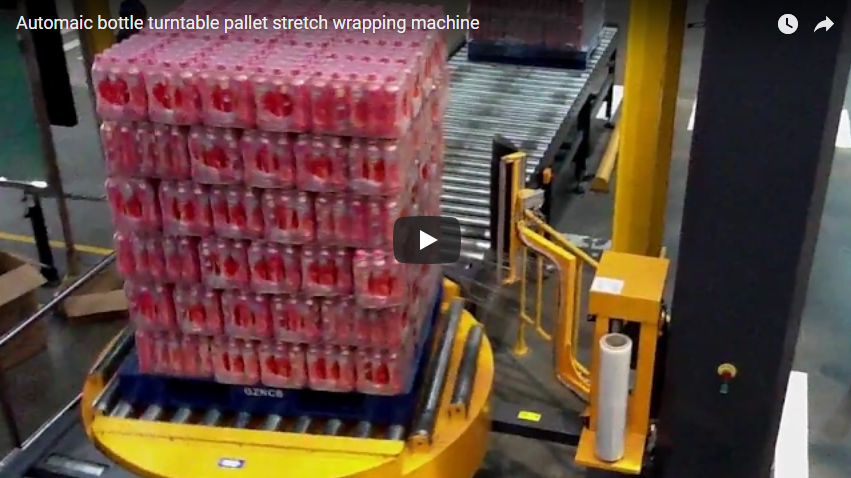
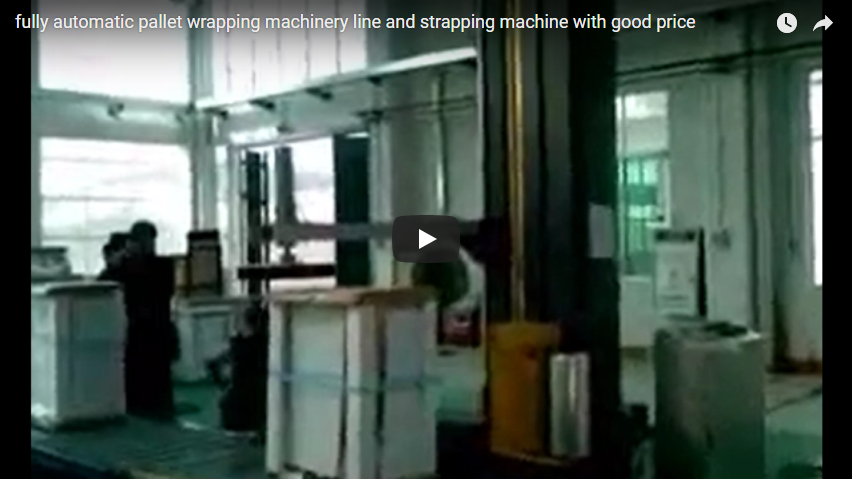
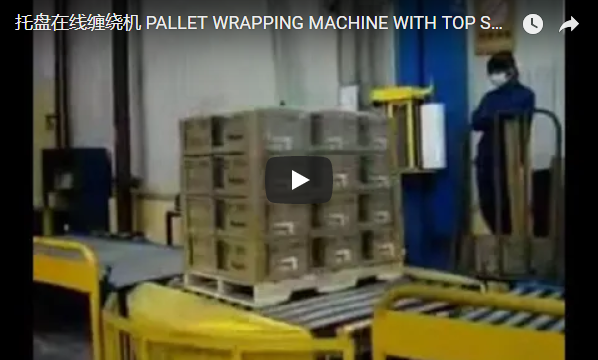
A cube-shaped pallet load stands on the yellow turntable of our wrapper, with a tall dark column behind it. The film carriage on the column travels up and down while the turntable turns, laying clear film around the load in a spiral.
A small digital display is mounted on the column; in the clearest shot it reads 0.00. At the end the load is fully wrapped and the carriage rests at a low position. The machine runs with no one in the shot.
How weighing and wrapping work together
| Step | What happens |
|---|---|
| Load | The pallet is set on the turntable |
| Wrap | The turntable turns and the carriage lays film |
| Finish | The carriage stops low and the film is cut |
| Weigh | The display shows the gross weight of the wrapped load |
| Remove | The wrapped load is taken off |
One position for weighing and wrapping means each load is handled once instead of twice.
Net weight from the gross reading
Illustrative example:
| Item | Value |
|---|---|
| Gross reading after wrapping (illustrative) | 1,025 kg |
| Wooden pallet (illustrative) | 25 kg |
| Film used (illustrative) | 0.6 kg |
| Net goods, 1,025 − 25 − 0.6 | 999.4 kg |
If you weigh before wrapping instead, leave the film out of the sum.
Stretch film laid per load
| Item | Value |
|---|---|
| Load footprint (illustrative) | 1,200 × 1,000 mm |
| Perimeter, 2 × (1,200 + 1,000) | 4,400 mm |
| Turns (illustrative) | 12 |
| Film laid, 12 × 4.4 m | about 53 m |
That is film laid on the load; pre-stretch means the roll pays out less.
Controls and safety
The turntable turns a full load and the carriage moves on the column. Keep clear of the turntable while it turns, and step in only when the cycle has stopped. For pallet wrapping machines, EN 415-6 adds the specific safety requirements.
The standards that apply depend on the destination market. For CE markets, ISO 12100 sets the risk-assessment method and EN 415-10 sets general requirements for packaging machines.
Selection checklist for a pallet wrapper with scale
- Heaviest load and pallet size.
- Weighing range and the reading you need.
- Whether the weight is printed or sent to your system.
- Load height and film plan.
- Loads per hour.
- Forklift or pallet jack loading.
Engineering FAQ
Q: Why weigh on the wrapper? A: Weighing and wrapping at one position handles each load once.
Q: How is net weight worked out? A: Gross minus pallet minus film: 1,025 − 25 − 0.6 kg gives 999.4 kg in our example.
Q: Should the load be weighed before or after wrapping? A: Either. After wrapping, subtract the film as in our example; before wrapping, leave it out.
Q: How much film does a load take? A: Turns × load perimeter: about 53 m laid for 12 turns on a 1,200 × 1,000 mm load in our example; pre-stretch means the roll pays out less.
Q: Which safety standard applies? A: For CE markets, EN 415-6 covers pallet wrapping machines.
Next step
We plan your pallet wrapper with scale in three steps:
- Submit your layout drawing with load sizes, weights and output to info@fhopepack.com.
- Receive a proposal within 48 hours, with the weighing and film plan.
- Book a site survey to check loading method and floor space.
Related reading
- Automatic pallet wrapping machine
- Video: pallet wrapping machine with automatic film cutting
- Video: semi-auto pallet stretch wrapping machine A100
Sources
- Machine content: FHOPE engineering team, 2026-10-04
- Pallet wrapper safety: EN 415-6
- Weight and film examples: our worked examples, illustrative values
- Machine in action: our video on YouTube
- Standards scope: ISO 12100:2010, EN 415-10:2014
Last reviewed: 2026-10-04