Overview
A mold flipper lift table is a hydraulic table that lifts one plate through 90° to turn a heavy mold onto its side; a folding bellows guard closes the gap that opens under the rising plate. This guide is for mold, stamping and injection workshop engineers and buyers deciding on a flipper by mold mass, centre-of-gravity moment, table footprint and guard coverage. The FPMT-10 handles molds up to 10 t and the FPMT-30 up to 30 t, with each flip taking 15–30 s. A worked example below finds the balance point of a 12 t mold and shows which model it needs.
What the lift table does
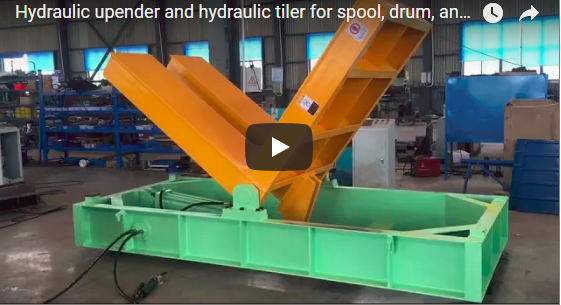
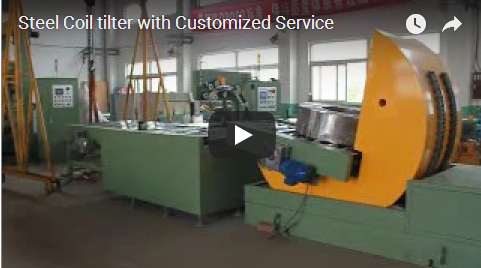
The machine is a long, low green table on the shop floor, with its control panel at one end. A large mold is set on the table by crane. At the press of a button, one half of the table rises on hydraulic cylinders, pivoting near the middle, and the mold turns with it until it stands on its side. The plate then comes back down, and the table is flat and ready for the next mold.
Turning a mold this way replaces flipping it on crane chains (see why 90° mold upenders are replacing overhead cranes), where the mold can swing and land hard. The flip is slow and controlled, and the mold is supported on a plate the whole time.
Why the bellows guard matters
As the plate rises, it opens a wedge-shaped gap above the base. A hand or foot in that gap would be crushed when the plate comes down. The table closes the gap with a black folding bellows guard. It is folded flat against the side of the table when the plate is down. As the plate lifts, it opens into a fan that covers the whole wedge, and it folds back as the plate returns.
The balance point of a turning mold
The load on the cylinders changes through the flip. At the start, the mold’s weight acts at its centre of gravity, out from the pivot, so the cylinders carry the largest turning load. As the plate rises, the centre of gravity moves towards a point above the pivot, and the load falls.
At the balance angle, the centre of gravity is directly above the pivot. Past that angle, the mold wants to tip onto its new face. The hydraulic circuit then has to hold the load back, so the plate lowers the mold instead of letting it fall. The valve arrangement for this over-centre stage is set to the mold weight and confirmed at quote.
For a mold sitting tight against the pivot, the balance angle is θ = arctan(x ÷ y). Here x is the distance from the pivot to the centre of gravity along the plate, and y is the height of the centre of gravity above the plate. The turning load is M = m × g × r × cos(θ + φ), where r = √(x² + y²) and φ = arctan(y ÷ x).
FPMT model data
| Item | FPMT-10 | FPMT-30 |
|---|---|---|
| Max load | 10 t | 30 t |
| Table L × W × H | 3,000 × 2,000 × 400 mm | 3,500 × 2,500 × 450 mm |
| Motor power | confirmed at quote | confirmed at quote |
| Rotation | 90° | 90° |
| Flip cycle | 15–30 s | 15–30 s |
The drive is sized with a 20% allowance over the rated load. Both tables are built to the mold, and 180° flippers are also built.
Worked example: a 12 t mold
Illustrative mold: 12 t, 1,600 mm long along the lifting plate and 1,200 mm high, set tight against the pivot, with its centre of gravity at its centre.
| Check | Calculation | Result |
|---|---|---|
| Rated load needed | 12 t is already over the FPMT-10’s 10 t; with 20% allowance, 12 × 1.2 | 14.4 t, so FPMT-30 |
| Footprint | 1,600 mm on a 3,500 × 2,500 mm table | fits |
| x, y | 1,600 ÷ 2, 1,200 ÷ 2 | 0.8 m, 0.6 m |
| Balance angle | arctan(0.8 ÷ 0.6) | ≈ 53° |
| Turning load at the start | 12,000 × 9.81 × 0.8 | ≈ 94 kN·m |
| Turning load at 53° | centre of gravity above the pivot | 0 |
Result. The 12 t mold is over the FPMT-10’s rating before any allowance, so it goes on the FPMT-30. The cylinders carry about 94 kN·m at the start, and the load falls to zero at about 53°. From 53° to 90° the mold leans onto its new face, so the plate lowers it the last 37° under control. A taller mold has a lower balance angle and tips over sooner.
Applications
- Turning injection and die-casting molds for maintenance and polishing.
- Opening and closing heavy molds for inspection.
- Turning dies, castings and heavy fixtures before machining.
Selection checklist
- Mold weight, with 20% allowance.
- Mold length, width and height, and the shape of its base.
- Turning angle: 90° or 180°.
- Crane or forklift loading.
- Floor space and power supply.
- Send mold weight, size and base shape to info@fhopepack.com.
- The table and drive are sized to the mold envelope and mass.
- A layout and quotation are provided after the details are confirmed.
- 90 degree mold flipper for 10T (product)
- 90 degree mold flipper for 30T (product)
- Mold flipper table, 180° (product)
- Why 90 degree mold upenders are replacing overhead cranes
- Big frame flipper for 180 degree turning
- FHOPE product pages: 90 degree mold flipper for 10T and 30T; mold flipper table (spec values in the FPMT model data and the worked example).
- Machine features described from our video of the mold flipper lift table.
- Worked example: illustrative figures; g = 9.81 m/s².
- Standards scope: ISO 12100; EN 415-10 — referenced for design and risk assessment.
Safety: EN 415-10 and ISO 12100
The table references EN 415-10 with an ISO 12100 risk assessment as the design basis; certification of a delivered machine is confirmed in the project ordering agreement. The main hazard is the crush gap under the rising plate, which the bellows guard closes. The operator works from the panel at the end of the table, clear of the plate and the mold.
Engineering FAQ
Q: Why does the shape of my mold matter?
A: The table is sized to the mold base. The table size also drives the cost, so the mold shape is requested before quoting.
Q: How long does one flip take?
A: 15–30 s, depending on the mold weight and the table.
Q: Can it turn a mold through 180°?
A: This table turns 90°. 180° mold flippers are built as well.
Q: What happens past the balance point?
A: The mold leans onto its new face. The hydraulics hold it back, and the plate lowers it the rest of the way.
Q: Does the table need a pit?
A: The table shown stands on the shop floor at 400–450 mm high. Floor loading and anchoring are checked against your mold weight in the layout.
Q: Which standard applies?
A: EN 415-10 for the machine and ISO 12100 for the risk assessment, as an engineering design reference framework; delivery certification is confirmed in the project ordering agreement.