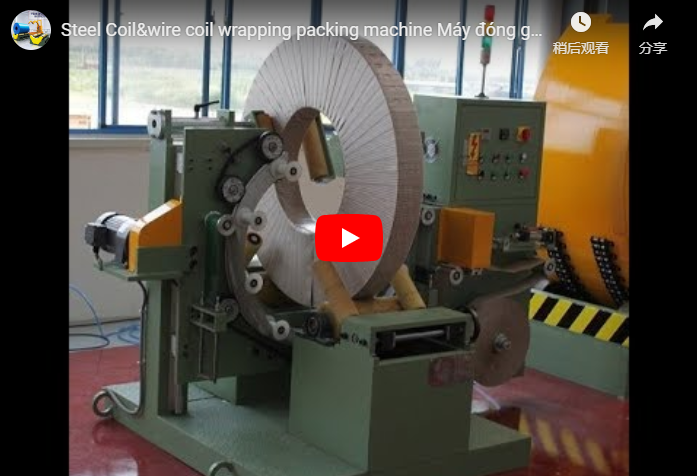
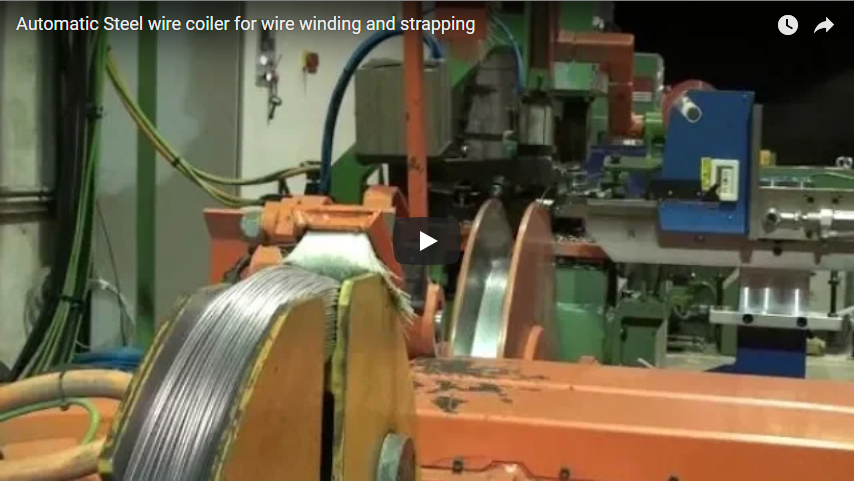
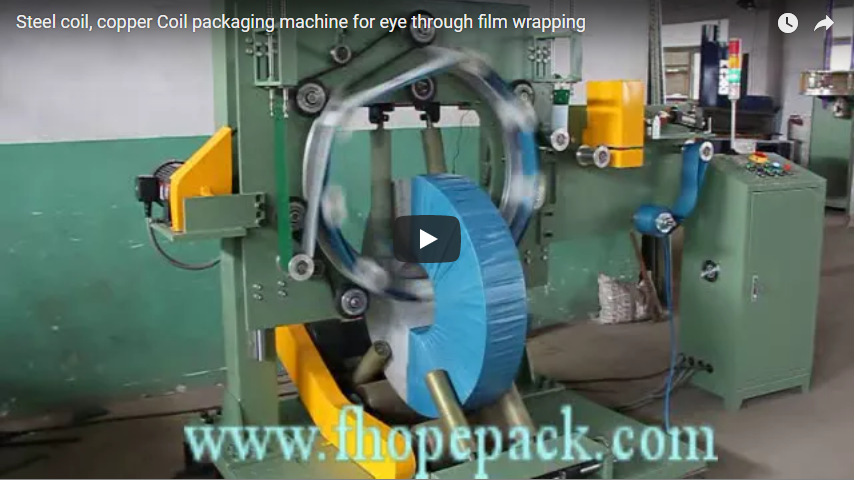
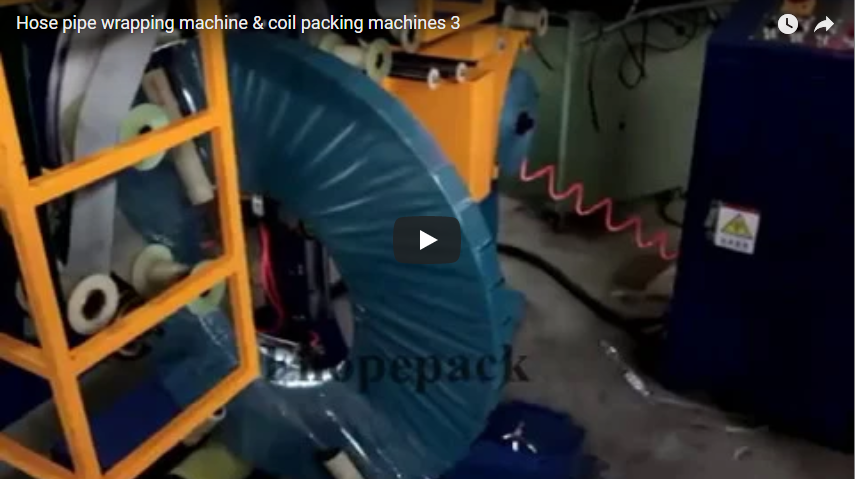
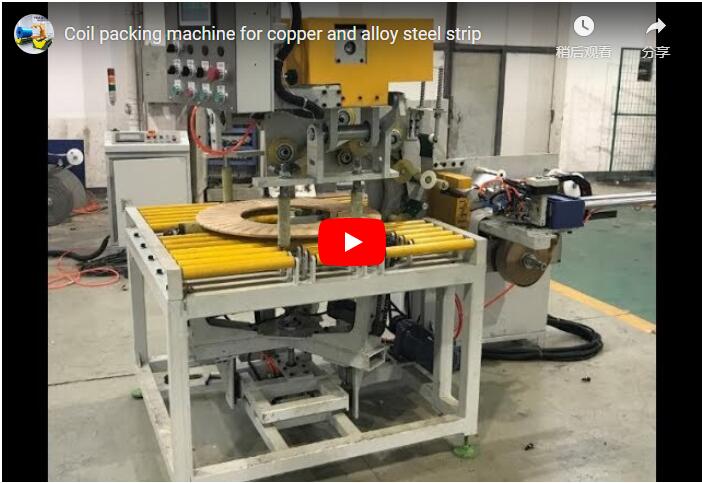
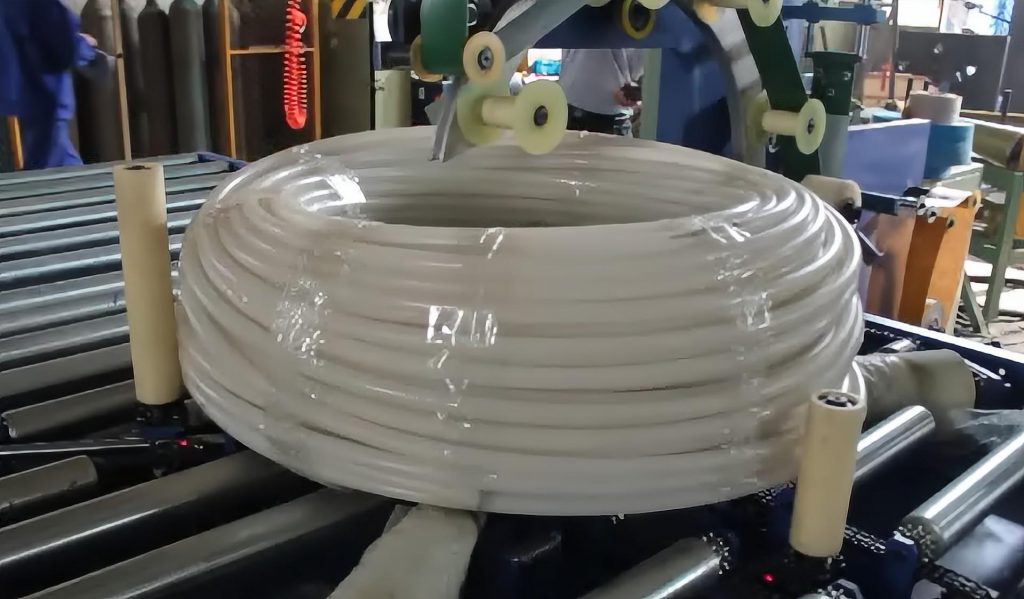
Executive summary This clip shows one of our slit coil packing lines in our workshop. A blue upender turns each coil, an orbital ring wraps it eye-through with stretch film, and a yellow gantry lifts the wrapped coils off the conveyor and stacks them. How much the film overlaps on each pass decides how many ring turns a coil needs, so we set it per coil size and protection level.
Table of Contents
- What the clip shows
- Why tilt, then wrap, then stack
- Ring turns per coil
- What we set per line
- Selection checklist
- Safety
- Engineering FAQ
- Next step
- Related reading
- Sources
What the clip shows
| Step | What you see |
|---|---|
| Workshop | Several of our coil lines under assembly |
| Tilting | A blue upender turns a coil on the line |
| Wrapping | An orbital ring wraps the coil eye-through on a roller conveyor |
| Stacking | A yellow gantry picks the wrapped coils and stacks them |
| Outfeed | Stacks move on along a long conveyor |
Why tilt, then wrap, then stack
- Tilt first. The coil is turned to the position the wrapper needs, so the ring can pass through the eye.
- Wrap next. Film covers the coil faces, edges and bore before anyone handles it.
- Stack last. The gantry only touches wrapped coils, so the film takes any contact.
- One flow. Each station hands the coil to the next on conveyors, with no crane moves.
Ring turns per coil
Worked example (illustrative).
| Item | Value |
|---|---|
| Film width (illustrative) | 100 mm |
| Overlap per pass (illustrative) | 50% |
| Advance per ring turn, 100 × 0.5 | 50 mm |
| Coil outer circumference (illustrative) | 3,000 mm |
| Ring turns for one layer, 3,000 ÷ 50 | 60 turns |
This is a simple outer-circumference estimate; on the line we also allow for coil width and extra overlap at the bore.
What we set per line
| Setting | Depends on |
|---|---|
| Overlap | Protection level and transport |
| Film | Stretch film width and pre-stretch |
| Tilt | Coil weight and target position |
| Stacking | Coils per stack and layer pads |
Selection checklist
- Coil OD, ID, width and weight.
- Coil position in and out of the line.
- Film overlap and layers.
- Coils per hour.
- Stack pattern.
- Floor space.
Safety
- Keep clear of the upender and wrapping ring while they move.
- Stay outside the fenced gantry area.
- Lock out before clearing a film jam.
- For CE markets, the machine is designed to ISO 12100 and EN 415-10.
Engineering FAQ
Q: What does the line do? A: It tilts each slit coil, wraps it eye-through with film and stacks it with a gantry.
Q: Why tilt before wrapping? A: The upender turns the coil 90 degrees so the ring shuttle can pass through the open bore.
Q: How many ring turns does a coil need? A: Circumference divided by advance per turn; 60 turns at 50% overlap on 100 mm film in the worked example.
Q: What overlap do you use? A: We set it per protection level and transport route.
Q: Can the gantry stack different coil sizes? A: Yes, we set the stack pattern per coil size.
Q: Which standards apply? A: For CE markets, ISO 12100 and EN 415-10.
Next step
We match a slit coil packing line in three steps:
- Submit your layout drawing with coil sizes, weights and coils per hour, to info@fhopepack.com.
- Receive a proposal within 48 hours with the machine data and layout.
- Book a site survey so we confirm the slitter exit layout.
Related reading
- Coil Tilter with 180 Degree Rotary Base
- Slit Coil Strapping, Wrapping and Stacking Line
- Automatic Steel Coil Stacking and Palletizing Gantry
- Slit coil packing line
Sources
- Machine content: FHOPE engineering team, 2026-10-10
- Clip: the video on YouTube
- Ring turns: our worked example, illustrative values
- Standards scope: ISO 12100:2010; EN 415-10:2014
- Proposal timing: approved house CTA (proposal within 48 hours)
Last reviewed: 2026-10-10