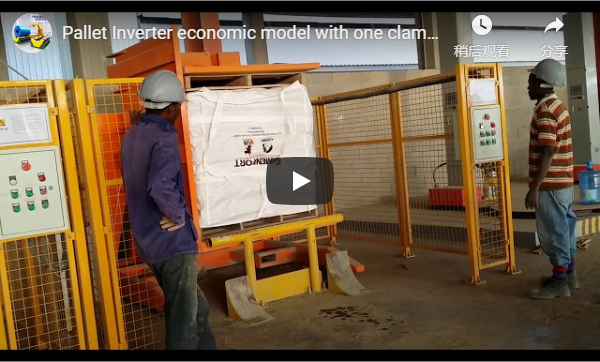
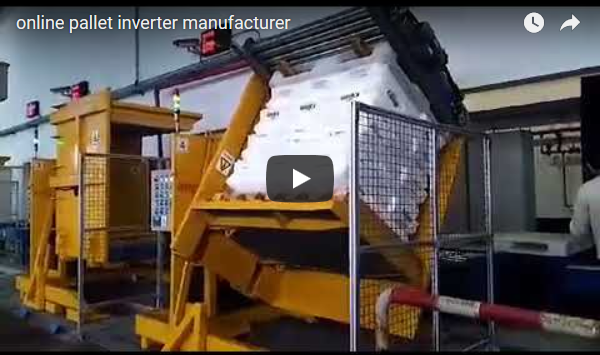
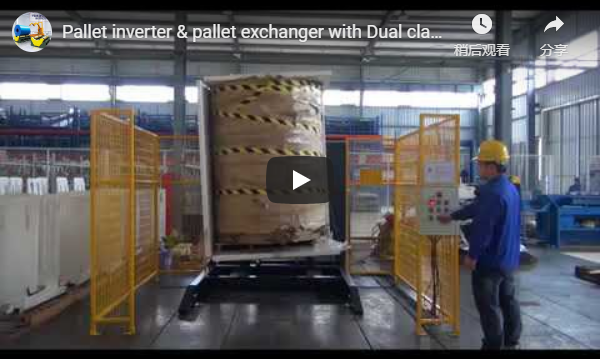
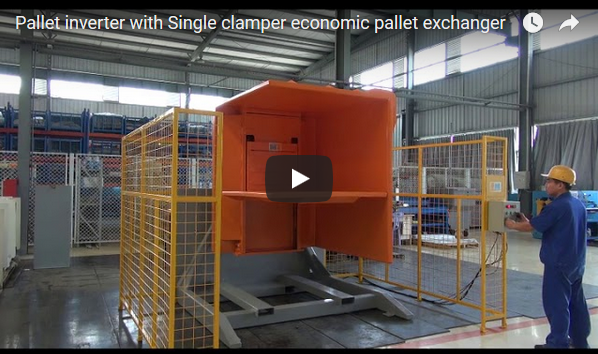
Summary: An illustrative benchmark demonstrates how integrating a 95° pallet exchanger with a servo-driven stretch wrapper stabilizes high-value cold-chain loads, eliminates manual handling risks, and reduces film consumption through programmable tension control, delivering measurable throughput and safety improvements.
On a typical loading dock, shift supervisors frequently review damage reports where mixed pallets shift during manual swaps, crushing bottom-tier inventory despite adequate shrink wrap. The root cause rarely stems from film failure alone; it originates from uncontrolled lateral forces introduced during manual handling. This operational reality drives procurement teams to evaluate automated solutions that combine mechanical pallet exchange with precision stretch wrapping, ensuring load integrity from dock to trailer.
🛠️ Operational Context & Baseline Requirements
Integrating automated load stabilization with mechanical pallet exchange eliminates manual handling risks while standardizing film tension across mixed-weight SKUs, directly addressing cold-chain throughput bottlenecks, reducing material waste, and ensuring compliance with industrial safety mandates and long-term liability exposure.
Regional cold-storage distributors typically manage temperature-controlled facilities serving retail, pharmaceutical, and e-commerce channels. Baseline operations frequently process mixed pallet loads weighing between 1,000 kg and 2,000 kg, utilizing standard Euro and INDUSTRIAL pallet configurations. Rising labor costs, stringent food-grade safety audits, and cold-environment fatigue drive management to modernize packaging workflows. Legacy lines often rely on semi-automatic stretch wrappers with mechanical tension drift, forcing operators to compensate with excessive film layers. More critically, manual tilting methods for pallet replacement create hazardous pinch points and routinely destabilize loads. Procurement objectives center on deploying equipment rated for sub-zero environments that integrates seamlessly into existing conveyor rhythms without requiring structural facility redevelopment or new utility infrastructure.
🏗️ Technical Friction Points & Failure Modes
Inconsistent mechanical tension and uncontrolled lateral forces during manual pallet transfers create compounding damage risks, forcing operators to overwrap with excess film while exposing personnel to repetitive strain and pinch-point hazards, ultimately inflating operational overhead and compromising downstream sorting efficiency.
Three primary technical friction points typically degrade packaging line performance:
| Friction Point | Technical Description | Direct Business Impact |
|---|---|---|
| Manual pallet exchange | Operators use forklifts and levers to tip heavy loads without precise angle control | Glass and electronics suffer impact damage; recurring minor injuries increase workers’ compensation premiums and reduce shift productivity |
| Aging stretch wrapper | Carriage motor drift causes variable pre-stretch ratios (mechanical elongation of film to reduce material use) | Operators overwrap with 15–20% more film to compensate for tension loss, directly inflating resin procurement costs |
| Mixed-load inflexibility | Inability to adjust tension quickly between fragile and heavy SKUs | Over-processing delicate goods wastes film; under-wrapping long-haul loads causes transit damage and failed automated conveyor sorting downstream |
The cumulative effect creates a fragile operation where packaging technology lags behind throughput demands. Addressing only the wrapper fails to resolve core instability from pallet handling, necessitating a holistic integration approach that stabilizes loads at the source while standardizing film application parameters.
🔗 Related: Explore more solutions
📈 System Architecture & Control Parameters
A servo-driven wrapping head paired with a 95° hydraulic exchanger delivers programmable tension control and consistent pre-stretch ratios, stabilizing heterogeneous loads while reducing floor footprint, minimizing material consumption, and eliminating manual intervention to ensure repeatable load integrity across all shift cycles.
System design relies on three calibrated parameters that directly influence operational efficiency:
-
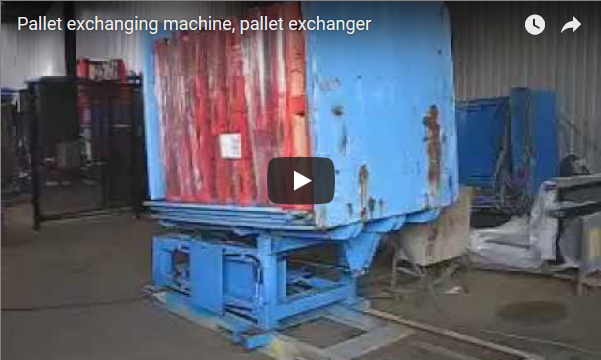
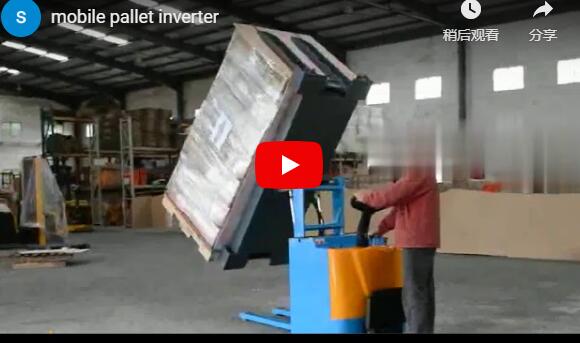
Pallet exchanger tilt angle: A 95° hydraulic transfer angle allows gentle load movement without sliding or tipping. Speed-controlled cylinders reduce peak lateral forces below 50 N, preventing stack displacement and protecting fragile electronics or glass packaging.
-
Stretch wrapper specifications: Servo motors enable 250% pre-stretch capability, meaning the film is mechanically elongated before application, reducing material thickness requirements. Tension is adjustable from 10 N to 80 N in 1 N increments, ensuring consistent wrap force regardless of load height. Film selection typically utilizes cast polyethylene (smooth, high-clarity film optimized for high pre-stretch) at 20–30 micron gauge (1 micron = 0.001 mm, dictating puncture resistance and tear strength).
-
Control integration: Both units synchronize via a PLC (Programmable Logic Controller, an industrial computer that automates machine sequences and stores operational data). Recipe storage supports up to 50 load profiles, allowing shift supervisors to switch between fragile glass and heavy steel containers in under 30 seconds without manual recalibration.
For facilities evaluating budget alternatives, semi-automatic turntable models offer 200% pre-stretch at lower capital expenditure, while fully automatic systems add conveyor integration and automatic film carriage for high-throughput environments. Both configurations comply with CE marking for machinery safety and align with ISO 2560 (stretch film testing) and ASTM D5457 (pallet load stability) standards.
🛡️ Commissioning Protocol & Integration Timeline
Standard commissioning requires 5–7 business days for mechanical alignment, 380V three-phase electrical integration, and PLC recipe programming, ensuring immediate operational readiness without facility retrofitting, extended production downtime, or specialized utility upgrades, allowing rapid deployment within existing warehouse footprints.
Implementation follows a structured deployment sequence to minimize production disruption:
| Phase | Duration | Technical Activity |
|---|---|---|
| Site preparation | 1 day | Floor marking, power drop (380V, 3-phase, 16A), compressed air line at 6 bar for hydraulic exchanger |
| Mechanical installation | 3 days | Unload, position, and level both units; connect conveyor sections and safety light curtains |
| Electrical & controls | 1.5 days | PLC wiring, HMI configuration, and recipe upload for 5 standard load types |
| Training & ramp-up | 0.5 day | 2-hour operator certification + 1-hour supervisor session; initial test run of 50 pallets |
Operators typically achieve proficiency within the first shift. The PLC recipe system eliminates manual film adjustments after initial calibration, reducing changeover errors and ensuring consistent wrap patterns across all production runs.
🔗 See Also: Related equipment
⚙️ Performance Benchmarks & Financial Modeling
Aggregated industry data indicates a 14–18 month payback period driven by 25–35% film reduction, 60–75% damage claim mitigation, and labor reallocation, though exact returns depend on local throughput, regional labor rates, and current resin pricing, requiring site-specific validation.
Illustrative performance benchmarks, derived from cross-referenced industry averages, demonstrate typical outcomes after 90 days of operation:
| Metric | Baseline Average | Post-Implementation Benchmark | Change |
|---|---|---|---|
| Damage claims (per month) | 14 cases | 3.8 cases | -73% |
| Film usage (kg per 1,000 pallets) | 68 kg | 49 kg | -28% |
| Pallet exchange time (per unit) | 4.2 min | 1.7 min | -60% |
| Hand injuries (rolling 12 mo) | 5 incidents | 0 incidents | -100% |
| Operator headcount at exchange station | 2 per shift | 1 per shift | -50% |
The 28% film reduction stems directly from consistent pre-stretch, which eliminates the overwrapping previously required to compensate for mechanical tension drift. The 73% damage reduction correlates with the 95° exchanger removing lateral forces during pallet swaps.
Financial Modeling Note: Based on current market data (as of Q3 2024), combined system pricing ranges from $65,000 to $85,000 for servo-driven wrappers paired with 95° exchangers, including conveyors and installation. Annual savings typically total $40,000–$55,000, driven by damage mitigation, film waste reduction, and labor reallocation. Payback periods generally fall between 14–18 months. Facilities processing fewer than 20,000 pallets annually may experience extended payback up to 24 months, while high-volume operations (50,000+ pallets) often achieve payback under 12 months. ROI and savings are model-based estimates derived from industry averages and are not guaranteed results; actual performance will vary based on local labor rates, film resin pricing, and specific throughput volumes.
🛠️ Procurement Evaluation Matrix
| Item | Recommended Criteria | Direct Business Impact | Pass / Fail |
|---|---|---|---|
| Load weight & size | Confirm machine capacity ≥ max pallet weight + 20% margin | Prevents motor overload and structural fatigue during peak shifts | ☐ |
| Film type | Cast PE for general use; blown PE for sharp-edged loads | Cast film maximizes pre-stretch efficiency; blown film provides puncture resistance for irregular edges | ☐ |
| Pre-stretch ratio | Minimum 200% suggested; 250% for film cost reduction | Higher pre-stretch directly lowers resin consumption and reduces material procurement costs | ☐ |
| Pallet exchange angle | 90–95° for gentle transfer; avoid steeper angles | Reduces lateral forces on stacked goods, minimizing transit damage and insurance claims | ☐ |
| Cold-chain rating | Ensure motors, seals, and lubricants rated for -10 °C or lower | Prevents hydraulic fluid thickening and motor failure in sub-zero environments | ☐ |
| Recipe profiles | At least 10 profiles for mixed-load flexibility | Eliminates manual recalibration time, reducing changeover downtime and operator error | ☐ |
| Safety compliance | CE marking required for EU; verify ANSI/PMMI for North America | Ensures regulatory compliance and reduces liability exposure during audits | ☐ |
| Budget (semi-auto) | $3,000–$15,000 for standalone wrapper; add $10,000–$20,000 for exchanger (as of 2024) | Aligns capital expenditure with throughput requirements and facility constraints | ☐ |
| Budget (full auto) | $20,000–$150,000+ depending on throughput and conveyor integration (as of 2024) | Scales with high-volume operations and automated downstream sorting requirements | ☐ |
🏗️ Technical FAQ
Q: Can I add a pallet exchanger to an existing stretch wrapper?
A: Yes, provided the wrapper has adequate floor space and conveyor height matches the exchanger discharge level. Expect additional integration costs of $8,000–$15,000 for PLC synchronization and safety circuit upgrades.
Q: What film thickness should I use for cold storage?
A: 23–27 micron cast PE performs optimally for most frozen goods due to its smooth surface and high pre-stretch compatibility. For loads with sharp corners or protruding edges, switch to blown PE in the same gauge range to improve puncture resistance. Verify temperature ratings with your resin supplier.
Q: How long does training take for a new system?
A: Most operators achieve proficiency within 2–4 hours. Recipe-based PLCs significantly reduce the learning curve by automating tension and wrap-count adjustments, minimizing manual intervention and calibration errors.
Q: Is the 95° exchanger safe for fragile electronics?
A: Yes, when equipped with speed-controlled hydraulics and padded load supports. The lateral force typically remains below 50 N, comparable to gentle conveyor merging. Always validate with sample loads before full deployment to ensure compatibility with your specific packaging configuration.