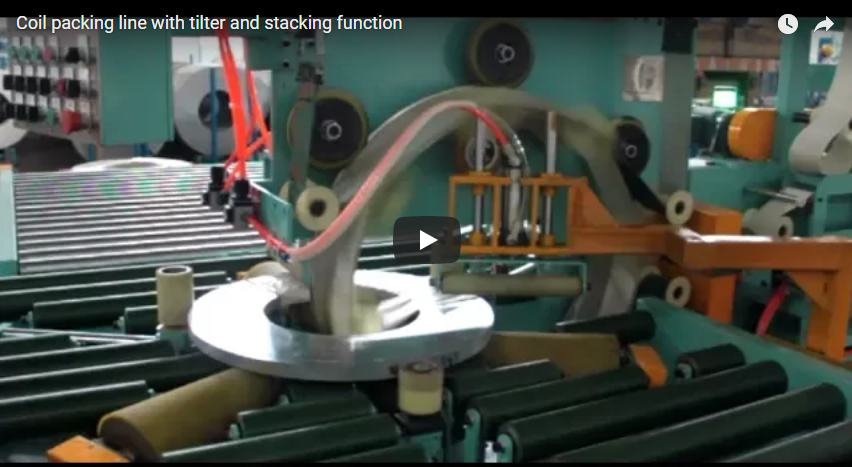
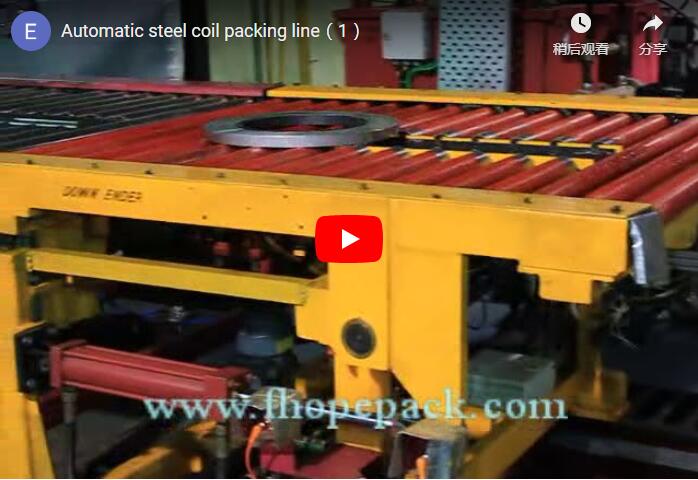
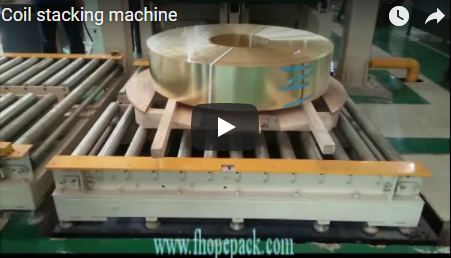
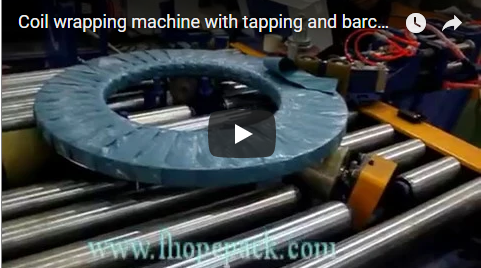
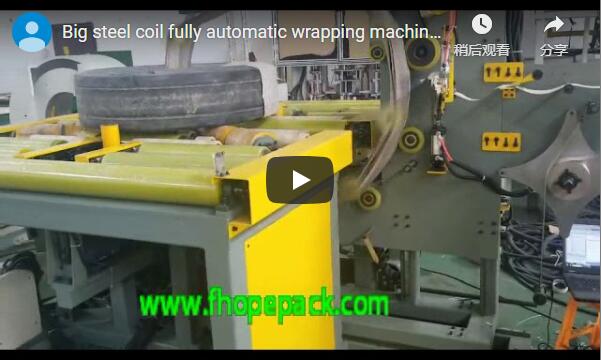
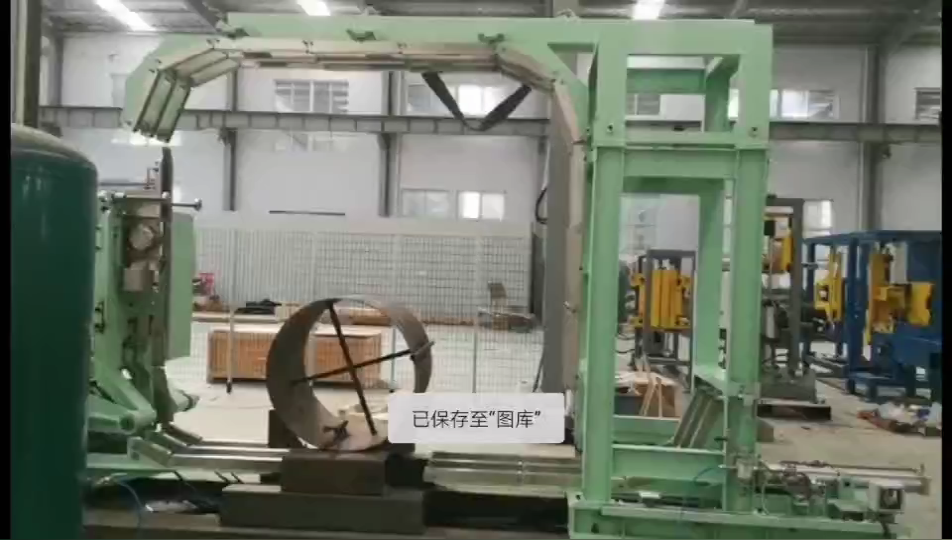
Executive summary This clip shows our slit coil line packing narrow coils with no hands on the coil. A blue tilter turns the coil, an orbital ring wraps it eye-through on yellow rollers, and a strapping station bands each coil while it sits on the conveyor. Each machine works inside its own fenced zone, so staff load film and strap from outside and do not reach in while a machine runs.
Table of Contents
- What the clip shows
- Safety zones on the line
- Exposure removed
- What we set per line
- Selection checklist
- Safety
- Engineering FAQ
- Next step
- Related reading
- Sources
What the clip shows
| Step | What you see |
|---|---|
| Tilting | A blue tilter turns a coil |
| Wrapping | An orbital ring wraps a coil eye-through on yellow rollers |
| Strapping | A blue strapping station bands narrow coils |
| Repeat | Coil after coil is strapped without anyone touching it |
| Conveyor | Coils leave on powered rollers |
Safety zones on the line
| Zone | Hazard | How staff stay out |
|---|---|---|
| Tilter | Moving cradle and coil | Fence and interlocked gate |
| Wrapper | Rotating ring | Fence and light curtain |
| Strapping | Strap head and tension | Guarded head, hold-to-run reset |
| Stacker | Moving gantry | Fence and interlocked gate |
Exposure removed
Worked example (illustrative).
| Item | Value |
|---|---|
| Coils per shift (illustrative) | 200 |
| Hand contacts per coil, manual packing (illustrative) | 4 |
| Hand contacts per shift, 200 × 4 | 800 |
| Time near the coil per contact (illustrative) | 15 s |
| Exposure per shift, manual, 800 × 15 | 12,000 s, 200 min |
| Hand contacts with the line | 0 during normal running |
What we set per line
| Setting | Depends on |
|---|---|
| Fencing | Layout and access points |
| Light curtains | Loading and outfeed openings |
| Tilter | Coil weight |
| Strapping | Straps per coil |
Selection checklist
- Coil OD, ID, width and weight.
- Coils per slitting cut.
- Straps per coil.
- Film layers.
- Stack pattern and pallet size.
- Coils per hour.
Safety
- Keep clear of the upender, strapping head and wrapping ring while they move.
- Stay outside the fenced stacking area.
- Lock out before clearing a jam.
- For CE markets, the machine is designed to ISO 12100 and EN 415-10.
Engineering FAQ
Q: What does hands-free mean here? A: Staff do not touch the coil during tilting, wrapping and strapping.
Q: Where are the safety zones? A: Around the tilter, wrapper, strapping station and stacker.
Q: How much exposure is removed? A: 800 hand contacts per shift in the worked example.
Q: How do staff reload film and strap? A: From positions outside the fence, while interlocks keep the machine stopped.
Q: Is stacking part of this cell? A: The clip shows tilting, wrapping and strapping; a stacker can be added downstream.
Q: Which standards apply? A: For CE markets, ISO 12100 and EN 415-10.
Next step
We match a slit coil packing line in three steps:
- Submit your layout drawing with coil sizes, coils per hour and layout, to info@fhopepack.com.
- Receive a proposal within 48 hours with the machine data and layout.
- Book a site survey so we confirm the access points.
Related reading
- Turnstile Slit Coil Strapping Machine
- Narrow Steel Coil Packing Line
- Coil Tilter with 180 Degree Rotary Base
- Slit coil packing line
Sources
- Machine content: FHOPE engineering team, 2026-10-10
- Clip: the video on YouTube
- Exposure removed: our worked example, illustrative values
- Standards scope: ISO 12100:2010; EN 415-10:2014
- Proposal timing: approved house CTA (proposal within 48 hours)
Last reviewed: 2026-10-10