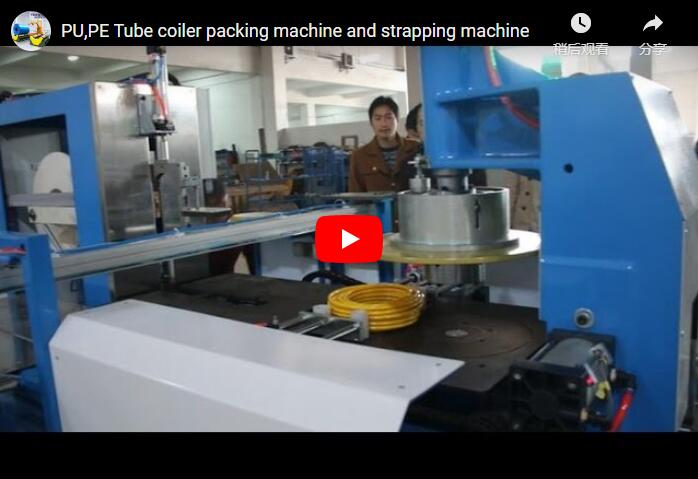
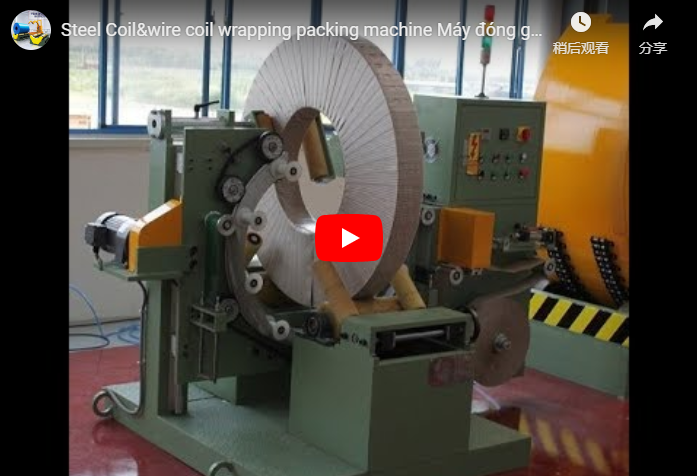
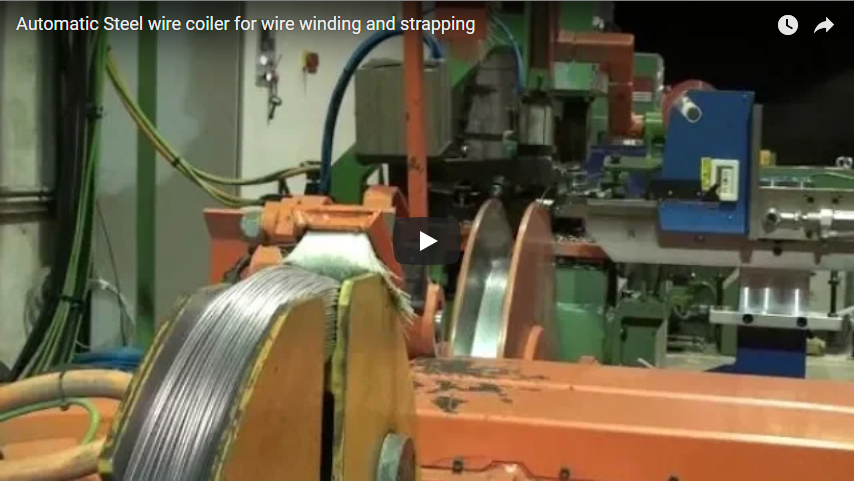
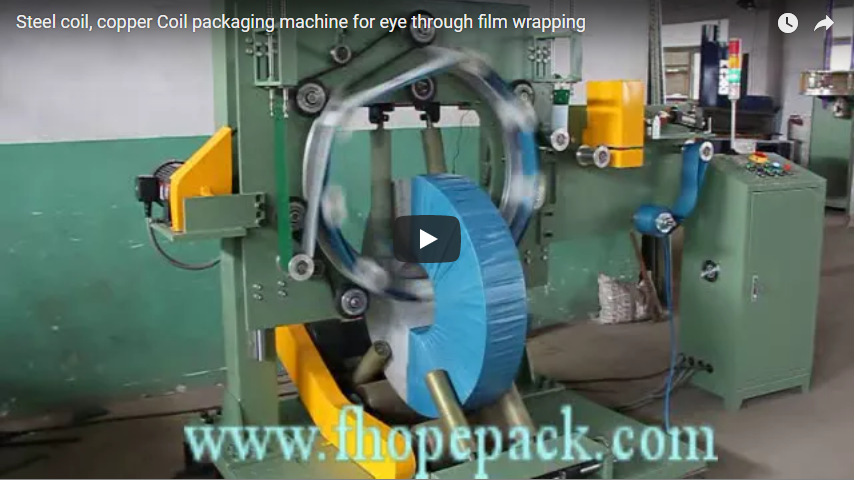
Executive summary: This review covers the manufacturer clip behind the article titled “Preventing Telescoping, Surface Scratches, and Edge Buckling: Engineering Solutions for Delicate Steel Coils”. The clip shows horizontal coils banded, film-wrapped and carried on roller conveyors. Three promises in that title are missing from the footage: no telescoped layer, no scratch and no buckled edge appears, and no tilting motion occurs either. Most frames are composite layouts, so the clip cannot settle station order or cycle time; below is what it does prove, and what to ask the supplier for instead.
https://www.fhopepack.com/orbital-stretch-wrapper.html
Who this is for: plant engineers and packaging buyers who handle steel coil and are weighing an automatic strapping, wrapping and stacking line against manual work. It separates what this 113-second clip puts on screen from what only the supplier’s engineering documents can settle.
How this review was made: The clip runs about 113 seconds. Fifty-seven still frames were sampled every two seconds, plus one frame from the final second. Each still was read on its own by a local vision model at temperature zero, and nine decisive frames were re-checked a second time. Every frame was also arbitrated as a single-camera view or an assembled layout. Stills cannot prove motion, sequence or timing.
In this review: What the video shows · Direct observation notes · What the video does not show · Claims vs footage · Stage by stage · Montage limits · Verification checklist · FAQ · Related reading · Next step
What the video shows
The clip follows one coil packaging line, from a multi-station hall to a single-camera view of a conveyor. Five operations appear clearly enough to state:
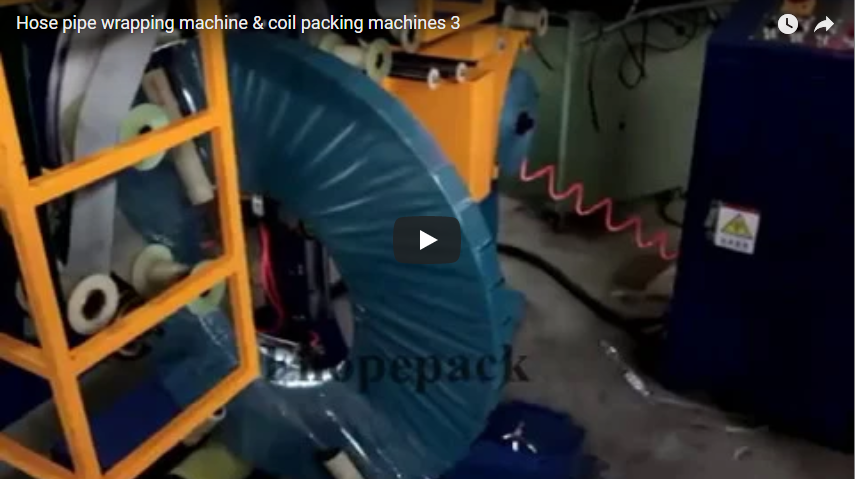
- Film wrapping. Clear stretch film covers coil bodies, and a rotating head or dispenser works above the coil.
- Banding. A band wraps around the coil body at the strapping stations.
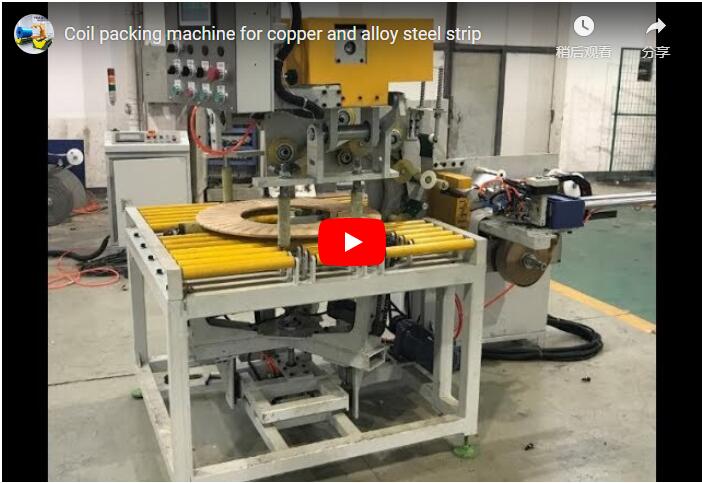
- Conveying and handling. Coils travel on yellow roller conveyors and sit on a rotating platform at several stations.
- Stacking. One frame shows several coils stacked, and a single wrapped coil lies flat on a wooden pallet under the overhead machine.
- Operators. People stand at the equipment and at a control station through the first half of the clip.
The clip’s own video title names a strapping and stacking packaging line, and both appear. What the footage never supplies is a number: no measurement, rating, setpoint or capacity figure can be read at any point in the clip.
Direct observation notes
What is readable in the frames, and what is not, so that nothing is filled in by assumption:
- Orientation. Every coil sits horizontal on a conveyor, a platform or a pallet. One first-pass read saw a vertical coil inside an inset; the re-check overruled it and found no upender.
- Film. Clear stretch film is the packaging material most clearly shown on the coil bodies.
- Bands. A band sits around coil bodies, and its material is not settled: the one re-checked band frame read soft film, and no re-checked frame read rigid metal.
- Stacking. Multiple coils are stacked in one frame that both passes agree on, and the re-check removed the stacking read on four other frames.
- Platforms and pallets. A rotating platform appears at several stations, and one coil lies flat on a wooden pallet under the machine.
- Numbers. No measurement, rating, tension, angle, rate or capacity figure can be read. The only numeric marks are an unlabelled panel display and a plate whose units cannot be established.
- Nameplate. No model number, capacity plate or rating text is readable, and the machine lettering resolves into no company name.
- People. Operators appear in fifteen frames, so this review does not claim an unmanned line.
What the video does not show
For a decision this size the gaps matter more than the footage. Nothing in the clip states:
- any telescoped layer, scratched surface or buckled edge — the three defects named in the article title;
- any prevention step for those defects: no edge protector, cushion, guide or separator appears;
- any tilt or upending angle, or one completed re-orientation cycle;
- any band tension, band material grade or film stretch ratio;
- any cycle time, line speed or output rate;
- any coil dimension, weight, grade or tolerance behind “delicate”;
- any evidence of one line: no line diagram, control screen or uninterrupted run;
- any staffing model, test report or certification.
The phrase “engineering solutions” sets the same expectation. Engineering solutions are written down: forces, tolerances, guards and test results. A camera can record equipment, not a design rationale.
What the titles claim vs what the footage proves
| Claim | What this clip supports | Status |
|---|---|---|
| Preventing telescoping | No telescoped wound layer appears on any coil in the sampled frames | Not observed |
| Preventing surface scratches | No scratch, scuff or dent appears, and the coils read as clean | Not observed |
| Preventing edge buckling | No buckled or deformed coil edge appears anywhere | Not observed |
| Tilting (article URL) | Every coil sits horizontal, and no upender device or motion appears | Not shown |
| Strapping (video title) | A band sits around coil bodies, but the material is not established | Shown, specification open |
| Stacking (video title) | Multiple coils stacked in one frame, agreed by both passes | Seen once |
| Film wrapping | Stretch film on coil bodies across many frames | Shown |
The pivot of this page is the word “preventing” in the article title. Prevention lives in a design detail: an edge protector, a tension setpoint, a guide that keeps wound layers aligned. The clip shows the machines that would carry those details, but not one of the details itself.
How the stages appear, band by band
Read as a walkthrough of what appears on screen, in the order the clip presents it:
- Band one, t≈0–14 s — the line and its stations. Coils lie horizontal on yellow roller conveyors and platforms. A vertical press frame stands over one station, a large green machine sits to the left, and operators are present.
- Band two, t≈16–36 s — handling and banding. Coils stay horizontal on conveyors and on a rotating platform, clear film appears on the coil bodies, and a band is read around a coil at two stations.
- Band three, t≈38–58 s — wrapping. Stretch film is applied across the whole band, and a rotating head or dispenser wraps the coil body.
- Band four, t≈60–112 s — overhead machines and the end of the line. Wrapped coils travel under blue overhead gantries past a control station, and one coil lies flat on a wooden pallet beneath the machine. The final thirty seconds are a single-camera view of film-wrapped coils on roller conveyors, with no operators in frame.
This is a list of what appears on screen, not a verified process order. Treat the sequence as the line’s real cycle only after one uncut run on a single camera confirms it.
Why this clip is a montage — and what that limits
Every sampled frame was arbitrated as single-camera or assembled. Forty-two of the fifty-seven frames, covering the first eighty-two seconds, are assembled layouts with one main scene and one or more insets; one of them is a four-panel grid. The final thirty seconds are a single continuous camera view.
Three consequences follow for a buyer:
- An inset may come from another machine or another moment, so panel order cannot be read as process order.
- Cutting between views breaks the clock, so no cycle time or line speed can be read from the clip.
- An edit can place side by side two stations that are not wired together as one line.
None of this makes the equipment unreal. The operations are genuine, on real coils. It does mean that the two halves of this clip cannot be shown to be the same line, and that the panel sequence is an edit, not a cycle.
Buyer’s verification checklist
| # | Ask the supplier for | Why it decides the purchase |
|---|---|---|
| 1 | The defect-prevention design: how telescoping, scratching and edge buckling are held back | These are the title’s three promises, and the footage shows none of them |
| 2 | The band specification: material, tension target and measurement point | The band material is not established by the footage |
| 3 | The wrapping film: type, stretch ratio and consumption per coil | Consumables are usually the largest running cost after labour |
| 4 | Coil data range: diameters, bores, strip width, thickness, grade and weight | Decides whether your lightest and most delicate coils fit |
| 5 | One uncut cycle, one camera, clock visible | The only footage that can support sequence and timing |
| 6 | Layout drawing and control architecture | Shows whether the stations are one line or separate units |
Work through this list before you commit:
- Our coil range sits inside the quoted envelope, in writing.
- The defect-prevention design is documented, not only named in a title.
- We have watched one full cycle, uncut, with a clock.
- Band material and tension target are named with a measurement point.
- Film cost per coil is quoted.
- Guarding, interlocks and control architecture are documented for our audit.
FAQ
Does this clip prove that the line prevents telescoping, scratches or edge buckling? No. None of the three defects appears in the fifty-seven sampled frames. The clip shows no coil that needed preventing and no step that prevents one. What it does show is real coils being banded, film-wrapped and carried.
What should I ask for instead of a video? Three documents: the defect-prevention design with its measurements, the band and film specifications with tension and stretch targets, and one uncut cycle on a single camera with a visible clock.
Is the equipment therefore unproven? The equipment is shown working on real coils, so the operations are genuine. What stays unproven is the engineering claim in the title and the line’s rated performance. Those need documents and measured data, not more footage.
Related reading
- Orbital stretch wrapper — the stretch-wrapping equipment family behind the film stage.
- Automatic coil packing line — the line configurations this clip belongs to.
- Steel coil strapping machinery — the banding stage shown on the coils.
- Steel coil wrapping machine — the film stage shown across the middle of the clip.
- Automatic strapping machine — strapping equipment of the same class.
- Coil upender and tilter — the re-orientation equipment the article URL calls tilting.
Next step
Send the supplier your coil mix: outer diameters, bores, strip widths, thicknesses, grades and daily volumes. The clip supplies none of those figures, so the envelope has to come from them.
Then ask how telescoping, scratching and edge buckling are designed out: which guide, protector or tension setpoint does the work, and how it is measured. Ask for the band and film specifications with their targets and consumption per coil, and for one uncut cycle with the clock running.
Use the contact page to start that exchange.
Last reviewed: 2026-09-21
Published: 2026-09-21