Executive summary
Large steel, aluminum, wire and cable coils need a wrap that does not vary from shift to shift. A full-automatic wrapping machine for large coils runs a ring around the coil with uniform tension and overlap, moving each coil in and out on its own conveyor. We build it for heavy industrial coil lines. Coil range and line interface are confirmed per project.
Table of Contents
- Why automate large coil wrapping
- Structure and build
- Ring and film carriage
- Conveyor and positioning
- Control and recipes
- Safety and line integration
- Typical configuration
- What the video shows
- Selection checklist
- Operation and safety
- Engineering FAQ
- Next step
- Related reading
- Sources and standards
Why automate large coil wrapping
Manual wrapping of large coils is variable by nature. Tension and overlap change from one operator to the next, and the finished wrap can leave a valuable coil open to moisture, dust and handling damage. Carrying heavy film rolls around a large coil is also a physical risk to operators. A full-automatic machine removes both problems: the wrap is identical every cycle, and nobody handles film around the coil.
Structure and build
Large coil machines run on an orbital principle. The core structure is a heavy-gauge welded steel frame that carries a rotating ring or C-frame around the coil. An integrated conveyor brings coils in, positions them and takes them out, and a control station houses the programmable controller and operator panel. Everything is sized to the maximum coil weight the line must handle.
Ring and film carriage
The ring is the moving element that applies the film around the stationary or indexed coil, and its speed sets the wrapping cycle time. Mounted on the ring, the film carriage holds the stretch film roll and includes a pre-stretch mechanism that draws the film out before application, which uses film more efficiently and raises the containment force. The pre-stretch setting follows the film grade, confirmed per project.
Conveyor and positioning
The integrated conveyor is part of the machine, not added after it. Roller or chain conveyors carry the coil in and out, and the station can include centering devices or lifters that align the coil relative to the wrapping ring before a cycle starts. Because the coil arrives positioned, the wrap starts in the right place on every load rather than wherever an operator happens to stop it.
Control and recipes
A programmable controller runs the sequence, with a touchscreen panel for operators. Tension, overlap, wrap count and ring speed are recalled as stored recipes per coil type, so changing from one coil to another is a recipe selection rather than a manual reset. Diagnostics surface faults by code, and cycle counts feed maintenance planning.
Safety and line integration
The machine is built to sit in a production or packaging line. Conveyor, ring and guarding are interlocked with the surrounding equipment, and the wrap zone is guarded so nobody reaches in while the ring runs. Emergency stops sit at the operator positions, and automatic cycles keep operators away from the film path and the moving ring.
Typical configuration
Figures below list functional design boundaries rather than numeric values, and are confirmed per project.
| Parameter | Typical range, confirmed per project |
|---|---|
| Coil | width, outer and inner diameter, weight |
| Ring | full ring, or C-frame for overhead crane loading |
| Conveyor | roller for palletized or chain for saddled coils, sized per project |
| Film | grade and pre-stretch |
| Recipes | stores per coil type |
| Electrical supply | 380 V three phase 50 Hz standard; auxiliary feeds confirmed per project |
What the video shows
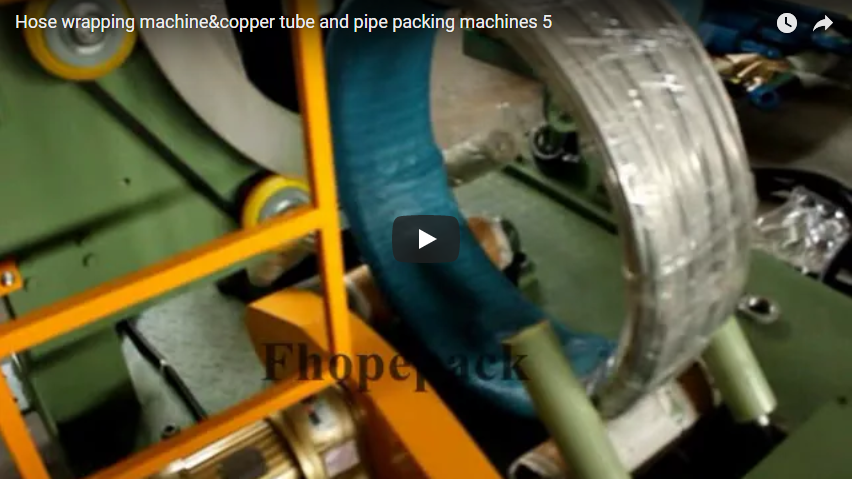
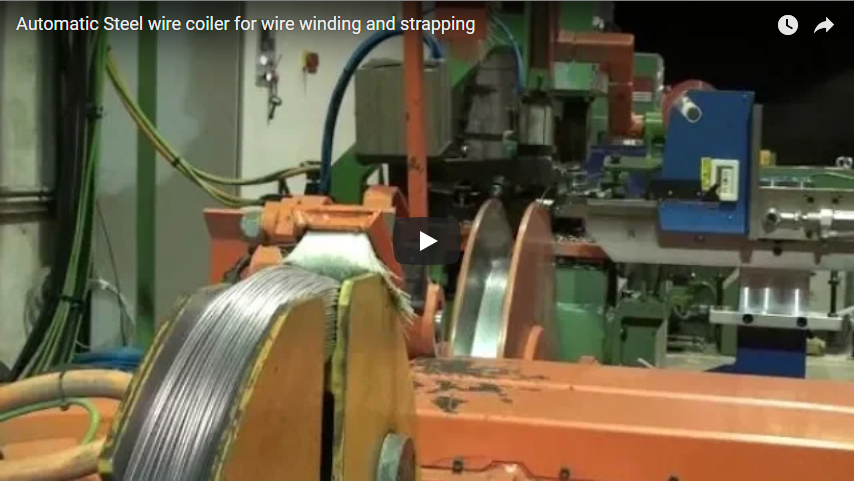
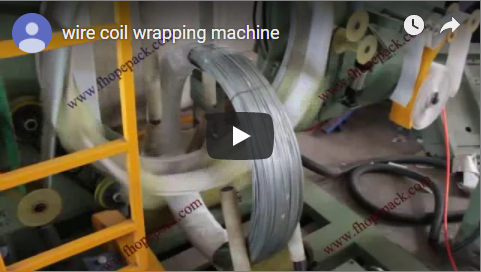
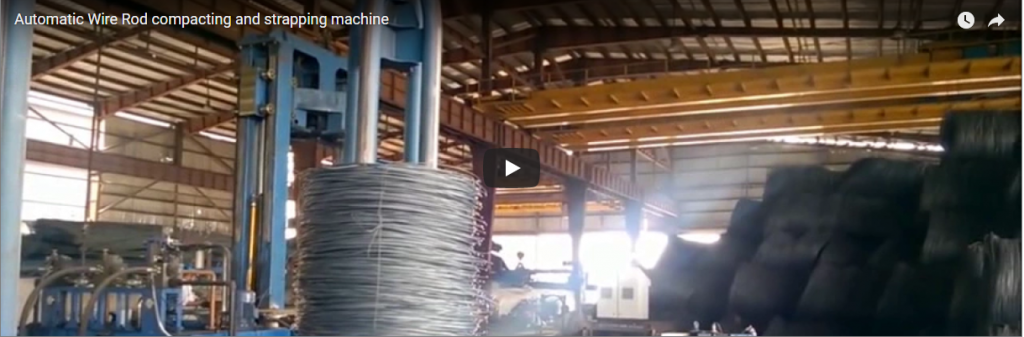
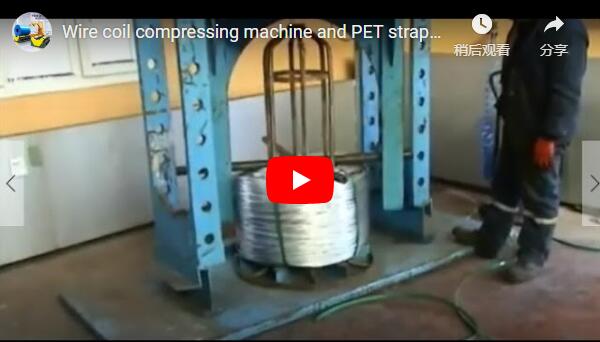
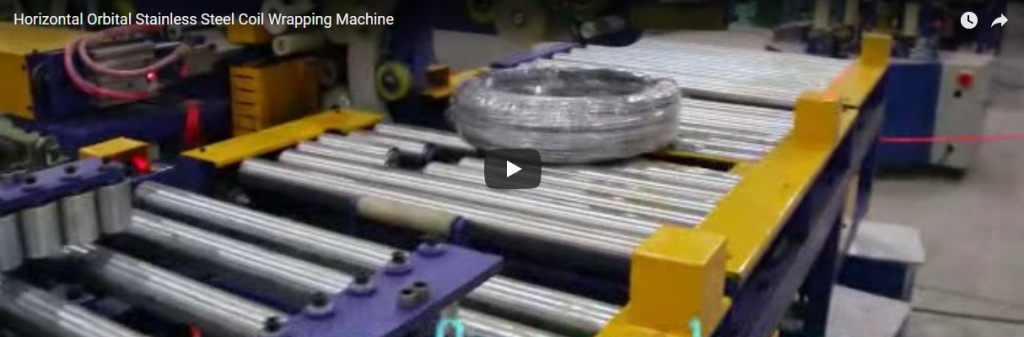
Our footage shows a full-automatic machine wrapping a large coil, including the conveyor cycle. It is a general demonstration, so coil range and line interface for your plant are confirmed with us per project.
Selection checklist
| Question | Confirm per project |
|---|---|
| Coil range | width, OD, ID, weight |
| Ring style | full ring versus C-frame |
| Conveyor | roller or chain, in and out |
| Positioning | centering and lifters |
| Recipe set | coil types planned |
| Electrical supply | 380 V three phase, with auxiliary feeds per project |
Operation and safety
Start the recipe from the panel, and the coil conveys in, wraps and conveys out without operator handling. Keep clear of the ring zone while a cycle runs, with guarding and emergency stops protecting the area. Routine checks cover the ring drive, carriage, conveyor, centering devices and sensors, per the machine manual.
Engineering FAQ
Q: What coils does the machine wrap? A: Slit, master, wire and cable coils, within project-defined inner and outer diameter and width envelopes.
Q: How is wrap quality kept consistent? A: Tension, overlap and wrap count are controlled per cycle and stored as recipes.
Q: Does the operator move the film? A: No. The conveyor brings the coil in and out, and the cycle runs without handling film around the coil.
Q: How does the coil get positioned? A: Centering devices or lifters align the coil against the wrapping ring before the cycle starts.
Q: Can it join an existing line? A: Yes, the conveyor and controls integrate with surrounding equipment and are confirmed per project.
Next step
- Email us at info@fhopepack.com with your coil range, film and line layout.
- We send a full-automatic proposal and a layout drawing within 48 hours.
- We arrange a site survey to confirm conveyor level and floor space.
Related reading
- Simple coil wrapping machine for full size
- Big Horizontal stretch Wrapping Machine for sale
- Automatic coil packing machine theory
- FHOPE packing machinery product lines
Sources and standards
- ISO 12100:2010 Safety of machinery, general principles for design and risk assessment
- EN 415-10:2014 Safety of packaging machines, general requirements
- EN ISO 13849-1:2023 Safety of machinery, safety-related parts of control systems
FHOPE full-automatic large coil wrapping machine demonstration video. Reviewed as a general demonstration; coil range confirmed per project.
Last reviewed: 2026-10-10