Executive summary
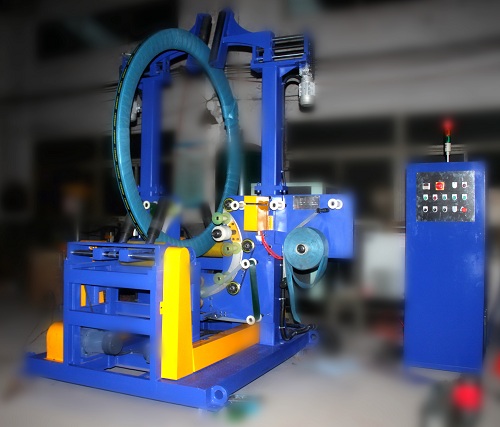
Ring-shaped and coil products — steel coils, wire coils, hose reels and tyres — pack inconsistently by hand, with uneven film overlap and repetitive strain on workers. This dual-station coil wrapping machine wraps a vertically held product with a spiral film layer from a rotating ring arm, while a second station stands ready for the next load. We build spiral coil wrapping machines with dual-station bodies. Product range and automation level are confirmed per project.
Table of Contents
- Why ring products need a wrap
- What the machine does
- The wrap cycle
- Dual-station layout
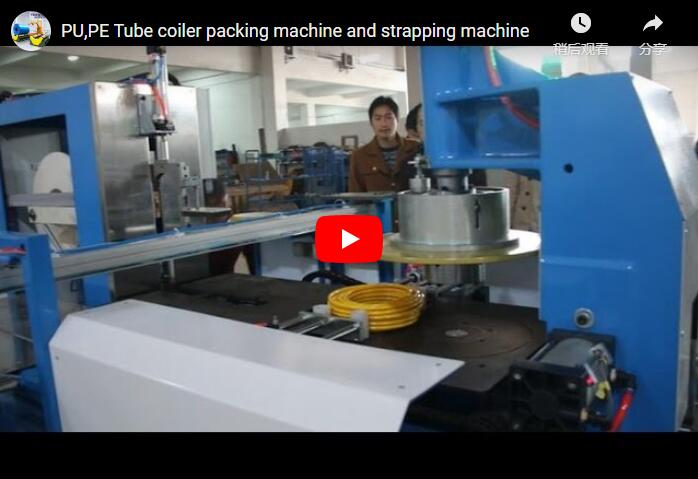
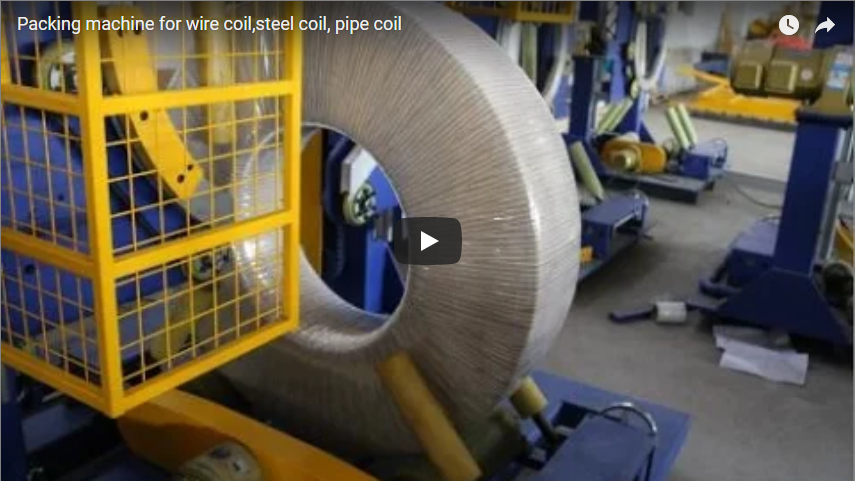
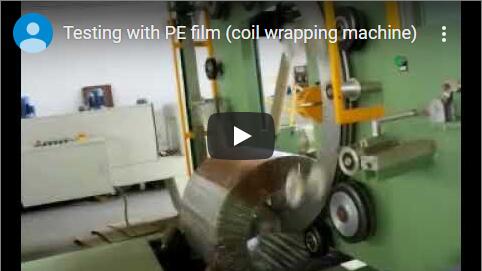
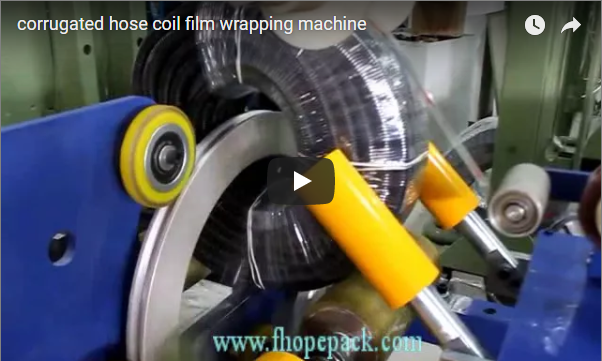
- What the footage shows
- Typical configuration
- Selection checklist
- Operation and safety
- Engineering FAQ
- Next step
- Related reading
- Sources and standards
Why ring products need a wrap
Steel coils, wire coils, hose reels and tyres are ring-shaped loads that pack inconsistently by hand, with uneven film overlap, wasted film and repetitive strain on workers. A spiral wrap from a powered arm applies the film evenly around the whole product, so the pack holds its shape through storage and transport.
Hand wrapping a ring is slow and uneven, and film spend varies from part to part. The machine closes that gap by wrapping automatically, layer over layer, with the product held at centre. The wrap standard and product range are confirmed per project.
What the machine does
The machine is a spiral coil wrapping machine built around a rotating ring arm. The product stands vertically in a clamping fixture, the arm carries the film roll around and over it, and the arm travels as it rotates, laying a spiral film layer across the product surface.
The body has two stations, so one station can wrap while the other is loaded. Clamping and unloading are manual in the clip, while the wrapping itself runs automatically. Product range and automation level are confirmed per project.
The wrap cycle
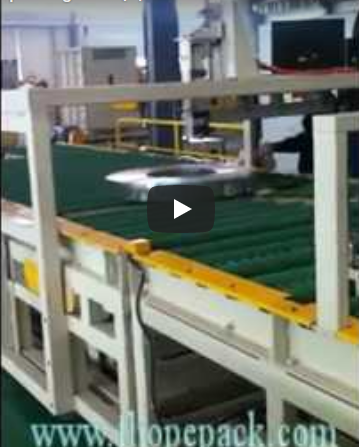
The footage shows one complete wrap on a vertically held tyre. The operator places the tyre into the clamping device, the machine fixes it at centre, and the ring arm descends and turns, applying film in a spiral across the surface. When the wrap completes, the operator lifts the part out and stands it on the floor.
The product stays vertical through the wrap, rotating slightly in sync with the arm so the film covers the outside evenly. The cycle runs through after the operator steps back. Cycle parameters are confirmed per project.
Dual-station layout
The dual-station body fits continuous operation: while one station wraps, the operator prepares the next product at the other. In this footage one station runs and the other stands in standby, so the layout can keep the wrap step fed.
With manual load and unload, the workflow is semi-automatic, suited to a low-to-medium feeding pace. Automatic load, unload or conveyor integration can be specified for fully continuous runs. The station configuration is confirmed per project.
What the footage shows
Our footage shows a dual-station coil wrapping machine spiral-wrapping a vertically held ring product. It is a general demonstration, so your product range and automation level are confirmed with us per project.
Typical configuration
Figures below list functional design boundaries rather than numeric values, and are confirmed per project.
| Parameter | Typical range, confirmed per project |
|---|---|
| Product | steel coils, wire coils, hose reels, tyres |
| Wrap | spiral ring arm, film layer |
| Body | dual station |
| Loading | manual load, automatic wrap |
| Control | PLC and HMI |
| Electrical supply | 380 V three phase 50 Hz, or 220 V single phase for light machines, selected per project |
Selection checklist
| Question | Confirm per project |
|---|---|
| Product range | coil sizes, ring widths, weights |
| Wrap | film width, layers, cycle |
| Automation | manual, semi or full line |
| Stations | single or dual body |
| Control | PLC and HMI options |
| Electrical supply | voltage, phase and frequency on site |
Operation and safety
Place the product in the fixture, then run the cycle from the panel and the machine wraps it automatically. Keep clear of the ring arm, product path and film carriage while the machine runs, with guarding and emergency stops at the operator position. The yellow safety fencing keeps the moving parts out of reach.
Routine checks cover the ring drive, vertical travel, rollers, sensors and control, per the machine manual. Confirm the wrap settings against the product before each run so rings pack evenly.
Engineering FAQ
Q: What does this machine wrap? A: Ring-shaped and coil products such as steel coils, wire coils, hose reels and tyres.
Q: How is the film applied? A: A rotating ring arm lays the film in a spiral while the product stands at centre.
Q: Is it automatic? A: The wrap runs automatically after the product is clamped; loading and unloading are manual.
Q: What does dual station mean? A: One station can be loaded while the other wraps, keeping the step fed.
Q: What does the footage prove? A: A full clamped spiral wrap of a vertically held ring product in one demonstration.
Next step
- Email us at info@fhopepack.com with your product range and ring sizes.
- We send a wrapping proposal and a layout drawing within 48 hours.
- We arrange a site survey to confirm product range and automation level.
Related reading
- Wire coil wrapping machine
- Steel wire strapping machine
- Steel coil wrapping machine
- FHOPE packing machinery product lines
Sources and standards
- ISO 12100:2010 Safety of machinery, general principles for design and risk assessment
- EN 415-10:2014 Safety of packaging machines, general requirements
- EN ISO 13849-1:2023 Safety of machinery, safety-related parts of control systems
FHOPE coil wrapping machine for steel, wire, hose and tyre products demonstration video. Reviewed as a general demonstration; product range and automation confirmed per project.
Last reviewed: 2026-10-11