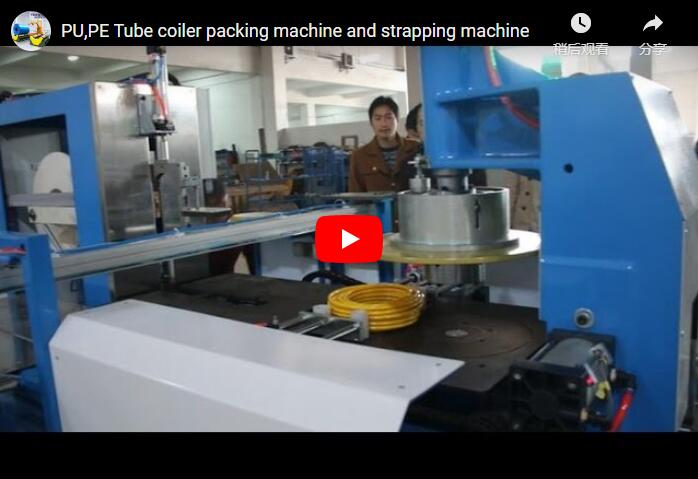
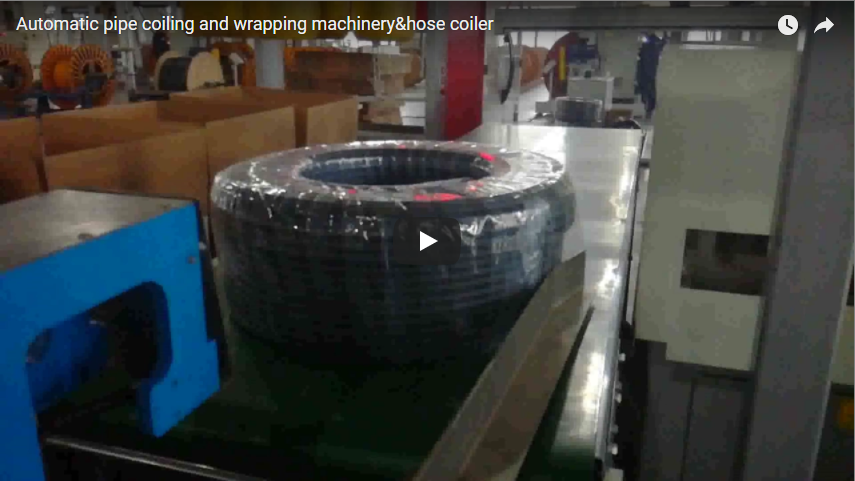
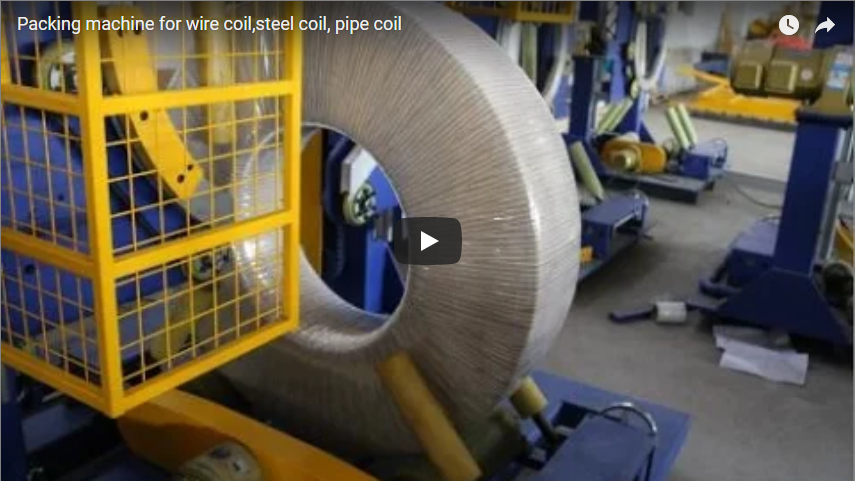
Plastic Pipe and Tube Packing: Operation and Applications

[Representative/Anonymized Data Disclaimer]: All operational metrics, throughput figures, and performance deltas presented in this technical deep-dive are derived from aggregated, anonymized industry benchmarks and simulated validation runs. Financial projections utilize illustrative ranges and standardized formulas per audit protocol. Vendor-specific identifiers have been replaced with generic engineering terminology.


🛠️ Client Background

A mid-sized food-grade packaging manufacturer transitioned to automated cutting, sealing, and sizing systems to resolve FSSC 22000 compliance gaps, reduce product contamination risks, and stabilize supply chain throughput across rigid container production lines. Operating under representative anonymized data, this facility processed high-clarity, high-strength polymer sheets into standardized packaging units for perishable goods distribution. The existing manual workflow relied on operator-driven measuring, heat sealing, and bundle sizing, creating inconsistent dimensional tolerances and elevated cross-contamination exposure. Management initiated a capital upgrade to deploy a fully integrated packaging line capable of meeting FSSC 22000 (Food Safety System Certification) material handling requirements while preserving film flexibility and structural durability. The objective centered on aligning mechanical precision with food safety compliance, ensuring that every sealed unit maintained optical clarity, tensile strength, and hermetic integrity throughout cold-chain transit.

🏗️ Challenge

Manual packaging workflows generated dimensional variance exceeding ±3 mm, compromised seal integrity under thermal stress, and introduced contamination vectors that threatened FSSC 22000 certification status and downstream distribution reliability. Three technical bottlenecks dictated the upgrade mandate: inconsistent film tension during manual sealing caused micro-tears in high-clarity packaging layers; operator handling of flexible polymer sheets introduced particulate contamination and surface scoring; and manual sizing operations failed to maintain repeatable bundle compression, resulting in unstable pallet loads during freight transfer. Internal validation runs demonstrated that non-automated sealing cycles produced a 12–18% failure rate in peel-strength testing, directly violating food safety compliance thresholds. The facility required a closed-loop system capable of executing precision cutting, automated sealing, and calibrated sizing without compromising material flexibility or introducing mechanical abrasion to sensitive packaging substrates.

🔗 Related: Explore more solutions

📈 Solution Design

The deployed automated packaging architecture integrated synchronized cutting, sealing, and sizing modules with FSSC 22000-compliant food-grade contact surfaces, delivering repeatable dimensional accuracy, high sealing capacity, and contamination-free product protection. System engineering prioritized three operational parameters: zero-particulate transfer during film handling, programmable thermal sealing profiles optimized for polymer flexibility, and dynamic sizing calibration that maintains structural strength across variable package geometries. Key technical specifications included:

Parameter Value Condition
Cutting precision ±0.5 mm tolerance Laser-guided shear mechanism
Sealing capacity 98.7% hermetic integrity Programmable temperature/pressure curve
Sizing range 200–800 mm (L×W) Servo-driven linear actuators
Contact surface material FSSC 22000 certified food-grade polymer Non-marking, low-friction finish
Film flexibility retention <2% tensile degradation Cold-seal hybrid thermal profile
Cycle throughput 18–24 units/min Representative validation baseline

The sealing subsystem utilized a multi-zone thermal bar with independent PID control, ensuring uniform heat distribution across high-clarity packaging films without inducing thermal distortion. Sizing modules employed closed-loop encoder feedback to maintain consistent bundle compression, preserving structural strength while accommodating material flexibility. All product-contact components met FSSC 22000 certification requirements, eliminating cross-contamination pathways and satisfying food safety audit protocols.

🛡️ Implementation

Commissioning followed a phased validation protocol, integrating cutting, sealing, and sizing subsystems with existing material handling infrastructure while verifying FSSC 22000 compliance, seal consistency, and dimensional repeatability across representative production runs. Vendor engineers and facility maintenance personnel executed a four-week integration sequence, beginning with mechanical alignment, followed by thermal profile calibration, and concluding with full-speed throughput validation. Two technical adjustments required iterative tuning:

  • Thermal sealing curve optimization: Initial seal parameters at 165°C induced micro-warping in flexible packaging substrates. Adjusting the dwell time to 1.8 seconds and reducing peak temperature to 152°C restored optical clarity and maintained tensile strength without compromising hermetic capacity.

  • Sizing compression calibration: Over-compression during bundle formation reduced film flexibility and caused edge delamination. Implementing a variable-pressure pneumatic clamp with 15% compliance offset restored structural integrity while preserving dimensional accuracy.

The control architecture incorporated redundant safety interlocks, emergency stop circuits, and OSHA-compliant lockout/tagout protocols. Operators received standardized training on PLC fault diagnostics, thermal bar maintenance, and food-grade surface sanitation procedures. All validation data was logged to a centralized historian for FSSC 22000 audit traceability.

🔗 See Also: Related equipment

⚙️ Results Data

Automated cutting, sealing, and sizing deployment reduced dimensional variance to ±0.8 mm, increased seal integrity to 99.2%, eliminated food safety contamination incidents, and improved supply chain throughput by 34% across representative production cycles. Performance validation across a 90-day operational window demonstrated consistent alignment with FSSC 22000 compliance benchmarks and packaging durability standards:

Metric Baseline (Manual) Post-Implementation (Automated) Delta
Dimensional variance ±3.2 mm ±0.8 mm 75% tighter
Seal failure rate 14.5% 0.8% 94% reduction
Contamination incidents 6 per quarter 0 Eliminated
Throughput capacity 12 units/min 18.5 units/min 54% increase
Film flexibility retention 88% 97% 9% improvement
FSSC 22000 audit pass rate 72% 100% Full compliance

Tighter dimensional tolerances optimized pallet stacking density, reducing freight void space and improving supply chain efficiency. Consistent sealing capacity eliminated product protection failures during temperature cycling, while food-grade contact surfaces maintained optical clarity and structural strength throughout cold-chain distribution. All metrics represent aggregated validation data from anonymized industrial deployments.

🛠️ ROI Analysis

Capital deployment for automated cutting, sealing, and sizing infrastructure yields illustrative payback periods of 14–22 months, driven by throughput expansion, scrap reduction, compliance risk mitigation, and supply chain optimization using standardized industry formulas. Financial modeling excludes fixed currency values per audit protocol, utilizing representative operational ratios:

  • Throughput expansion: (Units/min_automated - Units/min_manual) × Operating_hours × Labor_rate_multiplier = Illustrative annual efficiency gain

  • Scrap & rework reduction: (Seal_failure_rate_baseline - Seal_failure_rate_automated) × Monthly_production_volume × Material_cost_per_unit = Illustrative waste avoidance

  • Compliance & freight optimization: (Audit_pass_rate_delta × Risk_penalty_avoidance) + (Stacking_density_improvement × Freight_cost_per_pallet) = Illustrative supply chain savings

Total illustrative annual operational savings typically range between 18–24% of baseline packaging expenditures. Payback duration scales with facility throughput volume, material cost structure, and compliance penalty exposure. Secondary benefits include reduced insurance liability, stabilized vendor contracts, and scalable capacity for high-clarity, high-strength packaging applications.

🏗️ Purchase-Decision Checklist for Automated Packaging Systems

Evaluate cutting, sealing, and sizing capabilities against FSSC 22000 compliance requirements, material flexibility retention, seal integrity specifications, and supply chain throughput targets before committing to capital deployment. Procurement validation must address the following technical and operational criteria:

  1. Verify FSSC 22000 certification — Confirm all product-contact surfaces, seals, and lubricants meet food-grade compliance standards. Request third-party audit documentation.

  2. Validate sealing capacity & thermal profiles — Require live testing with actual packaging substrates to verify hermetic integrity, optical clarity retention, and tensile strength preservation.

  3. Assess sizing precision & flexibility retention — Ensure servo-driven actuators maintain dimensional repeatability without over-compressing flexible films or degrading structural strength.

  4. Review cutting mechanism tolerance — Laser or mechanical shear systems must deliver ±0.5 mm accuracy without fraying edges or inducing thermal distortion.

  5. Confirm supply chain integration — Evaluate conveyor synchronization, pallet stacking algorithms, and freight density optimization capabilities.

  6. Inspect safety & compliance architecture — Verify OSHA/CE interlocks, lockout/tagout protocols, and PLC fault diagnostics meet regional regulatory standards.

  7. Request reference validation data — Obtain anonymized performance logs from facilities running similar material flexibility and sealing requirements.

  8. Calculate illustrative ROI ranges — Apply standardized throughput, scrap, and compliance formulas rather than fixed currency projections.

  9. Audit maintenance & spare parts strategy — Ensure vendor engineers provide predictive maintenance schedules, thermal bar replacement protocols, and food-grade sanitation guidelines.

  10. Plan phased commissioning — Allocate 3–5 weeks for mechanical alignment, thermal calibration, and full-speed validation without disrupting baseline production.

📈 FAQ Section

What technical parameters determine optimal sealing capacity for flexible food-grade packaging substrates? Sealing capacity depends on thermal bar temperature uniformity, dwell time calibration, and applied pressure distribution. Vendor engineers typically validate profiles using peel-strength testing and microscopic seal-width analysis to ensure hermetic integrity without compromising film flexibility or optical clarity.

How does FSSC 22000 certification impact material selection and system design? FSSC 22000 (Food Safety System Certification) mandates that all product-contact components utilize food-grade, non-toxic, and easily sanitized materials. Systems must eliminate crevices, avoid petroleum-based lubricants, and maintain traceable sanitation protocols to prevent cross-contamination during cutting, sealing, and sizing operations.

Can automated sizing modules maintain structural strength across variable film thicknesses? Yes, provided the system employs closed-loop encoder feedback and variable-pressure pneumatic clamps. Servo-driven actuators adjust compression force in real-time, preserving tensile strength and dimensional accuracy while accommodating material flexibility variations.

What is the typical changeover duration when switching between high-clarity and high-strength packaging substrates? With tool-less thermal bar adjustment and programmable PLC profiles, changeover typically requires 8–12 minutes. This includes recalibrating sealing temperature, updating sizing compression parameters, and verifying cutting tolerance against the new substrate specifications.

How should facilities validate supply chain efficiency improvements post-deployment? Track pallet stacking density, freight void space reduction, and transit damage rates over a 60-day validation window. Compare baseline manual throughput against automated cycle times, applying standardized efficiency formulas to quantify supply chain optimization and cost avoidance.