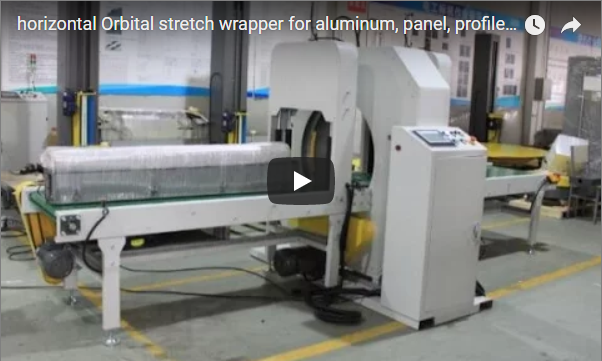
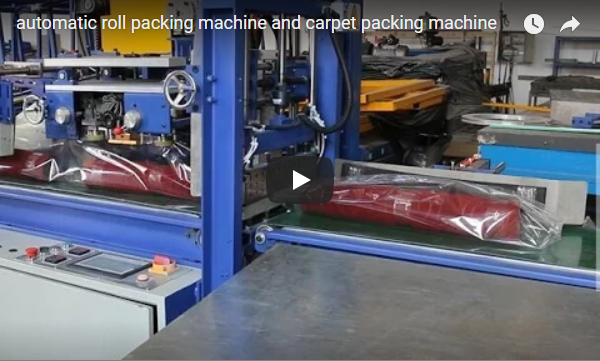
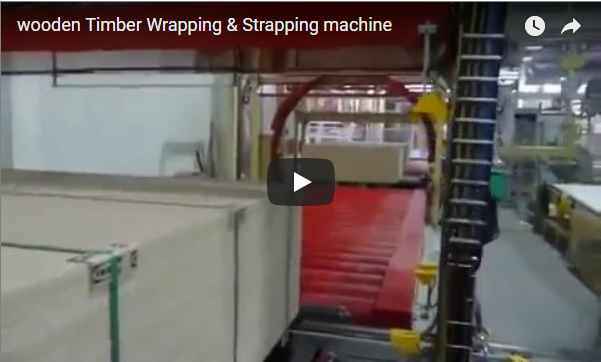
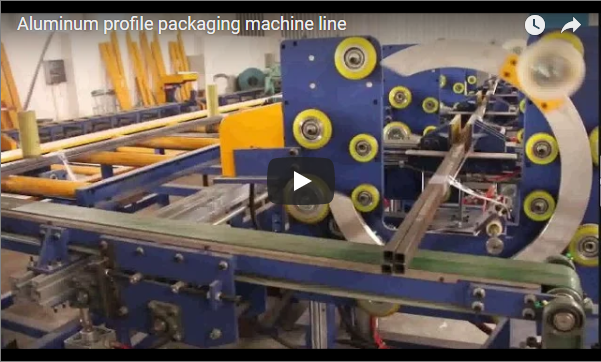
Executive summary This video shows a horizontal wrapping machine test run on a long metal cabinet. Two layers of packing material are applied: the cabinet arrives pre-covered in blue protective film, and the machine wraps it again with clear plastic film in a spiral pattern. The full test cycle — feed, wrap, cut and seal, and exit — is visible in about 60 seconds of footage.
What the video shows
This is a factory-floor testing video, filmed in a single continuous session of roughly one minute. It documents one complete wrapping cycle on a long, rectangular metal cabinet. Because it is a test video rather than a staged promotional clip, you can watch the machine behave exactly as it does in real operation.
The footage breaks down as follows:
- 0s–12s: A grey metal cabinet, partially covered in blue protective film, sits on a roller conveyor. The camera pans right to reveal the full length of the machine and its control panel. The cabinet is stationary.
- 12s–25s: The cabinet moves forward on the conveyor into the wrapping station. It enters the circular wrapping mechanism and the rotating arms begin applying clear plastic film around it.
- 25s–35s: A wider camera angle shows the entire machine running. Film is applied in a spiral pattern, now covering the blue layer with clear film.
- 35s–45s: A close-up view shows the film being applied. The arms rotate actively while the cabinet steadily moves forward.
- 45s–55s: The fully wrapped cabinet exits the wrapping station. The arms stop rotating and the film is cut and sealed.
- 55s–60s: A final shot shows the wrapped cabinet moving away on the conveyor.
The two-layer packing arrangement
The key detail in this test is visible in the product itself. The cabinet enters the machine already partially wrapped in blue protective film. During the cycle, the machine applies a second layer — clear plastic film — over the top in a spiral pattern.
This two-layer setup matters for buyers whose products have sensitive surfaces:
- The first layer (blue film) appears to be a pre-applied surface protection layer, suggesting the cabinet’s finish is vulnerable to scratches or scuffs.
- The second layer (clear film) is applied by the machine and adds containment and dust/moisture protection for transit and storage.
In other words, the test demonstrates that the machine can wrap over an already-film-covered product without disturbing the underlying layer. If your products arrive at the wrapper with pre-applied protection — edge boards, foam, or film — this footage is directly relevant to your use case. Confirm film compatibility and layer count options with the manufacturer.
How it works: process overview
The machine layout is linear and simple to follow:
- Feed. The product is placed on the infeed roller conveyor and moves toward the wrapping station.
- Wrap. The cabinet passes through a large circular opening. Rotating arms carry the film roll around the product while the product advances, producing a spiral wrap pattern along its full length.
- Cut and seal. When the wrap is complete, the arms stop and the film is cut and sealed.
- Exit. The wrapped product continues down the outfeed conveyor.
Because the product moves horizontally through a fixed ring mechanism, the process suits long items that cannot be rotated on a turntable — cabinets, boards, extrusions, doors, and similar elongated loads.
Machine structure at a glance
| Component | Observed detail |
|---|---|
| Frame | Grey painted metal construction with yellow safety accents on the arms and rollers |
| Conveyor | Long roller conveyor with black rollers, feeding linearly through the machine |
| Wrapping station | Central circular opening with rotating arms and a film roll holder |
| Control panel | White cabinet with touchscreen display, red and green push buttons, and a key switch, located on the right side at the end of the conveyor |
| Guarding | Transparent safety guard enclosing the wrapping mechanism |
| Emergency stop | Red button visible on the control panel |
The linear arrangement means the machine can be integrated into an existing production or packing line where product flows straight through — worth discussing with the manufacturer if you plan conveyor-to-conveyor integration.
Direct observation notes
The following notes stay close to what is actually visible in the footage:
- The video is shot on a factory floor; the machine is primarily grey painted metal with yellow accents on arms and rollers; conveyor rollers are black.
- The product is a large rectangular metal cabinet with a smooth metallic finish, approximately 2–3 meters in length, initially partially wrapped in blue protective film.
- The machine applies clear plastic film in a spiral pattern around the cabinet as it moves through the circular wrapping station.
- The control panel is a white cabinet with a touchscreen, red and green push buttons, and a key switch, on the right side of the machine.
- A transparent safety guard encloses the wrapping mechanism; a red emergency stop button is visible on the control panel.
- A red and white wall sign reads “安全生产人人有责” (Safety production is everyone’s responsibility).
- A watermark reading “FHOPESGROUP PACKING SOLUTION FOR YOU” with a logo appears throughout the video.
- At the end of the cycle, the arms stop rotating and the film is cut and sealed; the wrapped cabinet exits on the conveyor.
What the video does not show
This test video demonstrates one cycle on one product. It does not show or state:
- Rated capacity — maximum product weight or size the machine can handle
- Exact machine or product dimensions
- Cycle time per unit in normal production
- Model number, power requirements, or electrical specification
- Safety or quality certifications
- Film consumption figures or available film types/gauges
- Pricing, warranty terms, or after-sales arrangements
Treat any of these as to be verified with the manufacturer before making a purchasing decision. Use the footage for what it proves — that the machine wraps a long cabinet over an existing film layer, in an automated spiral pattern, with guarding and emergency stop in place.
Where this machine fits: applications
Based on the product shown and the horizontal wrap principle, this type of machine suits:
- Machinery parts and enclosures — long cabinets, control panels, machine housings with sensitive finishes
- Boards, panels, and doors — flat or rectangular items too long to spin on a turntable
- Furniture and construction materials — elongated products needing dust and scuff protection for transit
It is designed for horizontal wrapping and may not suit very small or very large items outside the tested size range. Match your largest and smallest products against the machine’s specification before committing.
Buyer verification checklist
Before requesting a quotation, prepare these questions:
- What is the maximum product length, width, height, and weight?
- Can the machine apply two or more film layers, as shown in this test?
- What film types and widths does it accept?
- What are the power requirements and footprint dimensions?
- Can it be integrated with existing conveyors and upstream/downstream equipment?
- What are the warranty terms and after-sales support arrangements?
FAQ
Why wrap a product that is already covered in blue film? The blue layer appears to be surface protection for a sensitive finish. The machine’s clear film layer adds containment and transit protection on top. The test shows the machine can wrap over a pre-filmed product.
How long does one wrapping cycle take? A full cycle (feed, wrap, cut, seal, exit) is shown in about 60 seconds of footage, but this is a camera-view estimate, not a rated cycle time. Confirm production throughput with the manufacturer.
Is the machine safe to operate? The footage shows a transparent safety guard around the wrapping mechanism and a red emergency stop on the control panel. Operators should be trained to keep the guard closed and stay clear of moving parts.
What does the control panel include? A white cabinet with a touchscreen display, red and green push buttons, and a key switch. The exact software functions are not shown — check with the manufacturer.
Can it handle products other than cabinets? The horizontal wrap principle suits long rectangular items such as boards, doors, and extrusions. Suitability for your specific product range should be confirmed with the manufacturer.
Source and method
The facts in this article come from a close review of the embedded test video. The analysis was performed by a vision model on sampled frames; the video contains background music only, with no narration or spoken content. Observations are limited to what is visible on screen, and anything not observable is listed under “What the video does not show.”
Related reading
- Stretch wrapping machine overview
- Semi-automatic pallet wrapping machine
- Automatic pallet wrapping machine
- Rotary arm wrapping machine
- Rotary ring stretch wrapping machine
Next step
If you pack long, sensitive products like cabinets or boards and want to see whether this horizontal wrapping approach fits your line, contact FHOPE to discuss your product dimensions, packing layers, and throughput requirements — and to arrange a test wrap similar to the one shown above.
Published: 2026-09-03