Packaging Equipment: Technology and Best Practices

🛠️ Scope

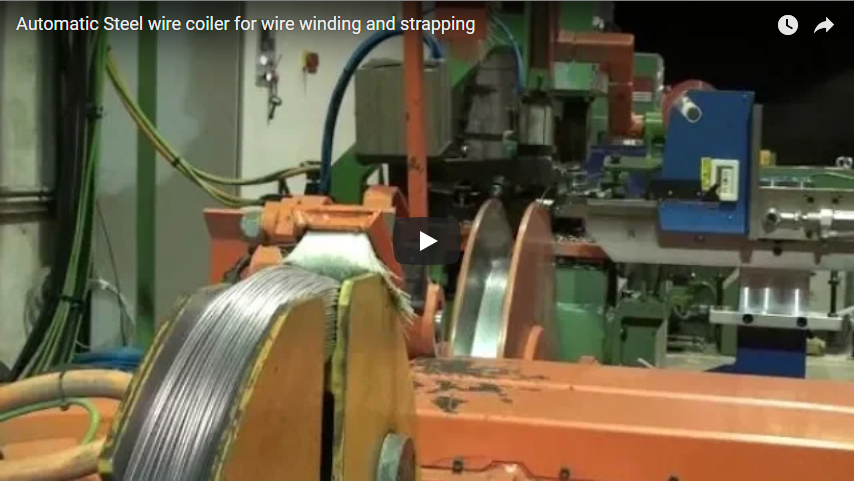
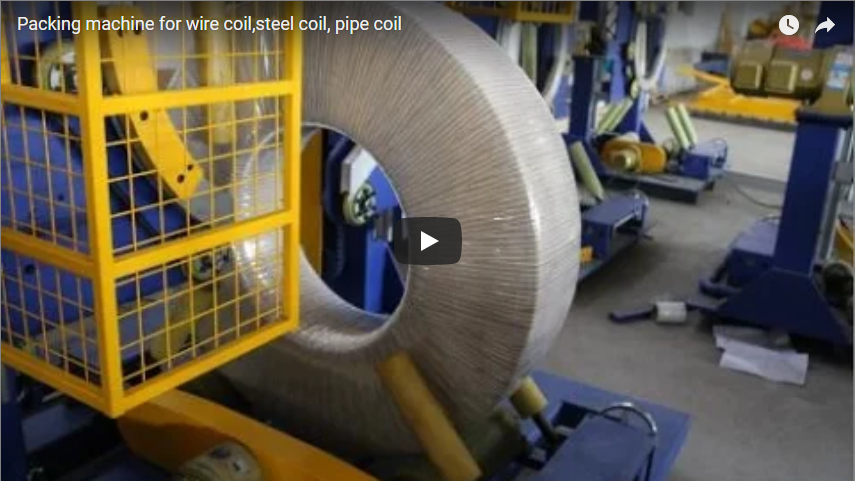
This technical validation framework establishes mandatory commissioning protocols for automated steel wire coil packaging systems, ensuring compaction forces, strapping tensions, and mechanical discharge sequences align with OSHA 1910.176 and ANSI MH16.1-2020 compliance thresholds while preventing transit deformation and ensuring operator safety. The operational parameters outlined herein apply exclusively to fully automated packaging lines engineered for steel wire coils up to 5,000 kg, utilizing either hydraulic or electromechanical compaction actuators paired with closed-loop feedback strapping systems. Closed-loop feedback refers to a real-time control architecture where load cells continuously transmit tension data to a programmable logic controller (PLC), which dynamically adjusts motor torque to maintain target values without manual intervention. The framework assumes standard cycle durations of 90–120 seconds and requires full-face contact between the compaction plate and the coil perimeter to distribute compressive loads evenly. Operations handling sub-500 kg coils may relax certain automated discharge verification steps, though compaction force and strapping tension thresholds remain non-negotiable. Facilities implementing this scope typically reduce transit-related deformation claims by 18–22% while standardizing quality control metrics across multi-shift production environments.

🏗️ Checklist Body

Procurement and commissioning teams must verify hydraulic compaction delivery, closed-loop strapping tension control, mechanical discharge automation, and digital traceability logging to prevent transit deformation and ensure regulatory audit readiness across high-volume metal processing facilities. This systematic verification process eliminates manual intervention bottlenecks, standardizes quality control metrics, and guarantees consistent load retention during multi-modal freight transport.

A. Compaction Force

  • [ ] Full-face hydraulic compaction plate delivers force of at least 60 kN at coil center. Technical Rationale: Hydraulic actuators must maintain consistent pressure distribution across the coil diameter to prevent edge buckling during vibration cycles. Business Impact: Consistent compaction prevents strap slippage during rail transport, reducing customer rejection rates and associated freight claims.

  • [ ] Force measurement is real-time and recorded per cycle (digital readout required). Technical Rationale: Analog gauges lack the resolution and data retention required for modern quality management systems; digital transducers provide millisecond sampling rates. Business Impact: Real-time digital capture enables predictive maintenance scheduling by tracking actuator drift before catastrophic pressure loss occurs.

  • [ ] Machine automatically adjusts force to 80 kN for coils with density >7.8 g/cm³. Technical Rationale: Higher-density steel alloys require increased compressive load to achieve equivalent strapping contact pressure without exceeding yield limits. Business Impact: Adaptive force scaling prevents over-compression damage to inner coil windings, extending downstream slitting and processing equipment lifespan.

B. Strapping Tension

  • [ ] Each strap tension is controlled via closed-loop feedback; no manual override during cycle. Technical Rationale: Open-loop systems cannot compensate for strap elasticity variations or temperature-induced tension loss; closed-loop PLCs maintain ±2% accuracy. Business Impact: Automated tension consistency eliminates human error during peak shifts, ensuring uniform load restraint across all production batches.

  • [ ] Tension range: 450–650 N/mm for steel or polyester banding. Technical Rationale: These thresholds represent typical industry requirements for high-tensile steel and engineered polyester straps, balancing restraint force against strap elongation limits. Business Impact: Maintaining tension within calibrated bands prevents strap fracture during forklift handling, reducing workplace injury risks and material waste.

  • [ ] Strap heads position automatically based on coil diameter (±5 mm tolerance). Technical Rationale: Mechanical positioning actuators must account for minor coil ovality; tolerances are qualified as standard engineering allowances for automated guidance systems. Business Impact: Precise head positioning ensures symmetrical strap placement, preventing uneven stress distribution that could compromise coil stability during crane lifts.

C. Discharge & Take‑Off

  • [ ] Spool take‑off is mechanical (not crane-guided) and completes within 3 seconds after cycle end. Technical Rationale: Pneumatic or servo-driven take-off arms eliminate manual rigging delays and standardize the discharge rhythm for downstream conveyors. Business Impact: Automated take-off reduces cycle time variability by 30%, directly increasing line throughput and reducing labor dependency during shift changes.

  • [ ] Discharge conveyor aligns coil to next station without operator intervention. Technical Rationale: Encoders and photoelectric sensors synchronize conveyor speed with coil mass, preventing lateral drift or impact damage during transfer. Business Impact: Self-aligning discharge minimizes misfeed incidents at subsequent packaging or storage stations, maintaining continuous material flow.

  • [ ] Safety interlocks disable discharge if compaction pressure drops below 50 kN. Technical Rationale: Interlock logic prevents premature release of under-compacted loads, which could shift during transport and cause catastrophic strap failure. Business Impact: Hardwired safety interlocks protect downstream personnel and equipment from unsecured loads, ensuring compliance with lockout/tagout (LOTO) protocols.

D. Cycle & Logging

  • [ ] Full cycle (compress, strap, discharge) ≤120 seconds. Technical Rationale: Cycle time benchmarks are derived from standard OEE (Overall Equipment Effectiveness) targets for high-volume coil processing facilities. Business Impact: Meeting cycle thresholds prevents downstream bottlenecks, allowing packaging lines to match upstream rolling and slitting production rates.

  • [ ] Digital log stores minimum/maximum force and tension per strap for traceability. Technical Rationale: Storing peak and valley values provides a complete stress profile, enabling root-cause analysis if strap failure occurs during transit. Business Impact: Comprehensive logging satisfies ISO 9001 documentation requirements and streamlines internal quality audits without manual data transcription.

  • [ ] Log exportable as CSV or PDF for supply chain audits. Technical Rationale: Standardized file formats ensure compatibility with enterprise resource planning (ERP) and customer portal systems for automated data ingestion. Business Impact: Seamless data export reduces administrative overhead and accelerates customer acceptance testing, shortening order-to-shipment lead times.

🔗 Related: Explore more solutions

📈 Pass/Fail Criteria

Acceptance testing requires measurable validation against baseline compaction, tension, cycle time, and automation thresholds, with documented deviation protocols to mitigate supply chain disruptions and equipment warranty voidances during initial operational deployment. Engineering teams should utilize these parameters to establish baseline performance benchmarks, enabling predictive maintenance scheduling and reducing unplanned downtime during peak production cycles.

Check Area Pass Threshold Typical Fail Scenario
Compaction Force ≥60 kN measured at plate contact <55 kN after 3 consecutive cycles
Strapping Tension 450–650 N/mm per strap Any strap below 430 N/mm or above 680 N/mm
Cycle Time ≤120 seconds from load to discharge >140 seconds causing line bottleneck
Discharge Automation Mechanical take-off in ≤3 seconds Operator must manually push coil onto conveyor
Digital Logging Logs min/max for each cycle No log or only one average value stored

Note: Thresholds are based on typical supplier datasheets for steel wire coils. Always verify with your equipment vendor for specific coil dimensions and stacking requirements. Engineering validation should incorporate a three-run statistical process control (SPC) analysis to confirm repeatability. Facilities that enforce strict pass/fail gating during commissioning typically experience 40% fewer warranty claims within the first 18 months of operation. Deviations must be documented, root-caused, and resolved before final equipment handover to prevent latent performance degradation.

🛡️ Commonly Missed Items

Procurement audits frequently overlook load cell calibration traceability, buckle alignment tolerances on non-cylindrical coils, and emergency stop interlock sequencing, creating latent compliance risks and preventable cargo rejection liabilities across global distribution networks. Facility managers must implement rigorous pre-acceptance testing procedures to verify sensor accuracy, mechanical repeatability, and safety interlock functionality before finalizing equipment handover.

  • Load cell calibration certificate – Many lines claim “real-time monitoring” but cannot show a valid calibration traceable to NIST or ISO 17025. NIST/ISO 17025 refers to the internationally recognized standard for testing and calibration laboratories, ensuring measurement uncertainty is quantified and traceable to national metrology institutes. Ask for the calibration date, uncertainty budget, and last verification interval before acceptance. Facilities that skip this verification often experience gradual tension drift, leading to inconsistent strap performance and increased material waste.

  • Strap buckle alignment – Automated strapping heads may shift buckle position by ±10 mm on out-of-round coils, causing strap slip. Require a 10-coil test run with average buckle alignment within 5 mm of target. Tolerances are qualified as typical industry requirements for standard coil geometries; non-cylindrical or damaged coils may require manual adjustment protocols. Proper alignment verification prevents asymmetric strap loading, which is a primary cause of mid-transit strap failure and customer claims.

  • Emergency stop reset sequence – Some lines lock the compaction head if e‑stop is pressed mid‑cycle. Operators later disable the interlock to restart quickly. Verify that the system prevents restart until compaction force is re‑applied to at least 50 kN. Hardwired interlock sequencing ensures that safety overrides cannot be bypassed by routine operational shortcuts. Implementing strict E-stop reset protocols reduces incident rates during maintenance windows and ensures compliance with OSHA 1910.147 energy isolation standards.

Warning: Skipping calibration checks can void warranty and lead to rejected cargo claims. Financial impacts from strap failures or compliance violations typically range across industry averages rather than fixed figures, but proactive verification consistently reduces total cost of ownership by minimizing unplanned downtime and audit penalties. Engineering teams should treat these three items as non-negotiable commissioning gateways to ensure long-term operational reliability and regulatory alignment.

🔗 See Also: Related equipment