Executive summary Steel tubes are strapped so they travel as one bundle, and the way that bundle is strapped decides whether it survives the journey. An automatic gantry line moves the strapping head along a fixed bundle, wraps a steel band around it and tensions it, so every strap lands in the same place every time. This page explains the moving-head gantry, the band closure, and the reference parameters behind the platform.
Table of Contents
- Why the bundle moves as a unit
- The gantry and moving strapping head
- Steel strap closure and tensioning
- Tube profiles and bundle patterns
- Baseline engineering parameters
- Controls and safety
- Engineering FAQ
- Selection checklist
- Related reading
- Sources
- Next step
Why the bundle moves as a unit
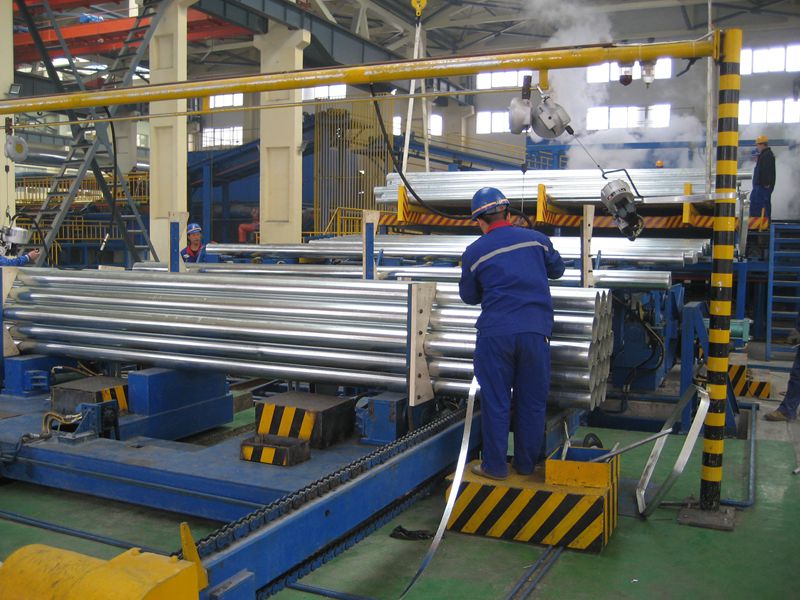
A bundle of steel tubes is only as good as its strapping. Tubes that ride loose develop free ends, a bundle that shifts opens gaps, and any of that means a rejected arrival at a site that expected a clean, square load. Strapping the bundle while it sits still is therefore the first requirement. A tube stack that is pushed through a machine at the same time is a stack being nudged out of square.
The line in the demonstration inverts the usual layout. Instead of driving the bundle past a fixed head, the head travels along the bundle, and the tubes stay in place on their supports. The bundle keeps every tube against its neighbours for the whole run, so the straps close on the same geometry every time and the bundle leaves as one unit.
The gantry and moving strapping head
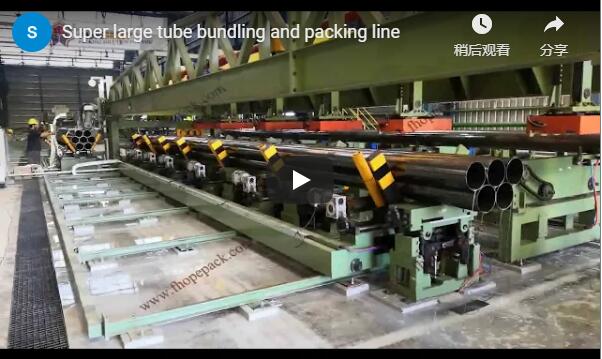
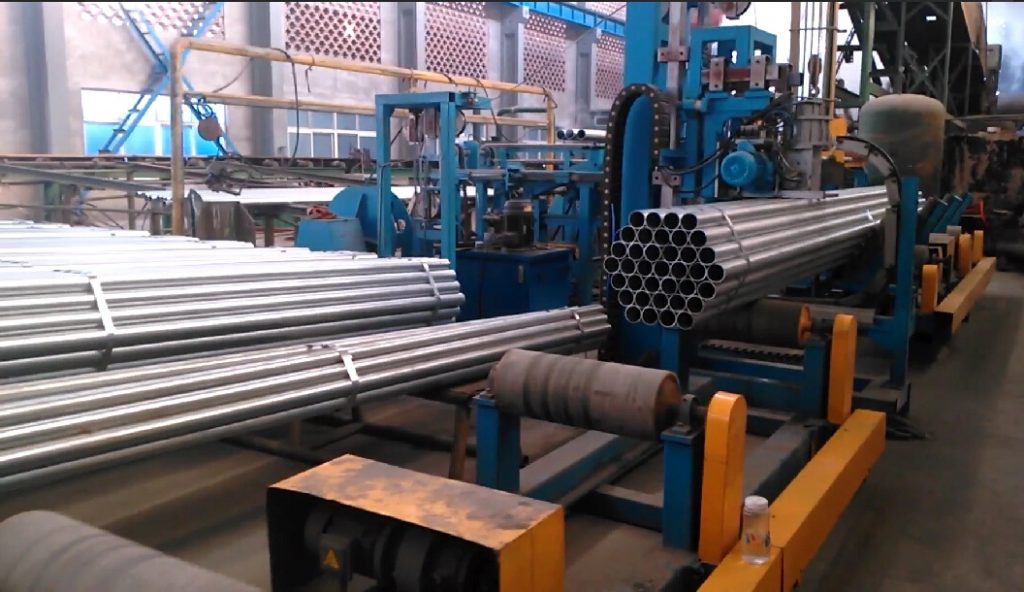
The machine is built as a long-span gantry frame with the strapping head as the moving element. In the demonstration the frame is finished in blue and carries a yellow strapping head that rides along the bundle.
The head is driven by a linear carriage with its motor and control cabinet on the structure, and it is the ring-shaped unit that carries the band. The bundle passes through the head’s opening as the head runs the length of the stack.
Because the head moves rather than the tube, the machine puts the straps down at programmed intervals while the bundle stays on a single support line. That also shortens the overall footprint compared with a layout that has to accelerate a heavy, long tube load down a conveyor.
Steel strap closure and tensioning
Each strap is fed from a band coil on the head and wrapped fully around the bundle. It is tensioned and sealed into a closed ring by the head’s own mechanism, with the joint type set at project engineering. The head then indexes to the next strap position along the bundle and repeats the pass, so the straps land the same distance apart instead of being judged by eye.
Tensioning pulls the band tight against the outermost tubes so the interior stays compressed and the bundle holds its shape during lifting and travel. Strap count, spacing and tension are part of the bundle recipe, so changing tube size changes the program rather than the hardware.
Tube profiles and bundle patterns
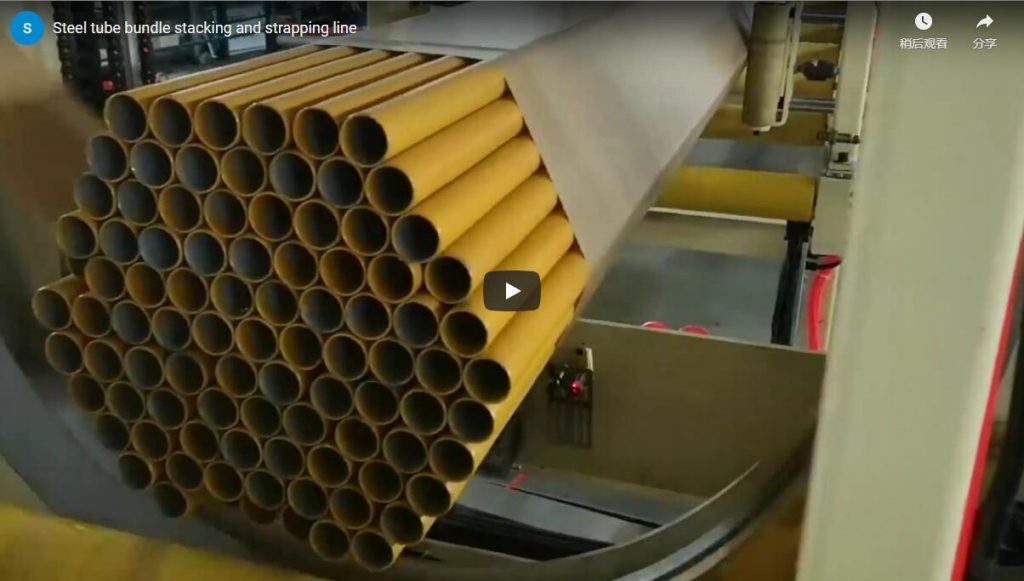
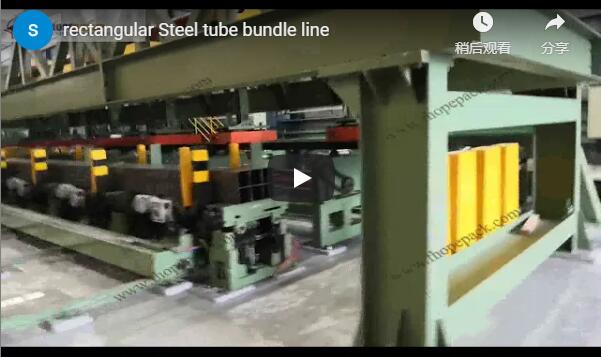
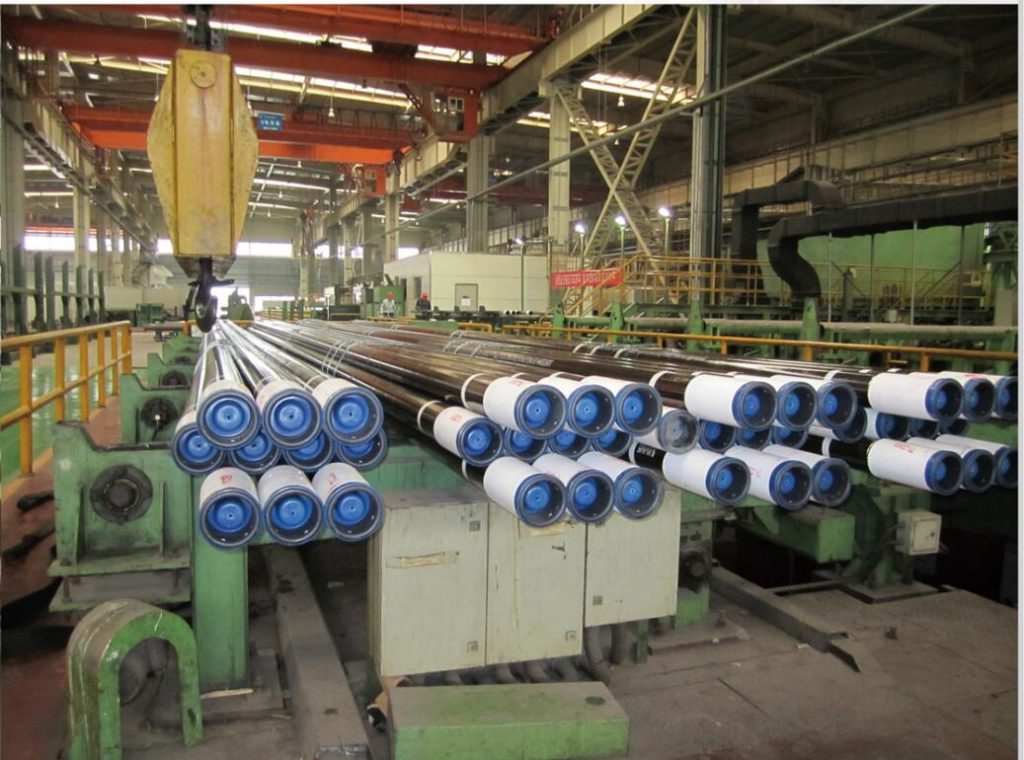
Round, square and rectangular steel tubes are lashed up in stacked patterns, with the profile deciding how the bundle nests. Round tubes meet at point contacts, so evenly spaced straps are the difference between a tight bundle and one that tries to separate; rectangular tubes stack square and need straps that hold the stack face-on.
Corner protectors are an option when the band would otherwise bite into the edge tubes, and both strap spacing and corner protection are selected at project engineering from the tube profile and bundle mass. The head’s travel range then matches the longest bundle the line is asked to make.
Baseline engineering parameters
Values below are demonstration observations and the engineering architecture; treat them as reference and confirm your bundle at project engineering.
| Parameter | Reference value | Basis |
|---|---|---|
| Frame | long-span gantry over the bundle | demonstration |
| Strapping head | travels along the stationary bundle | demonstration |
| Control | safety-rated PLC sequencing | engineering review |
| Drive | linear carriage with motor and control cabinet | demonstration |
| Band | steel band, coil-fed to the head | machine class |
| Strap pattern | spacing set per bundle recipe | engineering review |
| Standards | CE (EN ISO 13849-1 / EN 415-10) | safety architecture |
Controls and safety
The standard delivery is designed to CE (EN ISO 13849-1 / EN 415-10) and OSHA design requirements. The head travel corridor is guarded so no one stands in the path of the moving carriage, and a dual-channel emergency-stop circuit is at the operator position. The tensioning step is interlocked so the band cannot be pulled while hands are in the closure area.
For a line tied into a bundling-and-stacking flow, the standard delivery adds interlocked fencing with muting light curtains at the infeed and outfeed apertures. Clause coverage for your destination market is set at project engineering.
Engineering FAQ
Q: Why does the head move instead of the bundle? A: The bundle stays on one support line while the head travels, so every tube keeps its position and every strap lands on the same geometry.
Q: How are the strap positions decided? A: Spacing, count and tension are set in the bundle recipe, so a tube-size change is a program change instead of a mechanical one.
Q: What steel tube profiles can the line strap? A: Round, square and rectangular tubes in stacked patterns, with corner protectors as an option where the band would bite into edge tubes.
Q: How does the machine tension the steel band? A: The head wraps the band around the bundle and tensions it until the interior is compressed, before sealing the joint per build.
Q: What safety does a moving-head line include? A: CE (EN ISO 13849-1 / EN 415-10) and OSHA design, guarded travel corridor, interlocked tensioning and a dual-channel e-stop.
Q: Can the racks be strapped into longer bundles? A: Strap spacing and head travel are sized to the longest bundle at project engineering, so longer bundles are a sizing step, not a rebuild.
Selection checklist
- Tube profile and bundle cross-section, to size the head opening and support line.
- Longest bundle length and mass, to set head travel and strap spacing.
- Strap count and spacing per bundle, defined in the bundle recipe.
- Line integration, from a standalone gantry to a bundling-and-stacking flow.
- Corner protectors, selected where the band would bite into edge tubes.
- Site power, voltage, phase and frequency, confirmed per site at project engineering.
- Safety scope and clause coverage for the destination market.
Related reading
- Automatic Steel Tube Bundling and Strapping Machine
- Automatic Horizontal Wrapping Machine and Orbital Wrapper for Tube Bundles
- Aluminum Profile Stretch Wrapping Machine for Single Profiles and Small Bundles
- Automatic Steel Tube Packing Line
- Steel Tube Strapping Machine
Sources
- Demonstration footage: FHOPE automatic steel tube bundle strapping with steel band (FfXe3fZ7dP4), 2 min 49 s, channel Fhope packaging.
- Project record: FHOPE automatic pipe bundling, strapping and stacking line draft layout (166A), engineering record, 2026-10-09.
- Safety architecture: CE EN ISO 13849-1 / EN 415-10 and OSHA design standard, per-market clause at project engineering.
Next step
- Send your tube profile, bundle size and length to info@fhopepack.com.
- Receive a tailored layout drawing and proposal within 48 hours, with head travel, strap spacing and line integration sized to your bundle.
- Book a free site survey to confirm power, floor space and loading method before you order.
Last reviewed: 2026-10-09