Executive summary
Small and medium hose coils are handled one by one at the end of the line, and the wrapping and packing around them is the manual part. This machine wraps hose coils automatically with conveyor loading: coils feed in on a conveyor, are wrapped and packed, and move out as stable packages. We build hose coil wrapping machines for small to medium coil sizes. Coil range and wrap plan are confirmed per project.
Table of Contents
- Why hose coils are wrapped by machine
- What the machine covers
- Conveyor loading
- Wrapping the coil
- Packing the coil
- Small to medium coils
- Typical configuration
- What the video shows
- Selection checklist
- Operation and safety
- Engineering FAQ
- Next step
- Related reading
- Sources and standards
Why hose coils are wrapped by machine
Hose coils come off production as rounds that have to be wrapped and packed before they ship, and manual wrapping is costly and inconsistent. Hand wrapped coils vary in tension, which shows up in damage on the pallet, and the work is repetitive for the crew. Wrapping and packing on the machine removes the variability and the strain, giving coils that are consistent run after run. The coil range the machine takes is confirmed per project.
What the machine covers
The machine wraps and packs hose coils automatically, receiving them by conveyor loading and delivering a stable package at the outfeed. The coil is loaded onto the machine, wrapped in film and packed, all without the operator handling the wrap. Automating the two jobs, wrapping and packing, removes the hand pass between them that varies on manual lines. The covered steps and sequence are confirmed per project on the actual coil range.
Conveyor loading
Coils are loaded into the machine on a conveyor, arriving at the wrap station in flow. Conveyor loading means the coil moves into the machine rather than being placed by hand, taking the lifting off the operator. The conveyor positions each coil for wrapping, so the film works from a coil that is placed, not wobbling. Conveyor width and coil entry are confirmed per project.
Wrapping the coil
The machine wraps the coil in film to cover and protect the rounds, applying the wrap automatically. Wrapping holds the coil together and protects the hose surface, and automatic application keeps the cover even coil to coil. Because the coil is wrapped without an operator pulling the film, the tension is the same on every coil. The wrap plan follows the coil diameter and width, confirmed per project.
Packing the coil
After wrapping, the machine packs the coil, building it into a unit that moves and stacks as one. Packing turns a wrapped coil into a package that handles cleanly, without the coils shedding or separating. The packing follows the wrap and the coil, confirmed per project, so the finished package is stable on the pallet. A wrapped and packed coil is the shippable unit at the end.
Small to medium coils
The machine is designed for efficient handling of small to medium coil sizes, the range that moves in the highest numbers on a hose line. Smaller coils are where the per-coil labor adds up, so automating them returns the most from the fall. The small to medium range defines the machine’s capacity, confirmed per project against the coil mix. The machine’s coil range and its pace are set to the actual production.
Typical configuration
Figures below list functional design boundaries rather than numeric values, and are confirmed per project.
| Parameter | Typical range, confirmed per project |
|---|---|
| Coil | small to medium |
| Load | conveyor entry |
| Wrap | film plan |
| Pack | unit build |
| Output | pallet fit |
| Electrical supply | 380 V three phase 50 Hz, or 220 V single phase for light machines, selected per project |
What the video shows
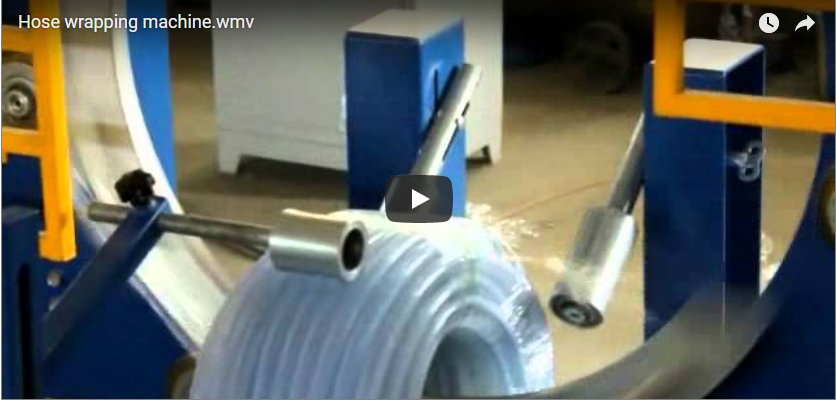
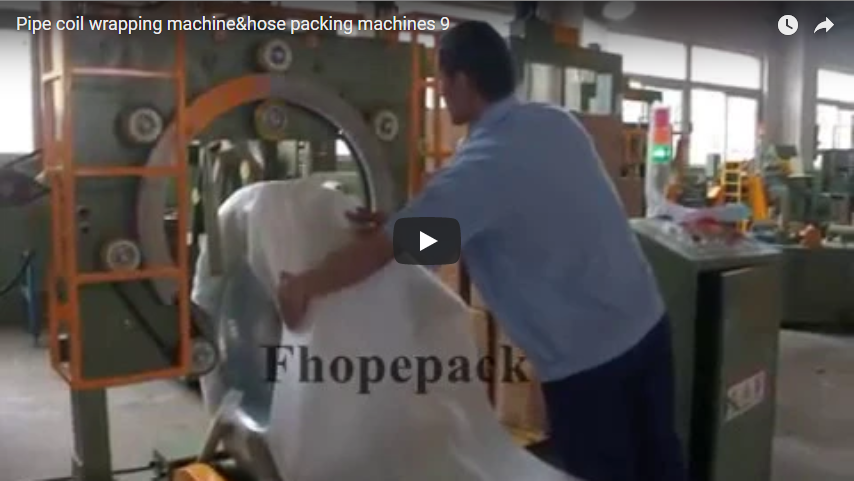
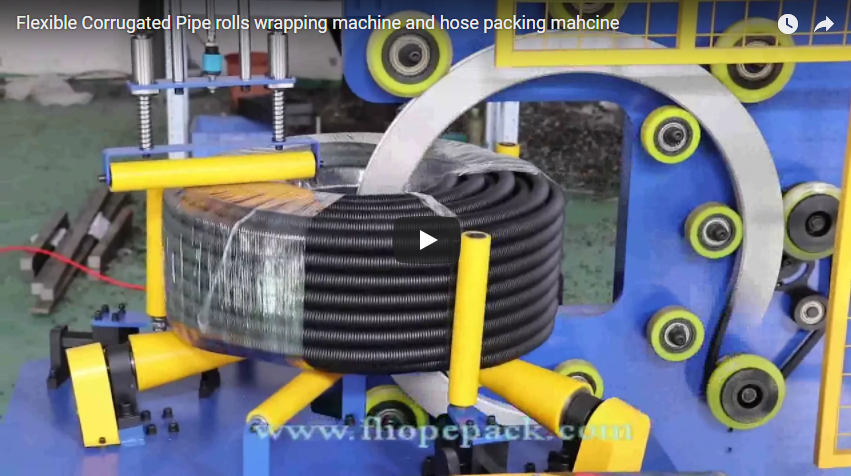
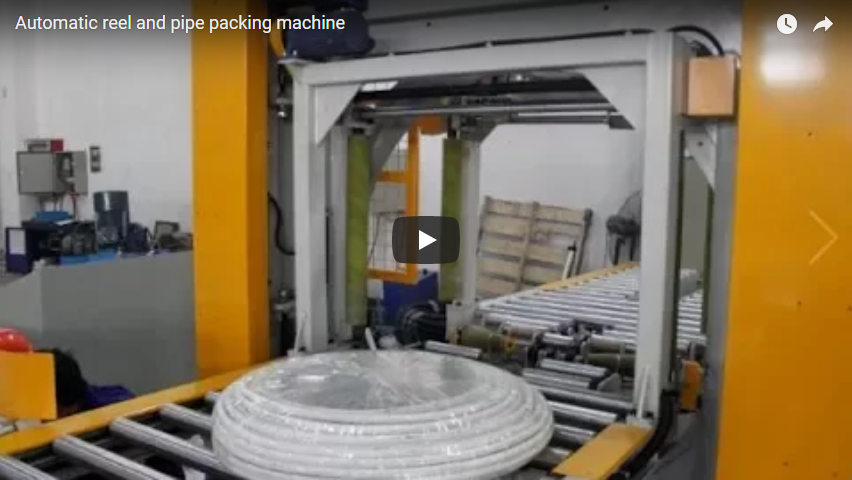
Our footage shows an automatic hose coil wrapping machine loading, wrapping and packing coils on a conveyor. It is a general demonstration, so your coil range and wrap plan are confirmed with us per project.
Selection checklist
| Question | Confirm per project |
|---|---|
| Coil range | small to medium |
| Load | conveyor fit |
| Wrap | film plan |
| Pack | unit build |
| Output | pallet fit |
| Electrical supply | voltage, phase and frequency on site |
Operation and safety
Run the recipe from the panel and the machine loads, wraps, packs and delivers each coil automatically. Keep clear of the conveyor, wrap ring and packing outfeed while the machine runs, with guarding and emergency stops at the operator position. Routine checks cover the conveyor, wrapper, film feed, sensors and packing outfeed, per the machine manual. Confirm the coil settings against the hose before each run so coils come out even.
Engineering FAQ
Q: What does this machine do? A: It loads hose coils on a conveyor, wraps them in film and packs them automatically.
Q: Why automate the wrap? A: Automatic wrapping holds even tension, while hand wrapping varies coil to coil.
Q: What is conveyor loading? A: Coils move into the machine on a conveyor instead of being placed by hand.
Q: What sizes does it take? A: Small to medium coil sizes, the highest-volume range on a hose line.
Q: What comes out? A: A wrapped and packed coil, stable and ready for the pallet.
Next step
- Email us at info@fhopepack.com with your coil range, wrap and volumes.
- We send a hose wrapping proposal and a layout drawing within 48 hours.
- We arrange a site survey to confirm coil range and line fit.
Related reading
- Automatic hose coiling and strapping machine for hoses
- Automatic pipe and hose coiling machine
- Rubber hose coiling machine
- FHOPE packing machinery product lines
Sources and standards
- ISO 12100:2010 Safety of machinery, general principles for design and risk assessment
- EN 415-10:2014 Safety of packaging machines, general requirements
- EN ISO 13849-1:2023 Safety of machinery, safety-related parts of control systems
FHOPE automatic hose coil wrapping machine demonstration video. Reviewed as a general demonstration; coil range confirmed per project.
Last reviewed: 2026-10-10