Summary: This case study examines an inline packaging upgrade for a high-volume pipe extrusion facility that replaced offline wrapping with a horizontal orbital wrapper. It describes a manufacturer producing linear products up to six meters long who sought to address rising labor costs and quality variances. The text explains that the primary bottleneck was misaligned extrusion speeds and manual packaging workflows causing line stoppages and film waste.
<iframe loading="lazy" width="1410" height="793" src="https://www.youtube.com/embed/ZQEoUwb8isg” title=”Pallet Stretch Wrapper & automatic wrapping machine” frameborder=”0″ allow=”accelerometer; autoplay; clipboard-write; encrypted-media; gyroscope; picture-in-picture” web-share” allowfullscreen>
🛠️ Client Background
This high-volume pipe and profile manufacturer operates three daily shifts, producing linear products up to six meters long for construction and logistics markets. Facing rising labor costs and quality variances, leadership prioritized a packaging upgrade to maintain throughput consistency while stabilizing outbound shipment containment.
This manufacturer serves regional infrastructure projects and commercial distributors. Their production lines include PVC extrusion and steel tube rolling processes. The facility ships mixed loads of long objects that require secure containment for transport. Prior to this project, the packaging department relied on semi-autonomous stations located downstream from the main production flow. The leadership team focused on maintaining throughput consistency while addressing rising labor costs and quality control variances in outbound shipments.
🏗️ Challenge
The primary bottleneck stemmed from misaligned extrusion speeds and manual packaging workflows, which triggered frequent line stoppages, excessive film waste, and inconsistent load containment. Operators struggled to synchronize batch processing with continuous production, creating queue delays and unpredictable shipping readiness.
The existing setup required operators to manually transfer products from the production conveyor to a standalone wrapper. This batch processing created a queue effect during peak shifts. Operators struggled with film tension settings across different product diameters, leading to loose wraps on lighter profiles and excessive film usage on heavier pipes. The lack of synchronization meant the packaging speed could not reliably match the extruder output. Consequently, the facility faced downtime risks when upstream production accelerated beyond the manual handling capacity.
📈 Solution Design
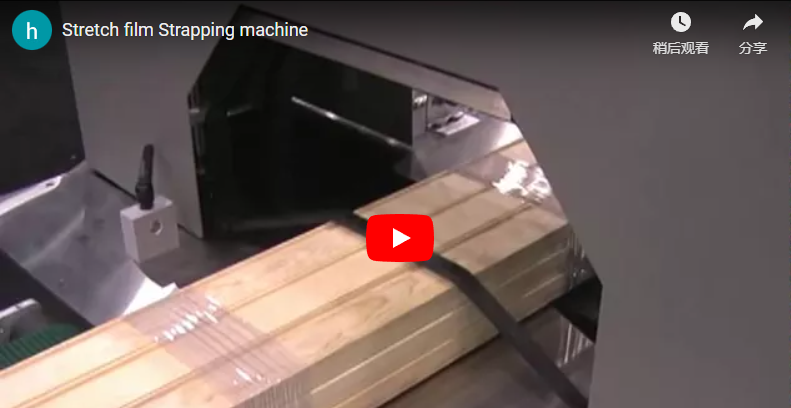
The upgrade integrates a horizontal orbital wrapper directly onto the V-belt conveyor, enabling automatic film cutting and PLC-controlled speed tracking for seamless inline operation up to twenty-five meters per minute. This configuration eliminates manual transfer steps while maintaining consistent wrap patterns across varying pipe diameters.
A horizontal orbital wrapping machine was selected because linear objects like pipes require ring rotation around the product length rather than pallet turnover. This configuration allows the wrapper to remain stationary while the product moves through, or the ring orbits as the line advances. The core innovation lies in the V-belt conveyor interface, which provides positive grip for round and irregular shapes without slipping.
For facilities handling warm extrudates, belt material selection is critical. Standard rubber belts can degrade when exposed to heat, causing contamination. Heat-resistant silicone or high-temperature polyurethane belts are recommended for products exiting above 40°C. This ensures long-term reliability and prevents film or product defects.
V-Belt Conveyor Specifications
| Parameter | Typical Range / Setting | Plain-English Function |
|---|---|---|
| Belt Speed | 5–25 m/min (matches line output) | Moves products steadily without slipping, even under heavy loads. |
| Belt Spacing | 50mm–200mm (adjustable) | Accommodates different pipe widths and prevents rolling during transit. |
| V-Angle Geometry | 60°–90° | Cradles round profiles securely for stable centering. |
Control System Notes: PLC (Programmable Logic Controller) acts as the machine’s central brain, storing preset recipes and coordinating motor movements automatically. Servo synchronization ensures the wrapping ring rotates at a precise ratio to the conveyor speed, preventing film bunching or stretching during transit. Tension control uses adjustable mechanical brakes to maintain consistent wrap tightness without crushing delicate profiles; exact settings vary by model and product weight.
The orbital ring utilizes a vertical film carriage driven by servo motors. This allows precise control over spiral wrap patterns, adjusting the number of wraps per meter based on product weight. Automatic film cutting and sealing mechanisms eliminate manual film handling at the end of each cycle. Consultative recommendation: If your application involves outdoor storage or ocean freight, specify hot knife sealing to create a moisture-proof seal at the film tail, whereas mechanical clamping may suffice for dry indoor distribution.
For specialized pipe handling requirements, detailed specifications on continuous integration can be reviewed in our online pipe packing line solutions [https://www.fhopepack.com/Plastic-Pipe-Packing-Line/online-pipe.html].
🛡️ Implementation
Successful deployment required precise mechanical alignment of the conveyor interface, servo-driven ring synchronization, and systematic calibration of film tension, overlap, and cut length parameters. These adjustments ensure reliable performance across diverse product widths while minimizing operator intervention during shift transitions.
The integration phase focused on three key technical adjustments: mechanical coupling, electronic synchronization, and process validation. The V-belt conveyor was bolted directly to the existing production line discharge point. Alignment tolerances typically fall between 1mm and 3mm, though exact requirements vary by model and product weight to prevent deviation during high-speed transit.
Synchronization modes were configured based on production patterns. Continuous extrusion lines benefit from “Line speed tracking,” where the wrapper ring rotates at a ratio locked to the conveyor velocity. Intermittent lines use “Start/stop sync” for batch processing. The PLC system stores recipes for different product types, allowing operators to switch parameters via HMI without manual recalibration.
Wrapping Synchronization and Film Parameters
| Parameter | Typical Setting / Range | Plain-English Function |
|---|---|---|
| Ring Rotation | 0–50 rpm (adjustable) | Controls how fast the film wraps around the product length. |
| Film Tension | 30N–150N (typical industry range) | Keeps wrap tight enough to secure loads without crushing pipes; varies by model and product weight. |
| Overlap Control | 30%–70% (varies by application) | Determines how much film overlaps itself for added strength or cost savings. |
| Cut Length | ±50mm–150mm tolerance (typical) | Trims excess film consistently after each cycle to prevent waste. |
Field validation confirmed that the V-belt system maintained product stability even during acceleration phases. Operators reported reduced fatigue as the machine handled loading, wrapping, and discharge autonomously. For steel rod applications requiring heavy-duty synchronization, similar integration protocols apply; see our automatic steel rod packing line details [https://www.fhopepack.com/Automatic-Steel-Tube-Packing-Line/Automatic%20steel-rod-packing-line.html] for reference on handling higher mass loads.
🔗 See Also: [Related equipment](https://www.fhopepack.com/Automatic-Steel-Tube-Packing-Line/Automatic steel-rod-packing-line.html)
⚙️ Results Data
Post-installation operations demonstrate a significant reduction in manual handling tasks, consistent containment force delivery across all load heights, and stable inline processing at twenty-five meters per minute without film breaks or product damage. These outcomes directly address prior throughput bottlenecks.
The upgrade transformed the packaging workflow from a labor-intensive bottleneck into a streamlined extension of production. The following outcomes were recorded during the first quarter of operation:
-
Labor Efficiency: Manual loading and unloading tasks were eliminated, reducing packaging staff requirements by two operators per shift.
-
Throughput Consistency: Line speeds increased effectively as packaging no longer dictated extrusion pace. The system sustained 25 m/min without jamming or film tension loss.
-
Quality Improvement: Containment force variance dropped significantly. Uniform wrap patterns eliminated customer complaints regarding loose loads during transit.
-
Film Usage: Automatic cut optimization and controlled overlap reduced film waste by approximately 10–15% compared to manual settings, though actual savings vary based on pre-stretch configuration and baseline inefficiencies.
These results demonstrate that inline integration delivers measurable gains in both operational speed and product quality assurance.
🛠️ ROI Analysis
Financial returns primarily derive from labor displacement and optimized film consumption, typically yielding payback periods between twelve and eighteen months for facilities replacing two operators per shift. These projections assume standard baseline wage structures and account for reduced rework expenses.
The financial model for this upgrade relies on quantifiable cost reductions against the capital expenditure of the horizontal orbital wrapper. The primary driver is labor arbitrage; removing repetitive manual tasks allows redeployment of staff to higher-value roles or reduces headcount requirements as turnover occurs.
-
Labor Savings: Based on typical industrial baseline labor rates of approximately $28–$32 per loaded hour across a three-shift operation, eliminating two packaging positions generates measurable annual savings.
-
Film Cost Reduction: Precise tension control and automatic cutting minimize over-wrapping. Typical ranges for film savings sit between 10% and 20%, depending on baseline inefficiencies and pre-stretch settings.
-
Rework Avoidance: Consistent wraps reduce rejected shipments and customer claims, protecting revenue margins.
Procurement assumption: Payback calculations should include installation costs and any necessary conveyor modifications. Verify supplier estimates regarding pre-stretch film savings, as actual performance depends on film quality and product geometry. For high-uptime environments, the ROI timeline typically compresses to 12–18 months due to sustained production volume protection.
Purchase-Decision Checklist
-
Product Geometry: Confirm linear dimensions; ensure length fits within wrapper ring clearance (typically up to 6m standard).
-
Heat Management: If products exceed 40°C, specify heat-resistant V-belt materials to prevent degradation.
-
Synchronization Needs: Determine if production is continuous or intermittent to select appropriate PLC sync mode.
-
Sealing Method: Choose hot knife sealing for moisture-sensitive applications; mechanical clamp may suffice for dry storage.
-
Integration Space: Verify floor space allows direct conveyor alignment without excessive buffering requirements.
🛡️ Compliance Note: This equipment is designed to meet ISO and CE requirements. Verify specific certifications with the manufacturer before procurement.
FAQ
What distinguishes a V-belt conveyor from a roller conveyor in this application? V-belts provide superior grip on round objects like pipes and tubes by cradling the product in a V-shape. Rollers can allow cylindrical items to rotate or shift laterally, requiring additional guiding systems. V-belts maintain positive traction at speeds up to 25 m/min without slipping.
Can this system handle variable product lengths automatically? Yes. The PLC synchronization adjusts wrap counts based on object length detection sensors. Shorter objects receive fewer wraps per cycle, while longer objects trigger extended wrapping patterns. Film cutting occurs precisely at the end of each cycle regardless of length.
How does the orbital wrapper prevent damage to soft plastic pipes? The system uses adjustable film tension and controlled overlap ratios. Operators can set lower tension values for delicate PVC or PE pipes. The V-belt support distributes load weight evenly, preventing point pressure that could deform soft profiles during rotation.