Executive summary Electrolytic copper busbars are long, flat conductors that are highly susceptible to mechanical surface scoring, edge bending, and atmospheric oxidation. In electrical switchgear and panelboard assembly, a tarnished or deeply scratched contact face can lead to high contact resistance and catastrophic quality rejection. Our automatic horizontal orbital stretch wrapping machine secures each copper flat bar or bundled profile in a continuous, tight layer of protective film. Utilizing an orbital rotary ring and non-marking, polyurethane-coated roller conveyors, the system processes bars in a linear pass-through without surface slippage or manual manipulation. Consumable consumption directly correlates with the busbar cross-section perimeter, total length, material neck-in compensation, and the programmed rotary overlap percentage—all configurable via PLC recipes.
Table of Contents
- What the video shows
- How the busbar wrapper works
- Estimating film per bar
- Why wrap copper busbar
- Controls and safety
- Selection checklist for a busbar packing machine
- Engineering FAQ
- Next step
- Related reading
- Sources
What the video shows
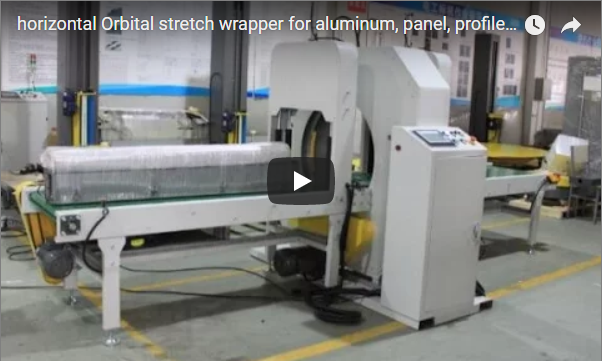
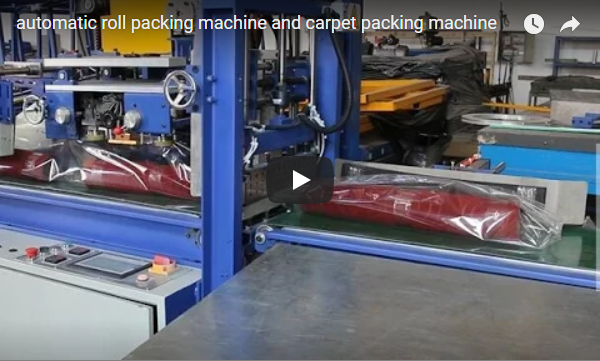
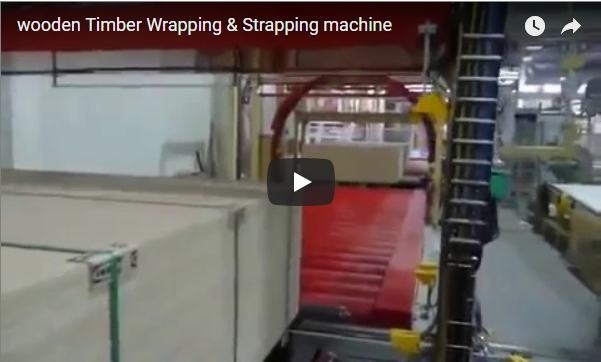
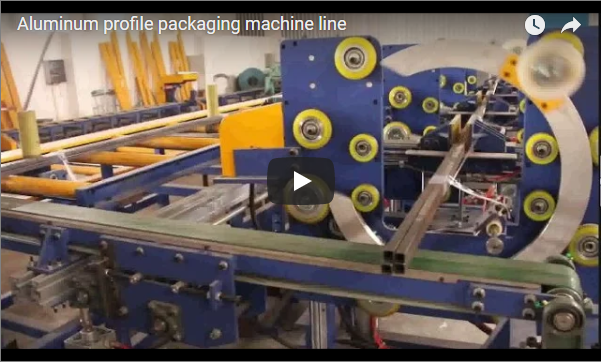
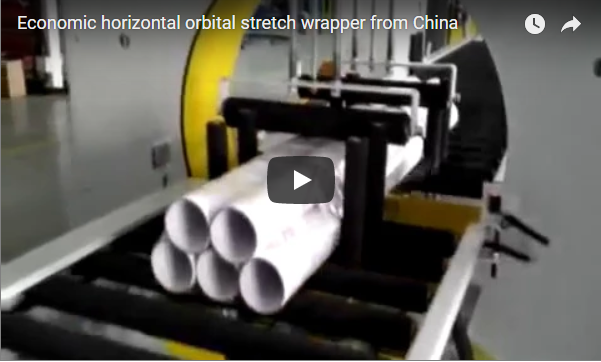
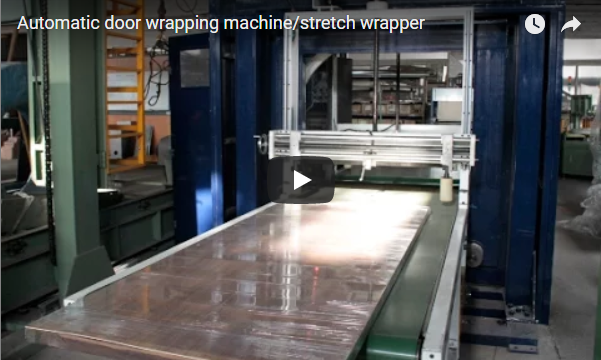
The engineering demonstration exhibits an industrial in-line horizontal orbital packaging station engineered specifically for long-form copper conductors. The busbar advances longitudinally along heavy-duty motorized roller conveyors equipped with non-marking polyurethane sleeves to prevent metal-to-metal rubbing.
As the workpiece enters the center of the rotating orbital ring, high-tensile stretch film is applied in a continuous, overlapping spiral around the outer perimeter of the copper bar. The rotating ring assembly operates at synchronized speeds relative to the linear conveyor speed, maintaining consistent pitch and tension.
The demonstration highlights both fully automated continuous cycling and monitored pilot operations, displaying integrated safety perimeter guarding, mechanical interlocks, and the pneumatic cut-and-clamp unit operating at cycle completion without requiring manual handling.
How the busbar wrapper works
| Step | Mechanism | Process Description |
|---|---|---|
| Infeed | Motorized Infeed Rollers | The copper bar is aligned along guide rollers and transported longitudinally into the wrapping throat. Polyurethane-sleeved rollers prevent contact marks. |
| Orbital wrap | High-Speed Rotary Ring | The ring rotates continuously around the passing bar. Film carriage reels deliver film under controlled tension, creating a uniform helical protective skin. |
| Film cut & clamp | Pneumatic Tail Gripper | Upon clearing the wrap zone, an automated pneumatic arm grips, cuts, and seals the trailing film edge cleanly against the bar without adhesive residue. |
| Outfeed | Powered Discharge Conveyor | The sealed bar transfers to outfeed accumulation tables or automated pack-off stations, fully stabilized against transit vibration. |
Because the workpiece moves purely on an axial vector and is never turned, tumbled, or subjected to lateral dragging, its high-conductivity flat faces and critical edge chamfers remain pristine. The resulting poly barrier provides complete barrier isolation against moisture, atmospheric sulfur, and handling abrasion.
Estimating film per bar
Below is a reference film estimation calculation for a standard single busbar measuring 100 mm in width, 10 mm in thickness, and 4,000 mm in total length, assuming a 100 mm nominal film roll width applied at a 50% target overlap:
| Engineering Parameter | Formula / Input | Calculated Value |
|---|---|---|
| Cross-section perimeter | 2 × (Width + Thickness) = 2 × (100 + 10) | 220 mm (0.22 m) |
| Nominal film roll width | Manufacturer specification | 100 mm |
| Linear advance per ring turn | Width × (1 – Overlap Ratio) = 100 × (1 – 0.50) | 50 mm / revolution |
| Total ring revolutions required | Workpiece length ÷ Advance = 4,000 ÷ 50 | 80 revolutions |
| Base net film length consumed | Ring turns × Perimeter = 80 × 0.22 m | ~17.6 m |
| Film length with reinforcement wraps | Net length + 2 end-reinforcement wraps | ~18.5 m |
Engineering Note: In actual production, tension stretching causes a 15% to 20% transverse narrowing (neck-in effect). Film carriages with mechanical friction or mechanical pre-stretch yield significant film yield gains, while bundled packages simply aggregate total cross-sectional perimeter into the same formula.
Why wrap copper busbar
| Operational Risk | Mechanism of Degradation | Protective Action of Orbital Stretch Wrap |
|---|---|---|
| Oxidation & Tarnish | Airborne sulfur, moisture, and CO₂ react with raw copper (forming Cu₂O/CuO), degrading electrical conductivity. | Continuous stretch film envelopes the bar in an airtight barrier, preventing ambient exposure during storage and sea freight. |
| Mechanical Scratching | Direct metal-to-metal rubbing during stacking creates deep scores on contact pads, leading to micro-arcing. | Resilient film cushions contact surfaces, ensuring bars do not gall or abrade one another inside crates. |
| Oil & Fingerprint Etching | Human sweat contains lactic acid and chlorides that etch permanent stains into polished or electro-tin-plated surfaces. | Eliminates manual touch points during warehouse picking, palletizing, and transport to the switchboard cell. |
| Bundle Disorientation | Mixed cross-sections shifting inside transit crates lead to bent edges and difficult sorting. | Orbital wrapping tightly unifies multi-bar bundles into rigid packs; barcodes and trace tags adhere securely onto the outer wrap. |
Optically clear cast stretch film allows incoming electrical quality assurance (QA) inspectors to verify surface finishing, stamp marks, and dimension markings without peeling off the weather seal.
Controls and safety
The orbital ring assembly operates at substantial rotational speeds (up to 100–150 RPM) and carries dynamic inertia. Machine safety relies on hard interlocked structural guarding combined with electrical dual-channel safety loops:
- Keep limbs entirely clear of the rotating ring zone and powered infeed/outfeed nips while power is active.
- Access panels are equipped with Cat 4 / PL e safety limit switches that force an instantaneous regenerative motor brake stop upon opening.
- Emergency stop pushbuttons and safety trip wires run along the conveyor perimeter.
- European and international installations align with ISO 12100:2010 (Risk Assessment and Risk Reduction) and EN 415-10:2014 (Safety Requirements for Packaging Machines – Modular and In-line Wrapping Lines). Electrical control enclosures comply with IEC 60204-1 industrial machinery standards.
Selection checklist for a busbar packing machine
- Cross-Section Dimensions: Minimum and maximum busbar width (W) and thickness (T), defining the necessary inner ring clearing diameter:
Ring_ID ≥ √((W_max)² + (T_max)²) + Clearance. - Length Envelope: Minimum bar length (governs roller center distances) and maximum length (governs total conveyor footprint).
- Packaging Configuration: Single flat bars, edge-stacked configurations, or multi-conductor master bundles.
- Throughput Target: Target throughput in linear meters per minute or finished bars/bundles per hour.
- Conveyor Surface Specification: Polyurethane (PU), UHMW-PE, or synthetic non-marking rubber to preserve polished or tin-plated copper faces.
- Line Integration: Standalone off-line operation or upstream integration with automated busbar shearing, punching, or tinning lines.
- End-of-Line Finishing: In-line automated adhesive barcode labeling, VCI anti-corrosion film pairing, and automated stacking cradles.
Engineering FAQ
Q: Why choose a horizontal orbital wrapper instead of an automated sleeve wrapper or spiral coil wrapper? A: A horizontal orbital wrapper advances the conductor linearly along its natural longitudinal axis without rotating the bar itself. This layout eliminates tipping, twisting, and conveyor face-scuffing, which are persistent problems on soft non-ferrous bars.
Q: How do you accurately calculate film expenditure per bar? A: The calculated film length equals the cross-sectional perimeter multiplied by the ring rotation count, plus lead/trail end-reinforcement wraps (typically 2 to 3 full revolutions per end). A 4,000 mm × 100 mm × 10 mm busbar requires approximately 18.5 m of unstretched film at 50% overlap.
Q: Can multi-bar bundles be processed through the same ring? A: Yes. As long as the bundle’s total diagonal cross-section fits within the inner ring diameter with dynamic clearance for the film roll carriage, bundled bars are clamped and wrapped simultaneously into a solid structural pack.
Q: Does the wrapping cycle require full-time manual operator presence? A: No. Fully automated models utilize photo-eye workpiece sensors to trigger automatic infeed, synchronized wrapping, pneumatic film clamp-and-cut sequences, and discharge indexing, running unattended between staging batches.
Q: Why use clear stretch film rather than paper or opaque PE film? A: High-clarity cast LLDPE film preserves full visual traceability. Incoming inspectors can examine the copper grain, tin/silver plating integrity, and edge stamping without opening the sealed pack, preventing premature oxidation on job sites.
Next step
Streamline and protect your copper busbar packaging process with our application engineering team:
- Submit your product specification matrix (bar width, thickness, maximum length, and hourly output requirements) to info@fhopepack.com.
- Receive an engineering layout proposal within 48 hours, including ring clearance modeling, roller load capacity calculations, and estimated film cycle budgets.
- Schedule an engineering design review to verify factory layout constraints, upstream shear line integration, and customized outfeed collection setups.
Related reading
- Orbital stretch wrapper
- Rotary ring stretch wrapping machine
- Video: rod orbital wrapper and bar wrapping machine
Sources
- Machine Technical Specifications: FHOPE Packaging Engineering Division, 2026-10-04
- Kinematic & Film Yield Calculations: FHOPE Busbar Packaging Application Protocol
- Demonstration Footage: Official YouTube Equipment Operation
- International Machine Safety Standards: ISO 12100:2010, EN 415-10:2014
Last reviewed: 2026-10-04