Hose Coil Wrapping and Strapping: Operation and Applications

Summary: Automating the coiling and strapping of large-diameter hoses and pipes addresses manual tension inconsistencies, typically lowers labor dependency, and helps prevent product damage during storage and transit. This article compares two common approaches—manual versus automated systems—to help you decide based on volume, material type, and budget constraints.

🛠️ Evaluation Criteria

Choosing between manual and automated hose coiling requires evaluating throughput capacity, tension consistency, labor dependency, and total unit cost against your specific production volume and material type. These four dimensions directly determine packaging quality, operational efficiency, and long-term profitability for general industrial operations.

  • Throughput (coils/hour): Measures how many finished coils exit the line per hour. Manual lines typically handle moderate volumes; automated systems generally exceed manual output significantly under consistent conditions. Verify actual rates with your equipment supplier based on hose diameter and coil size.

  • Tension Control (consistency): Refers to how uniformly the strapping holds the coil together. Manual methods often show wider variation, while automated systems use real-time sensor feedback to maintain tighter consistency. Better tension control reduces transport damage and storage instability.

  • Labor Dependency (operators per shift): Directly affects operational expense. Manual processes usually require multiple operators for feeding, winding, and strapping, whereas automated lines typically need one supervisor for loading and monitoring. Lower dependency directly impacts ongoing labor costs.

  • Total Cost per Unit (including labor, waste, rework): Combines equipment amortization, labor wages, material waste, and rejected coils. Automated systems often reach cost parity at higher annual volumes through reduced rework and steady output. Calculate your specific break-even point using local wage rates and rejection data.

🏗️ Option A: Manual Coiling and Strapping

Manual coiling relies on handheld tools and operator skill to produce moderate output with high labor intensity and variable tension control. This approach suits low-volume workshops or prototype runs where minimal upfront investment outweighs the need for consistent speed, uniform coil diameter, and reduced ergonomic strain.

  • Throughput: Generally produces moderate output per hour, limited by operator fatigue and break schedules. For smaller orders, this approach requires more calendar days to complete but avoids long machine setup times.

  • Tension Control: Often variable due to reliance on hand strength and experience. Inconsistent tension can lead to loose coils or diameter shifts, which may cause storage instability or transport damage for wire-reinforced products.

  • Labor Dependency: Typically requires multiple staff members per shift to manage feeding, winding, strapping, and quality checks. Labor usually represents a larger portion of total packaging expenses compared to mechanized alternatives.

  • Setup Flexibility: Features low initial equipment costs for basic tools and pneumatic guns. Changeover between different hose diameters takes longer because operators must manually adjust guides and tension settings.

  • Safety Risk: Carries higher ergonomic strain from lifting heavy hoses and repetitive strapping motions. Facilities should implement strict lifting protocols and ergonomic assessments to minimize workplace injuries in manual packaging zones.

Tip: Manual methods are viable only for annual volumes below typical thresholds or for hoses under standard diameters. Above these ranges, labor costs and quality issues typically outweigh equipment savings. Verify local wage rates before committing.

🔗 Related: Explore more solutions

📈 Option B: Automated Coiling and Strapping System

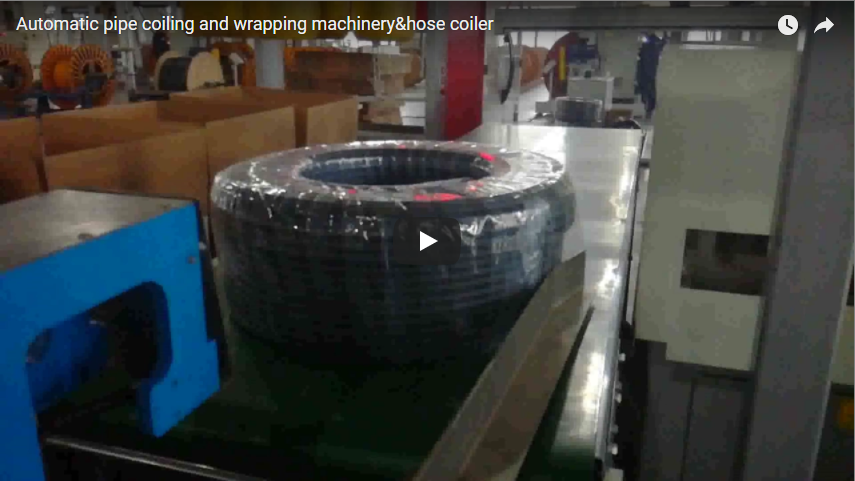
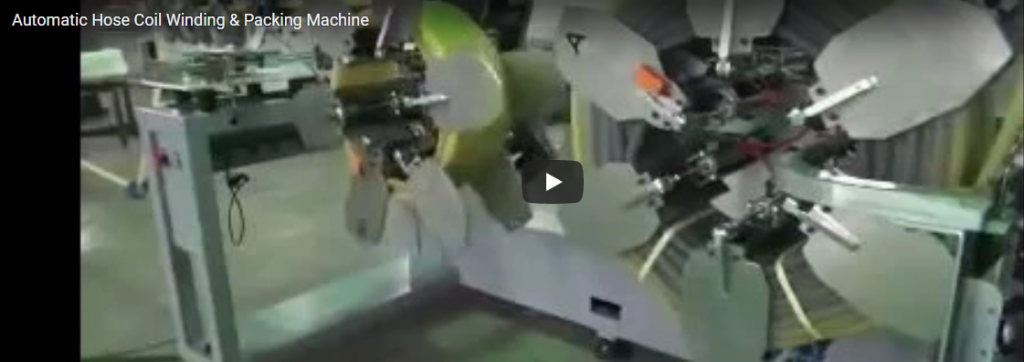
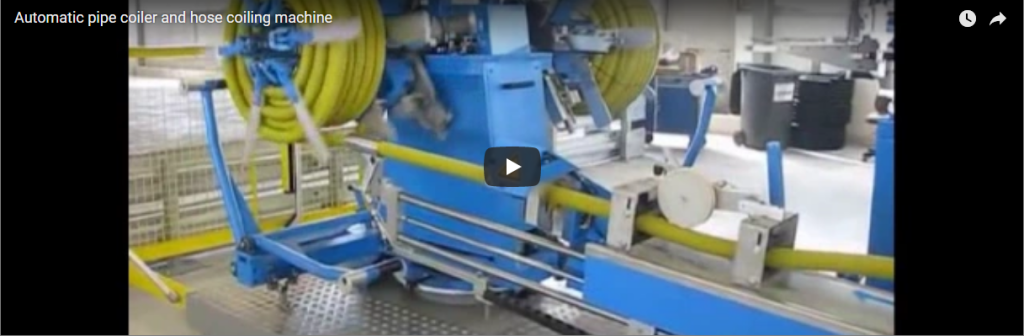
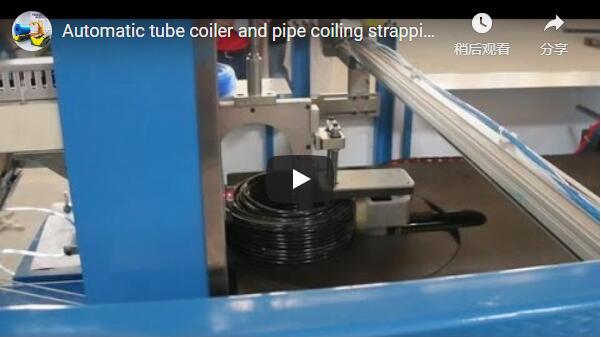
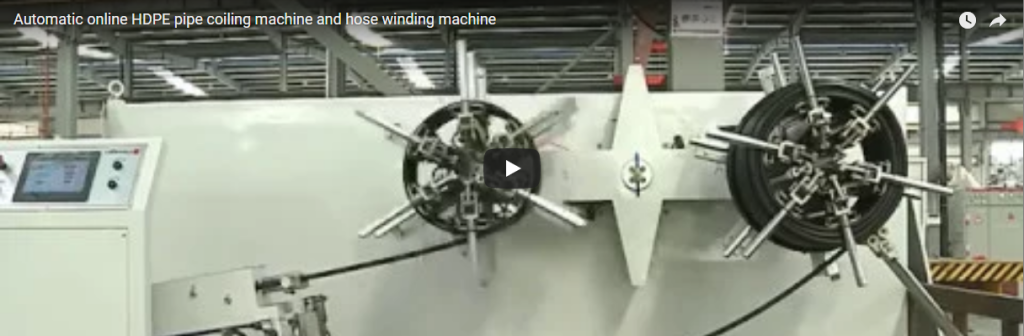
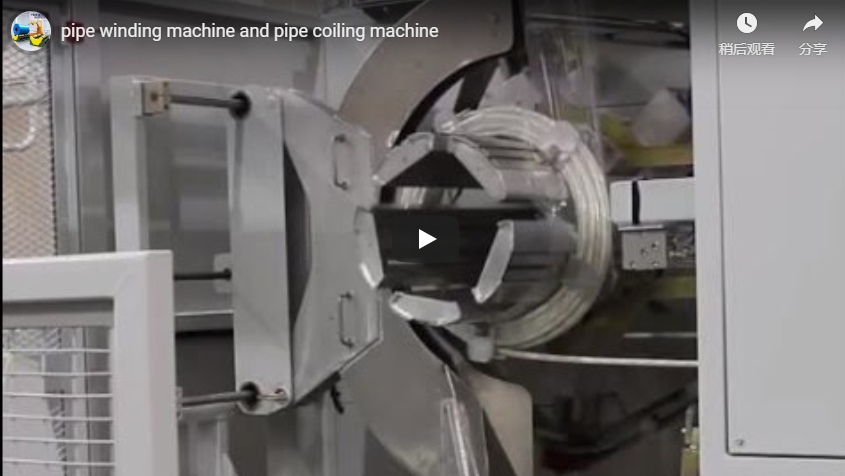
Automated systems use programmable controllers and real-time sensor feedback to deliver high throughput with consistent tension and minimal operator involvement. This approach is ideal for steady production runs where predictable output, standardized coil quality, and improved workplace safety justify the higher initial equipment investment.

  • Throughput: Delivers significantly higher output per hour by automating feeding, measuring, and strapping steps. Faster cycle times enable quicker order fulfillment and support larger production schedules without adding shifts.

  • Tension Control: Uses programmable logic controllers (PLCs) that automate machine settings and real-time sensor feedback to adjust tension automatically. This consistency protects corrugated or reinforced hoses from kinking and ensures uniform coil diameter for stable stacking.

  • Labor Dependency: Requires one operator per shift primarily for loading materials, monitoring the touchscreen interface (HMI), and performing routine quality checks. Reduced headcount lowers ongoing labor expenses and minimizes human error.

  • Setup Flexibility: Involves a higher initial investment but offers rapid changeovers through saved machine recipes on the control panel. Operators can switch between hose sizes quickly without recalibrating mechanical guides manually. Compatible with standard PP/PET strapping.

  • Safety Features: Incorporates emergency stop circuits, protective guards around moving parts, and compliance with standard industrial safety certifications. These features reduce ergonomic strain and help facilities meet workplace safety regulations efficiently.

ROI Insight: At moderate-to-high production volumes, an automated system typically pays back within one to two years through labor savings and reduced waste. Verify exact return periods using your facility’s specific wage rates, rejection data, and equipment financing terms.

🛡️ Comparison Table

A side-by-side comparison of manual versus automated coiling highlights clear trade-offs between upfront cost, labor requirements, tension consistency, and operational flexibility. Reviewing these metrics against your annual volume and material specifications helps procurement teams select the most economically viable packaging solution for their facility.

Criterion Manual Coiling & Strapping Automated Coiling & Strapping
Throughput Moderate output per hour (varies by operator speed) High output per hour under consistent conditions
Tension Consistency Wider variation due to manual hand tensioning Tighter consistency via real-time sensor feedback
Labor per Shift Multiple operators required for full process Typically one supervisor for loading and monitoring
Labor Cost % of Total Higher share of packaging expenses Lower share through reduced headcount
Rejection Rate (estimate) Higher due to variable tension and handling Lower under normal operation with consistent settings
Changeover Time Longer manual adjustment between sizes Faster switching via saved machine recipes
Equipment Investment Lower upfront cost for basic tools Higher initial investment for integrated line
Annual Volume Breakeven Suitable for lower annual volumes Typically cost-effective at higher annual volumes
Safety Risk (injury rate) Higher ergonomic strain from manual handling Reduced risk with guarded components and automation
Material Compatibility Best for flexible hoses under standard diameters Handles large-diameter, corrugated, wire-reinforced, and rigid pipes

🔗 See Also: Related equipment

⚙️ Selection Advice

Select manual coiling only when annual volume remains low, hose diameters are small, or capital is strictly limited. Opt for automated systems when production scales, material complexity increases, or consistent coil quality becomes critical to reducing waste and meeting shipping deadlines efficiently.

  • Choose manual coiling and strapping only for annual volumes below typical thresholds, hose diameters under 50 mm, or when capital is restricted and labor costs are manageable. Manual systems work for small workshops or prototyping where flexibility outweighs efficiency. However, be prepared for higher rejection rates and safety compliance costs.

  • Select an automated system when annual volume exceeds standard manual capacity, hose diameters range from 50–300 mm, or materials include corrugated or wire-reinforced structures. The automated line typically pays for itself through labor savings, reduced waste, and consistent coil quality. For high-mix production, ensure the control panel supports quick recipe switching.

  • For intermediate volumes, consider a semi-automated approach: a powered winding mandrel with manual strapping, or a basic automatic coiling machine without integrated strapping. This hybrid option offers moderate throughput improvement at a mid-range price point.

Common Mistake: Many buyers purchase an automated system without verifying hose material compatibility. Wire-reinforced or corrugated hoses require specific tension profiles—always request a test run with your actual product before committing. Verify supplier specifications against your production requirements.

🛠️ Purchase-Decision Checklist

A structured procurement checklist ensures buyers match equipment capabilities with actual production demands before committing capital. Verifying volume thresholds, diameter ranges, material compatibility, and safety requirements prevents costly mismatches between machine specifications and daily operational workflows.

  • [ ] Annual coil volume: below typical manual threshold / moderate range / above automated breakeven point

  • [ ] Hose diameter range: small diameters suitable for hand tools / standard to large diameters requiring machine guides

  • [ ] Material type: flexible hose compatible with manual tensioning / corrugated or wire-reinforced needing controlled feedback

  • [ ] Budget allocation: lower upfront cost acceptable / mid-range hybrid investment / higher capital for full automation

  • [ ] Available operator skill level: basic handling training sufficient / moderate technical familiarity required / PLC and HMI operation needed

  • [ ] Safety compliance requirement: standard PPE protocols / guarded equipment with emergency stops and certification verification

  • [ ] Future volume growth: stable output expectations / projected 10%+ annual increase requiring scalable infrastructure

🛡️ Compliance Note: This equipment is designed to meet ISO and ASTM requirements. Verify specific certifications with the manufacturer before procurement.

🏗️ FAQ

Frequently asked questions address common procurement concerns regarding payback timelines, material compatibility, floor space requirements, and strapping standards. Reviewing these practical considerations helps operations managers align technical specifications with realistic facility constraints and long-term maintenance expectations.

Q: What is the typical payback period for an automated hose coil wrapping and strapping machine? A: Payback timelines generally range from one to two years at moderate-to-high production volumes, driven by labor savings and reduced material waste. Verify exact return periods using your facility’s specific wage rates, rejection data, and equipment financing terms.

Q: Can automated systems handle wire-reinforced hoses without kinking? A: Yes, provided the machine uses real-time sensor feedback to adjust tension automatically during winding. Standard open-loop setups may still cause stress on reinforced materials. Always request a production test with your actual hose specifications before finalizing procurement.

Q: How much floor space does an automated coiling and strapping line require? A: Typical installations occupy a moderate footprint that includes infeed conveyors, the coiling station, strapping unit, and outfeed area. Compact configurations are available for facilities with tight layouts. Measure your bay dimensions against supplier layout diagrams to ensure proper clearance.

Q: What strapping materials are compatible with automated systems? A: Most modern units accept polypropylene (PP) and polyester (PET) strapping in standard widths, with reinforced heads available for heavy-duty steel bands. Confirm material compatibility with your equipment vendor to avoid tension mismatches or strap breakage during high-speed operation.

Q: Can the same machine handle both hose and pipe coils? A: Yes, if the diameter range and material flexibility fall within the manufacturer’s specifications. Different materials require distinct tension profiles, so the control system must store separate settings for each product type. Always validate cross-material performance during a trial run.