Executive summary
A pipe coiling and strapping machine winds hose or pipe from the extruder into a coil of a set length, cuts it, holds the loop and straps it, with no hands on the pipe. Picking the right machine comes down to three numbers: pipe OD, metres per coil and the coil size your customer wants. This page compares our two vertical coiler ranges, shows how to check that your coil fits, and explains length counting and strap layout.
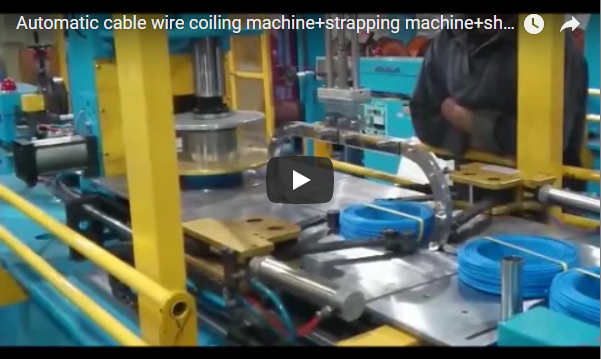
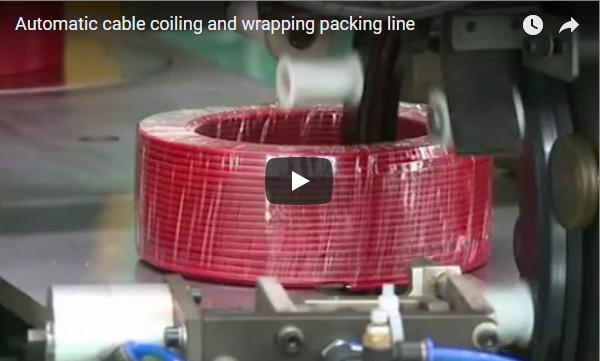
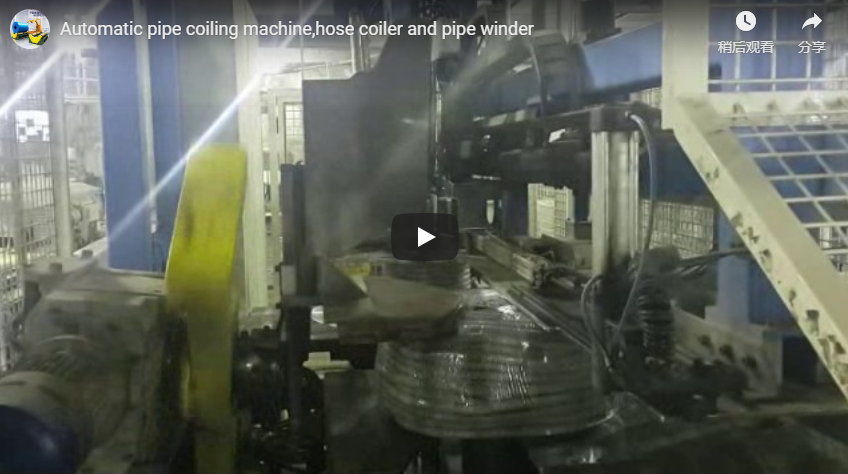
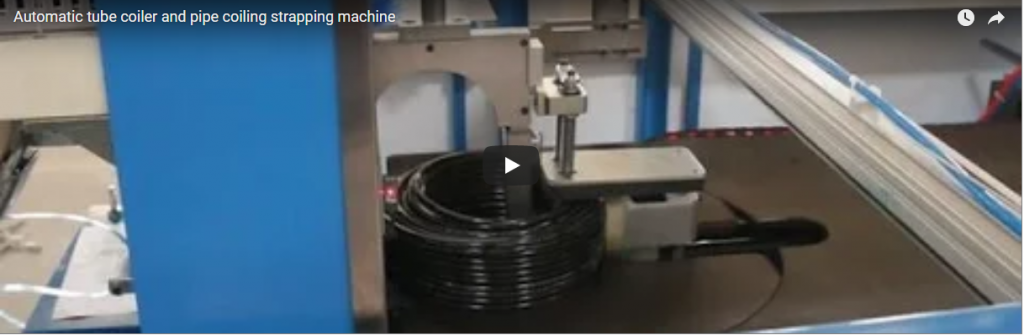
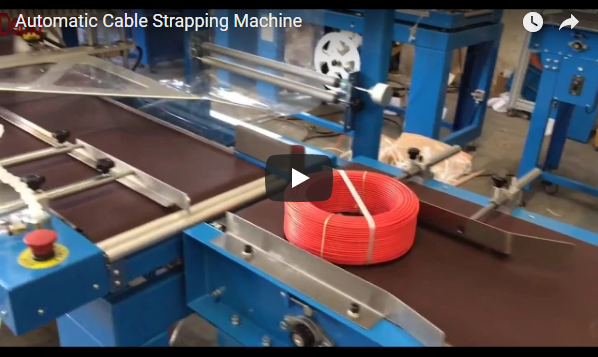
Hose is wound onto an expandable reel with steel spokes, which opens to hold the coil eye and closes to release it. The strapping head sits right beside the reel, so the coil is strapped where it is formed. An HMI panel on the machine sets length and speed.
Table of Contents
- Three numbers that choose the machine
- FCL-600 or FCL-800
- Will my coil fit? A worked check
- Length counting and cutting
- Strap layout
- Running with the extruder
- Selection checklist
- Safety
- Engineering FAQ
- Next step
- Related reading
- Sources
Three numbers that choose the machine
- Pipe OD: decides the reel, guides and cutter.
- Metres per coil: together with pipe OD, decides how big the coil gets.
- Coil ID, height and OD: set by your customer’s dispenser, carton or pallet.
If the coil your customer wants cannot hold the metres you sell at that pipe OD, no machine will fix it. Check the fit first.
FCL-600 or FCL-800
| Item | FCL-600 | FCL-800 |
|---|---|---|
| Pipe OD | 2–16, 8–20 or 15–30 mm by model | 5–16, 10–20 or 15–30 mm by model |
| Coil OD | 400–600 mm | 500–800 mm |
| Coil ID | 200–400 or 250–400 mm | 200–300, 250–500 or 300–600 mm |
| Coil height | 40–120, 40–200 or 100–300 mm | 80–200 or 100–300 mm |
| Length counter | 20–100 m per coil | by model, confirmed at quote |
| Speed | confirmed at quote | up to 80 m per minute |
| Air | 6 bar | confirmed at quote |
Small-bore PU, PE and nylon tube in short lengths fits the FCL-600. Longer coils and bigger pipe go to the FCL-800.
Will my coil fit? A worked check
Turns per layer = coil height ÷ pipe OD. Coil OD = coil ID + 2 × layers × pipe OD. Length ≈ 3.14 × mean diameter × turns per layer × layers. For 50 m of 12 mm hose, coil ID 300 mm, height 120 mm (example only):
| Layers | Coil OD | Length |
|---|---|---|
| 4 | 300 + 2 × 4 × 12 = 396 mm | 3.14 × 0.348 × 40 ≈ 44 m |
| 5 | 300 + 2 × 5 × 12 = 420 mm | 3.14 × 0.36 × 50 ≈ 57 m |
Turns per layer = 120 ÷ 12 = 10. So 50 m needs 5 layers and a coil OD of about 420 mm, inside the FCL-600 range of 400–600 mm. Soft tube packs a little tighter, corrugated hose looser, so confirm on a trial coil.
Length counting and cutting
The meter counter measures pipe as it runs and the PLC cuts at the set length. Cut length is adjustable on the panel, so one machine serves several coil lengths. After cutting, the machine holds the loop and moves the coil to the next station, so the next coil starts at once. Length tolerance for your pipe is confirmed at quote.
Strap layout
- Straps are spaced evenly around the coil, so the layers cannot spring open.
- Short, light coils need fewer straps; tall or springy coils need more.
- Strap tension is set low enough that thin-wall pipe is not flattened at the strap.
Running with the extruder
The extruder should not have to wait for the coiler. Coiling speed must match line speed, and coil change must fit in the time between cuts. If the coil change takes longer than the gap, an accumulator or a second reel keeps the line running. Give us your line speed and we check the change time.
Selection checklist
- Pipe types and ODs?
- Metres per coil and coil sizes?
- Extruder line speed?
- How many straps, and strap material?
- Wrapping, labelling or boxing after strapping?
- Air and power on site?
Safety
The machine is designed to EN ISO 12100:2010 for risk assessment, EN 415-10 for packaging machine safety and EN 60204-1 for electrical equipment. The turning reel, the cutter and the strapping head are guarded, with an emergency stop at the panel.
Engineering FAQ
Q: What pipe sizes can it coil? A: From 2 mm up to 30 mm OD across the FCL-600 and FCL-800 models.
Q: How do I know my coil size works? A: Use the fit check above with your pipe OD and metres per coil.
Q: Can I change coil length quickly? A: Yes, cut length is set on the panel.
Q: How fast can it coil? A: Up to 80 m per minute on the FCL-800.
Next step
- Send your pipe ODs, metres per coil and line speed to info@fhopepack.com.
- We check the coil fit and pick the model.
- We reply within 24 hours with a proposal and quotation.
Related reading
- Automatic hose coiling machine FCL-600 (product)
- Automatic pipe winding machine FCL-800 (product)
- Hose coil wrapping and strapping
Sources
- FHOPE product pages: FCL-600 hose coiling machine; FCL-800 pipe winding machine
- EN ISO 12100:2010; EN 415-10; EN 60204-1
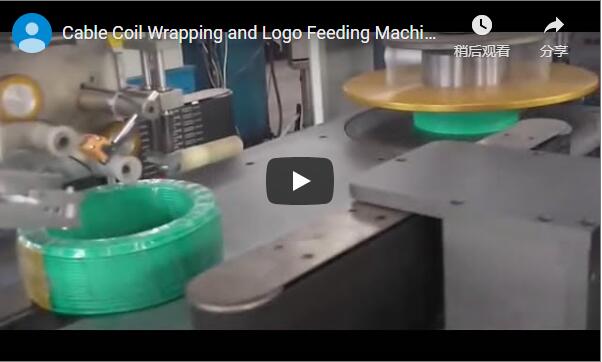
- The hose coiling and strapping machine shown above
Last reviewed: 2026-10-19