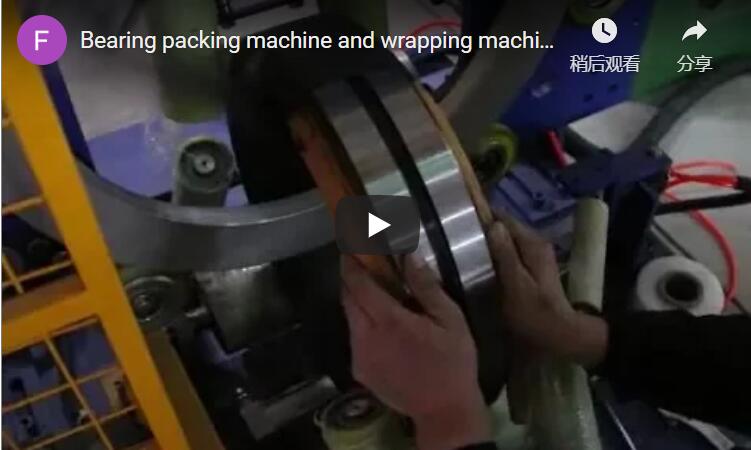
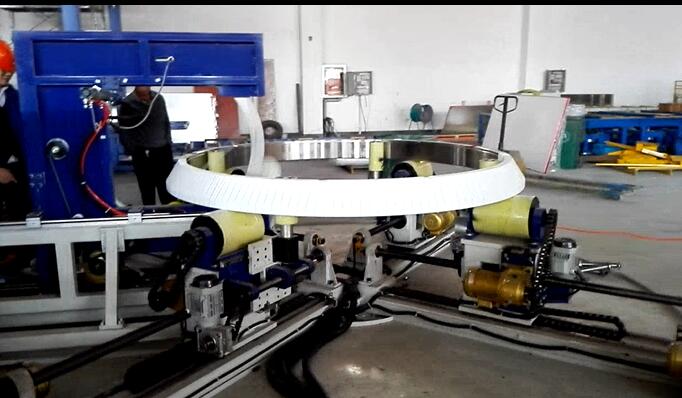
An automatic bearing packing line is a specialized packaging system designed to transport circular metallic rings on a conveyor and apply a protective wrap while the load rotates, eliminating the need for manual handling during the wrapping process. This configuration ensures consistent coverage for bearings leaving machining or assembly, preparing them for boxing or shipping. Because the line is sized from your specific bearing range and site conditions rather than a fixed rating plate, the exact configuration, cycle time, and material specifications are confirmed per project.
Overview
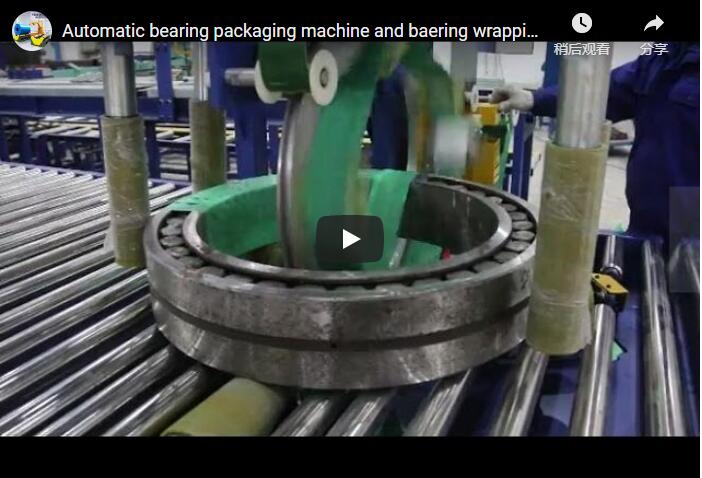
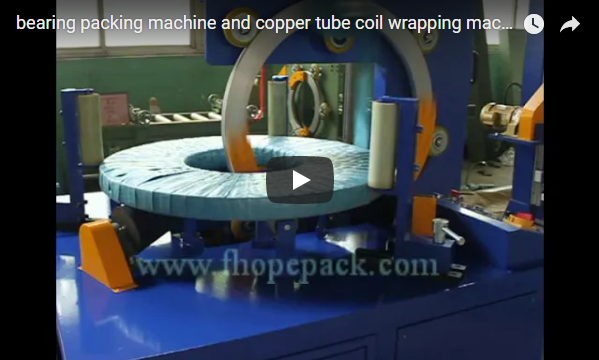
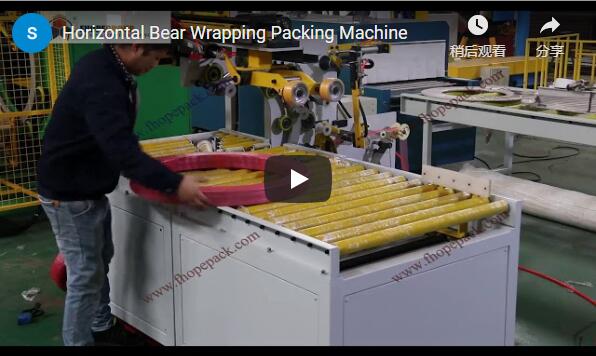
This clip is a general demonstration of the mechanical concept. It does not show rated bearing weight and size range, cycle time, or wrapping material specification. Furthermore, it does not demonstrate separate boxing or labeling stations, which are optional additions to the core wrapping function.
What this line does
The bearing is carried on rollers that support the ring and let it turn in place while the wrap is applied, so the protective layer is laid on evenly without an operator holding or positioning it. A rotating arm and a wrapping head move over the load as the ring turns, which allows the material to be applied continuously. The line is engineered to the specific geometry of bearing rings, and the coverage boundary of the wrap – how much of the ring face the material covers – is agreed with the material specification for the bearings you supply.
Frame and wrap head
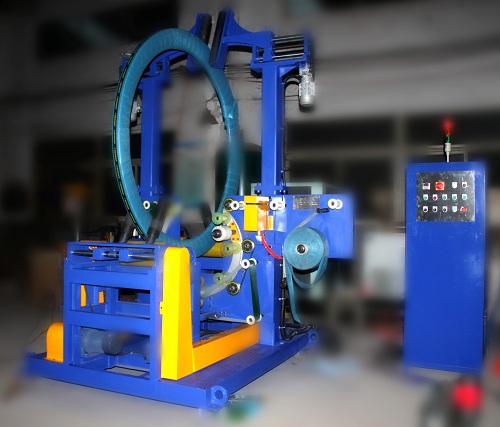
The structural frame of the line supports the conveyor system, the rotating arm, and the control panel. The machine is built to accommodate various bearing sizes, with the specific dimensions of the frame, rollers, and arm determined during the sizing phase.
The wrap head assembly includes the mechanism that feeds and applies the wrapping material. This component moves over the load, ensuring complete coverage. The control panel allows operators to start, stop, and monitor the cycle. The electrical requirements for the drive and control systems are tailored to the site conditions.
Wrap and cycle
The cycle begins with the bearing placed on the rollers. The arm and head apply the material in a controlled manner, and the number of wrap layers and the material tension follow from the bearing and the chosen packaging material. Once the wrap is complete, the bearing is ready for the next stage, which may involve boxing, labeling, or palletizing.
These downstream processes are not part of the core wrapping demonstration but can be integrated into the line based on your workflow. The cycle time and material consumption follow from the bearing parameters and the material selected.
Sizing and configuration
Sizing an automatic bearing packing line requires detailed information about the product and the site. The line is not built to a fixed specification but is customized based on the bearing range and site conditions. The following data points are essential for determining the correct configuration:
| Data to confirm | What it determines |
|---|---|
| Bearing weight and size range (kg, mm) | Conveyor, arm and wrap head sizing |
| Wrapping material type and grade | Consumable stock and tension settings |
| Bearings per shift | Line sizing and cycle time |
| How the bearing enters and leaves the line | Loading equipment and layout |
| Electrical supply (voltage, phase, frequency) | Drive and control build. House-typical 380 V three-phase 50 Hz, 220 V single-phase option, confirmed on site |
Every row in this table is confirmed to your site conditions before the build begins. This ensures that the machine is optimized for your specific production needs and operational environment.
Operation and safety
Operating the line involves placing the bearing on the conveyor and initiating the cycle. The machine then automatically wraps the bearing. Once the process is complete, the operator removes the finished bearing from the outfeed. The system is designed to minimize manual intervention during the wrapping phase, enhancing both safety and efficiency.
Safety is a critical aspect of the design. Operators must keep clear of the rotating arm and the conveyor while the line is running. The machine should be stopped and the power supply isolated before clearing a jam or reaching near the arm. Lock-out/tag-out (LOTO) procedures must be applied before any service work is performed. These practices are aligned with general machinery safety principles, such as those outlined in ISO 12100, which focuses on risk assessment and mitigation.
Engineering FAQ
Q: What does this bearing packing line do?
A: It carries a circular metallic ring on a conveyor and applies the wrap while the load rotates.
Q: How is the wrap applied?
A: A rotating arm and a wrap head move over the load, applying the wrapping material as the ring turns.
Q: What frame does it use?
A: The frame is customized to the bearing size range, supporting the conveyor, arm, and control systems.
Q: Can boxing or labeling be added?
A: Yes, both are options to confirm with the builder; the demonstrated cycle covers the wrap only.
Q: What electric supply does it need?
A: The typical build supports 380 V three-phase 50 Hz; options for 220 V single phase may be available. Confirm the site supply in the enquiry.
Next step: RFQ checklist
To receive a proposal for an automatic bearing packing line, please provide the following information:
- Email info@fhopepack.com with your bearing weight and size range.
- State whether boxing or labeling stations are required.
- Submit your layout drawing of the bearing infeed and outfeed area.
- Provide details on your electrical supply (voltage, phase, frequency).
- FHOPE packing machinery product lines
- Hose Wrapping Machine: HDPE Pipe Coil Packing Machines
- Economic Cable Coil Packing Machine: FPCA Specs, Wrap Time and Overlap Setup
- Automatic Bar Wrapping Machine and Small Orbital Wrapper: Sizes, Speeds and Film Pitch
- ISO 12100:2010 Safety of machinery, general principles for design and risk assessment
- EN 415-10:2014 Safety of packaging machines, general requirements
We reply with a proposal after we confirm the details. This ensures that the configuration is tailored to your specific requirements and site conditions.
Related reading
Sources and standards
The standards that apply depend on the destination market. For CE markets, ISO 12100 sets the machinery risk-assessment method and EN 415-10 covers packaging machine safety. Certification of a delivered machine is confirmed in the project ordering agreement. Demonstration footage (video hjsW2G4iAh4) is reviewed as a general machine demo; rated outputs are not shown in the clip and are therefore not quoted.