Bearing Packing Machine And Wrapping Machine: Complete Guide

Summary: This technical guide details the engineering principles, mechanical architectures, and procurement protocols for bearing wrapping systems. You will evaluate core operational parameters, material science applications, and integration strategies to align packaging infrastructure with precision manufacturing requirements.

[VIDEO PLACEHOLDER – Insert YouTube iframe here]

🛠️ Core Questions

Bearing packing systems utilize automated orbital or horizontal wrapping mechanisms to apply precision-engineered protective films, ensuring high-tolerance industrial components remain completely isolated from atmospheric moisture, particulate contamination, and mechanical deformation throughout complex global supply chain transit and long-term storage cycles.

What is a bearing packing machine and how does it work?

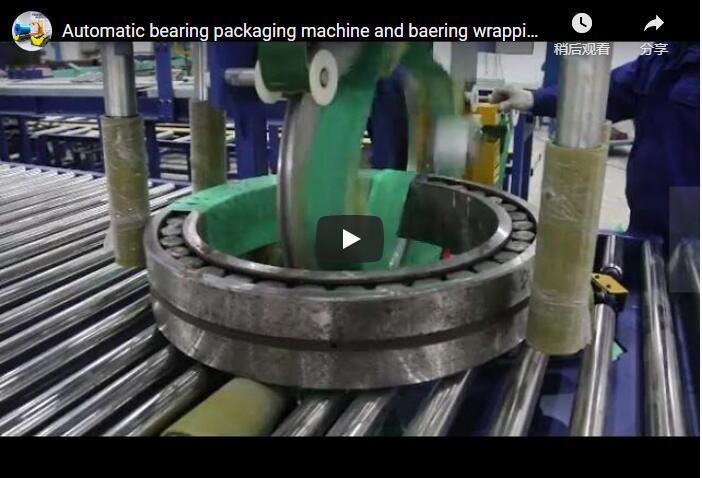
A bearing packing machine functions as a precision material application system designed to encase rotating elements in protective barriers without inducing structural stress or raceway deformation. The operational sequence begins with precise bore alignment, followed by the deployment of either volatile corrosion inhibitor (VCI) paper or high-tensile stretch film. Adjustable dancer rollers and tension controllers modulate wrap pressure, preventing brinelling or micro-surface scoring while guaranteeing complete outer diameter coverage. Industry averages suggest that optimal tension settings vary by bearing mass and steel hardness, requiring verification with your equipment supplier to match specific load profiles. This controlled application eliminates manual handling errors and standardizes protection across mixed production runs, directly translating to reduced field failure rates.

Why do bearings need specialized packaging instead of standard boxes?

Standard corrugated cartons lack the chemical and physical properties required to mitigate electrochemical corrosion and micro-vibration damage in precision steel components. Specialized wrapping systems generate a controlled micro-atmosphere where VCI compounds continuously migrate across metal surfaces, neutralizing acidic moisture and halting oxidation cycles. Without this engineered barrier, condensation during temperature fluctuations can initiate pitting within 72 hours, compromising fatigue life before installation. Operational context: In humid or marine transit environments, standard packaging fails to address vapor transmission, making specialized wrapping a non-negotiable requirement for maintaining dimensional tolerances and surface finish integrity. The financial impact of a single corroded bearing often exceeds the entire packaging line investment, particularly in automotive and wind-turbine supply chains.

What are the main types of bearing wrapping machines?

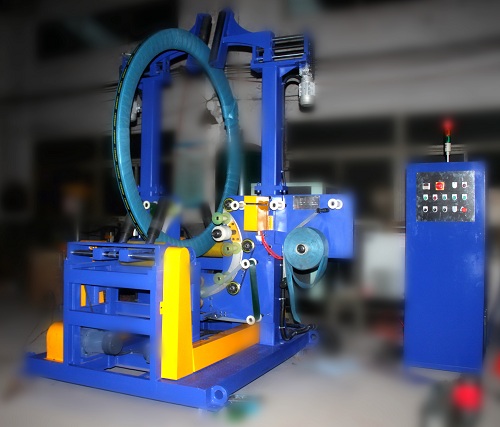
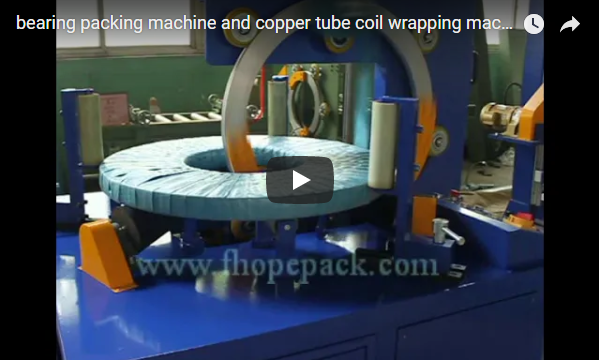
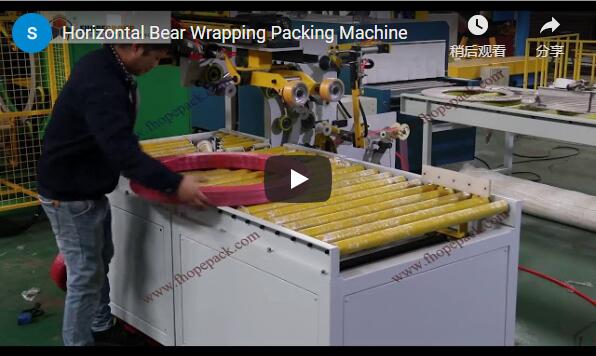
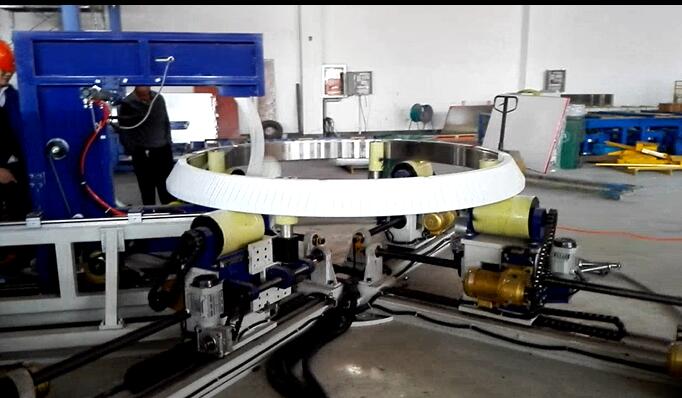
The industrial market primarily utilizes two distinct mechanical architectures: orbital ring wrappers and horizontal coil wrapping systems. Orbital configurations rotate the film carriage around a stationary bearing, optimizing throughput for standard automotive and industrial sizes. Horizontal coil wrappers, conversely, position the bearing on support rollers or a motorized turntable, accommodating heavier loads and irregular geometries. Advanced horizontal models integrate infeed conveyors and optical sensors for automated product detection and precise positioning, significantly reducing cycle times. Semi-automatic variants still require manual inner liner application when utilizing VCI paper, whereas fully automated lines synchronize material feeding with PLC-controlled motion profiles. Operational context: Selecting the correct architecture depends on your facility’s floor layout, bearing mass distribution, and required changeover frequency.

🏗️ Advanced Questions

Selecting an industrial bearing wrapping system requires critical evaluation of outer diameter limits, maximum load capacity, material compatibility, and changeover efficiency to ensure seamless integration with existing production workflows and sustained global operational throughput targets across diverse manufacturing environments.

What technical specifications should I compare when choosing a bearing packing machine?

Technical evaluation must prioritize dimensional compatibility and mechanical load ratings to prevent equipment overload or product damage. The standard operational envelope accommodates outer diameters up to 1500 mm and maximum bearing weights of 2000 kg, spanning small automotive components to heavy-duty wind turbine assemblies. Changeover protocols between varying bearing sizes typically require 10 to 15 minutes, a metric that directly influences line flexibility and overall equipment effectiveness. Industry averages suggest that wrapping speeds and film feed rates should be verified with your specific supplier, as these parameters fluctuate based on material thickness and tension requirements. A comprehensive specification matrix should also account for power consumption, compressed air dependencies, and sensor resolution for consistent product detection. Operational context: Mapping these specifications against your bill of materials prevents costly retrofits and ensures the machine handles your full product mix without manual reconfiguration.

How does material selection (VCI paper vs. stretch film) affect performance and cost?

Material selection dictates the corrosion mitigation strategy and long-term storage viability of the packaged assembly. VCI paper actively releases volatile inhibitors that adsorb onto metal surfaces, providing chemical protection ideal for extended inventory holding or international maritime shipping. Conversely, high-tensile stretch film functions as a passive physical barrier, effectively excluding dust and ambient humidity but offering no intrinsic chemical corrosion resistance. Operational context: Facilities typically deploy VCI paper for bearings destined for multi-month storage or humid climates, while reserving stretch film for short-term in-plant transfers or dry warehouse environments. Industry averages suggest that material cost differentials vary significantly by region and supplier contracts, requiring direct verification to accurately model per-unit packaging expenses. Matching material chemistry to storage duration prevents over-engineering protection for short-cycle components while safeguarding long-haul shipments.

What are the hidden costs and ROI factors for a bearing packing line?

Capital expenditure extends beyond the base machine frame to include facility integration, operator training, and consumable supply chain management. Maintenance requirements typically involve periodic replacement of tensioning rollers, cutter blades, and drive belts, though replacement intervals depend heavily on operational duty cycles and environmental conditions. Return on investment primarily stems from reduced warranty claims, minimized product damage during transit, and standardized labor allocation across packaging stations. Industry averages suggest that payback periods fluctuate based on current damage rates and regional labor costs, making direct financial modeling essential before procurement. Additionally, integrating a programmable logic controller (PLC) and human-machine interface (HMI) enables real-time monitoring, while manufacturing execution system (MES) connectivity provides traceability for quality assurance audits. Operational context: Tracking pre- and post-installation damage rates over a 90-day period provides concrete data to validate projected savings with your finance department.

📈 Selection Checklist

A systematic procurement framework must rigorously align industrial machine capabilities with actual production volumes, material handling requirements, and future expansion plans to prevent operational bottlenecks and ensure sustained long-term capital efficiency across evolving manufacturing demands and shifting global market conditions.

Step 1: Define your bearing size and weight range

Accurate dimensional profiling establishes the foundational boundary conditions for equipment selection. Engineers must document the minimum and maximum outer diameters, inner bores, and axial widths across the entire product portfolio. The selected system must comfortably accommodate the largest heavy-duty wind turbine bearings while maintaining precision on smaller automotive components. If production runs regularly exceed 1500 mm outer diameters or surpass 2000 kg weight limits, custom-engineered horizontal coil wrappers or reinforced orbital platforms become necessary. Operational context: Maintaining a 10% dimensional buffer above your largest current specification prevents premature capacity constraints as product lines evolve. Documenting these parameters early eliminates vendor misalignment and ensures accurate quotation comparisons.

Step 2: Decide on automation level

Automation architecture directly correlates with throughput requirements and labor allocation strategies. Semi-automatic configurations remain viable for low-volume batches or highly customized orders, relying on manual bearing placement and operator-initiated cycle starts. For high-volume environments, integrating an infeed conveyor paired with optical sensors enables continuous product detection and automated positioning, drastically reducing manual intervention. Advanced setups utilize a programmable logic controller (PLC) to manage motion sequences, while a human-machine interface (HMI) provides intuitive parameter adjustment and fault diagnostics. Industry averages suggest that full automation yields optimal results when daily output exceeds 500 units, though exact thresholds should be verified with your production engineering team. Operational context: Mapping your current shift structure against machine cycle times reveals whether manual loading creates a bottleneck or if automated conveyance justifies the capital outlay.

Step 3: Match wrapping material to storage duration

Material deployment must align with inventory turnover rates and environmental exposure risks. Short-term internal transfers typically require only a physical barrier, making high-tensile stretch film the most cost-effective solution for dry warehouse environments. Conversely, bearings destined for extended storage or export markets necessitate VCI paper to actively suppress oxidation during temperature and humidity fluctuations. Some facilities employ a hybrid approach, applying an inner VCI liner followed by an outer stretch film layer to combine chemical inhibition with mechanical impact resistance. Operational context: Verify material roll widths and core specifications with your supplier to ensure compatibility with existing film feed mechanisms and tensioning assemblies. Standardizing on one primary material reduces inventory complexity and simplifies operator training across multiple shifts.

Step 4: Verify safety and compliance

Regulatory compliance and machine safety protocols must be validated against regional industrial standards and customer audit requirements. While specific ISO, CE, or ASTM certifications vary by manufacturer and destination market, reputable suppliers should provide comprehensive documentation on electrical safety, emergency stop functionality, and guard interlock systems. Automotive and aerospace clients frequently mandate rigorous documentation on wrap tension consistency and corrosion resistance testing. Operational context: Request a physical sample wrap of your largest bearing configuration prior to procurement, allowing quality assurance teams to validate barrier integrity and dimensional compliance before finalizing the purchase agreement. Conducting a site safety audit ensures the machine’s footprint, guarding, and utility connections align with your facility’s occupational health regulations.

Step 5: Plan for future scaling

Long-term capital efficiency requires selecting equipment with modular expansion capabilities rather than fixed-limit configurations. A forward-compatible machine architecture should feature standardized programmable logic controller (PLC) platforms and spare input/output (I/O) ports, facilitating seamless integration with downstream labeling stations, robotic palletizers, or vision inspection systems. Operational context: Designing the packaging cell with additional floor space and utility connections (compressed air, electrical conduits) prevents costly facility reconfiguration when production volumes double. Industry averages suggest that modular upgrades typically cost significantly less than complete line replacements, though exact retrofitting expenses should be verified with your equipment vendor. Establishing a scalable infrastructure protects your initial investment and accommodates seasonal demand spikes without disrupting core operations.

For detailed technical specifications and configuration options, visit the bearing wrapping machine page or review the FPB-400 bearing packing machine documentation.