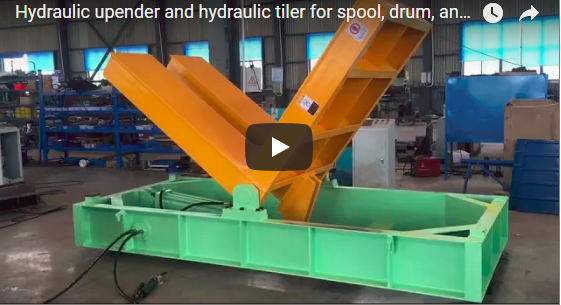
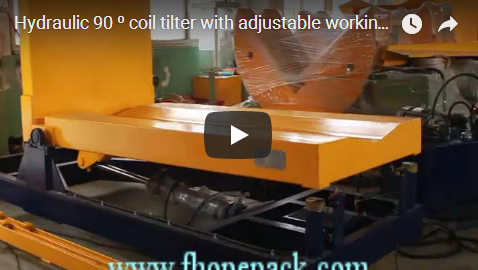
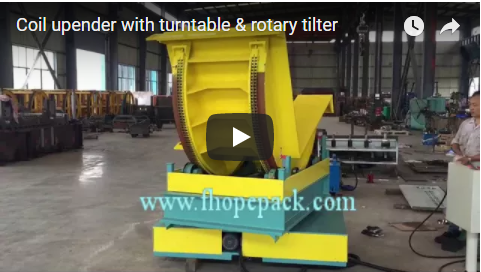
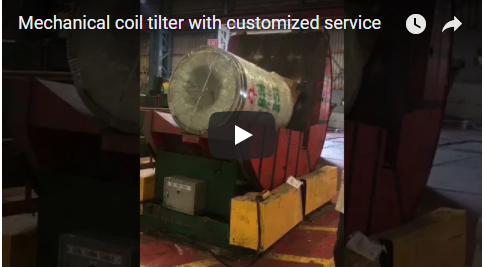
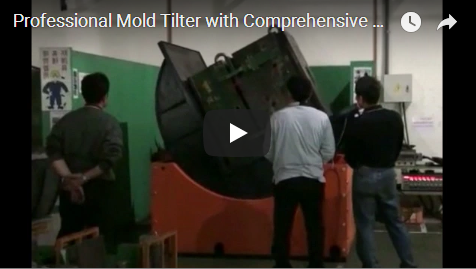
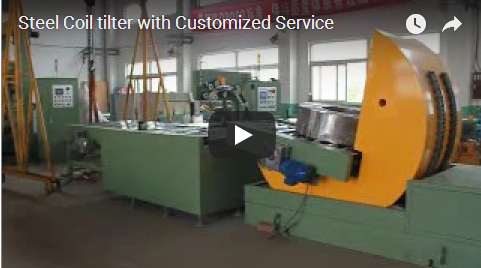
Executive summary This clip shows a 180 degree turning machine in a glass line. A sheet arrives on a roller conveyor, the turning frame clamps it between two roller beds, turns it over and sends it on with the other face up. The footage was shared with us; our equivalent solution turns glass, metal sheet, board and panels the same way, with the frame sized to your largest sheet.
Table of Contents
- What the clip shows
- Why turn a sheet over
- Sheets per hour
- What we set per line
- Selection checklist
- Safety
- Engineering FAQ
- Next step
- Related reading
- Sources
What the clip shows
| Step | What you see |
|---|---|
| Infeed | A large glass sheet travels in on a powered roller conveyor |
| Clamping | The turning frame closes its roller beds on both faces of the sheet |
| Turning | The frame rotates the sheet through 180 degrees inside a yellow guard |
| Outfeed | The sheet rolls out with its other face up |
| Line | Further roller conveyors run on through the plant |
Why turn a sheet over
- Two-sided work. Inspection, coating or cleaning of both faces without lifting by hand.
- Less breakage. Rollers on both faces hold the sheet through the whole turn.
- No crane. Large sheets are turned in line, so the crane stays free.
- Steady flow. The turner keeps pace with the conveyor, so sheets do not queue.
Sheets per hour
Worked example (illustrative).
| Item | Value |
|---|---|
| Turn cycle (illustrative) | 30 s |
| Infeed and outfeed (illustrative) | 30 s |
| Cycle per sheet, 30 + 30 | 60 s |
| Sheets per hour, 3,600 ÷ 60 | 60 sheets |
What we set per line
| Setting | Depends on |
|---|---|
| Frame size | Largest sheet length and width |
| Clamping | Roller beds or soft pads, per surface |
| Turn angle | 180 degrees, or 90 degrees to stand sheets up |
| Conveyor height | Your existing line |
Selection checklist
- Largest and smallest sheet size.
- Sheet thickness and weight.
- Surface that must not be marked.
- Sheets per hour.
- Conveyor height and direction.
- Turn angle: 180 or 90 degrees.
Safety
- Keep clear of the turning frame and fence it with interlocked gates.
- Stop the turner before removing a broken sheet.
- Wear cut-resistant gloves when handling glass.
- For CE markets, the machine is designed to ISO 12100 and EN 415-10.
Engineering FAQ
Q: What does a 180 degree turning machine do? A: It flips a sheet over in the line so the other face is up.
Q: Which products can it turn? A: Glass, metal sheet, board and panels, with the frame sized to the largest sheet.
Q: How is the sheet held during the turn? A: Roller beds close on both faces, so the sheet cannot slide.
Q: How many sheets per hour? A: About 60 sheets per hour with an illustrative 60 s cycle (30 s turn plus 30 s transfer); real output depends on sheet size and line speed.
Q: Can it turn 90 degrees? A: Yes. We set it for 90 degrees when sheets must stand up.
Q: Can you build this configuration? A: Yes. We build equivalent turning machines sized to your sheets and conveyor line.
Q: Which standards apply? A: For CE markets, ISO 12100 and EN 415-10.
Next step
We match a sheet turning machine in three steps:
- Submit your layout drawing with sheet sizes, weights, surface needs and sheets per hour, to info@fhopepack.com.
- Receive a proposal within 48 hours with the machine data and layout.
- Book a site survey so we confirm the conveyor heights.
Related reading
- Steel Sheet Upender for 180 Degree Safety Turning
- Big Frame Flipper for 180 Degree Turning
- 90-Degree Tilter for Palletised Panel Stacks
- Upender with conveyor
Sources
- Machine content: FHOPE engineering team, 2026-10-10
- Clip: the video on YouTube
- Sheets per hour: our worked example, illustrative values
- Standards scope: ISO 12100:2010; EN 415-10:2014
- Proposal timing: approved house CTA (proposal within 48 hours)
Last reviewed: 2026-10-10