Executive summary
An advanced auto aluminum ingot cross strapping machine applies steel straps across a stacked ingot block so the load holds together in transit. The stack is carried under a gantry frame, and a strapping head lowers onto the stack to apply the cross straps. Stack height, strap type and cycle time are confirmed per project.
Table of Contents
- Why cross strap ingot stacks
- What the machine does
- Gantry frame and strapping head
- Strapping cycle and control
- What the footage shows
- Typical configuration
- Selection checklist
- Operation and safety
- Engineering FAQ
- Next step
- Related reading
- Sources and standards
Why cross strap ingot stacks
Aluminum ingot stacks travel between the smelter, storage and transit, and a loose stack can shed ingots or tilt as it is moved. Cross straps hold the ingots square in one block, so the stack stays put under handling.
Strapping by machine applies the straps in a repeatable pattern instead of relying on manual tensioning. Stack height and strap spacing are confirmed per project.
What the machine does
The machine is a gantry cross strapping machine for aluminum ingot stacks. The stack is positioned on the carrier under the frame, and a strapping head lowers onto the top of the stack and applies the cross straps.
The strapped stack stays on the carrier for the next stage. Stack size and strap pattern are confirmed per project.
Gantry frame and strapping head
A steel gantry frame carries a crossbeam above the work area, and the strapping head hangs below the beam with its supply and drive units. The head lowers and lifts on a vertical slide, and a control box on the frame carries the electrical connections.
The head fits around the stack so the strap is guided across the block. Strap width and stack width are confirmed per project.
Strapping cycle and control
The cycle starts with a stack on the carrier under the frame. The strapping head lowers onto the stack, the strap is applied across the block, and the head lifts clear when the pass is done.
A cabinet beside the frame houses the controls, and the head returns to its raised position between stacks. Cycle time and strap tension are confirmed per project.
What the footage shows
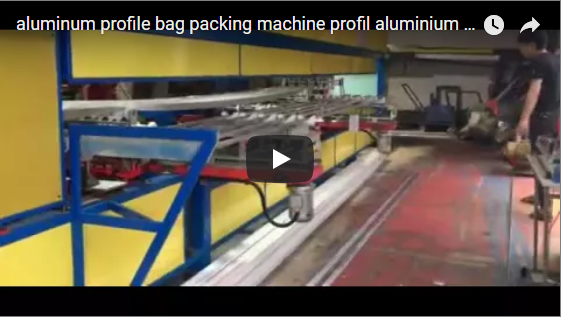
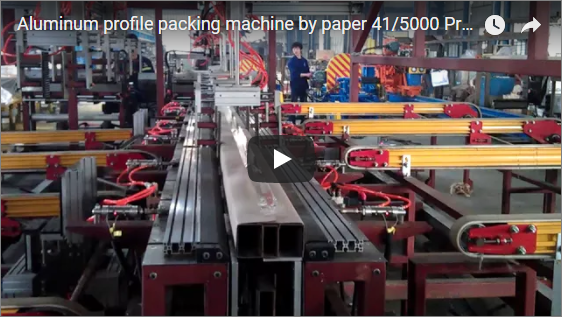
Our footage shows an aluminum ingot stack standing on a carrier under a gantry frame, with a strapping head held above the stack. The crossbeam lowers the head onto the top of the stack and lifts it clear again, and a second ingot stack waits off to the side. It is a general demonstration, so your stack size, strap type and cycle time are confirmed with us per project.
Typical configuration
Figures below list functional design boundaries rather than numeric values, and are confirmed per project.
| Parameter | Typical range, confirmed per project |
|---|---|
| Load | aluminum ingot stacks on the carrier under the gantry |
| Frame | steel gantry columns and crossbeam |
| Strapping head | head lowered onto the stack top, strap guided across |
| Supply | strap coil and drive units hung below the beam |
| Cycle | head down, strap applied, head up |
| Transfer | stack in and out on the carrier |
| Control | cabinet beside the frame |
| Electrical supply | 380 V three phase 50 Hz, or 220 V single phase for light machines, selected per project |
Selection checklist
| Question | Confirm per project |
|---|---|
| Stack range | ingot block height, width and weight |
| Strap | strap type, width and tension |
| Cycle | strap pass time and pitch between straps |
| Carrier | carrier width and stack positioning |
| Site | floor space for the gantry and carrier |
| Electrical supply | voltage, phase and frequency on site |
Operation and safety
Position the stack on the carrier, start the cycle, and let the head lower, strap and lift automatically. Keep clear of the gantry work area and the lowering head while the machine runs.
Routine checks cover the carrier, the head and the strap supply, per the machine manual. Confirm the stack is squared on the carrier before each cycle.
Engineering FAQ
Q: What does this machine do? A: It straps an aluminum ingot stack by lowering a strapping head onto the top and applying the cross straps, so the block holds together.
Q: How is the strap applied? A: The head lowers over the stack and guides the strap across the block, then lifts clear when the pass is done.
Q: Does the stack move through the machine? A: The stack sits on a carrier under the frame, and the carrier and head work together through the cycle.
Q: What stacks can it handle? A: Ingot stacks of different heights and widths fit the frame, and your stack size is confirmed per project when you send your details.
Q: What electrical supply does it need? A: The machine runs on 380 V three phase 50 Hz as standard, and light machines can be arranged for 220 V single phase, selected per project.
Next step
- Email us at info@fhopepack.com with your ingot stack size and weight.
- We send a cross strapping proposal within 48 hours.
- We confirm the strap type and cycle time for your stacks.
Related reading
- Advanced Auto Aluminum Ingot Cross Strapping Machine
- Coil De-strapping Machine
- Coil wrap packaging machine horizontal
- FHOPE packing machinery product lines
Sources and standards
- ISO 12100:2010 Safety of machinery, general principles for design and risk assessment
- EN 415-10:2014 Safety of packaging machines, general requirements
- EN ISO 13849-1:2023 Safety of machinery, safety-related parts of control systems
FHOPE advanced auto aluminum ingot cross strapping machine demonstration video. Reviewed as a general demonstration; stack size, strap type and cycle time confirmed per project.
Last reviewed: 2026-10-12