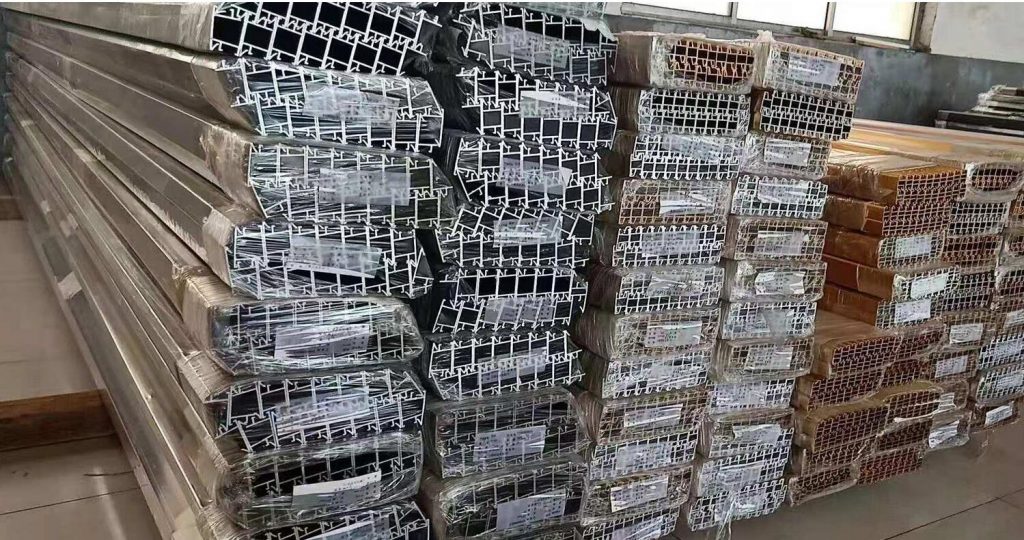
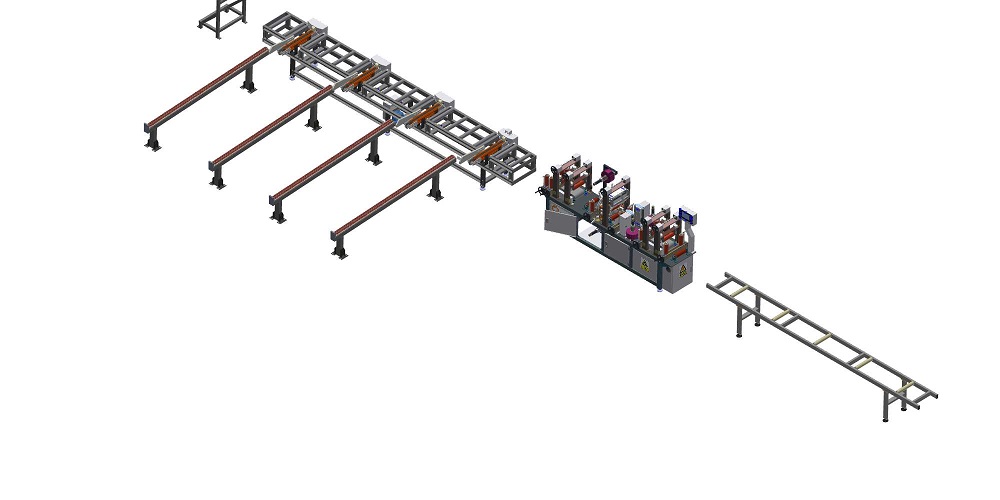
Executive summary Steel tube and rod bundles are long, heavy and hard to turn or move by hand. This machine clamps a bundle, works on it and carries it to the next station without manual handling. Two working sequences cover the range: slender rods are gathered, clamped and packed into a bundle, and a strapped bundle of tubes is turned from horizontal to vertical and transferred along a rail.
Table of Contents
- What the machine does
- Rod bundle making and packing sequence
- Tube bundle turning and rail transfer
- Controls, integration and safety
- Selection checklist for a tube and rod bundle machine
- Engineering FAQ
- Next step
- Related reading
- Sources
What the machine does
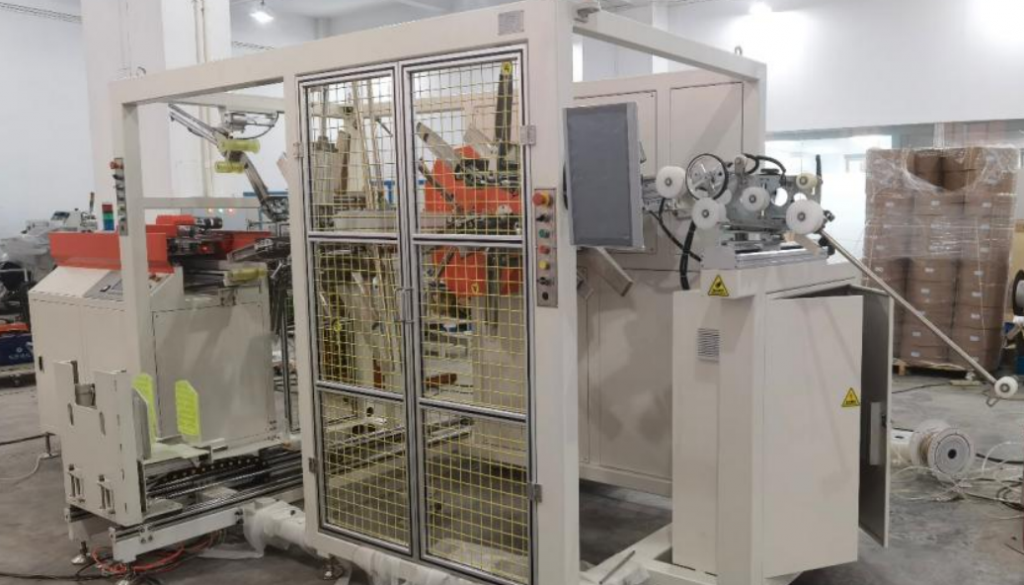
A steel tube bundle tapping and rod bundle packing machine brings the handling steps of a rod-and-bar packing line under one control. It clamps each bundle, positions it for the working step and moves it on, so operators do not lift, turn or carry long bundles by hand. That removes the crane delays and slip risk that manual bundle handling adds between stations.
The layout is a straight line: the feed area at the front, the working section in the middle and the output at the end. Which of the two sequences below is configured is a selection per project: incoming loose rods need bundling and tapping, while incoming pre-strapped tube bundles need the vertical re-orientation and transfer. The machine belongs to the automatic steel tube packing line family.
Rod bundle making and packing sequence
In the first sequence the machine gathers and packs a bundle of slender rods:
- Feed and guide. The rods travel along a guide system on the conveyor, kept parallel as they enter the machine.
- Fixturing. A rotating, circular fixture closes around several rods and holds them firmly in the working position.
- Working step. A mechanical arm works on the held bundle while it stays clamped, then opens.
- Discharge. The completed rod bundle moves out to the collection area, ready for downstream steel rod bundle strapping machines that bind the bundle for dispatch.
The cycle keeps every rod under control from the guide to the finished bundle, so the ends stay aligned and no rod slips out of place before the bundle is tied.
Tube bundle turning and rail transfer
The second sequence handles a strapped bundle of steel tubes and changes its orientation:
- Feed. A strapped tube bundle slides down an inclined chain conveyor toward the machine.
- Clamp. The red clamping unit closes on the bundle and holds it securely.
- Turn. The clamp rotates the bundle from horizontal to vertical through its working arc.
- Rail transfer. Still holding the bundle vertical, the clamp travels along a rail to the opposite side of the machine, holding it for a joining steel pipe bundling and stacking line or the next cell.
This is the machine’s core capability: a horizontal bundle arrives, the clamp turns it vertical on controlled motion, and the carrier moves it across on its rail without the bundle ever being released mid-handling.
Controls, integration and safety
The machine runs on a PLC and HMI, with the sequence parameters set from the panel. Operation is automatic once the feed is loaded, and the clamp, turn and rail travel follow the programmed order.
The safety design follows the destination market’s standards:
| Scope | Standard |
|---|---|
| Risk assessment for CE markets | ISO 12100 |
| General requirements for packaging machines | EN 415-10 |
| Safety-related parts of control systems | EN ISO 13849-1 |
| Guards and fixed safeguards | EN ISO 14120 |
The machine runs on a PLC and HMI, with the sequence parameters set from the panel and the standards above defining the safety scope for the destination market.
Selection checklist for a tube and rod bundle machine
- Bundle envelope: minimum and maximum length, width and weight for tubes and rods.
- Output: bundles per hour expected from the line.
- Function scope: whether bundle tapping or end aligning is included.
- Cycle: a complete timed cycle from feed to discharge.
- Controls: panel functions, settings and job recall.
- Safety package: guarding, emergency stop and certifications.
Engineering FAQ
Q: What does “tapping” mean in the machine name? A: Bundle tapping is the step that aligns and squares the bundle ends before dispatch. Whether it is included is part of the configured function scope, set per project.
Q: How does the machine turn a tube bundle? A: The red clamping unit closes on the bundle and rotates it from horizontal to vertical, then carries it along a rail to the opposite side.
Q: Why turn the bundle vertical at all? A: Vertical presentation is what the next station needs, whether that is strapping, wrapping, racking or loading, so the bundle arrives already oriented.
Q: How are the rod bundles held while they are worked on? A: A rotating circular fixture closes around the rods and holds them firmly while the mechanical arm works on the bundle, then opens for discharge.
Q: Can the machine take different bundle sizes? A: Yes, within the configured envelope. We set the clamp, turn and rail travel for your bundle length, width and weight range.
Q: How is the sequence controlled? A: Through the PLC and HMI. The feed, clamp, turn and rail-transfer steps follow the programmed order automatically.
Q: How is the machine kept safe during automatic running? A: The guarded work area, safety stopping and the safety-related control design follow the destination market’s standards, such as EN ISO 13849-1 and EN ISO 14120 for CE markets.
Q: Is the tube bundle released at any point during rail travel? A: No. The clamping unit holds the bundle vertical for the whole rail transfer and releases it only at the target station.
Q: What CE standards cover the safety and guarding design? A: ISO 12100 for risk assessment, EN 415-10 for packaging machines, EN ISO 13849-1 for safety-related control systems and EN ISO 14120 for fixed guards.
Next step
We plan your tube and rod bundle machine in three steps:
- Submit your layout drawing with bundle sizes, output and the function scope for tubes and rods to info@fhopepack.com.
- Receive a proposal within 48 hours, with the envelope, cycle and safety scope.
- Book a site survey to fit the feed, rail transfer and output to your line.
Related reading
- Automatic steel tube packing line
- Video: steel tube bundle packing line: conveying, forming and clamping
- Video: rod orbital wrapper and bar wrapping machine
- Video: automatic steel tube bundling and strapping solution
- Video: steel tube bundle strapping with a travelling head
Sources
- Machine in action: our tube and rod bundle machine video on YouTube
- Machine family: automatic steel tube packing line, rod-and-bar packing line family
- Standards scope: ISO 12100:2010, EN 415-10:2014, EN ISO 13849-1, EN ISO 14120
Last reviewed: 2026-10-09