Executive summary A brick pallet is heavy, sharp-edged and unforgiving to a weak strap.
An automatic pallet strapping machine for brick applies PET or PP strap with controlled tension, friction-weld seals and programmable patterns, packing the stack for handling and transit.
In this guide we explain how our machines work, when we configure vertical versus horizontal layouts, and how we keep tension and seals consistent. Load and pattern are confirmed per project.
Table of Contents
- What strapping does for a brick stack
- Strap material selection
- Vertical or horizontal layout
- Tensioning and sealing
- Patterns and sequence
- Calibration and consistency
- Typical configuration
- What the video shows
- Selection checklist
- Controls and safety
- Engineering FAQ
- Next step
- Related reading
- Sources and standards
What strapping does for a brick stack
Strapping pulls a pallet load into one unit. On a brick stack, where the product is dense and its edges are hard on film, strap is the practical choice. It holds courses of brick tight without the dust and abrasion problems that film suffers at the stack face.
Strap material selection
Three strap families cover almost every brick line, and each brings a trade-off. Polypropylene costs the least but relaxes over time under load, so it suits short, stable handling. Polyester holds tension better and resists the abrasion of a sharp-edged load, which makes it the usual pick for brick that travels. Steel, resistant and heavy, is reserved for the heaviest stacks where nothing else holds, and it needs heavier cutting and sealing tooling. The material follows the duty per project.
Vertical or horizontal layout
A vertical machine straps around the width of the pallet with a small footprint and open access to the load. A horizontal machine applies the strap in the other plane, suiting tall pallets and heavy payloads where the vertical path cannot carry the force. Which layout fits is ruled by the pallet geometry and the line, per project.
Tensioning and sealing
Tension is applied by the machine, not by an operator, so every strap lands at the force the product was planned for. Plastic PP and PET straps are sealed to themselves by friction welding, closing the loop without metal clips; steel straps use a mechanical joint from heavier tooling, configured to the strap per project.
Patterns and sequence
Straps follow a programmed pattern over the stack height, so the load gets straps where its structure needs them and none where they waste strap. Pattern changes are a stored selection at the panel rather than a re-run by hand.
Calibration and consistency
Tension consistency is a habit, not a one-time setup. The tension mechanism is checked against the strap’s rated strength ballpark, a test cycle runs on a representative load, and the strap path and seals are inspected on a schedule. Catching a slack strap before it ships beats finding it after the stack shifts.
Typical configuration
Figures below list functional design boundaries rather than numeric values, and are confirmed per project.
| Parameter | Typical range, confirmed per project |
|---|---|
| Load | pallet footprint, stack height and weight |
| Strap material | PP, PET or steel by duty |
| Layout | vertical or horizontal by geometry |
| Sealing | friction weld for PET/PP; steel per joint tooling |
| Pattern | strap positions over stack height |
| Electrical supply | 380 V three phase 50 Hz, or 220 V single phase for light machines, selected per project to the plant supply |
What the video shows
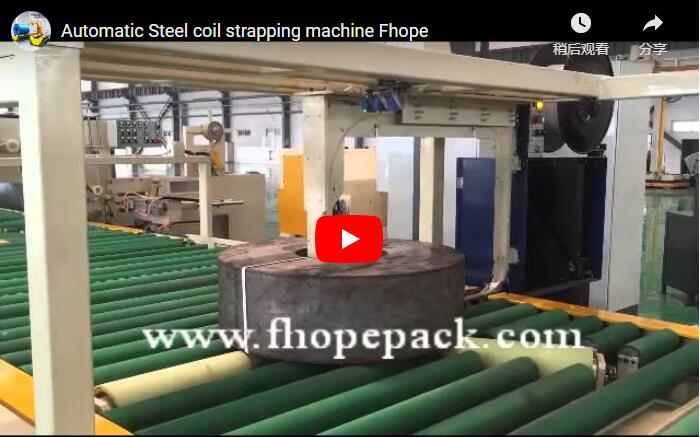
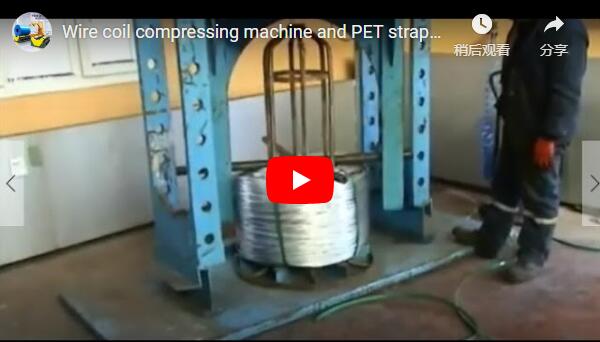
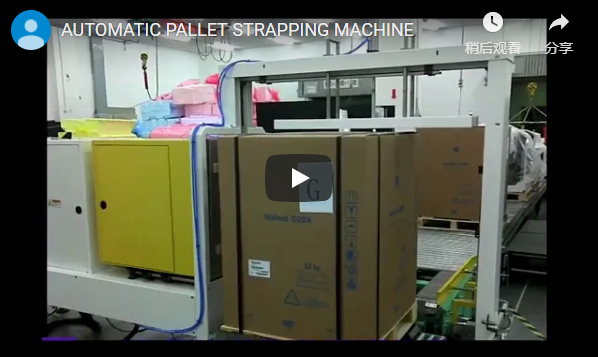
Our footage shows a pallet being strapped with a programmed pattern and friction-weld seals. It is a general demonstration, so load, strap and pattern for your plant are confirmed with us per project.
Selection checklist
| Question | Confirm per project |
|---|---|
| Stack geometry | vertical or horizontal layout |
| Duty route | strap material selection |
| Strap pattern | positions over stack height |
| Line pace | machine cycle fit |
| Floor space | footprint and access |
| Electrical supply | voltage, phase and frequency on site |
Controls and safety
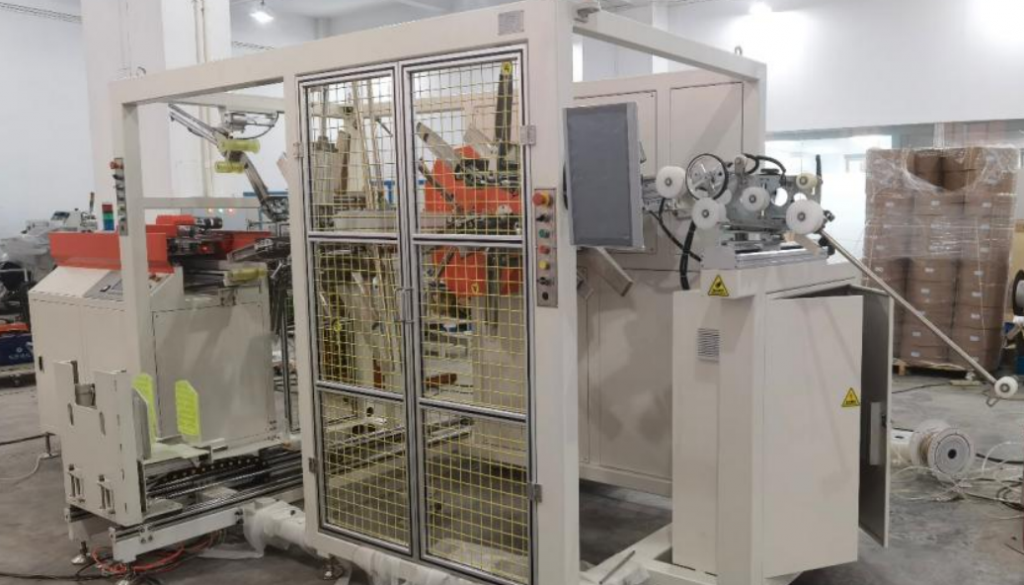
The strapper runs from a control panel with an emergency stop at the operator position and guarding around the strap path and seal head. Keep hands clear while a cycle runs. Routine checks cover tension, seals, strap path and sensors, per the machine manual.
Engineering FAQ
Q: Why strap brick instead of film it? A: Brick is dense and sharp-edged, and strap holds a tight unit where film wears at the stack face.
Q: Which strap material? A: PP for short stable handling, PET for stacks that travel, steel for the heaviest loads, per the duty.
Q: Vertical or horizontal machine? A: We deploy vertical strappers for standard footprints where space is constrained, and horizontal strappers for tall or heavy stacks, per geometry.
Q: How are the straps joined? A: The strap is sealed to itself by friction welding, with no metal clips in the joint.
Q: How is tension kept consistent? A: Tension is machine-set and the system is calibrated on a schedule with test cycles.
Next step
- Email us at info@fhopepack.com with your pallet sizes, stack weight and volumes.
- We send a strapping proposal and a layout drawing within 48 hours.
- We arrange a site survey to confirm floor and services.
Related reading
- Pallet wrapping machine with conveyors
- Pallet stretch wrapping: technology and best practices
- Automatic pallet strapping and wrapping machine from Shanghai, China
- FHOPE packing machinery product lines
Sources and standards
- ISO 12100:2010 — Safety of machinery. General principles for design, risk assessment and risk reduction
- EN 415-10:2014 — Safety of packaging machines. General requirements
- EN ISO 13849-1:2023 — Safety of machinery. Safety-related parts of control systems
- FHOPE automatic pallet strapping machine for brick demonstration video. Reviewed as a general demonstration; load, strap and pattern confirmed per project.
Last reviewed: 2026-10-10