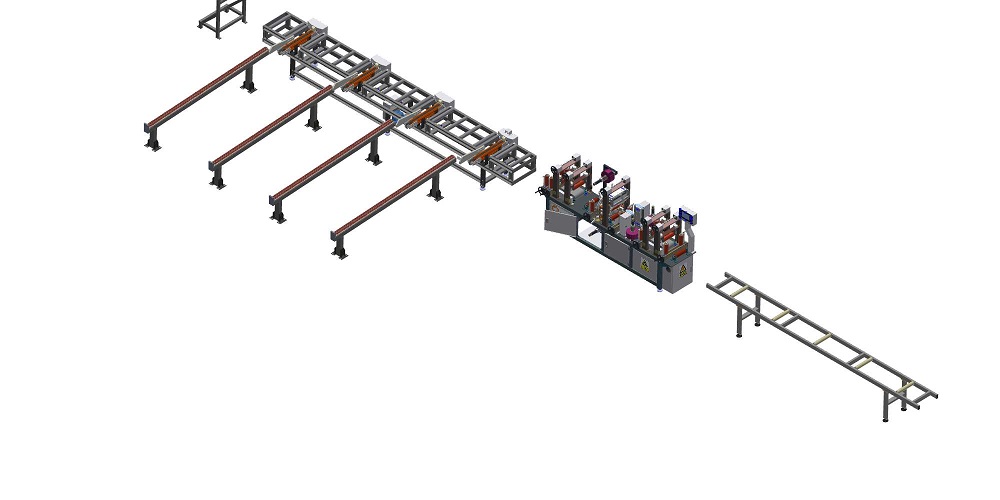
Summary: Discover how an automated aluminum profile packaging line eliminates manual bottlenecks. This guide details orbital wrapping technology, technical specs, and ROI benefits for extrusion manufacturers seeking CE-certified efficiency.
🏗️ Enhancing Efficiency and Protection: The Automated Aluminum Profile Packaging Line
The global demand for aluminum extrusions continues to surge, driven by the construction, automotive, and consumer goods sectors. However, maintaining profile integrity from the extrusion press to the end-user presents significant logistical hurdles. Traditional manual packaging often fails to meet modern standards, resulting in inefficiencies, surface damage, and safety risks. This analysis details the technical architecture and strategic advantages of implementing an automated aluminum profile packaging line, a critical solution for manufacturers targeting operational excellence.
📉 The High Cost of Manual Packaging in Metal Distribution
Manual handling of long aluminum profiles introduces severe operational bottlenecks. Relying on human labor for horizontal wrapping tasks creates the following vulnerabilities:
-
Labor Intensity & Escalating Costs: The process is time-consuming and manpower-heavy, directly inflating operational expenses. Repetitive motions lead to worker fatigue and ergonomic injuries, impacting insurance premiums and overall productivity.
-
Inconsistent Quality Control: Achieving uniform tension and precise film application manually is nearly impossible. Inconsistencies lead to inadequate protection against scratches, abrasions, and environmental exposure during transit.
-
Excessive Material Waste: Manual cutting and application of protective films often result in 15-20% higher material usage compared to precisely controlled orbital wrapping systems.
-
Throughput Limitations: Manual speeds create bottlenecks that throttle production output, delaying order fulfillment and straining client relationships.
-
Critical Safety Hazards: Handling long, sharp-edged profiles poses significant cutting and lifting risks, necessitating stringent (and slowing) safety protocols.
⚙️ The Automated Solution: Streamlining Aluminum Profile Packaging
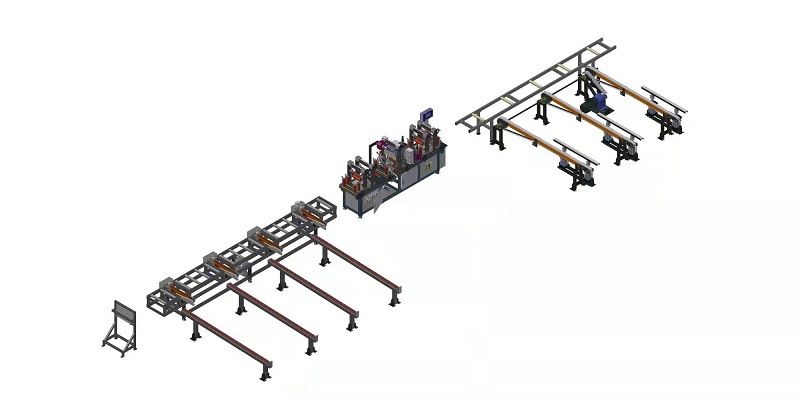
Automated packaging lines resolve these challenges by integrating multiple processes into a seamless workflow. By utilizing horizontal orbital technology, these systems ensure consistent protection for linear goods.
System Design and Core Components
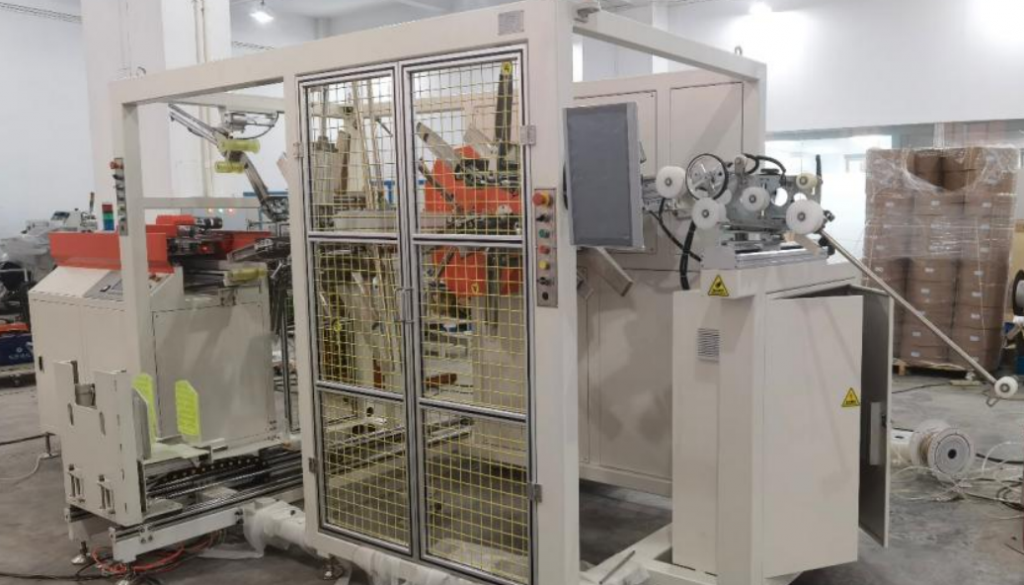
A typical automated aluminum profile packaging line comprises several integrated modules designed for heavy-duty industrial environments:
-
Infeed & Handling System: Automated storage, lifting, and transfer mechanisms ensure a continuous flow of profiles into the station, minimizing manual intervention.
-
Profile Taping/Wrapping Machine: The core unit utilizes orbital wrapping technology to apply protective film or tape consistently around the profile bundle.
- Wrapping Speed: Capable of processing 10-12 profiles per minute.
- Material Compatibility: Designed for PE, LDPE, and stretch films (0.05mm to 1.0mm+).
- Precision Control: Ensures consistent overlap and tension, optimizing material usage.
-
Profile Bagging Machine: Automatically inserts the wrapped bundle into a pre-formed or continuously fed polybag.
-
Sealing & Cutting Unit: Applies secure heat seals and cuts the bag to exact lengths.
-
Outfeed & Stacking System: Conveys finished packages to a buffer zone or automatic unloading table for palletizing.
-
PLC Control System: Features a Human-Machine Interface (HMI) touch screen for parameter adjustment (dimensions, wrapping settings) and real-time diagnostics.
🛠️ Technical Specifications
The following table outlines the standard capabilities of a heavy-duty horizontal orbital wrapper for aluminum profiles. Customization is available for specific extrusion dimensions.
| Parameter | Specification Range | Notes |
|---|---|---|
| Profile Length | 1,000mm – 7,000mm | Customizable for longer extrusions |
| Profile Width | 30mm – 200mm | Adaptable to various cross-sections |
| Profile Height | 30mm – 250mm | Suitable for complex architectural shapes |
| Max Profile Weight | Up to 12kg (per piece) | Heavy-duty frame options available |
| Wrapping Speed | 10-12 profiles/minute | Variable based on film layers |
| Film Thickness | ≥ 0.05mm – 1.0mm+ | Compatible with VCI and Stretch Film |
| Control System | PLC + Touch Screen HMI | Siemens/Mitsubishi options |
| Power Supply | 380V/50Hz | Adaptable to local grid standards |
| Frame Construction | Q235 Heavy-duty Steel | Powder-coated for corrosion resistance |
📈 Tangible Benefits and Strategic Advantages
Implementing an automated stretch wrapper line delivers measurable improvements across operational facets:
-
🚀 Increased Throughput: Dramatically boosts packaging speed, aligning capacity with extrusion output to eliminate bottlenecks.
-
💰 Reduced Labor Costs: Reallocates personnel from repetitive tasks to quality control. ROI calculations often show payback periods within 1-3 years based on labor savings alone.
-
🛡️ Enhanced Product Protection: Consistent, high-quality wrapping minimizes transit damage, reducing returns and improving customer satisfaction.
-
👷 Improved Workplace Safety: Eliminates direct manual handling of sharp profiles during the wrapping process, significantly reducing injury risks.
-
♻️ Optimized Material Usage: Precise automated control over film application minimizes waste, contributing to sustainability goals.
-
🏭 Space Efficiency: Integrated lines require less floor space than sprawling manual packaging stations.
-
✅ Process Consistency: Automation ensures every package meets identical quality standards, vital for brand reputation.
💡 ROI Insight: While the initial capital expenditure for an automatic packing line is higher than manual tools, the reduction in film waste (up to 20%) and labor hours typically yields a full return on investment within 18 to 24 months. Furthermore, the reduction in damage claims directly protects profit margins.
🔗 Integration and Future-Proofing
Modern automated packaging lines are designed for seamless integration. They interface with upstream systems (extrusion runout tables, cooling beds) and downstream logistics (AGVs, palletizers, WMS). Many systems offer data logging and connectivity features, aligning with Industry 4.0 principles for enhanced process monitoring.
🎓 Expert Pro Tip: When selecting a horizontal orbital wrapper, ensure the PLC system supports “recipe storage.” This allows operators to instantly switch settings for different profile dimensions without manual recalibration, reducing changeover time from 15 minutes to under 30 seconds.
🏁 Conclusion: A Necessary Investment for Competitive Advantage
For aluminum profile manufacturers and distributors, investing in automated packaging technology is shifting from a luxury to a necessity. The demonstrable gains in efficiency, cost reduction, product quality, and worker safety provide a strong competitive edge. By addressing the inherent limitations of manual processes, these automated lines streamline operations from end-to-end.
📞 Contact Us for a Consultation Ready to explore how an automated aluminum profile packaging line can revolutionize your operations? Contact our specialists today to discuss your specific requirements and receive a customized proposal. Let us demonstrate how this technology can enhance your efficiency, reduce costs, and improve product protection.
❓ Frequently Asked Questions (FAQs)
How does automation improve safety compared to manual wrapping?
By automating the handling, wrapping, and bagging process, the system minimizes direct human contact with potentially sharp or heavy profiles. This drastically reduces the risk of cuts, strains, and other manual handling injuries, ensuring compliance with OSHA and CE safety standards.
Is the packaging line adaptable to different profile shapes and sizes?
Yes. These flexible packing systems allow parameters like profile dimensions (length, width, height), wrapping tension, and bag length to be adjusted via the PLC/HMI. Customization beyond standard ranges is often possible to accommodate unique extrusion geometries.
What is the typical throughput increase we can expect?
While dependent on profile size, automated lines processing 10-12 profiles per minute can represent a 2x to 3x increase in throughput compared to typical manual packaging rates. This significantly reduces production bottlenecks during peak demand.
What kind of protective films can be used with this machine?
The machines are compatible with various standard packaging films, including Polyethylene (PE), LDPE, and stretch films. Compatibility with specialized films (e.g., VCI for corrosion inhibition) should be confirmed based on the machine’s dispenser design.
What is the estimated Return on Investment (ROI) for such a system?
ROI depends on current labor costs, material savings, and throughput increases. However, many manufacturers report payback periods between 18 months and 3 years. A detailed ROI analysis can be provided based on your specific operational data.
What level of maintenance is required?
Like any industrial machinery, regular preventive maintenance (lubrication, wear part inspection, sensor checks) is required. Most orbital wrapping machines are designed for reliability with user-friendly access for routine maintenance. Service contracts and spare parts are typically available from the supplier.