Executive summary Containment is made one layer at a time, by two coordinated motions: the arm round the load and the carriage up the mast. We examine how our rotate arm stretch wrapper builds a unitized cover around a stationary pallet, why that protects fragile and unbalanced loads, and how wrap patterns tune the film to the goods. Load profiles and film are confirmed per project.
Table of Contents
- Containment in layers
- Why the load does not spin
- Arm and carriage
- Film pattern and overlap
- Tuning containment
- High-volume fit
- Typical configuration
- What the video shows
- Selection checklist
- Controls and safety
- Engineering FAQ
- Next step
- Related reading
- Sources and standards
Containment in layers
A pallet load is unitized, not frozen. The film holds boxes and components as one stack by wrapping them in overlapping layers that share the load’s movement with each other. A rotate arm wrapper builds those layers while the load stays still on the floor or conveyor.
Why the load does not spin
Spinning applies centrifugal force to the goods. Light or loosely stacked items shift, and heavy unbalanced stacks can topple. With the load stationary, the only spinning part is the arm, so fragile goods ride through the cycle without being disturbed in the first place.
Arm and carriage
An overhead arm rotates around the pallet, and the film carriage rides on a vertical mast attached to the arm. The arm gives the round of the wrap, and the mast gives the height, so the two motions draw a spiral of film from the base of the load to its top.
Film pattern and overlap
The layers land as the arm turns while the carriage steps up. Overlap between passes is set at the controls, and the spiral reads as a solid web rather than separate bands. The result is a cover that shares tension across the whole load, not just at the strapping points.
Tuning containment
Containment is set by wrap count, overlap and carriage speed, per product. A load with fragile edges gets more passes where its surface is weakest; a sturdy uniform stack gets fewer. The pattern follows the goods, and the machine recalls each one at the panel.
High-volume fit
Because the load does not turn, the wrapper works at line pace beside a conveyor, taking pallets as they arrive and passing them on. In high-volume operations the machine runs a steady cycle through shifts, with containment that does not depend on who is at the controls that day.
Typical configuration
Figures below list functional design boundaries rather than numeric values, and are confirmed per project.
| Parameter | Typical range, confirmed per project |
|---|---|
| Load | pallet footprint, height and weight |
| Arm and mast | travel set to load height |
| Carriage | vertical travel with film tension |
| Pattern | overlap, wrap count, speed per product |
| Line flow | conveyor integration and pacing |
| Electrical supply | 380 V three phase 50 Hz, or 220 V single phase for light machines, selected per project to the plant supply |
What the video shows
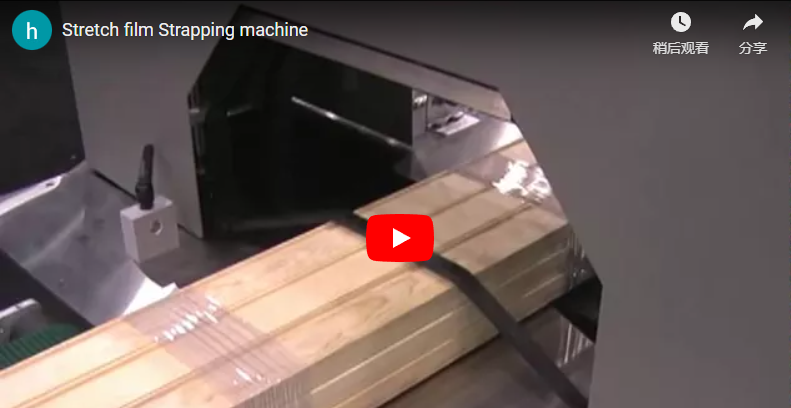
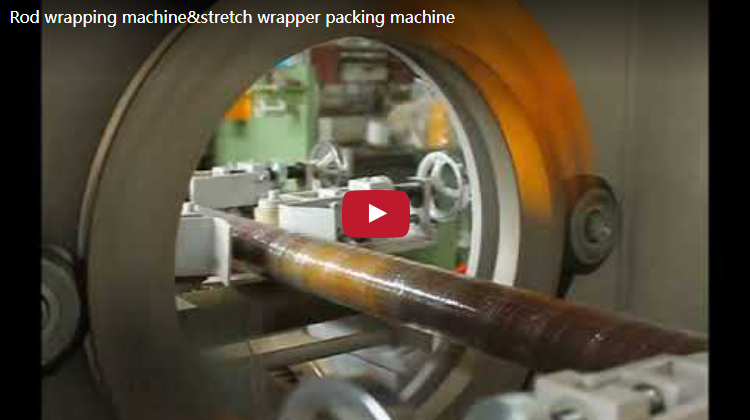
Our footage shows an arm rotating around a stationary pallet while a carriage lays film up the load. It is a general demonstration, so load, film and pattern for your plant are confirmed with us per project.
Selection checklist
| Question | Confirm per project |
|---|---|
| Fragile or unbalanced goods | whether stationary-load wrapping is needed |
| Tallest load | mast and arm travel |
| Film | overlap and wrap count per product |
| Line pace | steady-cycle capacity |
| Floor space | arm footprint and clearances |
| Electrical supply | voltage, phase and frequency on site |
Controls and safety
The wrapper runs from a control panel with an emergency stop at the operator position and guarding around the arm’s travel zone. Keep clear of the arm and carriage while the machine runs. Routine checks cover arm balance, carriage travel, film tension and safety devices, per the machine manual.
Engineering FAQ
Q: How is a load unitized without spinning it? A: The arm rotates and the carriage climbs a mast, drawing overlapping film layers around the stationary load.
Q: Why does stationary wrapping suit fragile goods? A: Nothing applies centrifugal force to the load, so loose or fragile items are not disturbed during the cycle.
Q: What sets how much film a load gets? A: Wrap count, overlap and carriage speed are stored per product and recalled at the panel.
Q: Does it keep pace with a conveyor line? A: Yes. Pallets arrive and leave on the wrapper’s own cycle, so the machine works at line pace through shifts.
Q: What loads suit it best? A: Tall, unbalanced, fragile or heavy loads that should not be rotated suit this design, confirmed per project.
Next step
- Email us at info@fhopepack.com with your load sizes, film and line pace.
- We send a wrapper proposal and a layout drawing within 48 hours.
- We arrange a site survey to confirm floor and services.
Related reading
- Rotate arm stretch wrapper
- Pallet stretch wrapping: technology and best practices
- Pallet wrapping machine with conveyors
- FHOPE packing machinery product lines
Sources and standards
- ISO 12100:2010 — Safety of machinery. General principles for design, risk assessment and risk reduction
- EN 415-10:2014 — Safety of packaging machines. General requirements
- EN ISO 13849-1:2023 — Safety of machinery. Safety-related parts of control systems
- FHOPE rotate arm stretch wrapper demonstration video. Reviewed as a general demonstration; load, film and pattern confirmed per project.
Last reviewed: 2026-10-10