Executive summary A compact turntable stretch wrapper winds clear film round a single item, so it stays clean, closed and held together on the way to the customer. Ours sits on a low black base with yellow clamp arms on the turntable and a white tower holding the film and controls. Film use follows from the item’s perimeter and the number of turns. Both are set per project to your products.
Table of Contents
- What the video shows
- How the turntable wrapper works
- Products it wraps
- Estimating film per item
- Controls and safety
- Selection checklist for a compact stretch wrapper
- Engineering FAQ
- Next step
- Related reading
- Sources
What the video shows
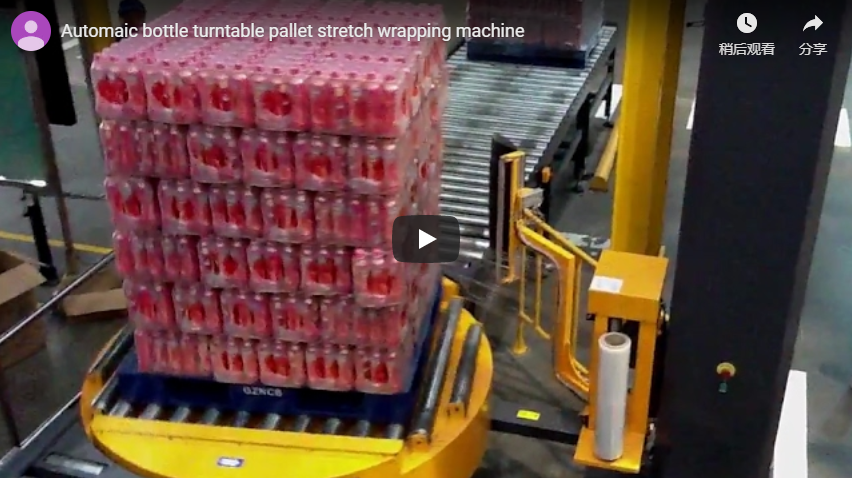
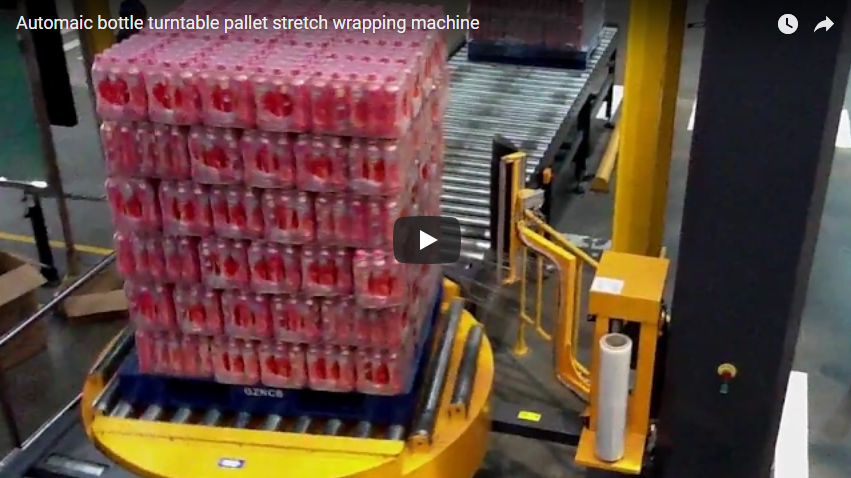
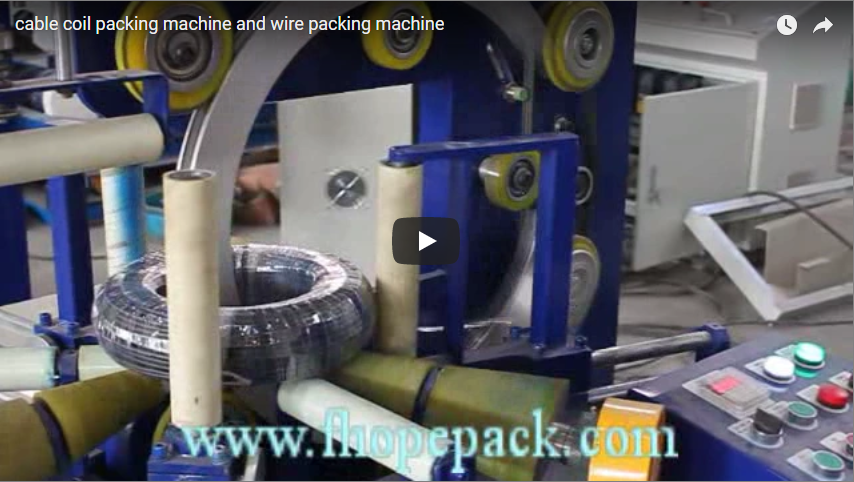
A round item stands on the turntable at one end of our wrapper’s black oval base. Yellow arms on the turntable hold it in place. The white tower at the other end carries the film and the control panel, with its buttons and red stop button on top.
The turntable turns, and clear film winds round the item from the tower. Layer by layer the item is covered, and the finished wrap is smooth and tight. A faint FHOPE GROUP mark sits in the corner of the clip.
How the turntable wrapper works
| Step | What happens |
|---|---|
| Load | The item is stood in the middle of the turntable |
| Clamp | The yellow arms hold it in place |
| Wrap | The turntable turns and film winds on from the tower |
| Cut | The film is cut and the tail pressed down |
| Unload | The arms open and the item is lifted off |
The clamp arms stop light or round items sliding as the table turns. That matters for bottles and small blocks, which a plain turntable could throw off centre.
Products it wraps
| Product | Why it is wrapped |
|---|---|
| Luggage | Protects the case and shows it has not been opened |
| Bottle packs | Holds the bottles together as one unit |
| Blocks and stone | Keeps dust in and the faces clean |
| Small boxes | Seals the lid and keeps out dirt |
The machine suits single items that stand steady on the turntable.
Estimating film per item
Illustrative example for a round item 300 mm across, wrapped with 10 turns:
| Item | Value |
|---|---|
| Diameter | 300 mm |
| Perimeter, π × 300 | about 942 mm |
| Turns (illustrative) | 10 |
| Film laid on the item, 10 × 0.942 m | about 9.4 m |
A square item uses its full perimeter, 4 times its side. Count the turns you need for the protection you want, then set them in the program.
Controls and safety
The turntable and clamp arms move during the cycle. The red stop button on top of the tower stops the machine. Keep hands off the item and the film while it is turning.
The standards that apply depend on the destination market. For CE markets, ISO 12100 sets the risk-assessment method and EN 415-10 sets general requirements for packaging machines.
Selection checklist for a compact stretch wrapper
- Largest and smallest item size and weight.
- Items per hour.
- Round, square or uneven items.
- Turns you need per item.
- Floor space and power supply.
- Clear or coloured film.
Engineering FAQ
Q: Why are there clamp arms? A: They hold light or round items in the middle of the turntable while it turns.
Q: What products can it wrap? A: Single items that stand steady, such as luggage, bottle packs, blocks and small boxes.
Q: How much film per item? A: Perimeter times turns. Our 300 mm round example with 10 turns lays about 9.4 m.
Q: Does it need a pallet? A: No. The item stands straight on the turntable.
Q: How is it stopped? A: The red stop button on top of the tower stops it at once.
Next step
We plan your compact stretch wrapper in three steps:
- Submit your layout drawing with item sizes and output to info@fhopepack.com.
- Receive a proposal within 48 hours, with the turns and film plan.
- Book a site survey to check the floor space and power.
Related reading
- Video: FHOPE luggage stretch wrapping machine
- Semi-automatic pallet wrapping machines
- E300 horizontal stretch wrapper
Sources
- Machine content: FHOPE engineering team, 2026-10-04
- Film example: our worked example, illustrative values
- Machine in action: our video on YouTube
- Standards scope: ISO 12100:2010, EN 415-10:2014
Last reviewed: 2026-10-04